
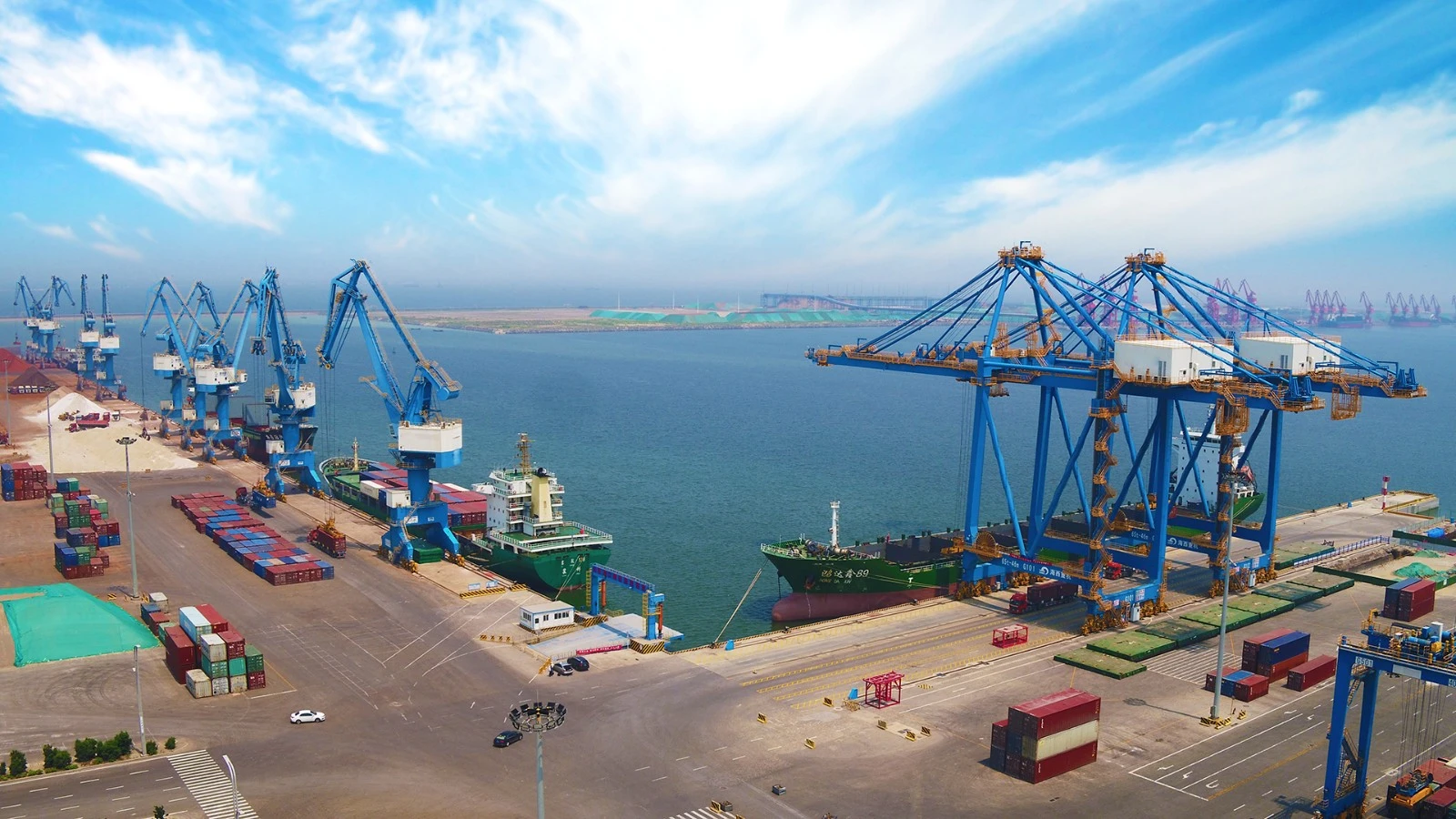
Hydraulic issues are a leading cause of Reach Stacker pick failures, with many incidents traced directly to hydraulics. These failures can create safety risks and reduce operational efficiency for port operators and maintenance teams. CEGC provides port machinery built to market-standard specifications, along with tailored solutions to address and resolve Reach Stacker pick failures traced to hydraulics quickly and safely.
Key Takeaways
-
Check hydraulic fluid levels often and look at hoses to stop failures. This easy step can help you avoid expensive repairs and lost time.
-
Do daily maintenance to find leaks and keep things safe. Checking every day makes machines safer and work better.
-
Use advanced hydraulic systems and anti-sway technology for more control and safety. These features help machines work better and lower the chance of accidents.
Hydraulics in Reach Stacker Picking
Lifting and Gripping Functions
Hydraulics help you lift and grip containers with reach stackers. The hydraulic system uses fluid under high pressure. Pumps, powered by diesel engines or electric motors, create this pressure. The fluid moves through hoses and cylinders. This lets you control the boom and spreader. When you use the controls, fluid goes to the right cylinder. The boom can then move out or pull back. Hydraulics give you exact control. You can grip containers tightly and lift them safely. The fluid also powers the load moment limiter. This checks the boom angle and how heavy the load is. It helps keep the reach stacker balanced and stops accidents. Hydraulics make lifting and gripping smooth and steady. This is important in busy ports. The fluid keeps the system working well. You can move containers quickly and safely.
Stabilization and Anti-Sway Control
|
Feature |
Description |
|---|---|
|
Keeps reach stackers stable and stops them from tipping over. |
|
|
Spreader sway prevention |
Uses hydraulic fluid to stop sway, so you can control loads better. |
|
Load indicator |
Shows you the load status with clear signals, so you know when to act. |
|
Safety System |
Has emergency shutdown and main power disconnect for safe hydraulic system use. |
|
Advanced CAN bus communication |
Lets you see engine and hydraulic system status on a screen, making things safer and easier. |
Hydraulic fluid is important for these safety features. You get reliable performance from the hydraulic system. This means less downtime and more work done. Hydraulics help you move containers faster and keep the machine steady. You can work in small spaces and stay safe. Checking the fluid and parts often keeps the reach stacker working well. CEGC makes machines with good hydraulics, anti-sway controls, and safety systems. You can trust your equipment every day.
Reach Stacker pick failures traced to hydraulics
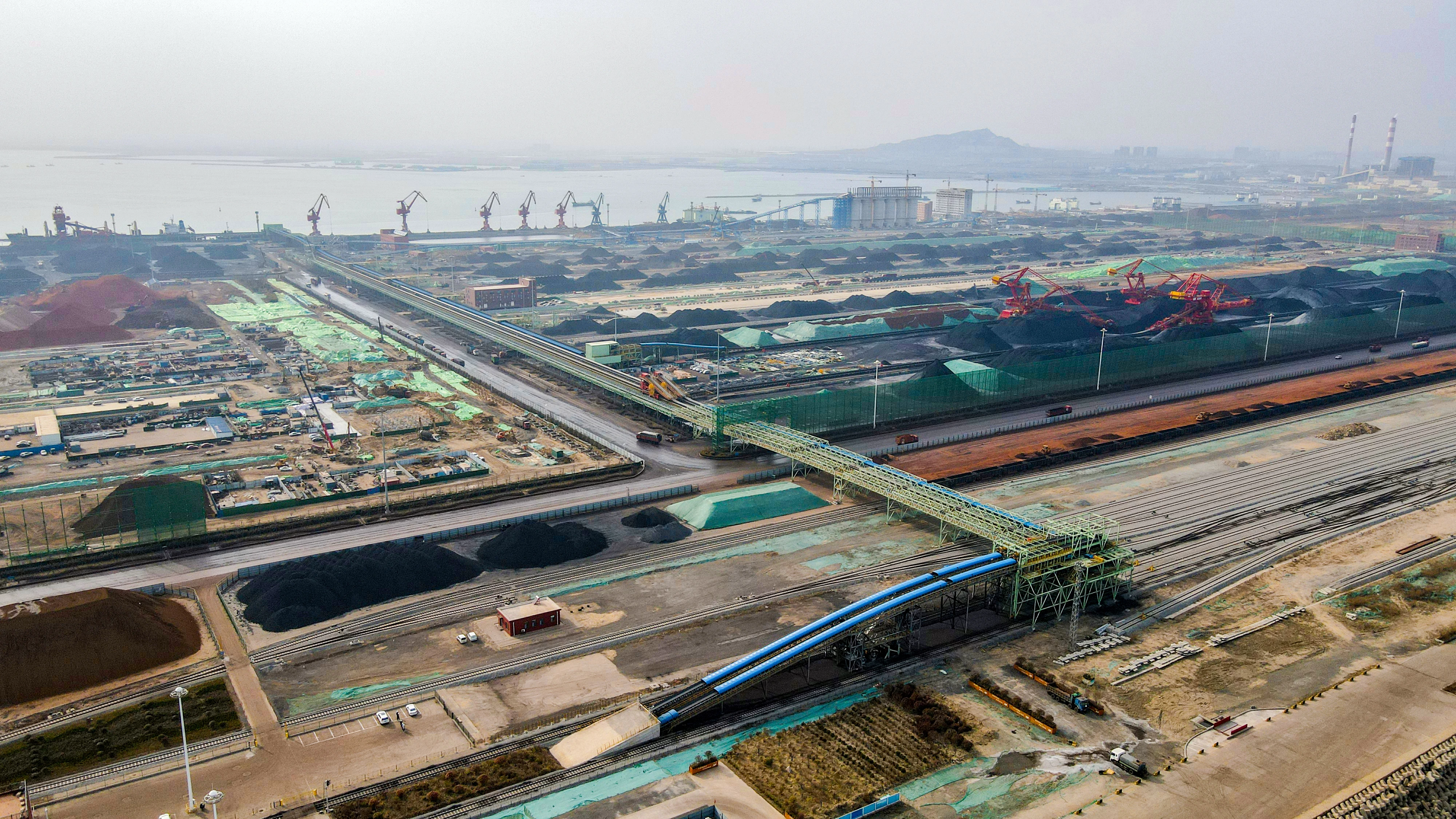
Common Hydraulic Failure Types
You face many problems when reach stacker pick failures are caused by hydraulics. The hydraulic system can stop working for different reasons. Here are the most common hydraulic problems you might see:
-
Cavitation happens when air gets into the suction line. The hydraulic fluid turns foamy and loses its lifting strength. You might hear a high-pitched noise near the motor.
-
Solenoid valve problems happen when tiny metal pieces block the valve. This causes leaks and stops the hydraulic fluid from moving right.
-
Return line problems show up as a warm return line. This means high-pressure fluid is not going back to the reservoir. A stuck relief valve or a broken bypass can cause this.
-
Hydraulic fluid leaks are a big problem. Leaks can come from old seals and hoses, loose fittings, or cracks in the lines.
-
Dirty hydraulic fluid causes pump failures, cylinder seal problems, and filter bypass events. Dirt, water, or metal pieces can make the fluid dirty.
-
Air in the hydraulic system makes lifting weaker and the fluid less useful.
You need to check for leaks, dirty fluid, and air in the hydraulic system often. Checking lines and filters helps stop these problems.
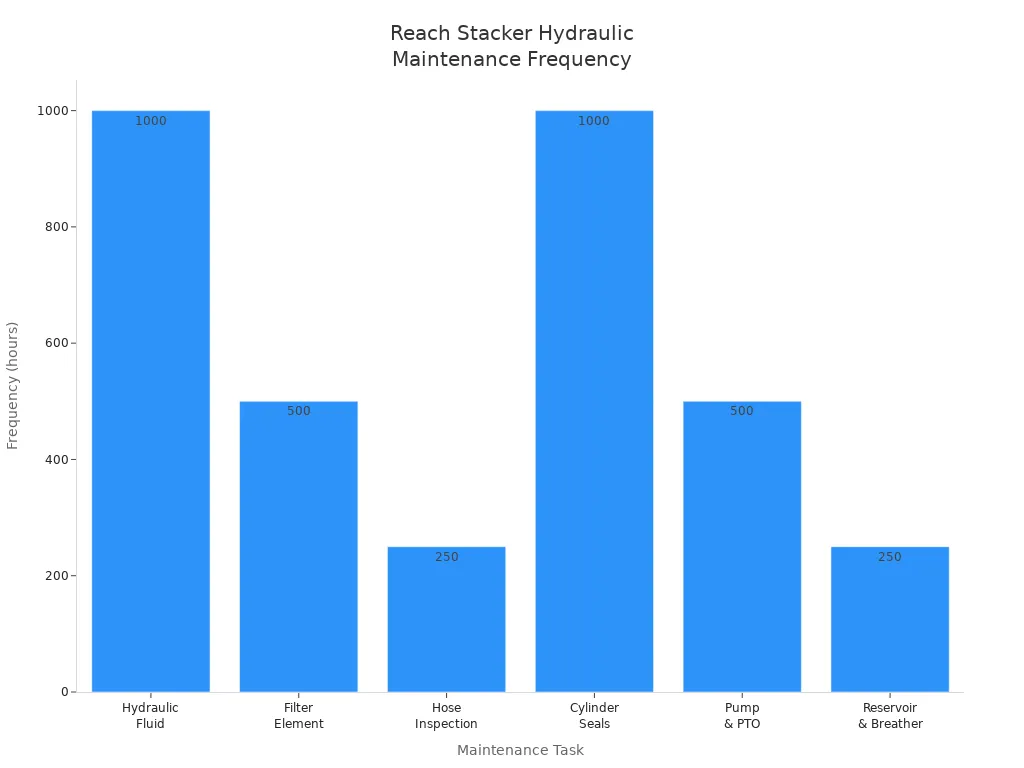
|
Frequency |
Priority |
|
|---|---|---|
|
Hydraulic Fluid |
1,000 hrs |
Full change |
|
Filter Element |
500 hrs |
High Priority |
|
Hose Inspection |
250 hrs |
Medium Priority |
|
Cylinder Seals |
1,000 hrs |
Medium Priority |
|
Pump & PTO |
500 hrs |
High Priority |
|
Reservoir & Breather |
250 hrs |
Routine |
Dirty hydraulic fluid causes most failures in reach stackers. It is the reason for 82% of pump failures, 74% of cylinder seal failures, and 91% of filter bypass events. You must watch for dirty fluid and leaks to keep your equipment working.
The most common "failed" system is not a broken pump; it is a sign of cavitation. This happens when air gets into the suction line and makes foamy oil that cannot be squeezed. Air can be squeezed but hydraulic fluid cannot, so the system cannot lift as it should. You will hear a high-pitched noise or growling sound near the motor. That is the sound of vacuum bubbles popping against metal parts.
Operational Symptoms and Downtime Risks
Reach stacker pick failures caused by hydraulics show up in many ways. You might see leaking hydraulic fluid, uneven lifting or lowering, jerky mast moves, or low fluid levels. These signs mean there is trouble in the hydraulic system and can cause downtime.
|
Impact on Downtime |
|
|---|---|
|
Leaking hydraulic fluid |
Makes things unsafe and needs fast repairs. |
|
Uneven lifting or lowering |
Causes work delays and makes things less efficient. |
|
Jerky or slow mast moves |
Means you need maintenance, which takes more time. |
|
Low hydraulic fluid levels |
Can hurt the pump and break the system. |
Hydraulic failures make things less safe. Loads can move without control if the hydraulic system loses power. You must hold the hoist lever in 'lower' to open safety valves and let gravity lower the load safely. Always use the parking brake and turn off the machine to stop accidents.
You need to do daily checks before each shift. Check fluid levels, tires, brakes, hydraulics, and the machine’s frame. These checks help you find leaks, dirty fluid, and worn seals and hoses before they get worse.
Hydraulic failures also slow down work. You will see longer work times and more downtime. This lowers how much you get done and costs more money. Hydraulic system problems stop container handling and slow down the port. You must fix leaks and dirty fluid fast to keep work moving.
|
Cost Range |
Notes |
|
|---|---|---|
|
Preventive Maintenance |
$2,000-$5,000 per machine |
Regular work stops failures and saves $10,000-$20,000 in repairs. |
|
Minor Fixes |
$500-$5,000 |
Costs for hoses, fittings, and small parts. |
|
Cylinder Repairs |
$1,500-$5,000 |
Includes seal changes and small repairs. |
|
Major Overhauls |
$5,000-$30,000+ |
Full rebuilds and bore repairs. |
|
Contamination Impact |
$4,000-$6,000 |
Small repairs cost more because of dirty fluid. |
Hydraulic system failures can stop port work for a long time. You lose money and face safety problems. Rules say you must check hydraulic pressure and keep systems safe.
Safety and Maintenance Solutions
You can stop reach stacker pick failures caused by hydraulics by using smart safety and maintenance steps. CEGC gives you advanced systems for port machines, like container handlers, portal cranes, and container gantry cranes.
-
Do daily checks to look for leaks, loose parts, and fluid levels.
-
Follow a service plan that changes engine oil and replaces filters.
-
Use AI tools to watch equipment health and guess when things might break.
-
Anti-Sway Control helps stop loads from swinging, making work safer.
-
Marine durability features give you strong power, work well in tough places, and are easy to fix.
-
Hydraulic systems use stainless steel and strong plastics to fight rust and handle high pressure.
-
Better serviceability means easier fixes, fewer breakdowns, and lower costs. Regular checks and fluid tests help you find problems early.
-
Easy-to-reach hydraulic parts make regular checks simple and keep reach stackers working.
|
Description |
|
|---|---|
|
Systematic Approach |
Use ergonomic lifting solutions in a full system to make work better and safer. |
|
Comprehensive Training |
Train people to use equipment right and stay safe. |
|
Pre-Use Inspection |
Check equipment before using it to stop failures and accidents. |
|
Proper Load Management |
Make sure loads are centered and not too heavy to keep things steady. |
You must care for the hydraulic system to have less downtime and do more work. Anti-sway technology and marine durability features help you move containers safely and quickly. CEGC’s solutions help with smart maintenance, easy repairs, and good performance in reach stackers. You keep port work running well and avoid costly leaks and dirty fluid.
You can trust your reach stacker if you check hydraulics a lot. Doing daily checks and fixing things early stops big problems. This helps you avoid losing time and keeps everyone safe. CEGC gives you special anti-sway controls and strong materials for better work.
|
Practice |
Benefit |
|---|---|
|
Regular checks |
Fewer breakdowns, safer machines |
|
Predictive maintenance |
Less waiting, saves money |
|
More working time, more safety |
-
You can pick CEGC’s hydraulic choices to fit your port.
-
Upgrades like automatic controls and tough steel make fixing easy and help your machine last longer.
FAQ
What causes most hydraulic failures in reach stackers?
Most failures happen because the hydraulic fluid is dirty. You need to check and change the fluid often. This helps your reach stacker work well.
How can you prevent hydraulic pick failures?
You should do checks every day. Follow a service plan and use tools that predict problems. These steps help you find issues early and stop downtime.
Why choose CEGC hydraulic solutions for port equipment?
You get strong performance and anti-sway safety. The machines last in tough places near the sea. CEGC lets you pick what fits your port best.


