
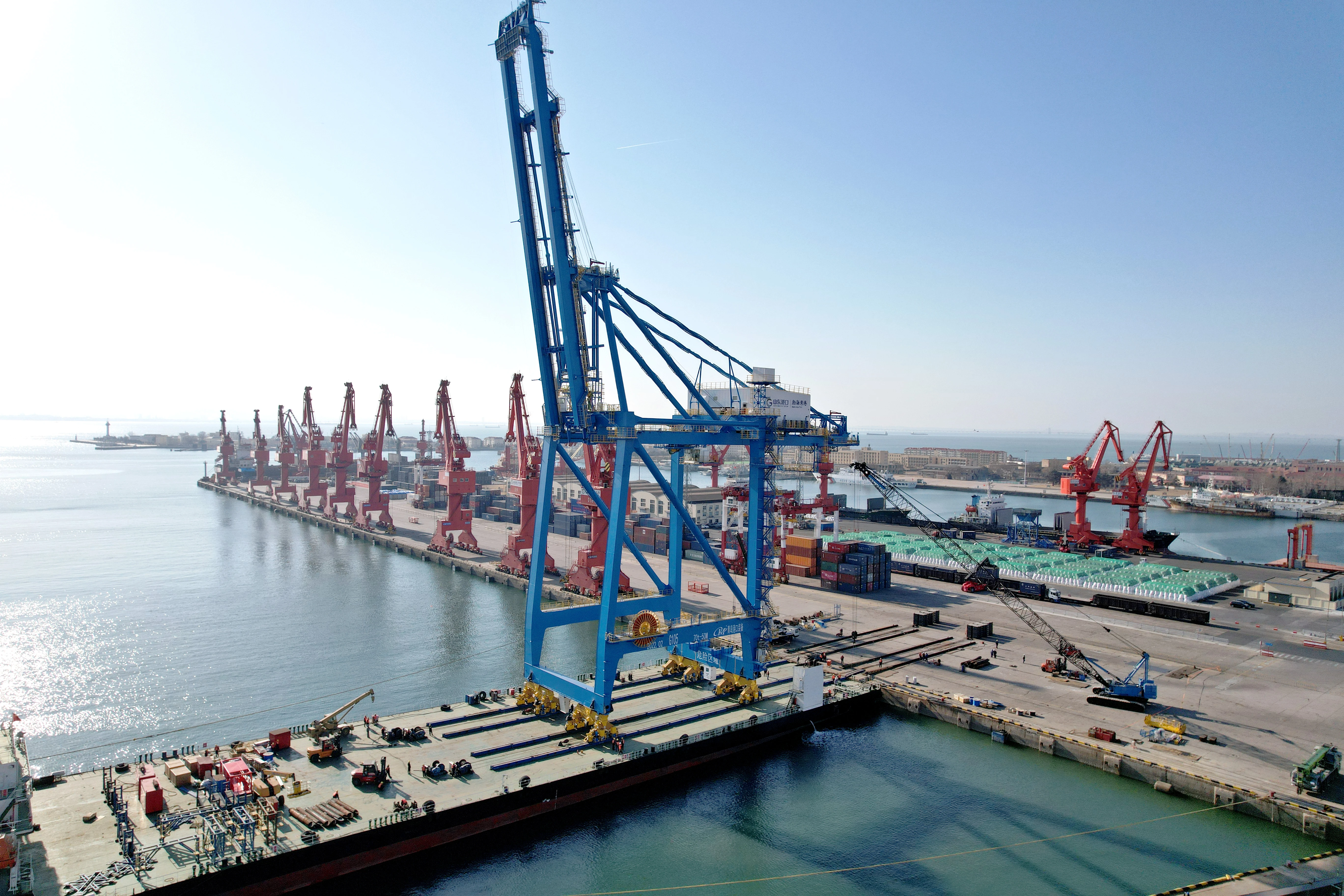
You can make things work better by using clear rules like cycle time and safety goals. These numbers help you find problems and fix your process. Safety KPIs show you care about keeping workers safe. CEGC gives container crane: pick success audit checklist choices that match market rules and help with project changes.
Key Takeaways
-
Use clear KPIs like cycle time and safety goals to track crane performance. This helps find problems and make work better.
-
Put safety first by following rules and keeping inspection records current. This keeps workers and equipment safe.
-
Use anti-sway systems to make loads more stable. This lowers accidents and helps move containers faster and more accurately.
Container crane: pick success audit checklist
Success Criteria & KPIs
You need clear rules to see how well your container crane works. The container crane: pick success audit checklist starts with KPIs that show how your crane is doing. You keep track of cycle time, idle time, hook time, and load transfer time. These KPIs help you find slow spots and make things better. You also check Mean Move Between Failures (MMBF) and Mean Time to Repair (MTTR). MMBF for quay container cranes is about 750 moves. MTTR is usually around 0.625 hours. These numbers tell you how often your crane breaks and how fast you fix it. You focus on four main movements: hoist, trolley, gantry, and boom. Each movement changes your KPIs and your container crane: pick success audit checklist.
-
List of industry-standard KPIs for container crane: pick success audit checklist:
-
Cycle time per container
-
Idle time between picks
-
Hook time during loading
-
Load transfer time
-
Mean Move Between Failures (MMBF)
-
Mean Time to Repair (MTTR)
-
Throughput per hour
-
Number of successful picks
-
Number of failed picks
-
Operator error rate
-
You use these KPIs to make goals and see how you are doing. You compare your numbers to what others in the market do. CEGC gives you container crane: pick success audit checklist choices that match industry rules and let you change things for your project. You can change capacity, span, duty cycle, and automation level to fit what you need.
Safety & Compliance Checks
Safety is the most important part of your container crane: pick success audit checklist. You check if your crane follows all safety rules and standards. You look for compliance with LOLER and OSHA requirements. You make sure your crane has the right papers and inspection records. Many audits find missing or mixed-up safety records. Not keeping inspection records is a common problem. You must keep your safety papers up to date.
-
Common safety and compliance issues found during audits:
-
Inconsistent safety documentation
-
Outdated operator certifications
-
Lack of emergency stop procedures
-
Broken safety interlocks
You check if your crane has many safety interlocks. These include overload protection, limit switches, and emergency stop logic. You also look for zone-based collision prevention. You use operator-centered HMI to help your team see alarms and updates. This makes training easier and helps keep people safe. You add safety KPIs to your container crane: pick success audit checklist. You keep track of safety incidents, near misses, and compliance problems.
Tip: Always check your safety papers before you start the audit. This helps you find problems and fix them fast.
Load Stability & Anti-Sway
Load stability is a big part of your container crane: pick success audit checklist. You want your crane to move containers smoothly and safely. Load sway makes it hard to put containers in the right place. It can cause crashes and slow things down. Wind and inertia can make sway worse when things are busy. Operator skill can also change load stability.
You use anti-sway systems to fix these problems. CEGC gives you advanced anti-sway solutions for container cranes. These systems use sensors and control algorithms to cut down on sway. You can pick mechanical, control-based, active, semi-active, or passive anti-sway systems. Each type helps your crane handle loads better.
|
Type of Anti-Sway System |
Description |
|---|---|
|
Mechanical Anti-Sway Systems |
Use structural parts and counterweights to dampen load movement. |
|
Control-Based Anti-Sway |
Use sensors and algorithms to suppress sway in real-time. |
|
Active Anti-Sway |
Monitor load movement and adjust crane motions for high precision. |
|
Semi-Active Anti-Sway |
Assist operators with corrective actions. |
|
Passive Anti-Sway |
Use mechanical features without real-time control. |
Anti-sway systems make things safer and faster. They lower crash risk and protect cargo. You can move containers quicker and more accurately. Anti-sway systems also help operators feel less tired and keep equipment working longer. You can use open-loop or closed-loop control methods. Closed-loop control uses real-time feedback for better sway control.
|
Control Method |
Description |
|---|---|
|
Open-Loop Control |
Uses preset algorithms without real-time feedback. |
|
Closed-Loop Control |
Uses real-time sensor feedback for dynamic sway control. |
Anti-sway systems can cut sway by up to 40%. This helps your container crane pick more containers the right way. You add load stability checks to your container crane: pick success audit checklist. You keep track of how often sway causes problems and how well your anti-sway system works.
-
Benefits of anti-sway systems for container crane: pick success audit checklist:
-
Higher precision in container placement
-
Lower operator fatigue
-
Less equipment wear and longer crane life
You use these tools and checks to finish your container crane: pick success audit checklist. You focus on safety, KPIs, and load stability to keep your crane working well.
Audit Prep & Process
Pre-Audit Checklist
You begin by making sure you have what you need. You gather crane operation logs, maintenance records, and kpi reports. Your team should have a safety officer, a crane operator, and a maintenance technician. CEGC’s monitoring tools help you get real-time data for your audit. The table below lists the main steps ports follow before the audit starts:
|
Step |
Description |
Output |
|---|---|---|
|
1 |
Get berth allocation and tell customs. |
Vessel is ready for port checks. |
|
2 |
Give berth permission and secure vessel. |
Vessel is in the right spot. |
|
3 |
Handle paperwork and customs clearance. |
Cargo can be unloaded legally. |
|
4 |
Start unloading with a supervisor watching. |
Cargo moves from ship to port. |
|
5 |
Check tally and quantity. |
Tally report is made. |
|
6 |
Confirm cargo weight. |
Weight is checked for shipping. |
|
7 |
Store cargo safely. |
Cargo is ready to send out. |
|
8 |
Prepare papers for leaving. |
Cargo leaves the port officially. |
|
9 |
Check cargo when it arrives. |
Cargo is added to company records. |
You make sure every step is done before the main audit begins.
Data & Log Review
You look at all data and logs to check crane performance and kpi trends. You review cycle time, idle time, lifting capacity, and other key numbers. Good data logging gives you facts to study. Remote monitoring lets you see real-time and old data. Anti-collision systems and automation data show how safety and efficiency get better. Management system links help the terminal work better. Log reviews often show more failed picks when containers are stacked high. This means you must watch kpi and performance data to find and fix problems.
Equipment Inspection
You check the crane at different times to see if it is safe and works well. Each shift, you look at controls, safety devices, wire rope, and hydraulic lines. Every month, you write down these checks and look for issues. Once a year, you do a full inspection with structural checks and load testing. Predictive maintenance helps you plan repairs when things are slow. This cuts downtime, saves money, and helps the crane last longer. You use kpi and CEGC’s data to track lifting capacity, efficiency, and safety.
Operator Assessment
You check operators using clear kpi and metric rules. You look at their safety record, incident history, and references. You check certification, paperwork, and real experience with lifting capacity. Operators must be responsible and follow rules. Simulation training helps them learn and stay safe. New operators have more accidents, so you use kpi data to track how they do. You keep all operator records current for each audit.
Troubleshooting & Improvement

Common Issues & Solutions
Many container cranes have the same problems during audits. These problems can make moves slower and less safe. They also lower how much work gets done. The table below lists some common problems you might see:
|
Issue Type |
Symptoms |
|---|---|
|
Wear-and-tear |
Strange sounds, slow hoisting, or the load slipping. |
|
Hydraulic system failure |
Leaks, slow or stuck movements, and less lifting power. |
|
Electrical issues |
Crane acts weird, will not start, or loses power suddenly. |
|
Structural damage |
Cracks or bends in the boom or other parts after heavy loads. |
|
Outrigger problems |
Sinks into soft ground or will not move, making the crane unstable. |
You can fix these problems with the right tools and checks. Anti-sway systems help stop loads from swinging and keep things safe. Predictive maintenance helps you fix things before they break. This keeps the crane working longer and cuts down on waiting. CEGC has special packages to stop rust and protect your crane. These steps help your crane work better and faster.
Reporting & Benchmarking
You must write down what you find in kpi audits. Take photos and use GPS to show where and when you checked. Connect your notes to the right crane and workers. Keep your records easy to find for audits. Good reports help you compare kpi numbers and see what needs work. Use port kpis like crane moves per hour, vessel turnaround, and yard use to check how well things run. These audits show where you can do better and use your cranes more.
Continuous Improvement Steps
You can make things better by following these steps:
-
Check your process to find slow spots and wasted moves.
-
Look at yard layout and inventory to use space and time better.
-
Change how things flow to get more done and move faster.
-
Use clear steps and signs to help with training and safety.
-
Add new tech like anti-sway and predictive maintenance to help cranes work better.
-
Train your team often so they remember safety and kpi rules.
-
Watch kpi and other numbers to see if things are getting better.
CEGC helps you change and support your cranes for a long time. You can keep your cranes working well and moving fast by using these steps.
You can follow this checklist when you check your container crane:
|
Checklist Item |
Description |
|---|---|
|
Verify gross load |
Make sure you know the total weight and rigging. |
|
Inspect slings and hooks |
Look for any damage or signs of wear. |
|
Confirm rigging ratings |
Check that all gear is right for the load. |
-
Doing audits often makes things safer and helps work go faster. It also saves money.
-
Looking at data lets you see how things are going and plan what to fix.
Using CEGC solutions helps your port work better and stay strong.
FAQ
What is a container crane used for?
You use a container crane to lift a container from a ship. You move the container to a truck or a train. The container stays safe.
How do you check a container for safety?
You look at the container for damage. You check the container doors. You make sure the container is locked. You write down the container number.
How do you keep a container stable during lifting?
You use anti-sway systems. You watch the container as you lift. You keep the container balanced. You do not rush the container move.
|
Step |
What You Do With the Container |
|---|---|
|
1 |
Check the container weight |
|
2 |
Inspect the container locks |
|
3 |
Watch the container sway |
|
4 |
Move the container slowly |
|
5 |
Set the container down safely |
Tip: Always check the container before you move the container. You keep the container safe and protect the container from damage.


