
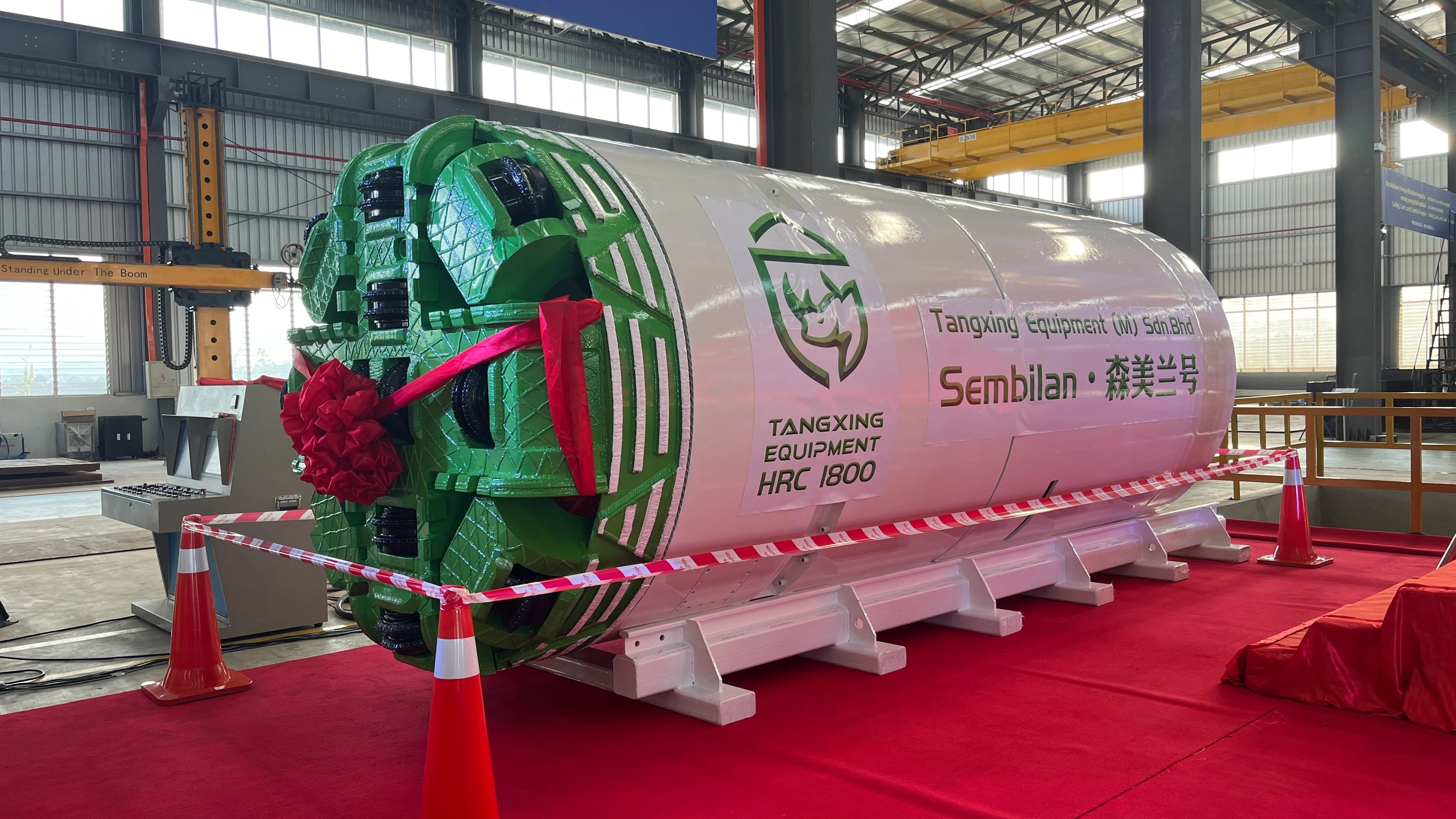
Achieving better yaw control means smoother rings in a TBM tunnel, resulting in enhanced accuracy and stability. When you effectively manage yaw in your tunnel boring machine, you ensure that the tunnel remains strong and safe. CEGC provides superior guidance and steering systems that contribute to building each ring with higher quality and efficiency.
Key Takeaways
-
Good yaw control helps the tunnel boring machine stay on course. This makes tunnel rings smoother and stronger.
-
Special guidance systems, such as lasers and gyroscopes, help with yaw control. They lower mistakes and keep the ground from sinking.
-
Improved yaw management means less fixing is needed. Projects finish faster and safety gets better for workers and people nearby.
Yaw control in tunnel boring machines
What is yaw control?
Yaw control helps keep the tunnel boring machine facing the right way. Yaw is how the machine turns left or right as it moves forward. It is about the rotation around a vertical axis. In shield tunnel projects, accurate yaw control stops the machine from drifting off course. When you manage yaw, the shield stays on the planned path. This is important for making the tunnel smooth and safe.
Why yaw matters for TBM alignment
Yaw control is very important for tunnel machine projects. If the shield drifts, the tunnel can become misaligned. This can cause uneven rings and safety issues. You must fix any drift quickly, especially in tough ground. Good yaw control lets you adjust the shield in real time. This keeps the tunnel on the planned line and grade. It also lowers the chance of overcut. Overcut is when too much space forms around the tunnel lining. Less overcut means less soil moves and less risk of ground settling above the tunnel.
Tip: Always watch yaw closely during shield tunnel drives. Fast fixes keep your tunnel safe and your project on track.
Guidance systems for precise yaw
Advanced guidance systems help you control yaw very well. These systems use lasers and gyroscopes to track the shield’s position with great accuracy. Laser systems send a beam from a fixed spot to a target on the machine. This gives feedback on yaw, pitch, and roll. Gyroscopic systems are good for long or curved tunnels where lasers may not work. CEGC’s guidance and steering solutions use both technologies. They also have a strong shield structure and real-time monitoring. This helps keep the tunnel lined up, even if the ground changes or the drive gets hard.
How yaw affects ring installation
You build tunnel rings by putting segments together. The shield helps guide the tunnel boring machine forward. Good yaw control keeps each ring lined up with the last one. If the shield turns too much, the rings do not fit well. This makes gaps and rough spots. Better yaw control means smoother rings in a TBM tunnel because the shield stays on track. The tunnel machine keeps rings straight and close together. You avoid leaks and weak places. Using advanced guidance systems helps rings match the design every time.
Reducing misalignment and ground settlement
Misalignment happens when the shield leaves the planned path. Rings can shift or overlap. This can make the ground above move. If the ground settles, you may have claims and delays. Better yaw control means smoother rings in a TBM tunnel because the shield stays steady. You keep the tunnel safe and strong. You also stop the ground from sinking. CEGC’s guidance systems help you watch yaw and shield position right away. You can adjust fast if the ground changes. You see less overcut and fewer gaps between rings. The tunnel stays stable, and you avoid expensive repairs.
Note: You can stop ground settling by keeping the shield lined up and controlling yaw when you install rings.
Project benefits of smoother rings
You get many good things when rings are smoother in a TBM tunnel. The tunnel is stronger. You spend less time fixing things. Building goes faster because you do not need to fix rings that do not line up. Safety gets better for workers and people nearby. CEGC’s yaw control systems help you in hard ground. You get standard specs and can change things for your project. The table below shows how control systems work in tough ground:
|
Control System |
Lateral Position Tracking |
Yaw Angle Tracking |
Performance in Low-Friction Conditions |
|---|---|---|---|
|
AMPC |
Very accurate, little change |
Almost perfect, tracks movement well |
Best, changes well |
|
MPC |
Good, but small shifts happen |
Good, but more shaking |
Okay, some overshoot |
|
LQR |
Big changes, slow to react |
Big changes when slowing down |
Not good, slow to respond |
You see AMPC systems work best. You get smoother rings and less ground movement. CEGC’s tunnel machines use adaptive yaw control to help in soft, wet, or mixed ground. You can change the shield and guidance system for your job. You get better yaw control means smoother rings in a TBM tunnel, even if the ground changes. You finish on time and meet all quality rules.
You get smoother tunnel rings when you control yaw well in TBM and Microtunnelling Machine projects. CEGC’s guidance systems help make tunnels safer and better. Many places now use advanced yaw control. Safety gets better with improved steering and better ways to find problems.
|
Region |
|
|---|---|
|
North America |
Leads |
|
Europe |
Strong |
|
Asia-Pacific |
Fastest growth |
|
Improvement Type |
Description |
|---|---|
|
Better steering in tight curves |
|
|
Diagnostic Capabilities |
Easier to find faults |
FAQ
What is yaw in a tunnel boring machine?
Yaw is the left or right turning movement of your tunnel machine. You control yaw to keep the tunnel straight and rings smooth.
How does better yaw control help your project?
You get smoother rings, fewer repairs, and safer tunnels. Good yaw control also helps you finish your project faster and meet quality standards.
Can CEGC guidance systems work in different ground types?
Yes. CEGC guidance systems adapt to soft, wet, or mixed ground. You can customize them for your project needs.


