
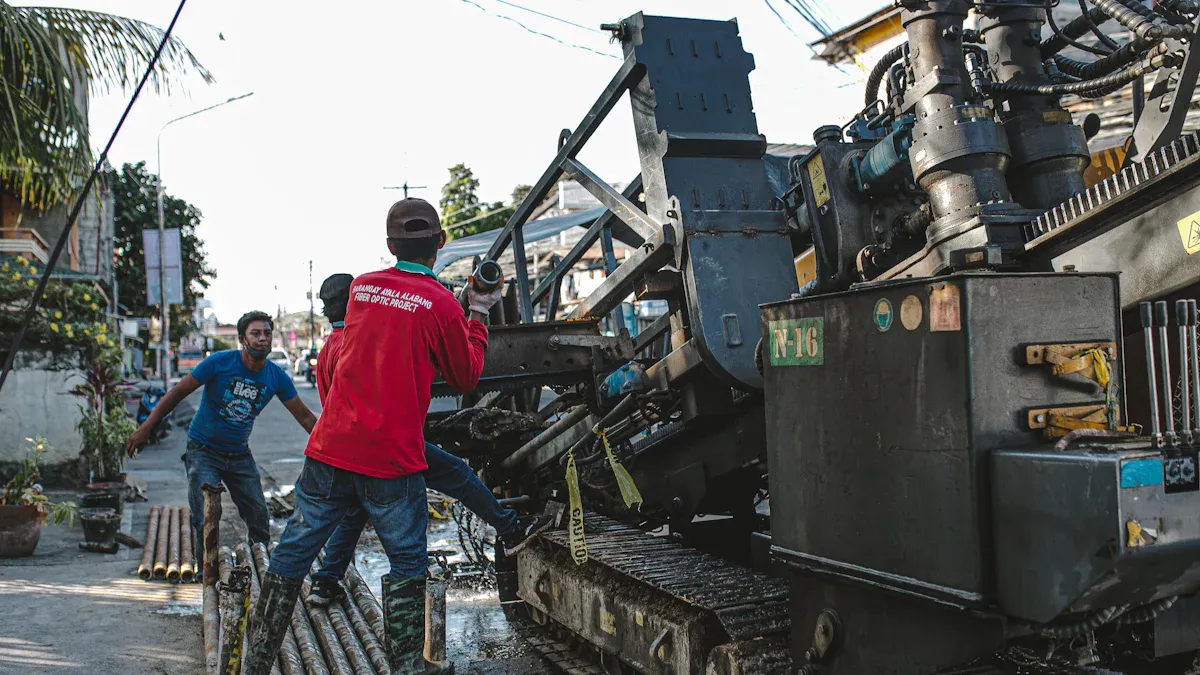
When tackling tough 60m directional bores, you encounter challenges like unstable ground, tight job sites, and strict project timelines. CEGC offers advanced solutions with the Directional Bore Machine 60m Penetration Solves Problems, specifically designed to address these issues. The table below highlights common challenges and how CEGC’s technology helps:
|
Challenge |
Description |
|---|---|
|
Unsupportive ground |
Hard soils make it difficult to maintain bore stability and fluid flow. |
|
Limited layout area |
Compact spaces complicate pipe installation and equipment setup. |
|
Time restrictions |
Urban projects require precise planning to ensure timely pullback. |
With the Directional Bore Machine 60m Penetration Solves Problems from CEGC, you achieve reliable accuracy, dependable performance, and environmentally conscious operations on every project.
Key Takeaways
-
CEGC's Directional Bore Machine solves hard 60m drilling problems. It keeps drilling accurate and stable, even in shaky ground.
-
Advanced tracking and real-time data help you decide fast. This makes drilling faster and helps the project work better.
-
Good fluid management is very important for safe drilling. It keeps boreholes steady and protects nature. It also follows local rules.
Directional Bore Machine 60m Penetration Solves Problems
Precision Guidance and Bore Path Control
You must be accurate when drilling a 60-meter bore. The directional bore machine 60m penetration solves problems by using advanced guidance and stability systems. These machines match the load to control thrust, pullback, and rotation. This helps you keep your bore straight, even in tough spots. Strong frames and careful carriage alignment lower vibration. This stops your bore from going off course or failing to cross.
Neural network guidance and rotary steerable technology make things easier. You do not have to depend only on operator skill. The machine helps you stay on target. You can trust the directional drilling process to give you the same results every time. Planning your bore path is simple and reliable.
Making a pilot hole and making it bigger are important for deep drilling. Jetting and washing are used to expand boreholes. This keeps the borehole stable while drilling. For example, cavity wells can reach big depths and sizes, with an expansion ratio of 32 for a 250 mm pilot borehole. Jetting uses fast-moving fluid to wear away the ground, which is important for stable boreholes in geotechnical jobs.
You start with a pilot hole. You make it bigger with special tools. This keeps your bore safe and steady as you reach 60 meters.
Overcoming Soil and Crossing Challenges
You deal with many soil types when using a directional bore machine 60m penetration solves problems. Each soil brings its own challenge. Here are some common examples:
-
Clay and reactive soils can swell and get sticky. You need special reamer designs for these.
-
Sand and loose soils can move and settle. You must use tools that mix sand with drilling fluid to stop blockages.
-
Shale is tough and rough. You need bits with carbide protection to break and remove it.
The directional drilling machine helps you cross under roads, rivers, and utilities. It gives you power and control for every crossing. You can trust the machine to keep your bore straight, even in mixed or changing ground.
Advanced Tracking and Data Integration
You want to know what happens underground during your project. The directional bore machine 60m penetration solves problems by giving you advanced tracking and real-time data integration. This technology lets you see the bore path as you drill. You can make quick choices and change your plan if needed.
Here is how real-time data helps your results:
|
Metric |
Value |
|---|---|
|
1430 m |
|
|
Average sandstone drilling rate |
86.2% |
|
Average gas layer drilling rate |
70.2% |
|
Increase in gas layer drilling rate |
>10% |
You get better drilling rates and more successful crossings. You can finish your project faster and with fewer problems. The directional drilling machine gives you the information you need to work smarter and safer.
The directional bore machine 60m penetration solves problems for contractors, utilities, and city projects. You get accuracy, power, and data to handle every challenge.
Horizontal Directional Drilling: Reliability and Fluid Management
Anti-Stall Powertrain and Overload Protection
You need a machine that keeps working in tough ground. CEGC’s Trenchless Drilling Rig uses a strong powertrain to stop pipes from getting stuck. The anti-stall system can tell when the drill faces too much resistance. It changes power and speed so the drill keeps moving. This helps you finish your directional drilling jobs on time.
Drilling through hard or mixed ground can cause torque spikes. These spikes can hurt your rods and tools. The overload protection system handles these spikes. It controls pressure and rotation to keep your equipment safe. You do not have to worry about sudden stops or broken parts. This system gives you more control and less stress during every directional drilling project.
Tip: Always check your rig’s load sensors before starting a new bore. This helps you find problems early and avoid expensive repairs.
Tooling Durability and Compatibility
You want your tools to last a long time. CEGC’s horizontal directional drilling machines work with many kinds of reamers and cutters. You can use blade, fluted, rock, or barrel reamers for different soils. This flexibility lets you pick the right tool for each job.
The machine gives smooth torque to lower tool wear. Less vibration means your tools stay sharp and strong. You spend less money on new tools and drill more meters per tool. Service-friendly access makes it easy to change or check your tools. You save time and keep your directional drilling project moving forward.
Here is a quick look at tooling options:
|
Tool Type |
Best For |
Benefit |
|---|---|---|
|
Blade Reamer |
Clay, soft soils |
Fast cutting |
|
Fluted Reamer |
Sand, loose soils |
Good cleaning |
|
Rock Reamer |
Hard, rocky ground |
High durability |
|
Barrel Reamer |
Mixed conditions |
Versatile performance |
Mud Integration and Environmental Safety
Good fluid management is important for safe and clean directional drilling. CEGC’s horizontal directional drilling machines use smart mud systems to keep the borehole stable. The pump matches the right flow and pressure for your project. This helps you avoid stuck pipe and keeps the hole open.
You need to follow a mud program. This means mixing the right fluids, checking them often, and making changes as needed. Clean mud helps you drill faster and protects the ground. The machine works with electric or diesel pumps and can use extra filters or coolers for tough jobs.
Note: Always watch your mud returns. If you see less flow, check for leaks or blockages right away.
You also protect the environment with these systems. Good mud control stops spills and keeps the site clean. You meet local rules and avoid fines. CEGC’s focus on fluid management helps you finish every directional drilling job safely and responsibly.
By using these features, you get reliable performance and protect your team, your tools, and the environment. Horizontal directional drilling becomes safer and more efficient with the right equipment and planning. You can trust CEGC’s trenchless technologies to help you succeed on every 60m project.
You get fast, accurate, and eco-friendly results with CEGC’s directional drilling machines for 60m jobs. Good planning, strong machines, and smart fluid systems help your project succeed.
|
Feature |
Traditional Methods |
|
|---|---|---|
|
Invasiveness |
Not very invasive |
Very invasive |
|
Sustainability |
More green |
Not as green |
Using CEGC’s directional drilling helps you follow market rules and lets you change plans for each project.
FAQ
How do you choose the right tooling for different soils?
You match the reamer or cutter to the soil type. For example, use a rock reamer for hard ground and a fluted reamer for sand.
What makes CEGC’s horizontal directional drilling machine reliable for 60m projects?
You get anti-stall power, overload protection, and strong frames. These features help you finish jobs on time and avoid equipment damage.
How does fluid management help your drilling project?
-
You keep the borehole stable.
-
You prevent stuck pipe.
-
You protect the environment by controlling mud flow and returns.


