
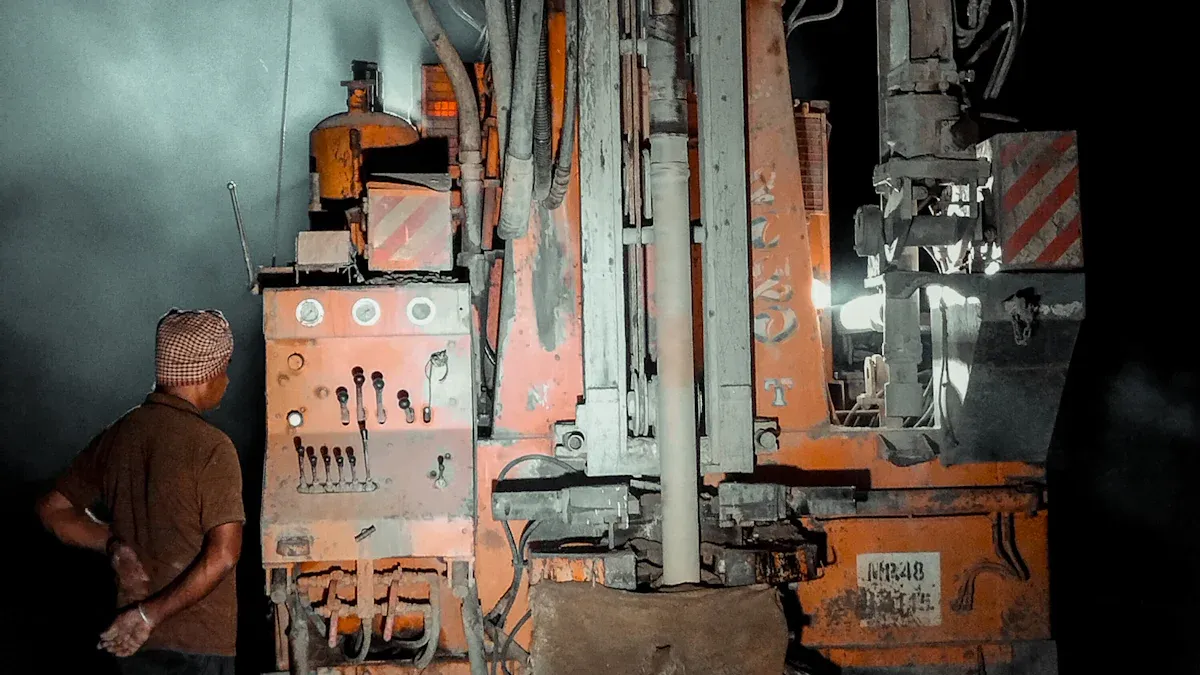
You need live depth tracking for every horizontal directional drilling job. The main tracking tools are walk-over, wireline, and gyroscopic systems.
|
Technology Type |
Market Share (%) |
Description |
|---|---|---|
|
Conventional HDD Systems |
Used for most jobs. They are cheap and reliable for normal ground. |
|
|
Rotary Steerable Systems (RSS) |
38 |
Gives exact control. Works best for tricky ground and better efficiency. |
If you miss the target, you might hit underground utilities. You could also cause frac-out or borehole collapse. CEGC gives you standard specs and custom options for each project. Directional Boring Machine Live Depth Never Misses when you need accuracy.
Key Takeaways
-
Live depth tracking is very important for directional boring. It helps stop expensive mistakes and keeps drilling correct. It makes sure the drilling stays on track the whole time.
-
Pick the best tracking system for your job. Walk-over systems are good for shallow work. Wireline and gyroscopic systems are better for deep or hard jobs.
-
Checking calibration often and having skilled workers helps accuracy. Good setup and training stop mistakes and keep your bore going the right way.
Directional Boring Machine Live Depth Never Misses: Tracking Systems
Walk-Over Locating Technology
Walk-over locating technology is used for many directional boring jobs. A transmitter goes in the drill head. It sends signals to a receiver on the ground. You get live information about how deep and which way the drill head is pointing. This lets you see where the bore is all the time.
Here is how walk-over locating works:
|
Feature |
Description |
|---|---|
|
Transmitter |
Sends location and orientation data from the drill head to the surface. |
|
Real-time Monitoring |
Shows depth and angle instantly, so you can adjust the bore path quickly. |
|
Calibration |
Keeps the signal steady for accurate, live depth display. |
-
The transmitter sends signals to the receiver above ground.
-
You can see depth and direction at any moment.
-
The system uses ultrasonic measurement for different operator heights.
Walk-over locating makes tracking the bore easy. You can fix mistakes fast if the drill head moves off track. For jobs that are not very deep, this method helps keep the bore on target. Directional boring machine live depth never misses when walk-over systems are used for the right job.
Wireline & Gyroscopic Guidance
Wireline guidance is best for deep or tricky directional boring. A wire runs inside the drill rods. It connects the drill head to a receiver and a display. You see the drill head’s position, depth, and angle as you drill. You can steer the bore without digging extra trenches.
-
The wireline system shows depth, angle, and heading.
-
You can change the bore path while drilling.
-
Data goes from the drill head to the surface, even if the receiver is not right above.
Wireline guidance is very accurate, even at deep levels. Errors can be as low as two percent. Magnetic wireline steering tools use surface tracking to check the drill’s position. This makes them the most reliable for long or deep bores. Gyroscopic tools help steer the bore too. They measure angles very precisely, up to plus or minus 0.04 degrees. But they cannot check position from the surface, so you must use them carefully.
|
Technology |
Precision |
Reliability |
|---|---|---|
|
Magnetic Steering |
Highly reliable for directional boring |
|
|
Gyroscopic |
High precision, no external verification |
Less reliable for long bores |
|
Walk-over |
Good for shallow bores |
Limited for deep or large projects |
You should use wireline or gyroscopic guidance for river crossings, railways, or long utility runs. Directional boring machine live depth never misses when you pick the right tracking system for the job.
Real-Time Receivers & Transmitters
Real-time receivers and transmitters are important for every tracking system. They give you instant updates on the drill head’s position and direction. You can see pitch, roll, and heading as you drill. The telemetry system sends this information from underground to your screen above ground.
|
Feature |
Description |
|---|---|
|
Shows you the drill head’s position and angle right away. |
|
|
Enhanced sensors |
Measures pitch, roll, and direction for precise bore control. |
|
Telemetry system |
Moves data from the drill head to the surface, so you always know where the bore is. |
You can make quick choices and fix the bore path before problems start. This keeps your directional boring project going smoothly. CEGC’s directional drilling machine has tracking-ready systems. You get top accuracy for every bore. You can also change the system for your trenchless method or special job.
Directional boring machine live depth never misses because you use the best technology for each job. You get live data, high accuracy, and strong control. This helps you finish every directional boring project with confidence.
Real-Time Data, Accuracy & Error Prevention
Data Capture & Transmission
Live data helps you keep your project safe. Sensors and transmitters in the drill head track where it is and how deep it goes. These tools send information to your receiver above ground. You can watch the drill head move as it happens. This lets you change the path before anything goes wrong. You avoid mistakes and keep the job running well. CEGC’s system gives you trusted data for every project.
Calibration & Operator Skill
You need to calibrate your equipment for best results. Follow these steps to do it right:
|
Description |
|
|---|---|
|
Signal Strength Measurement |
Check the transmitter’s signal at a set distance and write down the number. |
|
Interference Check |
Make sure there are no metal objects or live utilities nearby that could mess up the signal. |
|
Depth Verification |
Use a tape measure to check depth at other spots. Move the drill head if you need to. |
|
Transmitter Change |
Calibrate again if you switch transmitters or change the drill head housing. |
|
Receiver Accuracy |
Calibrate if the receiver shows the wrong depth after checking for interference. |
Skilled operators make the job more accurate. They know how to read the signal and move the tool head. They can find the strongest signal and fix the direction. This skill keeps the bore on target, even for long jobs.
Redundancy & Fail-Safes
You want your project to finish without problems. CEGC rigs have backup systems and anti-stall features. These protect the machine from getting stuck or overloaded. You get tools that stop errors and keep the bore safe. If something goes wrong, the system helps you fix it fast. This makes your work steady and accurate every time.
Overcoming Challenges in Live Depth Tracking
Interference & Obstructions
Tracking live depth can be hard. Signal interference is a big issue. It comes from passive and active sources. Passive interference happens when metal objects block signals. Active interference is caused by things that send out their own signals.
|
Common Sources of Interference |
|
|---|---|
|
Passive |
Metal structures like chain-link fences, pipes, rebar, guard rails, underground steel drains, and utility vaults |
|
Active |
Power lines, fiber optic lines, cellular lines, traffic loops, and diesel generators |
You can fix these problems with the right tools and steps. Premium receivers help you get clear signals in tough places. You should train your staff to use advanced GPS features. A site survey helps you find interference before you start boring. Modern tracking systems let you switch frequencies to avoid signal issues.
|
Solution |
Description |
|---|---|
|
Premium Receivers |
These devices help reduce signal interference in hard environments. |
|
Staff Training |
Makes sure operators know how to use advanced GPS features. |
|
Site Survey |
Finds possible sources of electromagnetic interference. |
|
Frequency Switching |
Helps you find clearer signals and avoid interference. |
Difficult Ground Conditions
You will face tough ground during directional boring. Cobbles, gravel, boulders, and strong bedrock can change how your bore moves. These changes make it hard to keep the bore on target. You may need to change drill bits or adjust your fluid mix. This can affect live depth tracking.
High-rigidity frames keep your machine aligned. This helps you track the bore more accurately. Load-matched control systems manage forces during drilling. They help you keep the bore on the right path. CEGC lets you customize your rig for any ground. You can pick the best features for your project. Good mud management keeps the bore stable and helps you avoid problems.
Tip: Always check the ground before you start. Pick the right tools and settings for your directional boring job. This will help you finish your bore safely and on time.
You can see how deep the drill is right away with CEGC machines. Real-time tracking helps you keep the bore on the right path. You get updates all the time, so you can fix mistakes fast. Good jobsite setup and checking pitch and roll help you finish the bore exactly. Pick CEGC for your next project.
FAQ
How do you perform verification during a horizontal directional drilling project?
You use sensors and receivers to check where the drill head is. Verification helps you make sure the bore path is correct. This stops expensive mistakes from happening.
Why is bore path verification important for your project?
Bore path verification keeps your drilling on the right track. It lowers the chance of hitting underground utilities. It also makes your project safer and more likely to succeed.
What tools help with verification in a directional drilling machine?
You use real-time receivers, transmitters, and data logging systems. These tools give you quick updates for verification. You can change the drill path fast if needed.
Tip: Always finish verification steps before and after each stage of drilling.


