
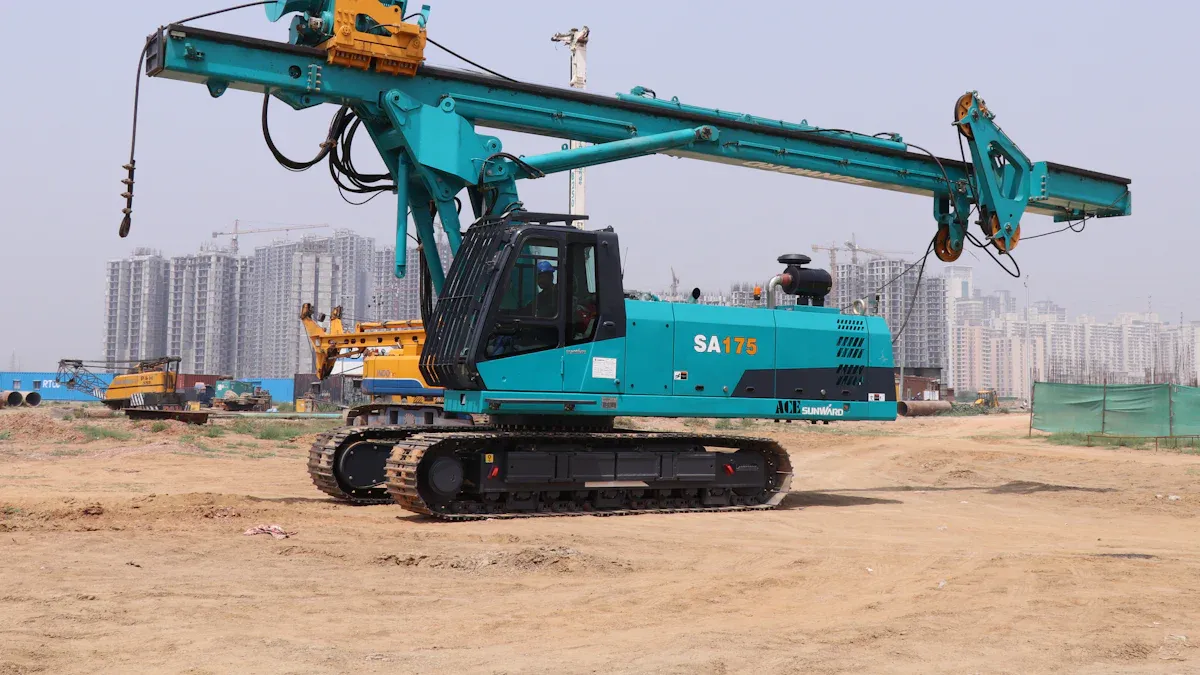
Pressure loss can lead to significant issues, including hole collapse, stuck pipes, and costly frac-outs, all of which can result in substantial financial losses. Maintaining steady pressure is crucial for safe and efficient drilling operations, effectively preventing lost circulation. This blog offers valuable tips to address and prevent pressure loss for your directional drill machine. By ensuring consistent pressure, you can avoid losses and prevent lost circulation. CEGC provides solutions for a Directional Drill Machine Constant Pressure Stops Loss.
Key Takeaways
-
Pressure loss in drilling causes big problems like stuck pipes and lost fluid. This costs a lot of money.
-
Good drilling fluid, proper rock bit removal, and strong tools help keep pressure steady. This stops fluid loss.
-
New technologies and regular checks on your equipment are important. They help keep pressure stable and prevent costly issues.
Understanding Pressure Loss in Directional Drilling
You need to know why pressure drops. This happens in horizontal drilling. Many things make pressure unsteady. These problems can cause you to lose money.
Drilling Fluid Properties and Pressure Stability
Your drilling fluid is key. It helps keep pressure steady. The fluid's thickness makes pressure. This pressure pushes back. It fights ground pressure. Good thickness is 8.5 to 12.5 pounds per gallon. Sometimes, you need it thicker. Up to 14 pounds per gallon. This is for hard ground. It is also for high ground pressure.
The fluid's thickness shows how it flows. It needs to be thick enough. It must carry rock bits. But it must be thin enough. This stops too much pressure. Thickness is usually 35 to over 100 seconds per quart. Good drilling fluid stops fluid loss. It keeps pressure steady underground.
Cuttings Suspension and Transport Issues
Rock bits not floating well cause trouble. They can pile up. This makes the space smaller. This is for your drilling fluid. Your pump works harder. Pressure goes up. This can cause sudden pressure jumps. Big trash can block the system. This is for a short time.
Many rock bits can raise hole pressure. This higher pressure can be too much. It can break the ground. This makes paths for fluid to escape. This causes fluid loss. It also causes lost circulation. Many solid bits make the fluid thicker. This changes how fluid flows. It changes pressure during drilling.
Flow Rate Management and Downhole Pressure
How fast your fluid flows matters a lot. It affects underground pressure. Not enough flow means bad pressure control. It also means rock bits are not removed. This makes rock bits pile up. But pumping too much makes messy flow. This can wash out the hole. It can also cause mud loss. This leads to sinkholes.
You should keep the flow smooth. A good rule is ten times the bit size. This is for best work. Not enough fluid flow causes higher pressure. This is true when fluid volume is wrong. It is wrong for the hole size. This can cause frac-outs. It also causes lost circulation.
Consider these pressure examples:
|
Calculation Type |
Parameters |
Result (KPa) |
|---|---|---|
|
Hydrostatic Head (Static) |
Water, 3m depth |
29.4 |
|
Hydrostatic Head (Static) |
Water, 10m depth |
98.1 |
|
Hydrostatic Head (Static) |
Slurry (SG 1.2), 3m depth |
35.3 |
|
Hydrostatic Head (Static) |
Slurry (SG 1.2), 10m depth |
117.7 |
|
Circulating Pressure (Dynamic) |
Slurry (SG 2.0), 3m depth |
59 |
Sudden flow changes cause pressure spikes. These happen when you start a pump. They also happen when you stop it. They occur during connection time. They also happen when pulling out. If you double the flow, pressure loss quadruples. Pressure is linked to flow rate squared. This can cause lost circulation.
Tooling Selection and Wear
Your tools and their state are key. Worn tools cause more rubbing. Wrong tools also do this. This raises pressure during drilling. This can make drilling less good. It can also cause fluid loss. Check tools often. Pick the right ones. This helps keep pressure steady. It stops fluid loss.
Formation Instability and Geologic Challenges
Some ground makes pressure control hard. Shale ground can be shaky. It can fall apart. This is true when the hole is at 45 degrees. Broken rock or loose dirt cause fluid loss. Leaks in broken ground cause total fluid loss. This creates big problems. It causes fluid loss. High-flow areas and loose sand also cause fluid loss. These issues make pressure loss more likely.
You can stop pressure loss. This helps avoid costly problems. Use these tips. They help keep pressure steady. They stop lost circulation.
Optimizing Drilling Fluid Rheology
Your drilling fluid is very important. It helps control pressure. It stops fluid from escaping. Make the fluid just right. Check its thickness and flow. This lowers pressure from the fluid. It helps stop lost circulation.
For straight holes (0°-30° angle), use a thin fluid. This moves rock bits well. It does not make too much pressure. Aim for a medium thickness (12-18 lb/100ft²). Keep the fluid thin as possible. Control solid bits. Keep the thickness ratio (YP/PV) between 0.5 and 1.0. Also, use weak, flat gel strengths. This lowers pressure changes. Use special liquids to thin it. Control solid bits a lot.
When drilling angled holes (30°-90° angle), make the fluid thicker. This helps carry rock bits. It stops them from settling. Look for a 6 RPM Dial Reading of 8-12+. Aim for a high thickness (20-30+ lb/100ft²). The thickness ratio (YP/PV) should be over 1.5. Gel strengths should grow slowly. They must be easy to control. Use thickeners like Xanthan Gum.
For hot, high-pressure wells, the fluid must stay stable. It needs to act the same. This is true even in extreme heat. Keep thickness steady at the bottom of the hole. Stop it from getting too thick. Use special fluids. These are good for heat. Control fluid loss well.
In soft, reactive rock, focus on stopping swelling. Do not use very thick fluid. This stops the rock from swelling. It stops bits from sticking. Aim for weaker, firmer gels. Keep the fluid thin. Use special fluid systems. These stop swelling. Limit thickeners.
You must also follow mud rules. Set clear mixing goals. Check your drilling fluid often. Make changes as needed. Use computer programs. They predict pressure and rock bit movement. Test fluid flow often. Add thickeners or thinners. Do this based on real-time facts. Watch how fluid flow changes. See how it affects drilling. This helps control hole pressure.
Advanced Cuttings Management
Removing rock bits well is key. It keeps pressure steady. Double-deck shakers separate better. They handle big bits first. Then they handle smaller bits. This helps process more fluid. API 13C screens work the same. They give exact measurements. This helps compare and choose.
Shaker screens are the first step. They remove big solids. These are usually over 74 microns. After the shaker, fluid goes through cleaners. These are hydrocyclones and centrifuges. They clean it more. Set up hydrocyclones well. Use the right cone angles. Keep pressure at least 30 psi. These can clean bits as small as 25 microns.
Good solids control is important. This includes removing small bits. Small bits can thicken the mud. They change how it flows. Removing bits keeps mud right. It keeps its thickness and chemicals. This helps drilling. It makes the hole stable. Removing drilled solids fast stops them from returning. If they return, mud gets thicker. This makes pressure unsteady. Keeping mud stable helps keep pressure steady. It stops lost circulation.
Precision Flow Rate Control
Controlling fluid flow precisely is key. It stops pressure changes. Automated drilling systems use computers. They learn and adjust. They change the choke. They account for pressure changes. This device connects to your rig. It uses rig data. This includes flow rates and pressures. You tell it the pressure you want. It adjusts the choke. It uses smart programs. This adjusts for pipe movement. It adjusts for flow changes. The computer learns. It predicts future pressure changes. This keeps pressure steady during drilling.
RAPTR™ tech watches pressure live. Three sensors give exact readings. They react fast to changes. If pressure gets too high, it opens. It releases standpipe pressure fast. It always reads pressure. This helps it work better. It reacts in seconds. If pressure spikes, RAPTR™ opens. It sends fluid back. This lowers pressure. The release is controlled. When pressure drops enough, it closes. Pressure builds back slowly. Full flow returns. The valves have a special part. It helps release pressure slowly. This makes pressure equal faster. It shortens connection times. This controlled way avoids releasing fluid outside. It keeps people safe. It saves time. It stops system restarts.
RAPTR™ lets you drill harder. It does not cause more failures. It increases the pressure range. This means faster drilling. It means more pressure difference. It means higher flow rates. It means more motor power. The system drills faster. It does not lose control. It helps keep pace. Drilling at higher pressures is safe. It allows more fluid flow. It cleans the hole better. It adds pressure difference. It makes the motor work better. You can push harder. You can drill faster. This is by fine-tuning pressure. These levels were once too high. The result is better drilling plans. It means fewer drilling days. It means faster completion. Halliburton's LOGIX™ system uses live sensor data. It uses smart fluid models. This predicts hole fluid flow. This system keeps the hole strong. It manages hole pressure. It controls formation pressure better. It manages fluid entry. It gives insights into hole stability. This makes drilling faster. It makes tripping faster. It improves hole strength.
Durable Tooling and Wear Checks
Your tools and their state matter. They affect pressure stability. Worn tools cause more rubbing. This raises pressure during drilling. This can cause fluid loss. Choose the right tools. These are blade, fluted, rock, or barrel reamers. Check them often for wear. CEGC's tool package helps. It gives smoother power. It reduces shaking. It reduces uneven wear. This helps keep pressure steady.
Check equipment daily. Look for leaks. Check all parts for drips. Especially hydraulic lines. Check oil and fluid levels. Make sure they are right. Look for wear and tear. Check drill bits, hoses, and cables. Fix problems fast.
Do daily checks before starting. Look for damage. Look for too much wear. Look for fluid leaks. Check that parts are tight. Check safety devices. Check the air system. Check air pressure. Check hose connections for leaks. Clean filters. Make sure oil levels are good. Check automatic oilers.
Do weekly maintenance. Check worn parts closely. Measure key sizes. Replace parts as needed. Check the hammer part. Check piston wear. Check bushing condition. Check valve action. Use special tools. Service the oil system. Change oil filters. Fill oil tanks. Set up automatic oilers. Check drill steel. Turn it for even wear.
Schedule monthly maintenance. Take it apart a little. Check inside parts closely. Measure parts with exact tools. This shows wear trends. It predicts when to replace parts. Replace seals and gaskets. Replace small inside parts.
You can also use smart maintenance. Vibration systems find problems. These are in moving parts. Temperature monitors find oil problems. They find too much rubbing. They find cooling issues. Oil analysis programs check oil. They check for dirt. They check for wear. They check for chemical changes. This shows inside part condition. It shows wear patterns. It shows dirt sources. Good drilling needs exact settings. These are for hammer speed. They are for impact power. They are for rotation speed. They are for feed pressure. Consider drilling conditions. Consider material types. Consider bit design.
Hydraulic System Maintenance for Pressure Integrity
Checking and fixing your hydraulic system is key. It keeps pressure strong. Filters are very important. They remove tiny bits. These bits can harm pumps and valves. Dirt causes most hydraulic failures. A good filter plan is top priority. Watch filter indicators. Change them on time.
Hoses carry high-pressure fluid. Check them often for rubs. Check for kinks. Check for leaks at connections. This stops injuries. It stops machine shutdowns. Fittings make leak-proof connections. They must hold high pressure. Valves control fluid flow. They control pressure. They stop the system from going too high. They protect parts from breaking. Pumps turn power into fluid force. They must work right. Cylinders turn fluid pressure into straight force. Their seals must work well. This keeps pressure. It stops leaks.
Pressure drops can happen. This stops the system from working fully. It can be from inside leaks. It can be from bad relief valves. Worn seals and O-rings are key. They keep pressure in. They make tight barriers. If seals are bad, fluid leaks. This causes big pressure drops. Clogged filters slow fluid flow. This causes pressure drops. It reduces force. This makes it slower. It causes more wear. A bad relief valve can open too soon. It can be set wrong. It can be worn out. This releases fluid. This causes pressure loss. It makes it work unevenly.
You should check and change hydraulic fluid often. Look for leaks. Make sure hoses and connectors are good. Look at the machine daily. Check fluid levels. Look for leaks or damage. Do a deeper check weekly. Check hoses and connectors. Make small fixes. Monthly, change hydraulic filters. Clean the hydraulic system. Oil moving parts.
Utilizing Lost Circulation Materials (LCMs)
Lost Circulation Materials (LCMs) are vital. They fix lost circulation. They seal porous rock. They stop fluid loss. Choose the right LCM. Choose the right size. This depends on how bad the loss is.
For small to mild losses, use fine LCMs. These are like calcium carbonate or graphite. For medium to bad losses, use coarser mixes. These include mica, gilsonite, cedar fiber, or ground nutshells. For total loss, pump a lot of bridging materials. Then use cement plugs or resin.
Fibrous materials are like threads. They are wood, mineral, or glass fibers. They weave together. They form a mat. They work well for small to medium cracks. Granular materials are like small bits. They are ground nut shells, mica, or calcium carbonate. They get stuck in pores and cracks. They often work well with fibrous materials. Flaky materials are like mica flakes. They fit different crack shapes. They are good for wide cracks. Chemical LCMs are like polymers. They react to form a solid plug. They create a chemical bond. These are more lasting fixes. They are for specific rock types.
Mixes of fibrous, flaky, and granular LCMs often work well. The size of the particles matters. Special mixes work. These are like graphite with calcium carbonate. Or crystalline graphite with calcium carbonate. They stop lost circulation. Graphite enters small cracks first. It makes an initial seal. Calcium carbonate forms a bridge. This is at the crack opening.
React fast when fluid is lost. Every rig needs LCMs. Have fine, medium, and coarse types. Have cement kits. Have mixing systems. Keep thick fluid ready. This is like bentonite mud or xanthan gum. Use diverter tools. These change fluid paths. Have fluid regain kits. These watch fluid loss and gain. A good tool kit helps. It finds and measures lost circulation zones.
Before drilling into known problem areas, use LCMs. These are like graphite, gilsonite, or calcium carbonate. Use special methods. These strengthen weak rock. Consider using sealing pills. Especially in risky rock. These steps are key. They stop lost circulation.
CEGC's Anti-Stall Powertrain and Overload Protection
CEGC's drilling machine has special features. It has Anti-Stall Powertrain. It has Overload Protection. This system gives strong power. It works at many speeds. It senses hydraulic load. It manages pressure. It starts and stops slowly. This reduces shock. It protects rods, swivels, and tools. This stops stuck pipes. It stops sudden torque. It stops downtime. These can cause pressure loss. CEGC's "rock packages" are optional. They work better in hard ground. This ensures steady drilling. It reduces circulation problems.
Integrated Mud Management Solutions
CEGC offers full mud management. This includes pump size help. It considers flow and pressure. It considers length, diameter, and rock. It also checks circulation path and filters. You can get custom pump packages. Check and tighten connections every shift. Grease high-friction spots.
Integrated mud solutions include many drilling fluids. These are water-based, non-water, and synthetic. They are made for tough problems. These include small pressure ranges. They include high temperatures. Nanoparticle tech improves hole stability. It reduces fluid loss. Digital smarts, like BaraLogix®, watch things live. They automate tasks. This keeps fluid properties right. It ensures predictable results.
Loss prevention and treatment use many materials. These range from simple paper to special blends. They bridge and seal problem areas. These additives include filter control agents. They include shale inhibitors. They include lubricants and thickeners. They help keep the hole stable. They prevent fluid loss. They reduce wasted time. Solutions are made for loss types. These are seepage, partial, severe, or total. They are also made for the cause of loss. They use fibers, fine granules, and larger granules. These seal well.
Special starch reduces fluid loss. It makes the cake thinner. This additive is cheap. It improves filtering. It improves thickness. It makes drilling better. It makes hole pressure stable. It uses fewer expensive chemicals. Biopolymers like starch are good choices. They are natural. Native starches, like potato starch, control filtering well. This is in water-based drilling fluids. They lose little fluid. This is true even at high heat. Potato starch has a lot of amylopectin. This makes it gel better. It improves its structure. It helps it mix with bentonite. This leads to better filtering. It leads to better heat resistance. Natural materials, especially plant sugars, are key. They change fluid flow. They control fluid loss. This is in water-based drilling fluids. These materials are safe. They break down naturally. They can be renewed. They make drilling fluids better. They help with sustainable drilling.
Watching drilling fluid live helps. Systems like AFM find problems early. They find things like barite sag. This fast finding, often in minutes, allows quick fixes. Treating the fluid early restores its density. It restores its flow. This avoids long circulation. Drilling can continue without stopping. This proactive method prevents pressure loss. It keeps fluid properties right. It keeps the hole stable. The AFM system finds barite sag fast. It streams live fluid weight data. It updates flow data often. Live data goes to workers. It goes to fluid experts. It goes to support staff. This helps with analysis and fixes. Early fluid treatment avoids long circulation. It lets drilling continue. It prevents pressure loss. It gives automated advice. This is for optimal tripping speeds. It is for proper pressure control. It is for reducing torque and drag.
You learned many ways. They stop pressure loss. This makes sure your drill machine keeps steady pressure. This stops you from losing money. It is very important to manage fluids. It is important to manage cuttings. It is important to manage tools. New solutions are key. These include LCMs. They include CEGC's special features. Watching things all the time helps you succeed. It helps you make money. Change your ways for future success. This makes sure your drill machine keeps steady pressure. This stops you from losing money. Your hard work makes sure your drill machine keeps steady pressure. This stops you from losing money.
FAQ
What causes pressure loss in directional drilling?
Many things make pressure drop. Bad fluid and poor cuttings removal are common. Worn tools also cause it. These problems lead to lost circulation.
How do drilling fluid properties affect pressure stability?
Your drilling fluid's thickness controls pressure. Its flow also controls pressure. Good fluid stops fluid from escaping. This helps avoid lost circulation.
Why is constant pressure important for your drill machine?
Steady pressure keeps your bore stable. It stops pipes from getting stuck. It makes drilling work well. This stops lost circulation. It saves you money.


