
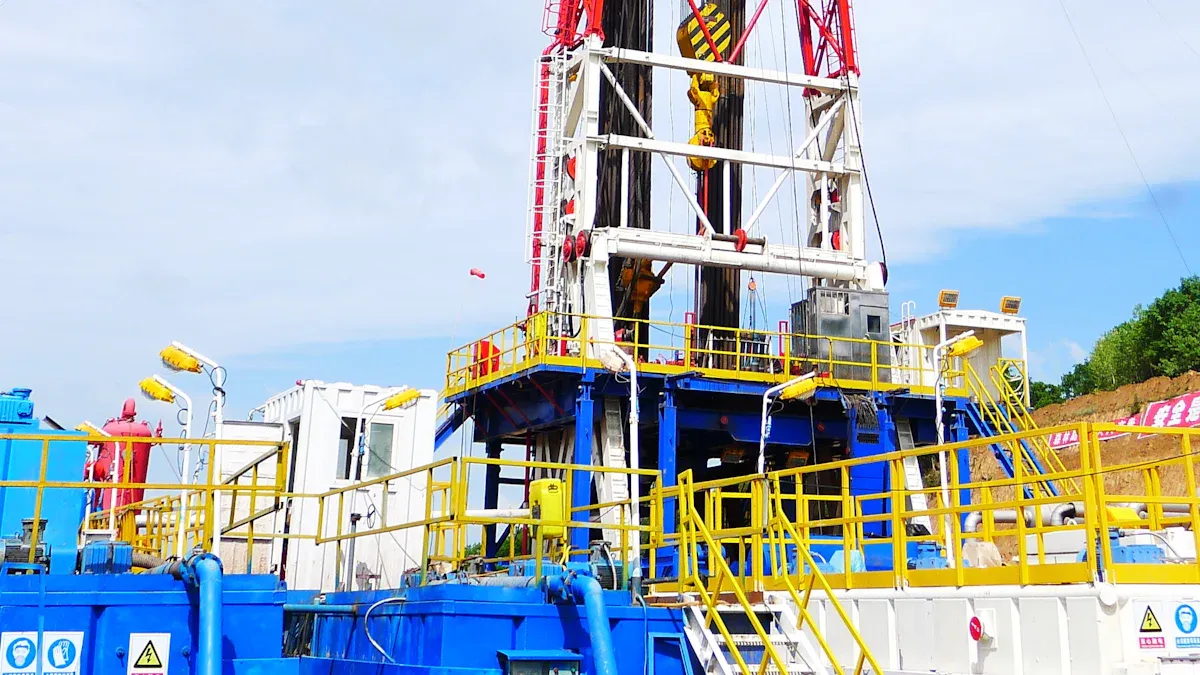
Drilling hard rock is tough. Regular drills often have problems. The 50000Nm torque drill rig is a strong answer. It works well and is powerful. This blog shows how CEGC uses new ways. They drill better. A Drill Rig 50000Nm Torque Beats Hard Formation.
Key Takeaways
-
A 50000Nm torque drill rig uses strong twisting force. It breaks hard rock easily. This makes drilling faster and smoother.
-
Down-The-Hole (DTH) drilling puts the hammer at the drill bit. This sends power directly to the rock. It makes drilling very efficient.
-
Modern drill rigs use smart systems. These systems keep the drill on track. They also prevent the drill from getting stuck.
The Power of 50000Nm Torque: Penetrating Hard Rock
Drilling through very hard rock needs a lot of power. A 50000Nm torque drill rig provides this power. It uses strong forces to break through tough ground. This section explains how this power works. It shows how these rigs drill faster and more smoothly.
High Torque Mechanics and Rotary Drilling Efficiency
High torque is a strong twisting force. This force is key to breaking hard rock. When a drill bit twists with great power, it cuts into the rock more effectively. Think of it like twisting a very stubborn lid off a jar. The more torque you apply, the easier the lid comes off. In drilling, this means the drill bit can fracture and remove rock chips more quickly.
Research shows that more torque leads to faster drilling. When the drill spins at a steady speed, increasing the torque helps the drill bit cut more rock. This needs more energy. Both the pushing force and the twisting force on the drill bit go up. This confirms that more torque helps drill faster in uniform rock. A formula from lab tests shows this clearly: penetration per revolution (δ) is directly linked to the applied torque (T). It is also linked to the rock's strength (SA) and the pushing force (Fv). The formula is δ = 2πT / (SA – Fv). This means more torque directly helps the drill go deeper.
Many parts work together to deliver this high torque.
-
Kelly Bar: This part connects to the drill rig. It sends twisting force and downward push to the drill bit. Its top connects to the rig's rotary drive. This makes sure the twisting power goes where it needs to.
-
Friction Kelly bars work well for smoother drilling at medium depths. They transfer torque by contact.
-
Interlocking Kelly bars use mechanical locks. They offer stronger torque. They are good for deep or hard rock drilling.
-
-
Top Drive System: This system spins the drill string continuously. It applies torque to the drill bit. It replaces older systems.
-
Motors inside the top drive spin the drill string.
-
A gearbox changes the motor's energy. It matches the drilling needs.
-
A torque track helps tighten drill string connections.
-
A traveling block moves the drill string up and down. It also sends torque to the drill pipe.
-
-
Other parts like the rotary table (in older rigs), the drill string, and the bottom-hole assembly also help send torque to the drill bit.
Down-The-Hole (DTH) Drilling for Maximum Impact
Down-The-Hole (DTH) drilling is a very effective method. It puts the hammer right at the drill bit. This is different from other methods where the hammer is at the surface. Because the hammer is at the bottom, energy loss is very small. The power goes straight to the rock. This makes DTH drilling very efficient, no matter how deep the hole is.
Inside the DTH hammer, a piston moves. Compressed air powers this piston. The piston hits the drill bit directly. This direct hit sends maximum power to the rock. The energy does not have to travel through long drill pipes. This means almost no energy is lost. The piston strikes the bit's impact surface. This direct transfer happens down in the hole. It ensures minimal energy loss.
This method greatly increases drilling speed. DTH drilling can boost the Rate of Penetration (ROP) by 10–25%. In hard ground, DTH drilling can achieve about 1.5 meters per hour. This is more than twice as fast as rotary systems. Rotary systems often drill less than half that rate. This shows how effective DTH drilling is for hard rock.
Anti-Stall Powertrain: Preventing Stuck Pipe and Downtime
Getting a drill pipe stuck is a big problem. It costs a lot of money and time. Torque spikes can also damage drill parts. Hard or mixed ground makes consistent drilling difficult. The anti-stall powertrain on a 50000Nm torque drill rig solves these problems. This system prevents the drill from getting stuck. It also protects the equipment from sudden power surges.
This powertrain gives high torque output. It also has a wide range of speeds (RPM). It controls how the power starts and stops. This smooth ramp-up and ramp-down reduces shock loads. This protects the drill rods, swivels, and other tools.
The design features of this system help a lot.
-
Engine Idle Speed Management: This feature makes sure the engine uses power wisely. It helps the drill work across many speeds.
-
Multiple rotor speeds: These speeds allow the engine to work at its best. This also helps with a wide range of RPMs.
-
Automatic Load Control: This system watches how much power the engine needs. It changes the drilling speed to stop the drill from stalling. This keeps production high and smooth.
These features ensure that the Drill Rig 50000Nm Torque Beats Hard Formation challenges. It provides consistent power and protection. This means less downtime and more efficient drilling.
Precision and Stability: How 50000Nm Torque Beats Hard Formation Challenges
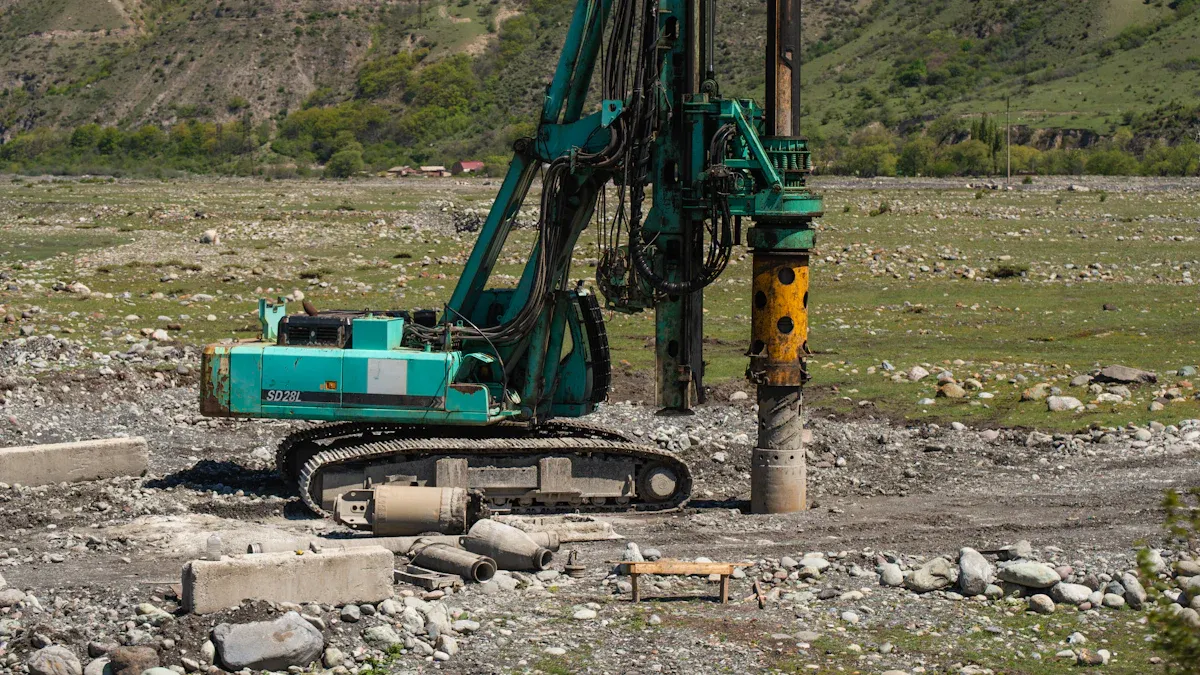
Drilling through hard rock with immense power is one thing. Doing it accurately and without breaking equipment is another. This section shows how a 50000Nm torque drill rig stays precise and strong. It explains how these rigs keep their integrity even when facing huge twisting forces.
Precision Guidance Systems for Bore Accuracy
Drilling a straight hole in hard rock is a big challenge. The drill bit can wander off course. This is called bore deviation. Many things can cause this. The type of rock matters. For example, layered rocks with soft and hard parts can make the drill turn. Fissured rocks, which have cracks, can also make the drill follow the cracks. Worn drill strings or incorrect drill bit designs can also lead to problems. Even how fast the drill moves can affect its path.
💡 Tip: Bore deviation can happen more often when the force from the hammer, feed, and rotation changes a lot. This shows how much the rock itself affects the drill's path.
When a drill goes off course, it causes many problems. Projects can take longer and cost more money. For example, longer and deeper holes need more drilling fluid and more passes to widen the hole. This increases costs. If the drill bit is the wrong size, it can damage the drill string or other equipment. This creates safety risks.
To avoid these issues, modern rigs use smart guidance systems. These systems help the drill stay on target.
-
Steering tools have sensors that tell the driller about the drill's angle and how it is rolling. This helps guide the drill.
-
Downhole survey tools use sensors to figure out the exact position of the borehole. They can use magnetic or gyroscopic sensors.
-
Tracking systems use signals to give more exact location points. Some systems, like walk-over locating systems, use a beacon in the drill bit. This beacon sends a radio signal to a handheld receiver on the surface. This gives real-time data on the drill's position and depth.
-
Wire-line guidance systems send information directly from the drill bit through a wire in the drill rods. This means no one needs to walk over the ground to track the drill.
-
Advanced systems, like the H&P Bit Guidance System, can even automate parts of the drilling process. They help guide the drill bit and make decisions in real-time.
These precision guidance systems, combined with load-matched control and a very stiff frame, directly solve the problem of "Bore Deviation & Crossing Failure." They ensure the drill stays on its planned path.
Rig Stability and Heavy-Duty Components for Torque Transfer
A drill rig needs to be very stable. This is especially true when it uses 50000Nm of torque. This huge twisting force can make the rig move or shake. The rig must transfer this power to the drill bit without losing control.
The design of the rig's frame is very important. High-strength steel parts are key. They help transfer the torque and keep the rig strong.
-
A hexagonal Kelly bar helps transfer torque well.
-
The spindle has an octagonal shape. This also helps increase torque.
-
A large diameter vertical shaft and a long support span make the rig very stiff. This helps transfer torque effectively.
Robust anchoring systems also prevent the rig from moving. They keep it stable when extreme torque is applied.
-
Setting Mechanism: Parts called slips expand. They grip the casing wall tightly.
-
Preventing Rotation: The anchor creates a fixed point. The slips stop the anchor and tubing from spinning when torque is applied.
-
Load Distribution: The anchor manages forces that push or pull. It keeps the tubing tight or compressed. This makes the rig more stable.
These anchoring systems provide enhanced stability. They prevent the tubing from rotating. This happens even with very strong twisting forces. They also reduce downtime by stopping tubing from coming loose. This helps the rig work better and last longer.
The drill pipes themselves must be very strong. They need to handle extreme torque and rotational forces.
|
Description/Benefit for Extreme Conditions |
|
|---|---|
|
High-Strength Steel |
Strong and durable, handles heavy loads and wear. |
|
Alloy Steels |
Better resistance to cracking in harsh conditions. |
|
API Grade G-105 |
Very tough and rugged, good for deep or high-pressure drilling. |
|
API Grade S-135 |
Designed for very deep wells, shows high strength. |
|
Friction Welding |
Makes strong connections between parts, handles huge stress. |
|
Strength-to-Weight Ratio |
Important for managing spinning forces. |
|
Fatigue Performance |
Helps pipes last through constant spinning and stress. |
|
Corrosion Resistance |
Keeps pipes strong in tough drilling environments. |
These heavy-duty components and strong anchoring systems ensure that the Drill Rig 50000Nm Torque Beats Hard Formation challenges. They maintain the rig's integrity and allow for powerful, controlled drilling.
Tooling Compatibility and Durability for Reduced Wear
Drilling in hard rock can quickly wear out tools. This leads to high costs for new parts. It also means more time spent changing tools. A 50000Nm torque drill rig addresses this with smart tooling and durability features.
The rig uses standardized interfaces. This means many different types of tools can fit the rig. This includes various reamers like blade, fluted, rock, or barrel reamers.
-
Standardized tool lists help. They make sure the same tools are used for all jobs. This comes from testing.
-
This system turns test results into clear tool models. These models include details like size and how long the tool should last.
-
It records how long tools should last and how to use them. This helps keep drilling consistent.
-
All tasks related to tools use this list. This reduces mistakes and makes sure data is uniform.
Standardizing parts, like hole sizes or corner shapes, allows for using the same tools and fixtures again and again. This lowers costs. Designing parts with the cutting tool in mind also helps. For example, matching inside corner sizes to standard milling tools makes the machine run faster. It needs fewer passes and uses standard tools. This makes drilling more predictable and cheaper.
The rig also delivers torque more smoothly. This reduces chatter and uneven wear on tools. Easy access for maintenance also helps. It makes tool changes faster. These features help reduce "High Consumables Cost & Tool Wear." They ensure the rig's tools last longer and work better.
Making Things Work Better: Bits, Fluids, and CEGC's Solutions
Drilling hard rock needs more than just power. It needs the right tools. It also needs good plans. This part looks at important things. They help drill rigs work well. This is for tough ground. It talks about special drill bits. It covers how to handle drilling fluids. It also shows CEGC's answers. These are for hard rock jobs.
Better Drill Bits for Rough Ground
Picking the right drill bit is very important. This is for hard rock. Polycrystalline Diamond Compact (PDC) bits are great. They have fake diamond cutters. These are on a strong base. This base is tungsten carbide. This makes them very tough. PDC bits drill fast. They can drill 50% faster. This is compared to older bits. They also last longer. Sometimes 20 times more. PDC bits work well in hard rock. They keep cutting. This is true even when hot. This makes them good for some drilling.
|
Feature |
PDC Bits |
Tricone Bits |
|---|---|---|
|
Cutters |
Diamond-impregnated |
Tungsten carbide |
|
Efficiency |
Usually better |
Not as good as PDC |
|
Hard/Abrasive Rock |
Very good |
Not as good |
PDC bits drill faster. They last longer. They also shake less. They get stuck less.
Good Fluid Control for Stable Holes
Drilling fluid, or "mud," is very important. It makes the drill head smooth. It also takes rock pieces out. This is from the hole. The fluid helps hold the hole sides. This stops them from falling in. Good mud stops problems. One problem is frac-out. This is when fluid leaks out. Checking pressures helps stop frac-outs. This is in some drilling. Experts can change mud. This is for different ground.
Pump size and flow path are key. This is for fluid control.
-
Pipe Diameter: A bigger pipe makes fluid slower. It lowers rubbing. The pump works less.
-
Pipe Length: Longer pipes cause more rubbing. This needs a stronger pump. This keeps fluid moving.
CEGC's Drilling Machines for Hard Rock Jobs
CEGC has strong Horizontal Directional Drilling Rigs. These machines are for hard rock. They meet market standards. CEGC also customizes them. This means rigs can be set up. This is for specific hard rock jobs. These CEGC machines mix high torque. They have good fluid control. They also use strong bits. This makes drilling good. It works well in tough ground.
CEGC's drill rigs are great. They have 50000Nm of power. They work well in hard rock. They use strong twisting force. They drill from the top down. They also stop getting stuck. They drill very straight. Good plans for drill bits help. So do drilling fluids. This makes drilling fast. It is also exact. It saves money. This shows these drills beat hard rock. New drilling tech will keep getting better. It will show how these drills win.
FAQ
How does 50000Nm torque help drill hard rock?
This high torque provides strong twisting force. It fractures hard rock more effectively. This leads to faster and more efficient drilling.
What is DTH drilling and why is it good for hard rock?
💡 Tip: DTH (Down-The-Hole) drilling places the hammer at the drill bit. This minimizes energy loss. It delivers maximum impact directly to the rock.
How do CEGC's rigs prevent bore deviation?
CEGC rigs use precision guidance systems. These systems include sensors and tracking. They ensure the drill stays on its planned path.


