
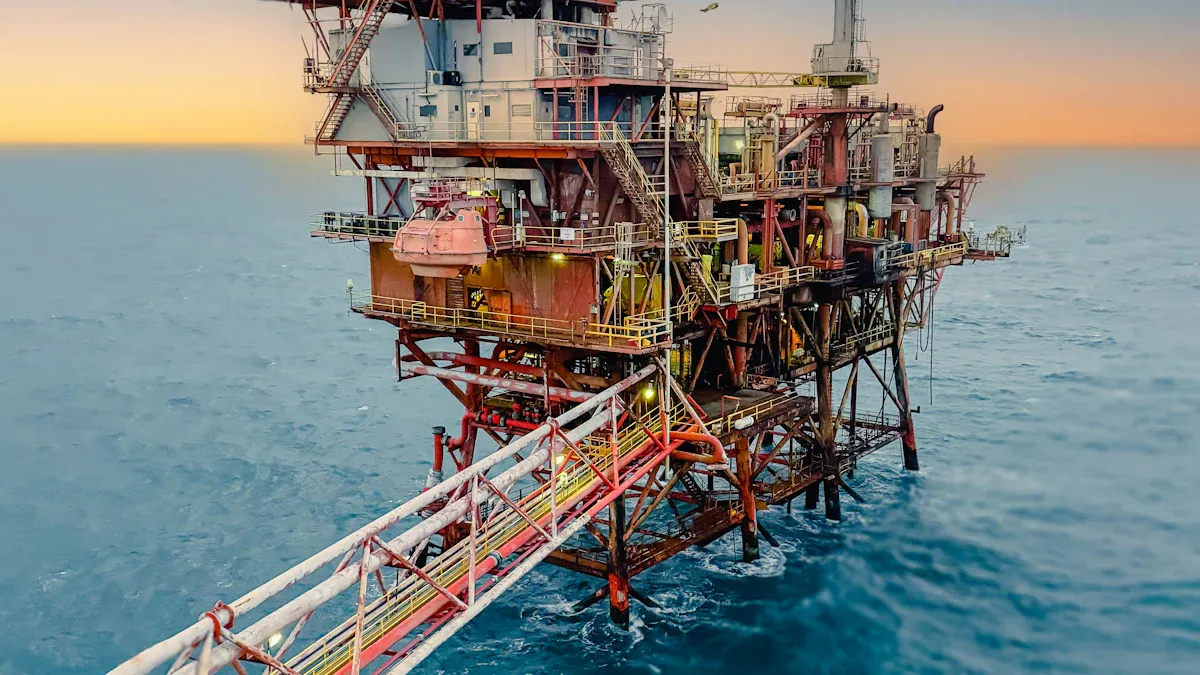
Drill Rig Live Tracking beats Depth Estimation when you need precise results in horizontal directional drilling. You face numerous challenges, such as locating utilities, managing drilling fluids, navigating tough soil, preventing equipment failures, and adhering to regulations. CEGC provides market-standard specs along with customizable options tailored to your project needs. This ensures a steady workflow and delivers excellent results.
Key Takeaways
-
Drill rig live tracking gives data right away, so teams can make fast changes and keep drilling safer. - Live tracking helps stop delays and keeps tools from breaking, which saves money and makes projects work better. - Tracking systems can be changed to fit each project, so every job gets what it needs and works well.
Methods Overview
What Is Drill Rig Live Tracking?
Drill rig live tracking shows you what is happening right now. You know where your drill bit is underground every second. This method uses special sensors and digital tools to gather data as you drill. You can change your drilling path quickly if something changes. Many systems use Measurement While Drilling (MWD), accelerometers, and cloud-based platforms to send data fast. These tools help you avoid mistakes and keep your project safe.
Tip: Live tracking lets you make fast choices and keeps your team safe.
Here is a table that lists the main jobs and results of live tracking:
|
Core Functions |
Outcomes |
|---|---|
|
Real-time data acquisition |
Safe and efficient drilling with instant feedback for adjustments |
|
Depth, pitch, and roll tracking |
Precise steering to stay on the planned bore path |
|
Utility identification |
Protection against utility strikes and better job site safety |
|
Accuracy in tracking |
Fewer errors and a higher chance of project success |
What Is Depth Estimation?
Depth estimation uses other ways to guess how deep your drill is. You might check the drill’s angle, count rods, or look at hydraulic oil flow. These ways can work for shallow jobs, but they are not good for deep or tricky projects. For example, signals can get weak in deep ground, and oil flow readings can change if equipment gets old. Sometimes, you must stop drilling to check, which slows you down. Weather and soil can also make it hard to get a clear answer.
Key Differences
Live tracking gives you real-time and correct data. You see the drill’s position, depth, and direction as you work. Depth estimation uses math and old data, so mistakes can happen. With live tracking, you can react fast to changes underground. This helps you avoid big mistakes and keeps your project moving. CEGC’s horizontal directional drilling machines are ready for tracking, so you get advanced technology every time.
Drill Rig Live Tracking Beats Depth Estimation
Accuracy and Reliability
You need to be accurate and reliable in horizontal directional drilling. Drill rig live tracking is better than depth estimation because it shows the drill bit’s exact spot every second. You do not have to guess or use old numbers. You see the drill’s path, depth, and direction as you work. This helps you avoid bore deviation. Bore deviation can cause extra work or even make the project fail.
CEGC’s guidance and stability system gives you load-matched control and strong frames. These features keep your drilling steady, even when conditions are tough. You can trust live tracking data to help you make choices. This lowers mistakes and makes your results better.
When you use live tracking, you make fewer mistakes and have more successful crossings. You do not rely only on operator skill. The system helps you stay accurate every step.
Real-Time Data and Decision-Making
Drill rig live tracking is better than depth estimation because it gives you real-time data. You see what happens underground right away. This means you can react quickly if something changes. You do not need to stop and check or wait for reports. You make better choices because you have the newest information.
Here is how real-time data helps your drilling:
|
Feature |
Benefit |
|---|---|
|
Real-time visibility |
You get important drilling details right away, so you can decide faster. |
|
Live data streaming |
You respond quickly to changes during drilling. |
|
Key parameter tracking |
You can adjust things early using real-time data. |
You get real-time updates of survey data. Automated live integrations mean you do not have to enter data by hand. You can react fast to changes in downhole conditions or the drill’s path. Corva’s software proves that instant data makes drilling smoother and gives better results.
Operational Efficiency
Drill rig live tracking is better than depth estimation because it makes your work faster and easier. You save time and money because you do not have to stop and check your progress. You spot problems early, like stuck pipe or tool wear, and fix them before they get worse. This keeps your drilling moving and cuts downtime.
Here is a table that shows how live tracking helps efficiency:
|
Evidence Type |
Description |
|---|---|
|
Live visuals help you line up and control depth, so you do not have to guess. |
|
|
Improved Safety |
Real-time monitoring finds problems or dangers early, stopping accidents. |
|
Reduced Operational Costs |
Finding issues early means less equipment damage and fewer errors, so costs go down. |
You can use CEGC’s anti-stall powertrain and overload protection to handle torque spikes and stuck pipe. The system finds small changes in process data that you might miss. Real-time checks of torque and drag can lower stuck pipe problems by up to 70%. You get warnings before trouble starts, so you can act fast.
Cost and ROI
Drill rig live tracking is better than depth estimation when you look at cost and return on investment. You spend less on repairs and extra work because you catch problems early. You use less fuel and fewer supplies because your drilling is smoother. You finish jobs faster, so you can do more projects.
CEGC’s horizontal directional drilling machines give you tools that fit your geology and bore length. The mud integration and fluid management solution help keep drilling safe and steady. You can change your rig for each project, which makes you more efficient and helps you earn more.
You get more value from your investment with live tracking. You avoid expensive mistakes and keep your projects on time.
Drill rig live tracking is better than depth estimation in every way. You get more accuracy, faster choices, better efficiency, and lower costs. You can trust your data and your results.
Practical Benefits of Tracking
Reducing Bore Deviation
You want your drilling to stay on target. Tracking helps you watch the drill bit’s position all the time. You can see if the drill moves off course and fix it fast. This keeps your drilling path straight. You do not need extra runs or sidetracks. Tracking makes your drilling more accurate.
|
Contribution of Live Tracking |
Description |
|---|---|
|
Continuous Tracking |
Live tracking lets you keep checking the bit’s position, inclination, and azimuth. |
|
Prompt Correction |
Directional drillers can spot mistakes and fix them quickly. |
|
This means fewer extra runs or sidetracks, so drilling is more efficient. |
Minimizing Downtime and Tool Wear
Tracking helps you find problems early. You can see changes in torque or pressure right away. This helps you fix stuck pipe or tool wear before it gets worse. You spend less time fixing things and save money. Your tools last longer, so you do not need to replace them often. Drillers work better when there are fewer delays.
Tracking gives you warnings early, so you can fix problems before they get big.
Enhancing Fluid Management
Good fluid management keeps drilling safe. Tracking systems let you watch mud flow and pressure as you drill. You can change your mud plan to fit the ground and bore length. This lowers the chance of stuck pipe and keeps drilling steady. You avoid expensive cleanup and follow rules.
Customization for Projects
Every project needs different things. Tracking systems have many options to fit your job. You can pick features like real-time tracking, journey replay, geo-fencing, fuel monitoring, and engine block for security. CEGC’s machines support these choices for different bore lengths, ground types, and site needs.
-
Real-time tracking updates
-
Journey replay to check past routes
-
Geo-fencing for following routes
-
Fuel monitoring to save money
-
Engine block for safety
Tracking gives you better drilling and lower costs. Drillers do a better job because they have the right tools.
Addressing Concerns
Common Objections
Some people think live tracking systems are hard to use. They worry digital tools might not work well outside. Others believe switching from depth estimation to live tracking could slow teams down or need lots of training.
Here are real examples showing live tracking works well:
-
A global parcel carrier improved first-attempt delivery by 22%. Live shipment monitoring and predictive ETAs fixed visibility problems and stopped failed deliveries.
-
A Pan-African retail group made delivery times 15% faster. Customer satisfaction went up by 15 points with better shipment visibility and multi-carrier management.
-
A furniture retailer made ETA accuracy reach 97%. On-time deliveries improved by 24% with AI routing and slot-based checkout.
These stories show live tracking systems can do tough jobs. They give reliable results even when things are hard.
Why Tracking Prevails
You want the best results for your drilling projects. Live tracking gives you real-time data. You can make quick decisions and avoid costly mistakes. You do not have to guess or wait for updates. This keeps your project on schedule and within budget.
You also want to get the most roi. Live tracking helps by cutting downtime, lowering tool wear, and making things safer. You find the roi sweet spot by using technology that saves time and money and boosts accuracy. With CEGC’s tracking-ready directional drilling machine, you get a system that fits your needs and helps your team every step.
Drill rig live tracking helps you stay safe. You get real-time data to make good choices. Integration makes schedules, payments, and plans better. CEGC’s horizontal directional drilling machine works with integration for all projects. The table below shows how integration helps safety, money, and technical results.
|
Benefit Type |
Description |
|---|---|
|
Operational |
Integration gives real-time visibility and keeps you safe. |
|
Financial |
Integration makes payments faster and improves cash flow. |
|
Technical |
Integration gives data-driven insights for safety and better drilling campaigns. |
Integration keeps safety high and projects running well. You use integration at every site and job. You trust integration for safety and good results. You pick integration for your next trenchless drilling project. You depend on integration for safety and success.
FAQ
How does drill rig live tracking improve mining accuracy?
You use digital tools to watch your drill rig. You get mining data right away. You can change your path fast if needed. Remote monitoring helps you stop mistakes. Modeling helps you make better mining choices.
Can you use remote digital systems for mining projects?
You can use remote digital systems in mining. You check mining progress from any place. Digital modeling shows you clear pictures of mining. You make mining safer and work better.
Why is digital modeling important in mining?
Digital modeling helps you plan mining jobs. You see how mining will look before you start. You use digital maps for mining work. Remote access lets you change mining plans fast.
Tip: Digital modeling and remote mining tools help you manage mining projects more easily.
-
You get mining updates quickly.
-
You use digital mining data for better work.
-
Remote mining systems help you save time.
|
Mining Feature |
Benefit |
|---|---|
|
Digital modeling |
Clear mining plans |
|
Remote monitoring |
Safer mining operations |
|
Real-time mining |
Faster mining decisions |


