
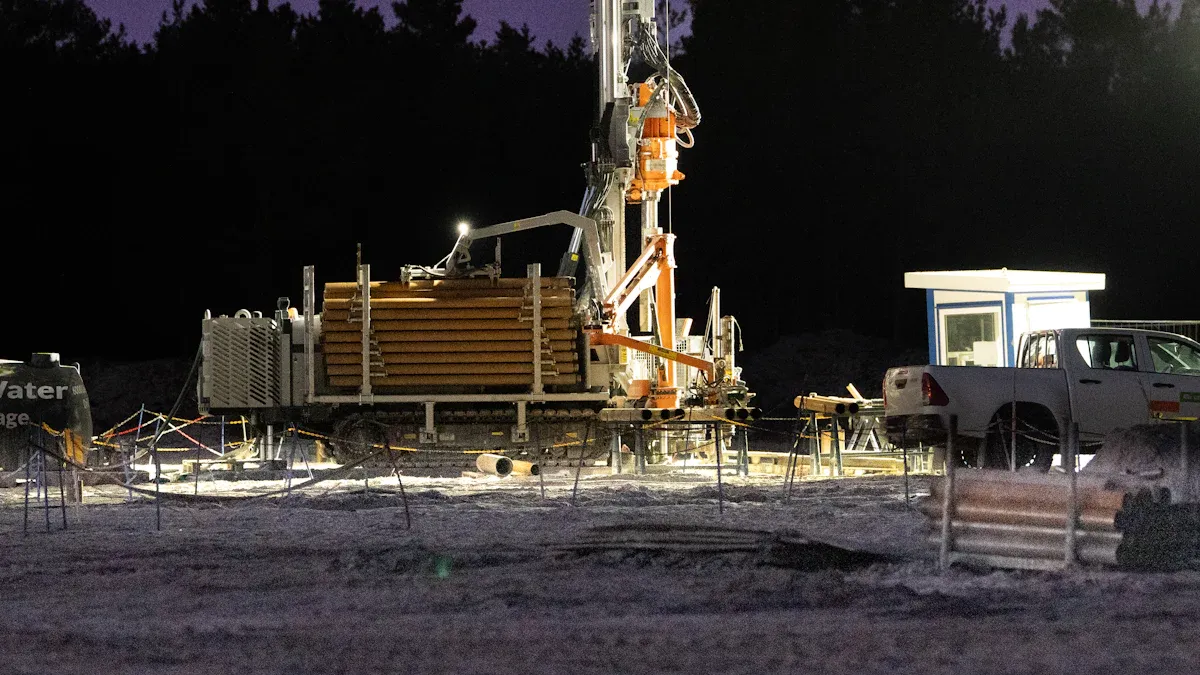
History is being made as drilling mining 1800m deep beats all records, thanks to the innovative efforts of the CEGC team, who have set a new world record. This advancement in mining technology propels the industry forward.
-
This success accelerates work processes and enhances efficiency.
-
It ensures that mining remains safe for future generations.
-
The introduction of new technology not only secures resources but also protects the environment, contributing to economic growth.
Key Takeaways
-
Drilling down 1800 meters breaks a world record. This shows how mining technology is getting better. These changes help make mining faster and safer.
-
The CEGC team used smart new ideas to reach this record. They picked the best drilling design and the right bits. Their work will help others drill even deeper in the future.
-
New tools, like self-driving systems and live monitoring, make mining safer. These tools also help miners work better and find more valuable resources.
1800m Deep Drilling World Record
Breaking Previous Drilling Records
You might wonder how drilling mining 1800m deep breaks all records. This is a big deal in deep drilling. In the past, engineers and geologists tried to go deeper with projects like the Kola Superdeep Borehole in Russia. That borehole went down 12,261 meters. It was very hard because of heat and pressure. Every meter they drilled was a big win.
You can look at the table below to see how the longest diamond drill hole records compare:
|
Well Name |
Location |
Total Depth (ft) |
Total Depth (m) |
|---|---|---|---|
|
Odoptu OP-11 |
Sakhalin, Russia |
40,502 |
12,345 |
|
Z-44 Chayvo |
Sakhalin, Russia |
40,602 |
12,376 |
|
Tiber |
Gulf of Mexico |
35,050 |
10,683 |
|
Ondjaba 1 |
Angola |
~11,903 |
3,628 |
Note: The Kola Superdeep Borehole in Russia reached 12,261 meters. This project showed how hard it is to drill very deep. Engineers had to fix problems with heat, pressure, and tough rocks.
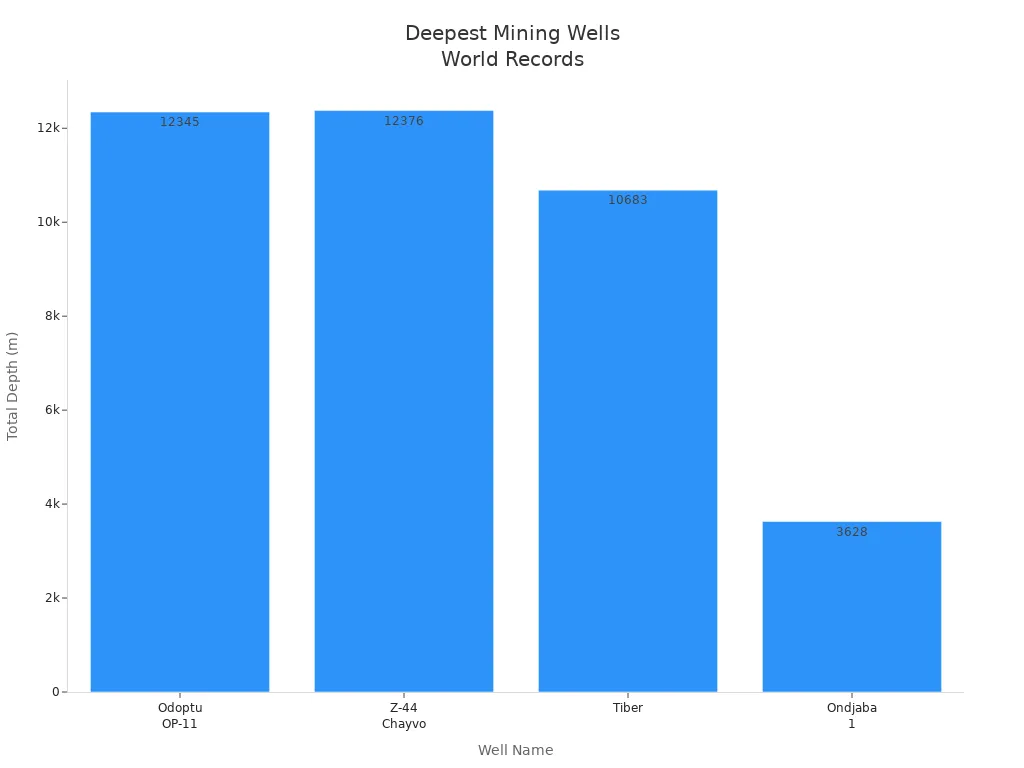
You can see that the step-out drill program is now more competitive. Teams want to set new records for the longest diamond drill hole. The famous Canadian diamond drill hole made many engineers want to drill deeper. Today, drilling mining 1800m deep is the new record in the step-out drill program for diamond drilling. This record shows that technology and teamwork help people reach new depths.
Who Set the 1800m Record
You may ask who made this record happen. The CEGC team set the new world record for the longest diamond drill hole at 1800 meters. They worked in a tough place and used smart plans. Their step-out drill program used high-grade vein intercepts and deep pilot hole methods.
Here are some important things that helped the CEGC team win:
|
Key Factor/Strategy |
Description |
|---|---|
|
Optimized drilling design |
Careful planning and execution for the well location. |
|
Tailored bit selection |
Use of a 26-inch PDC bit for the first time in this field. |
|
Improved drilling progress |
Combination of tri-cone and PDC bits for tough rock layers. |
|
Minimized non-productive time (NPT) |
Lowest NPT compared to nearby wells, avoiding risky issues. |
|
Heavy casing string management |
Managed the heaviest casing string and reduced operational risks. |
|
Optimal drilling fluid control |
Continuous monitoring for wellbore stability. |
You can see that the CEGC team’s step-out drill program focused on working fast and safe. They used a deep pilot hole to check the ground before drilling the main well. This helped them find high-grade vein intercepts and avoid trouble. Their work is now the new standard for deep drilling.
The longest diamond drill hole at 1800 meters is now a sign of progress. More teams will try to drill deeper and make better wells. The CEGC team’s record will inspire others to try new things in mining.
Technology and High-Grade Drill Results
Innovations in Deep Drilling Equipment
Drilling mining 1800m deep is a big achievement. New technology helps people explore deep places better. Advanced machines work faster and keep workers safer.
-
Autonomous robotic systems use sensors to find mineral zones underground.
-
SLAM-based navigation works where GPS cannot, like tunnels or deep-sea sites.
-
Lightweight drills make it easier for workers and help them work faster.
-
Real-time monitoring gives instant data, so teams can make quick choices and stay safe.
-
Automation in drilling machines makes drilling more accurate and can make work up to 40% more efficient. This means fewer errors and lower costs.
The Dino hammer drill rig and automatic drill bit changer are important tools. The Dino hammer drill helps with precision. The automatic changer lets workers switch bits safely. These tools help people reach deeper targets and get better high-grade drill results.
Achieving Gold Mineralization at Depth
Drilling deeper helps people find gold in new places. Recent projects show gold at almost 1800 meters deep. Look at the table below for some assay results:
|
Depth (m) |
Gold Grade (g/t) |
Description |
|---|---|---|
|
1,620 |
15.70 |
Deepest intercept at the project |
|
1,740 |
N/A |
New pilot hole with multiple mineral zones |
Deep-sea exploration finds more gold and better assay results. Companies report strong assay results from broad mineral zones. This means more gold for future mining. As drilling mining 1800m deep beats all records, more discoveries will happen in deep-sea exploration and new gold zones.
You can see how drilling 1800 meters deep changes mining. New machines and ways of working help people find gold mineralization deeper underground. Gold mineralization means miners find more gold and better grades. It also helps workers do their jobs faster and safer. Gold mineralization makes mining cost less money. The table below shows some good things and some hard things about this:
|
Benefits |
Challenges |
|---|---|
|
Need for workforce reskilling |
|
|
Improved safety |
Changes in employment models |
|
Reduced costs |
Community and environmental accountability |
You will see deep drilling change mining in the future. Gold mineralization will give miners new chances and make mining better.
FAQ
Why is drilling 1800 meters deep special?
Drilling deeper helps miners find new places. They can reach gold and other minerals that were hard to get before.
How does technology make deep drilling better?
Miners use smart machines and real-time checks. These tools keep workers safe and help find mineral zones faster.
What problems do miners have when drilling deep?
Miners face hot temperatures and strong rocks. Teams need good plans and special gear to stay safe.


