
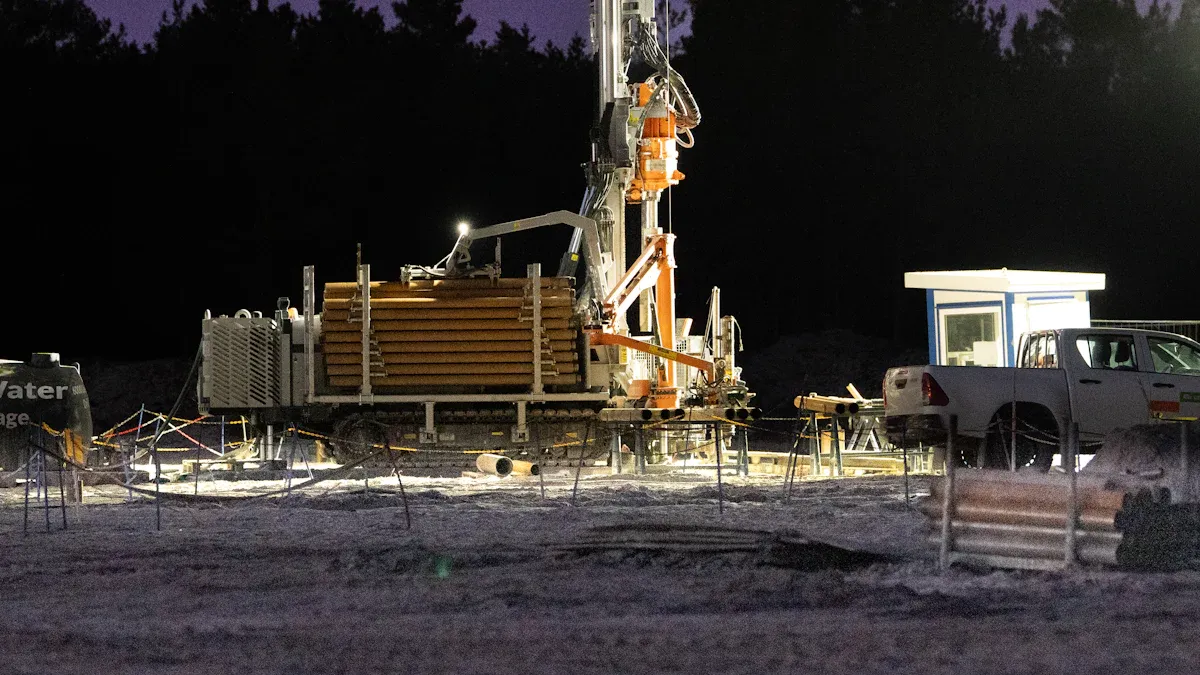
You need a strong plan when you face 450MPa bedrock. Drilling Mining 450MPa Power Beats Bedrock requires advanced tools from CEGC. Specialized rigs and bits help you cut through tough rock. Safety matters most. You must follow clear steps to manage heat, vibration, and wear.
-
Use powerful equipment for best results.
Key Takeaways
-
Pick the best drilling method for the bedrock type. Use rotary drilling if you need deep holes. Use pneumatic drilling for shallow holes.
-
Choose strong rigs and tough bits made from diamond or tungsten carbide. This makes drilling through hard rock easier.
-
Always put safety first by wearing protective gear. Use advanced monitoring systems to help stop accidents and work better.
Drilling Mining 450MPa Power Beats Bedrock Methods
Rotary and Pneumatic Drilling
Rotary drilling can help break very hard bedrock. The drill bit spins and grinds the rock down. Pneumatic drilling uses air to make the drill move. This makes drilling faster and keeps dust low. Both ways are good for Drilling Mining 450MPa Power Beats Bedrock if you want speed and to work well.
Tip: Use rotary drilling for deep holes. Use pneumatic drilling for holes that are not deep.
Diamond Core and Blast Hole Drilling
Diamond core drilling lets you get exact samples from the bedrock. The bit has diamonds and cuts through the rock. This helps you see the layers and plan what to do next. Blast hole drilling makes holes for putting in explosives. This breaks the bedrock so you can take it out. Both ways help with Drilling Mining 450MPa Power Beats Bedrock when the rock is very hard.
-
Diamond core drilling: Good for getting samples and checking them.
-
Blast hole drilling: Good for taking out lots of rock.
Geological Assessment for Method Selection
You need to check the bedrock before you start drilling. Look at how hard it is, its shape, and if it is wet. Pick the drilling way that fits the rock. Drilling Mining 450MPa Power Beats Bedrock works best if you use the right way for the rock. This saves time and keeps your tools safe.
Note: Always look at the rock type and pick the best way to drill.
Equipment, Techniques, and Overcoming Challenges
Rig and Bit Selection
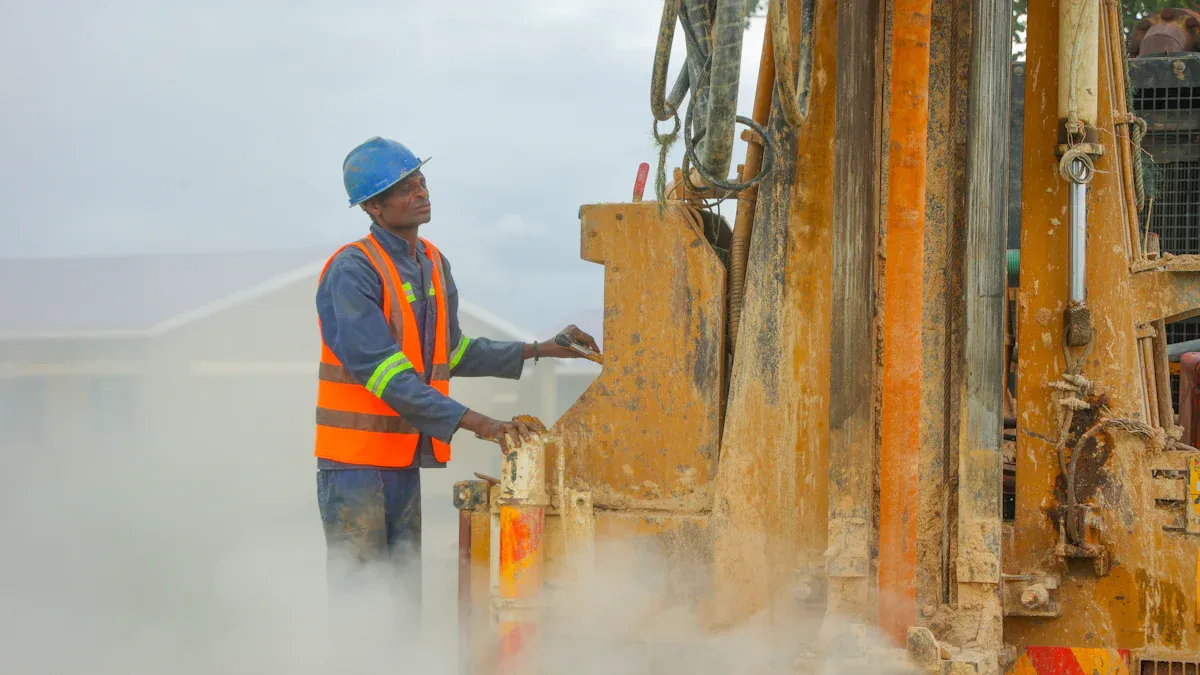
You need the right rig and bit for hard bedrock. Pick a rig that is strong and steady. Heavy-duty rigs handle tough rock pressure and shaking. Choose drill bits made with industrial diamonds or tungsten carbide. These materials cut through 450MPa bedrock without breaking. Use shock absorbers and stabilizers for support. These tools keep your rig steady and protect your equipment.
Tip: Always check your rig and bits before you start. Replace worn parts so you do not get delayed.
Drilling Parameters and Cooling
Set your drilling speed and pressure for the hard bedrock. Use slow speeds and high pressure for tough rock. This helps stop overheating and bit damage. Cooling is very important. Use water or special fluids to keep the bit cool. Cooling fluids also remove dust and small rock pieces. Clean holes help your bit last longer and make drilling safer.
Step-by-step for setting parameters and cooling:
-
Start with a low rotation speed.
-
Increase pressure slowly until the bit cuts.
-
Add cooling fluid as soon as drilling starts.
-
Watch the temperature and adjust fluid flow if needed.
-
Stop and check the bit often for wear.
Managing Bit Wear, Vibration, and Heat
Drilling Mining 450MPa Power Beats Bedrock puts stress on your tools. Bit wear happens fast in hard rock. Check your bit after every drilling cycle. Replace it if you see cracks or missing pieces. Vibration can shake your rig and cause mistakes. Use stabilizers and keep your rig level to reduce shaking. Heat builds up quickly in hard rock. Cooling fluids and slow speeds help control the temperature.
Note: If you see smoke or smell burning, stop drilling right away. Let the bit cool before you continue.
Safety and Efficiency Best Practices
Safety comes first when drilling hard bedrock. Wear helmets, gloves, and goggles to protect yourself. Keep your work area clean and free of loose tools. Use advanced monitoring systems to track your drilling in real time. These systems help you make quick decisions and avoid problems. They also reduce downtime and improve performance. Automation and sensors lower mistakes and keep your team safe.
Here is a table showing how advanced monitoring systems improve efficiency:
|
Efficiency Improvement |
Description |
|---|---|
|
Enhanced Decision-Making |
Real-time monitoring and data analytics help you make smarter choices fast. |
|
Reduced Downtime |
Automation and sensors keep your equipment running longer. |
|
Improved Overall Performance |
Advanced technology boosts drilling results and resource use. |
|
Cost Reduction |
Better drilling settings and maintenance save money. |
|
Increased Safety |
Automation lowers mistakes and keeps workers safe. |
Remember: Safe and efficient drilling starts with the right tools, careful planning, and smart technology.
You can get through 450MPa bedrock if you use the right steps and tools. Pick your way to drill and your equipment with care. This makes your work safer and helps you save money.
-
Good design helps you stay safe and means you do not have to change plans a lot.
-
Making choices early helps you work faster and get more done.
-
Choosing well helps you make more and keeps workers safe.
FAQ
What is the best drill bit for 450MPa bedrock?
You should use diamond or tungsten carbide bits. These materials cut through hard rock and last longer.
How do you keep the drill cool during operation?
Tip: Add water or special cooling fluid while drilling. This keeps the bit cool and removes dust.
Can you use blast hole drilling for small projects?
You can use blast hole drilling for small projects. It works best when you need to break up tough rock quickly.


