
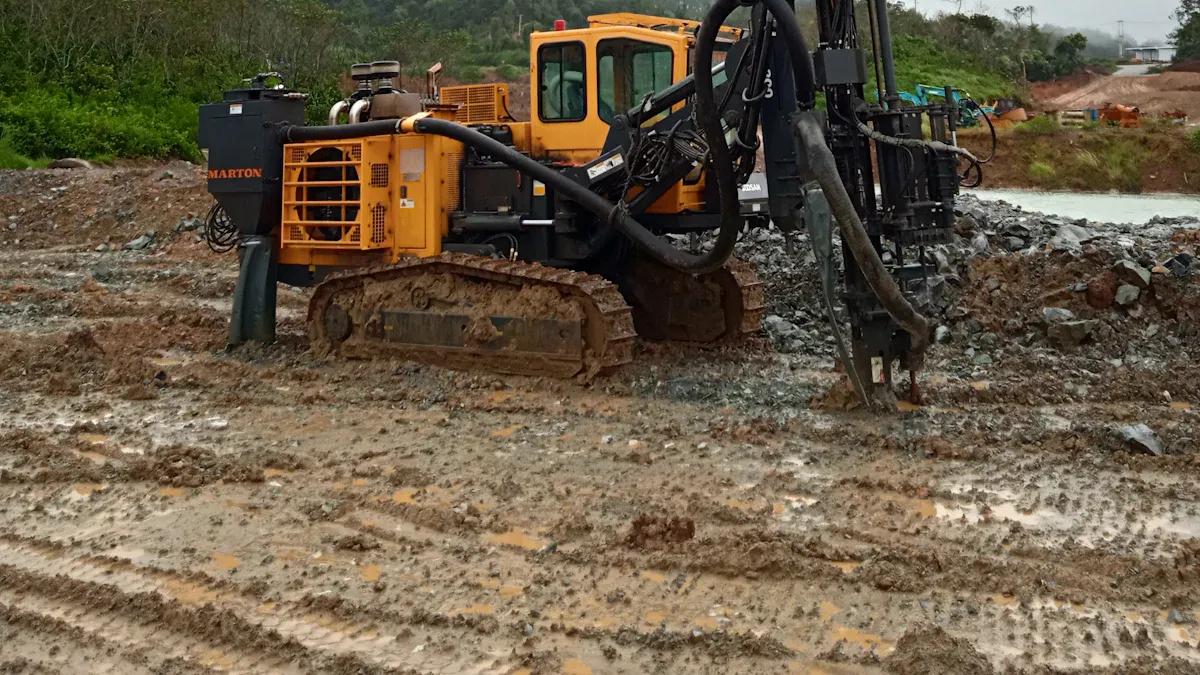
Strong horizontal directional drilling solutions are crucial for challenging rock formations. For 2026, the HDD Machine 50000Nm Torque Powers Through Rock is the optimal choice for drilling into rock. This HDD Machine 50000Nm Torque Powers Through Rock effectively drills through rock. CEGC HDD machines offer essential features that address common horizontal directional drilling problems. One such issue is bore deviation. This guide illustrates how CEGC enhances horizontal directional drilling operations, a significant factor in the HDD market. Selecting the appropriate drill is paramount for successful HDD operations.
Key Takeaways
-
A strong 50000Nm torque helps HDD machines drill through hard rock easily. This power prevents the drill from getting stuck and makes drilling smooth.
-
Successful rock drilling needs more than just torque. It also needs strong push and pull power, a powerful engine, and smart fluid use to keep the drill working well.
-
Modern HDD machines use special tools and guidance systems. These help them drill precisely and stay strong in tough rock conditions, making jobs more successful.
50000Nm Torque: The Core of Rock Drilling Power
High torque is very important. It helps with horizontal directional drilling (HDD) through rock. It gives the power needed. This power cuts through tough ground. It stops problems like stuck pipes. It also prevents sudden torque spikes. A strong hdd machine 50000nm torque powers through rock works smoothly. It runs without stopping.
Defining HDD Torque for Rock Cutting
Torque is a twisting force. In hdd work, this force is between the drill string and the ground. It is the twisting power. This power turns the drill bit. This twisting action cuts and grinds rock. Without enough torque, the drill bit cannot break hard rock. This can slow down the drilling. It can also make the drill get stuck.
High Torque's Impact on Rock Penetration
High torque helps the drill go into rock. A drill with 50000Nm of torque can push through hard rock. This stops the drill pipe from getting stuck. It also lowers sudden increases in torque. These are called torque spikes. Spikes can harm the drill string. They can also damage other equipment. A powerful hdd machine 50000nm torque powers through rock cuts steadily. This means less time for repairs. It makes drilling more effective. This ability is key for any good hdd guide. It helps with tough ground.
Achieving 50000Nm+ Torque: Hydraulic and Drivetrain Innovations
Getting such high torque needs smart engineering. Modern hdd machines use special hydraulic systems. They also use special drivetrain systems. For example, the ZTSPZ-1000 Horizontal Directional Auger Boring Machine can make 50,000 Nm of torque. It uses a 'Premium Hydraulic & Power System'. This system has great hydraulic pumps. It also has motors and valves. A strong 194 kW diesel engine powers these parts. The machine also has a 'Robust Frame & Drive Structure'. This structure has a fully closed gear-driven power head. It has dual-speed piston motors. All these parts work together. They give a lot of torque.
Hydraulic systems are very important. They are key for high-torque jobs. They give the needed reliability. This helps with drilling through dense ground. They also help make the bore path longer. The Tescar TT10 compact drill rig shows this. It uses an advanced hydraulic system. It also has a double-motor oil-bath rotary. This lets it make 76,736 foot-pounds of torque. Drivetrain innovations are also very important. These include:
-
High mechanical features
-
Strong materials and connections
These features make sure the machine can handle extreme forces. These forces come from rock drilling. They help keep torque levels high.
Important Drill Details for Rock
Other important details help with rock drilling. These specifications make jobs successful. They help with problems like going off track. They also help with bad fluid use. CEGC has many horizontal directional drill units. They are grouped by size. Some are less than 20 tons. Some are 20–40 tons. Others are more than 40 tons. Each size fits different jobsite conditions.
Push and Pull for Hard Rock
Strong push and pull power are very important. These powers move the drill string. In hard rock, the drill needs huge power. It pushes forward. It also pulls back tools and pipes. For tough jobs, a drill might need over 200,000 lbs of push and pull. This power stops the drill string from getting stuck. It also keeps the drill on its path. This helps avoid going off track. It also stops failures. Strong push and pull keep the drill on target.
Engine Power and Fluid System Work
A strong engine is key for any horizontal directional drilling machine. It runs the fluid system. This system powers both twist and push. Engines are usually 300 to 500 HP. This is for bigger rock drilling machines. High engine power gives steady power. Good fluid systems use this power well. They lose very little energy. This helps them work well in tough ground conditions. It also uses less fuel. This makes jobs cheaper.
Best Spin Speed (RPM) for Drilling
The spin speed (RPM) of the drill bit is key. It must match the twist for good rock cutting. For hard rock, like granite, a slower RPM can be better. Going from 11.5-12 to 9.5 RPM can make it cut 15-20% faster. It also means 19% fewer tool changes. Slower RPM usually wears out outer tools less. It also protects the cutting head edge.
For medium-hard to hard rock, like marble, a different plan works. Use heavy weight on the bit. Also use a fast spin speed. This uses special bits. When facing very broken, hard ground, drilling at half RPM is often best. Push down enough to cut 1 to 2 inches per minute. This stops the bit from wearing out fast. This is because it grinds more than cuts.
Usually, spin speed goes up with how fast it cuts at slow speeds. But, the speed increase slows down at higher speeds. This is often because the bottom of the hole is not cleaned well. If the drill head stops, slowing down can give more twist. This helps keep it spinning. CEGC Xz Series machines can spin up to 89-114 r/min. This lets workers change for different ground conditions.
Smart Fluid Use for Rock Drilling
Good fluid use is very important for rock drilling. It takes out rock pieces. It also makes the hole stable. Bad fluid use can cause cracks. It can also make the hole unstable. High-pressure, high-flow mud pumps are a must. They send drilling fluid to the cutting part. This fluid washes away rock pieces. It also cools the drill bit.
For tough rock, mud pumps need special features.
|
Pump Type |
Pressure Rating |
|---|---|
|
Duplex |
Up to 3,000 psi |
|
Triplex |
Up to 7,500 psi |
|
Quintuplex |
Up to 10,000 psi |
A flow rate of 100 GPM at 1,000 PSI is a common goal. This makes sure rock pieces are removed well. It also keeps the hole stable. Good solids control is also key. It separates rock pieces from the drilling fluid. This keeps the fluid clean to use again. It also protects the pump and other equipment. A well-run mud plan is part of a full hdd guide. This includes mixing goals and regular changes. This stops problems and makes drilling successful.
Integrated Solutions for HDD Rock Drilling Performance
Many technologies work together. They make drilling through rock better. These solutions help with high costs. They also help with tool wear. They fix problems like going off track.
Robust Drill String and Tooling for Rock
A strong drill string is vital. It needs special metal alloys. These give flexibility and strength. They also give long life. One-piece forged rods are good. They are for smaller drills. They have strong ends. Drill pipes handle weight. They handle pulling forces. They resist bending. Hard banding protects tool joints. It stops wear.
Different rock needs different bits.
-
PDC bits work well. They are for soft to medium rocks. These include sand and limestone. They handle up to 25,000 psi strength.
-
Tricone bits are very flexible. Mill Tooth tricones are for softer rocks. TCI tricones work for a wider range. They handle from 5,000 psi to over 50,000 psi.
-
Hammer bits are best. They are for very hard ground conditions. They are good for rocks above 30,000 psi. This includes granite and basalt.
Precision Guidance for Challenging Rock Bores
Accurate steering is key. Advanced sensors help. Gyro steering systems use special gyroscopes. They find the drill bit's exact position. MEMS gyro technology is used. It is in all models. It works well. It does not need Earth's magnetic field. Integrated sensors combine gyroscopes. They also combine accelerometers. A control unit shows real-time data. This includes 3D position and direction.
Real-time monitoring helps a lot. It uses logging-while-drilling methods. These systems make smart choices. They adjust the drilling direction. This stops the drill from going off course. Electromagnetic wave logging finds rock layers. It also shows tool direction. This helps with precise horizontal directional drilling.
Anti-Stall Powertrain for Consistent Drilling
An anti-stall powertrain keeps drilling steady. It uses hydraulic load sensing. This system feels how much force is needed. It controls how power starts. It also controls how power stops. This prevents the pipe from getting stuck. It also stops sudden power surges. These surges can damage equipment. This ensures smooth drilling. It also ensures consistent drilling.
Durability and Maintenance for Rock Drilling
Machines need to be tough. This is for rock drilling. They have heavy-duty parts. These parts are made from strong materials. This helps them last longer. Cooling systems are often made stronger. This handles extra heat. Multi-stage filtration keeps hydraulic fluid clean. This stops wear.
Good maintenance saves money. Predictive analytics software helps. It finds problems. It finds them before they happen. IoT sensors gather data. This helps with planning. Regular checks are important. Replacing worn parts is important. Lubricating moving parts reduces friction. Cleanliness prevents rust. Following maker's rules helps machines last. This makes HDD operations more reliable.
For 2026, a top horizontal directional drill for rock is available. It uses 50000Nm torque. This hdd machine 50000Nm torque powers through rock has strong thrust. It also has advanced tools. These drill specs fix common problems. They make horizontal directional drilling effective. This increases profitability for hdd operations. Buying these specs is important. It helps with future hdd success. It also helps with jobsite profitability in the market. This powerful drill is a true hdd guide. It leads to high profitability.
FAQ
What does 50000Nm torque mean for an HDD machine?
It means the machine has strong twisting power. This power helps it cut through very hard rock. It makes drilling efficient and prevents stuck pipes.
Why is high thrust and pullback important in rock drilling?
High thrust pushes the drill forward. Strong pullback retrieves tools. This power keeps the drill moving. It prevents the drill string from getting stuck in tough rock.
How do different drill bits help in various rock types?
Different bits match different rocks. PDC bits work for softer rocks. Tricone bits handle many rock types. Hammer bits are best for the hardest ground conditions.


