
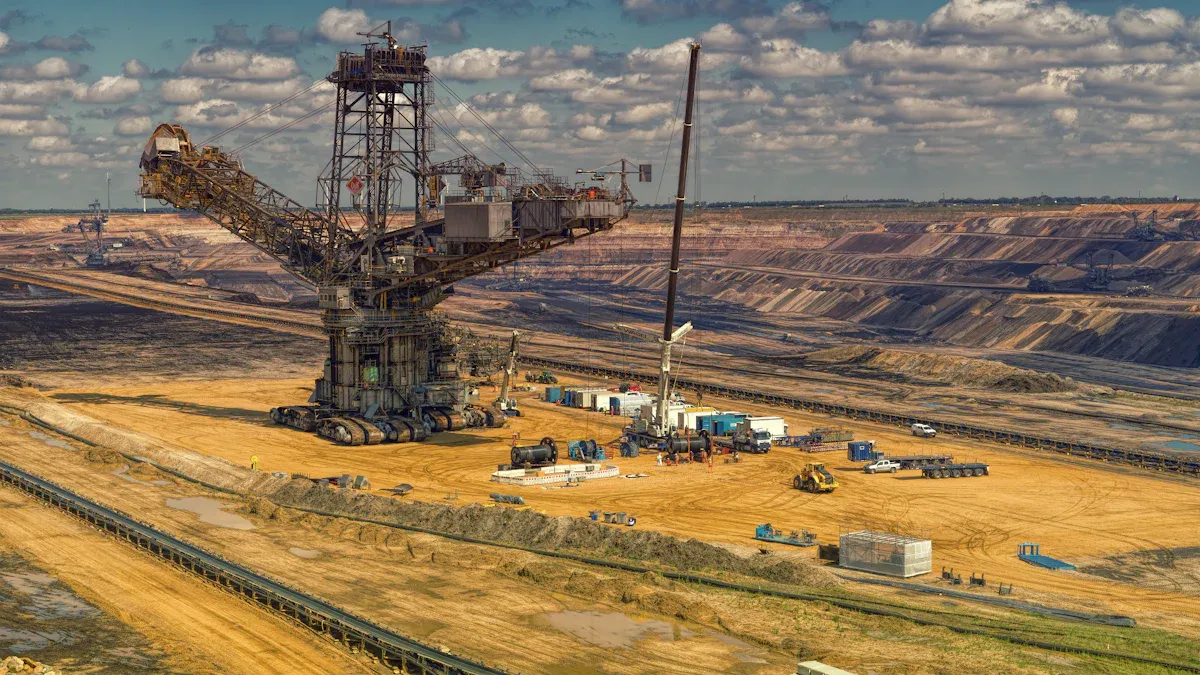
The HDD Machine 500HP Engine Powers Through Rock, a critical component for Horizontal Directional Drilling (HDD) operations. This robust engine isn't merely about raw strength; it's engineered to overcome immense resistance, enabling precise underground work. The substantial horsepower is particularly beneficial for challenging projects, a hallmark of CEGC's powerful machinery.
Key Takeaways
-
A 500HP engine gives great power. It helps HDD machines drill through hard rock. This power makes projects finish faster.
-
Special tools and mud systems help drill in rock. These include strong drill bits and high-pressure mud. They keep the drill on track and the hole stable.
-
Strong HDD machines work well in rocky areas. They build pipelines and utility lines. This saves time and money on tough jobs.
Understanding HDD in Rock Drilling
Basics of Horizontal Directional Drilling
Horizontal Directional Drilling (HDD) installs pipes. It puts cables underground. It does not dig open trenches. A drill bit pushes horizontally. It goes beneath the surface. A steering system guides it. This controls the drill's path.
The process starts with drilling. A hole is made deep down. A mud pit collects mud. This mud cools the drill bit. It carries away soil. It also removes rock pieces. A special drill bit attaches. It goes to the drill pipe. The drill pipe goes underground. It goes in sections. To turn, the operator stops drilling. They adjust its direction. A guiding device helps. It sends signals to people. These signals show the drill's spot. Operators fix the drill's path. High-pressure water flushes soil. It flushes rocks away. This makes the borehole. The mud returns to the surface. It is cleaned and reused. This system drills well. It is fast. It works in many ground types. It works in soft soil. It works in hard rock.
Unique Challenges of Drilling Through Rock
Drilling through rock is hard. Rocks are often very hard. Equipment wears out fast. Some rocks have many holes. These are like porous limestone. These holes make ground unstable. They can make the drill go off course. Karst formations are a challenge. These are hidden caves. They are sinkholes. They form from dissolved limestone. They are hard to find. They can be dangerous.
Weak rock causes problems. Fractured rock causes problems. The hole can collapse. Unstable formations collapse too. These are shales or loose sands. Hard rock resists turns. It is hard to start a new path. These factors need special tools. They need careful planning.
500HP Engine: The Core of Rock Drilling Power
Horsepower and Torque in Drilling Operations
A 500HP engine is very strong. It provides the force needed for drilling. Horsepower measures how fast work gets done. Torque is the twisting force. Imagine turning a stubborn bolt. You need torque to loosen it. In drilling, torque turns the drill bit. It grinds through hard rock. High horsepower means the drill bit spins powerfully. It also means the machine can push and pull with great strength. This combination of power and twist is essential. It allows the HDD Machine 500HP Engine Powers Through Rock with less effort.
Powering Critical HDD Machine Components
The 500HP engine does not just sit there. It sends its power to several key parts of the HDD machine. First, it powers the drill head rotation. This is what spins the drill bit. Second, it drives the thrust and pullback systems. These systems push the drill string forward into the ground. They also pull the product pipe back through the bore. Third, the engine powers the mud pump. This pump sends drilling fluid down the drill string. For example, the F-500 Hydraulic Motor Driven Drilling Rig Mud Pump uses 373 KW of input power. This is equal to 500 HP. This shows how a powerful engine directly drives crucial components like the mud pump. This F-500 drilling mud pump is vital for oil and gas drilling. It is also a key part of HDD systems. It helps manage the drilling fluid.
How 500HP Boosts Penetration and Efficiency
More horsepower means more power to overcome resistance. When drilling through hard rock, the drill bit faces immense pressure. A 500HP engine provides the consistent, robust output needed. This allows the drill bit to penetrate rock faster. It increases the rate at which the machine drills. This improved penetration rate makes projects finish quicker. The strong engine also helps prevent common problems. It reduces the chance of a "stuck pipe." It handles "torque spikes" better. These spikes happen when the drill bit hits a very hard spot. A powerful engine can push through these spots. This means less "downtime" for repairs or freeing stuck equipment. The HDD Machine 500HP Engine Powers Through Rock more efficiently. It works steadily, even in tough conditions. This consistent power makes the entire drilling operation smoother and more productive.
HDD Machine: Powering Through Rock with Advanced Tech
Specialized Drill Bits and Cutting Tools
Drilling through rock needs more than just power. It needs the right tools. Special drill bits are key. They crush and cut hard rock. Two main types are used. These are Tricone bits and PDC bits.
-
Tricone Bits (TCI or Mill Tooth): These bits have cones. They roll and crush the rock.
-
Cutter Materials: They use tungsten carbide inserts. These inserts can be round for very hard rock. They can be cone-shaped for softer rock. New types last longer.
-
Number of Rows of Inserts: The number of rows changes. It depends on the job. It also depends on the hole size.
-
Bearing Structure: They have open or sealed bearings. Some have air-cooled roller bearings. These bearings hold the cone in place.
-
Shirttail Protection: Three types of protection exist. They stop the bit from wearing out.
-
Gauge Structure: Gauge inserts are on the cone. They keep the hole size correct. Tungsten carbide inserts also protect the gauge.
-
-
PDC Bits: These bits use fake diamond cutters. They cut the rock away.
-
Cutters: They use fake diamond. This material is very hard. Its shape can change. This helps it cut better.
-
Carbide Substrate: The diamond cutters sit on a base. This base is tungsten carbide. It is tough and resists wear.
-
Body Design: The bit body can be steel. It can also be a matrix material. Steel bodies are strong. They can be fixed. Matrix bodies resist damage.
-
Nozzles: Nozzles cool the cutters. They also clean away rock pieces.
-
Blade Configuration: Blades are set up. They touch a lot of rock. This helps cut evenly.
-
Gauge Protection: This protects the bit. It keeps the hole size right. It often uses hard materials. Or it uses small diamond inserts.
-
Back Rake and Side Rake Angles: These angles help the bit cut well. They also help remove cuttings.
-
High-Pressure Mud Systems and Fluid Management
Drilling fluid is very important. It is often called "mud." It does many jobs. It removes rock pieces. It cools the drill bit. It also keeps the hole stable. High-pressure mud systems push this fluid down.
Drilling fluid sends power. It goes to mud motors. These motors help spin the drill bit. They also power tools. These tools measure while drilling. They also log while drilling. These tools send info to the surface. Engineers plan how to use the fluid. They match it to the bit nozzles. They also match it to the pump power. This makes sure the fluid hits the bottom. It hits with force.
The fluid's power depends on things. It depends on pump power. It depends on pressure loss. This is in the drill string. It also depends on the highest pressure allowed. This is at the surface. The best flow rate is also key. Thicker fluids lose more pressure. These have high viscosity. Or they have many solids. Thin fluids change easily. These are like polymer fluids. They send power better. Careful mud control helps drill deeper.
Bentonite mixes are common. They are drilling fluids. They have many parts:
-
Viscosifiers/Gelling Agents: Sodium bentonite makes fluid thick. It carries rock cuttings out. Other agents also help. These are xanthan gum and cellulose.
-
Fluid Loss Control Agents (FLAs): These stop fluid from leaking. They form a thin layer. This is on the borehole wall.
-
Shale Stabilizing Inhibitors: Potassium chloride (KCl) stops clay from swelling. Other chemicals stop shale from breaking.
-
Emulsifiers/Wetting Agents/Surfactants: These keep oil-based muds stable. They also clean surfaces.
-
Lubricants: These reduce rubbing. They lower twisting force. They stop sticking.
-
Corrosion Inhibitors & Oxygen Scavengers: These protect the equipment. They remove oxygen. Oxygen causes rust.
-
Biocides: These stop bacteria from growing. They grow in the mud.
-
Defoamers/Defoamants: These control foam. Foam is in the fluid.
-
Lost Circulation Materials (LCM): These plug holes. They plug cracks in the ground. They stop mud from being lost.
Precision Guidance and Stability for Rock Bores
Keeping the drill on track is vital. Guidance systems ensure the path is right. They stop the drill from going off course. This avoids "Bore Deviation & Crossing Failure."
-
Magnetic Steering Tools: These tools are very accurate. They work with surface tracking. Surface tracking checks their spot underground. They are often chosen for accuracy.
-
Gyro Steering Tools: People think gyros are most accurate. But surface tracking cannot check them. This means operators might be "drilling blind." Magnetic tools and tracking are more precise.
-
DC Surface Tracking (Tru-Track): This method is very precise. It works with magnetic steering tools. A wire loop is placed on the surface. A DC current makes a magnetic field. This helps find the tool's spot. Navigators can find the exit point well. They can fix small errors.
Good fluid management helps keep the bore stable. Drilling fluid lubricates the drill. It also stops the hole from collapsing. Without good management, fluid can leak. It goes into unwanted areas. This can cause "frac-outs." Frac-outs are bad for the environment. They also cause rule problems. Preventing frac-outs means watching pressure. This is down the hole. It also means managing fluid well. Planning for spills is also important. The HDD Machine 500HP Engine Powers Through Rock better. This is when all these technologies work together.
Benefits of 500HP HDD for Rock Projects
Faster Project Completion and Reduced Downtime
A strong 500HP engine drills fast. It goes through rock quickly. Projects finish sooner. Less waiting time happens. The machine runs smoothly. It rarely stops working. This means less downtime. Crews start new jobs faster.
Enhanced Capability for Diverse Rock Formations
The strong engine handles many rocks. It drills hard granite. It also works in rough sandstone. This power allows more projects. It handles tough ground. The HDD Machine 500HP Engine Powers Through Rock that other machines cannot. This opens up new jobs.
Improved Reliability and Component Durability
Enough power eases stress. The engine works easily. This means less damage. Drill bits last longer. Other parts also last. This lowers "High Consumables Cost & Tool Wear." The machine stays dependable. It works well for years.
Cost-Effectiveness in Challenging Environments
High power saves money. Faster work cuts labor costs. Fewer breaks mean less repair money. The machine does tough jobs well. This makes it cost-effective. It is smart for hard rock projects.
Real-World Uses of Strong HDD Machines
Building in Rocky Areas
Strong HDD machines are key. They build big pipelines. They put in utility lines. These lines move water, gas, or power. They often go under rivers. They go under roads. Some projects are in rocky spots. A 500HP HDD machine is vital. It drills through hard rock. This avoids open trenches. This helps nature. It also stops traffic jams. These machines make hard jobs possible.
Good Results in Hard Rock Drilling
Many machines do well in rock. The Ditch Witch AT40 is one. It uses new tech. It drills well in tough ground. Drillto 350-500T machines also work hard. These machines handle very hard rock. They finish jobs others cannot. They show strong engines are good. CEGC offers tough drilling machines. These machines are for hard jobs. They help companies in rocky places. Their strong engines work well.
A 500HP engine is key. It helps HDD work in rock. This power uses new tech. It makes installs fast and exact. It works well in tough ground. This makes projects quicker. It also saves money. High horsepower helps drills do more. It is a big part of new trenchless work.
FAQ
What makes a 500HP engine crucial for rock drilling?
A 500HP engine delivers strong power. It creates high torque. This helps the drill bit cut through hard rock. It also pushes and pulls the drill string with great force.
What specialized tools are used for drilling through rock?
Specialized drill bits are key. Tricone bits crush rock. PDC bits use fake diamonds to cut. High-pressure mud systems also help clear debris and stabilize the bore.
How does drilling mud help when drilling in rock?
Drilling mud removes rock pieces. It cools the drill bit. It also keeps the borehole stable. This prevents collapses. Good mud management is vital for success.


