
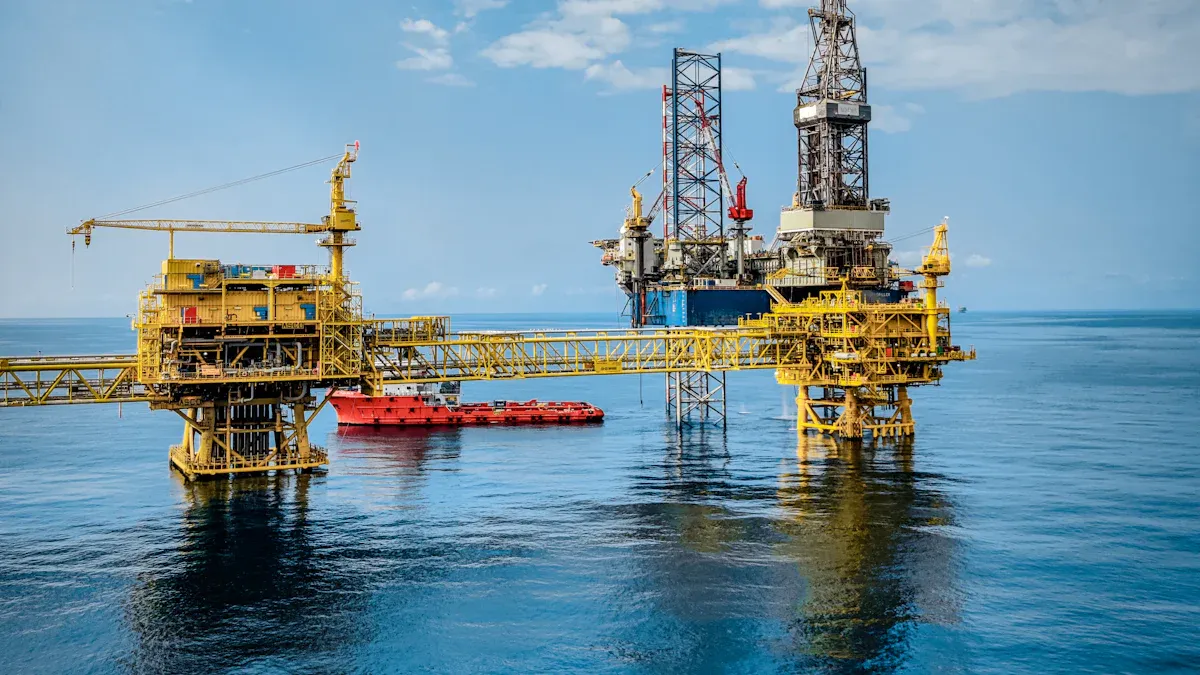
Horizontal directional drilling (HDD) projects are becoming increasingly complex and environmentally sensitive. Therefore, preventing blowouts is paramount in drilling operations. A stable HDD Rig Supplier Stable System Prevents Blowout, ensuring operational efficiency and enhancing safety. This blog explores key components for such a system, incorporating advanced monitoring and robust pressure control. CEGC and other leading directional drilling machine manufacturers are making drilling safer. Investing in these advanced drill systems is crucial for any horizontal directional drilling machine or Trenchless Drilling Rig work. It improves drilling performance and optimizes drill rig functionality. Such a drill rig system is essential for safe horizontal directional drilling.
Key Takeaways
-
A strong HDD rig system has good parts. It watches things closely. This stops blowouts. It keeps drilling safe.
-
New technology helps find problems fast. Sensors watch things live. Data is looked at. This makes drilling safer. It works better.
-
Good operators are key. They stop blowouts. They know how to use tools. They handle bad situations.
Core Mechanical and Structural Components for a Stable HDD Rig System
This section details the fundamental mechanical and structural components that ensure the HDD rig's integrity and prevent fluid leaks. These elements are crucial for a stable HDD rig system designed to prevent blowouts, encompassing robust physical parts and essential pressure control tools.
Enhanced Rig Foundation and Anchoring
A strong foundation is the primary step towards safe drilling. The rig must be securely anchored to prevent movement during demanding drilling operations. Effective anchoring maintains the drill rig's stability, which is essential for precise drilling and protection against sudden shifts.
High-Strength Drill Pipe and Connections
The drill string is a critical component of any HDD rig, subjected to significant stress during drilling. Therefore, strong drill pipe and connections are essential to prevent failures during challenging drilling operations.
New materials are changing drill pipe. Fiber composite pipes are good. Carbon fiber ones last longer. They also fight rust better. Metal composite pipes are a mix. They cost less. They are stronger downhole. These are good for medium-depth jobs. Less weight is not as important there. New tubes mix carbon fiber's light strength. They add metal composite for more power. This helps them handle high twist and pull. Strong alloy materials make drill pipe last longer. Better ways to make them also help. They also weigh less. Makers now build lighter, stronger drill pipes. This lets them drill deeper. They can do more complex jobs. Better connection designs also make pipes last longer. Double-shoulder connections are one example. Key details include steel type (G105, S135 for more strength). Size, wall thickness, and connection type matter too. Stronger steels fight wear and twist better. Performance numbers include how long they last. They also show how much twist they can take. And how much pull they can handle. These must match the drilling plan. API connections (like Regular, IF, FH, NC) follow API Spec 5B. They can have round threads. Or they can have buttress threads. Premium connections are better than API ones. They are often special. They can have double shoulders. This gives more twist power. Round threads seal liquids well. But they are not good against pulling. They hold less than 80% of the pipe's strength. Buttress threads are better against pulling. But they do not seal liquids well. A study of steel pipes in HDD showed something. The measured strains were much lower than the breaking point. This means the pipe stayed stretchy. This was true even with sudden increases in pull. This happened when pulling started. This study does not give failure rates. It does not show them for certain connection types. Instead, it looks at how the pipe reacts to stress. This is during HDD work.
Robust Blowout Preventer (BOP) Stack
A robust Blowout Preventer (BOP) stack is a critical safety component designed to prevent blowouts by sealing the well and containing sudden pressure surges. The BOP stack comprises several main components: annular preventers, which seal around any object in the wellbore; pipe rams, which seal around the drill pipe; blind rams, which seal an open hole when no drill string is present; and shear rams, capable of cutting the drill string and sealing the well. Enhanced sealing elements further improve safety. Blind shear rams (BSRs) can cut the pipe and seal the well, while variable bore rams (VBRs) can seal around various drill pipe sizes. These components work in concert, providing multiple layers of safety to maintain well control during drilling operations.
Advanced BOP Control Systems and Choke Manifold
The BOP control system operates the BOP stack, ensuring its rapid and efficient functionality. This system includes an accumulator unit, which consists of valves, accumulator bottles, a backup pump, a hydraulic tank, and a control manifold. These components collectively provide the necessary hydraulic power to actuate the BOPs.
A choke manifold is a key system. It controls the flow and pressure of well fluids. It does this safely. It is vital during well testing. It is also vital for production control. It is also very important for killing wells. It helps blowout prevention systems. Its parts include adjustable chokes. It also has fixed chokes. Gate valves change the flow. Pressure gauges check the pressure. Connection points are for flow lines. They are also for kill lines. This manifold handles wellhead pressure. It protects separator systems. It controls flowback jobs. It allows safe burning. Or it allows routing to flowlines. It stops equipment damage. It stops possible blowouts. It does this by keeping pressure steady. It makes sure well performance is steady and can be measured. The choke manifold reduces wellhead pressure to a safe level before fluids reach surface equipment. It maintains back pressure, preventing well kicks or blowouts during drilling and testing. By stabilizing downstream pressure, it protects the well, reservoir, separators, pipelines, and surface equipment from excessive pressure. Kill lines, integrated into the choke manifold system, facilitate safe circulation or fluid pumping to control pressure during well control operations. This entire system is vital for maintaining well control and preventing blowouts.
Anti-Stall Powertrain and Overload Protection
Preventing stuck pipe and sudden torsional events is crucial for efficient drilling. An anti-stall powertrain provides ample torque across various speeds, enabling the drill to adapt to diverse ground conditions. Hydraulic load sensing and pressure management are also vital in preventing the drill from becoming stuck. Controlled acceleration and deceleration mitigate harsh impacts, protecting the drill string, swivels, and tools. This solution addresses issues like 'Stuck Pipe, Torque Spikes & Downtime,' ensuring consistent daily operations.
Overload protection systems are in HDD machines. They always check the load. They act when too much load is found. This can mean slowing down drilling. Or it can mean less twist. It can also mean shutting down the machine. This early action stops equipment damage. It makes the machine last longer. It cuts down on costly repairs. These systems also make operators safer. They stop dangerous work conditions. They make drilling work better overall. This is because they cut down on stops. These stops are from broken equipment. The system uses load sensors. It has a control system. It has actuators. It has an alarm system. These work together. They check, find, and react to too much load. These systems offer numerous benefits, including equipment protection, preventing damage to the machine and its components, extending its lifespan, and reducing repair costs. They ensure operator safety by preventing hazardous machine operation and automatically respond to excessive loads. They enhance overall efficiency and drilling performance, minimize downtime, and aid in compliance with safety regulations. This comprehensive approach ensures the drill rig operates safely and effectively, forming a crucial part of an HDD rig supplier's stable system for blowout prevention.
Smart Monitoring, Fluid Control, and Top Operations
This part talks about the "brains" of blowout prevention. It also covers the "first line of defense." It uses smart sensors. It uses data analysis. It uses good drilling fluid methods. It also thinks about people. It plans for the future of horizontal directional drilling.
Real-time Downhole Monitoring and Gas Detection
Watching things deep underground is key. It stops blowouts. It shows what is happening right away. The LWD system is important. It gathers data as you drill. This includes where the wellbore is. It helps guide the drill bit. This makes it steer correctly. It avoids problems. LWD also checks the ground. It finds liquids like oil or gas. It checks for water. It looks at how electricity flows. It checks gamma rays. It measures neutron porosity. This helps find gas. The system watches how drilling is going. It checks torque. It checks weight on the bit. It checks mud flow. This finds problems early. These include stuck drill bits. Or hard ground. LWD gives live data. This makes things safer. It helps avoid dangers. These include high-pressure spots. Or shaky ground. This helps stop blowouts.
Drill Vision Systems use good cameras. They watch drilling live. This includes HDD. These systems make things safer. They stop dangers. They have good cameras. These cameras take pictures. They get data from inside holes. They also watch the drilling path. Live video shows progress. It finds blocks. It finds things that are not straight. It finds worn tools early. They are strong. They can handle heat. This makes them reliable. This is true even in tough drilling. They work well in dark places. They work in high pressure. You can watch them from far away. Experts can help crews from far. Workers can find problems early. This stops costly accidents. It stops broken equipment. This includes things that cause blowouts.
Effective air monitors can detect hazardous gases in drilling areas within 30 seconds, a rapid response crucial for safety. Different sensors have different accuracy.
|
Sensor Type/Technology |
Monitoring Capability |
Estimated Accuracy (%) |
|---|---|---|
|
Laser-Based Sensors |
PM2.5, PM10 |
95–99% |
|
Electrochemical Sensors |
CO, NO2, H2S, O2 |
90–98% |
|
Optical Particle Counters |
PM1, PM2.5, PM10 |
95–99% |
|
Photoionization Detectors (PID) |
VOC, Benzene, Toluene |
85–95% |
|
Metal-Oxide Semiconductor (MOS) |
CO, NO2, H2S, CH4 |
80–95% |
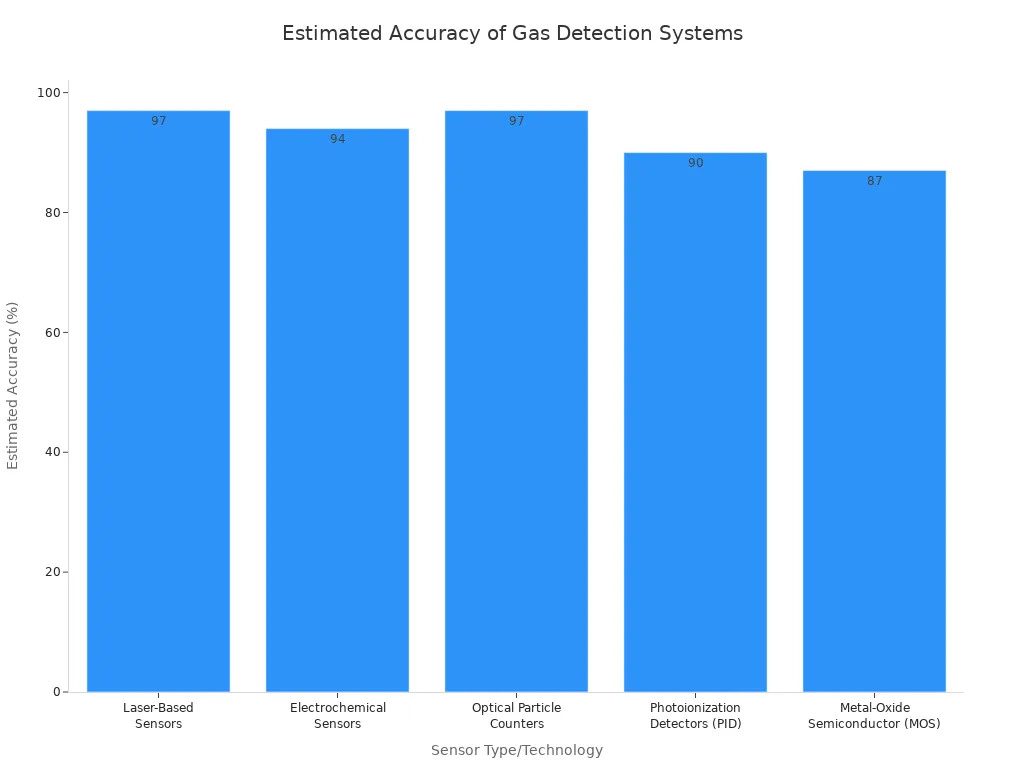
These tools provide precise data, enabling swift action in hazardous situations and significantly enhancing drilling safety.
Integrated Data Analytics and Predictive Modeling
Data from monitors is analyzed, which is crucial for identifying patterns and predicting potential problems, thereby facilitating early risk management. Predictive modeling utilizes historical and real-time data to forecast equipment failures and ground-related issues, enabling proactive intervention. This improves operational efficiency, reduces downtime, and prevents costly problems. The system supports informed decision-making, leading to smoother drilling operations.
Remote Control and Emergency Shutdown Capabilities
Remote control makes things safer. It makes them work better. HDD drill rigs use smart parts. These include remote control. They include data sharing. Workers can control rigs from far. This is good for special jobs. Data sharing sends data live. It helps analyze it. Remote watching is more common. This is because of better connections. Managers and techs can see data from far. This shows how drilling is doing. It shows how equipment is. It shows how well things work. This live watching helps with fixes. It helps find problems fast. It helps make choices with data.
Remote lockout tools are common. They are 'exit side control devices.' They turn off the drill string from far. Once off, the drill string stops. It will not start again. This is until it is turned on. The operator must restart it. It is key to check signal range. This must cover the whole job. This makes sure these tools work.
Remote control for HDD rigs uses smart tech. It uses PLC control. This allows safety features. It has operator protection. It has safety locks. It has logic locks. It has anti-mistake protection. This makes the HDD rig stop. It alarms in bad situations. Remote control works by adding a receiver. This is on the rig. It uses IoT tech. A wireless controller sends signals. It uses buttons. It also sends signals from knobs. The wireless part changes signals. It makes them digital. The receiver changes them back. This controls rig parts. It makes things automatic.
Web-based remote monitors are also beneficial, comprising a data terminal and server software. The terminal, utilizing a small computer, collects and transmits live rig data. The server processes this data using Java, stores it in a database, and displays it in real-time, aiding in monitoring and management.
Good communication tools are key. Remote wrenches help with the drill string. Quick connect tools are also important. The drill should not run without talking. This is between the locator. Or exit side workers. Two-way radios must always work. This is between entry and exit sides. An exit side tool makes sure the drill runs. It runs into the hole only. This is after exit side workers are safe. These steps give strong control. They make drilling safe.
Optimized Drilling Fluid and Mud Integration Solution
Effective drilling fluid and mud solutions address issues such as inadequate fluid performance and frac-out risks. They are crucial for maintaining wellbore strength and ensuring proper pressure control.
-
-
Optimal mud viscosity and flow rate are essential. This maintains appropriate mud consistency, supports wellbore walls, and adjusts flow properties to facilitate cuttings removal and prevent stuck pipes.
-
Additives mitigate problems. Chemicals prevent shale swelling and disintegration, while sealants prevent fluid loss into porous formations.
-
Preventing fluid loss is crucial. Lost Circulation Materials (LCM) halt fluid loss by sealing cracks and maintaining stable pressure.
-
-
Managed Pressure Drilling (MPD):
-
MPD methods provide precise control, managing wellbore pressure effectively.
-
Consistent bottomhole pressure prevents wellbore collapse or fracturing.
-
Intelligent pressure control rapidly adjusts surface pressure based on real-time data, maintaining stability.
-
-
Computational Fluid Dynamics (CFD):
-
CFD simulates drilling fluid behavior within the wellbore, aiding in the analysis of fluid flow to improve cuttings transport and reduce pressure loss.
-
It models mud flow, ensuring wellbore support.
-
It predicts wear and tear for both the wellbore and the drill string.
-
-
Hydraulic Fracturing Simulation:
-
This models how fluids interact with the formation.
-
It illustrates crack initiation and propagation, aiding in the design of mud plans and preventing unwanted fracturing.
-
It optimizes fluid injection and pressure management, maintaining wellbore integrity.
-
Keeping mud weight (MW) safe is vital. This is between the Collapse Gradient. It is also between the Fracture Gradient. This stops breaks. It stops fluid loss. This range changes with depth. It changes with ground type. Good mud design is used. This includes special muds. These are for reactive shale. Enough mud weight is kept. This is in the safe range. Mud saltiness and pH are controlled. This makes sure chemicals work with the ground. These steps make drilling fluid flow well. They make things safer.
Precision Guidance and Stability Systems
Exact guidance and stability systems stop problems. They stop the bore from going off. They stop crossing failures. They make sure drilling paths are right. These systems watch pressure deep down. This stops frac-outs. Good fluid control also stops frac-outs. Planning for containment is key. This is for frac-out prevention. Drill paths are designed. They think about soil strength. This stops boreholes from falling in. Using the right tools stops drill stem breaks. Workers follow good drilling rules. This also stops drill stem breaks. Good locating and steering systems help. They make things more exact. They make them work better. Live locating tech steers the drill head. This is done with care. This happens during the pilot bore.
Technological solutions include load-matched control, which synchronizes push/pull, rotation, and feed. A robust frame contributes to stability. Carriage alignment minimizes vibration and movement. Tracking system readiness, encompassing data logging and process control, is also crucial. These systems maintain the drill's trajectory, which is vital for challenging operations, and improve overall drilling performance.
Comprehensive Operator Training and Emergency Response
People are most important. This is for blowout prevention. Good operator training is key. It makes sure workers know the systems. They know how to react to emergencies. Training covers all drilling parts. This includes using equipment. It includes watching things. It includes fluid control. Emergency plans are practiced often. This includes drills for many problems. This gets people ready. They can act fast. They can act well. This focus on training makes things safer. It makes the system work best. It helps any drilling job succeed.
A stable system stops blowouts. It uses many parts. These parts work together. They make drilling safe. The system has strong parts. It watches things smartly. It handles fluids well. Trained people also help. CEGC and other companies make these parts. Buying these tools helps safety. It protects nature. It makes projects work well. This is for any drilling. It makes drilling better.
FAQ
How does a stable HDD rig system prevent blowouts during drilling?
A stable HDD rig system utilizes robust components and intelligent monitoring to prevent blowouts during challenging drilling operations. It ensures personnel safety and environmental protection, which is crucial for all drilling activities.
What advanced technologies support safe drilling operations?
New technologies are instrumental. They enable downhole monitoring, gas detection, and data analysis, which aids in predicting problems. Remote control and emergency stop systems also contribute to drilling safety.
Why is operator training essential for blowout prevention in drilling?
Thorough training for workers is essential. It educates them on operating new drill systems and responding to emergencies, thereby enhancing drilling safety and reducing risks.


