
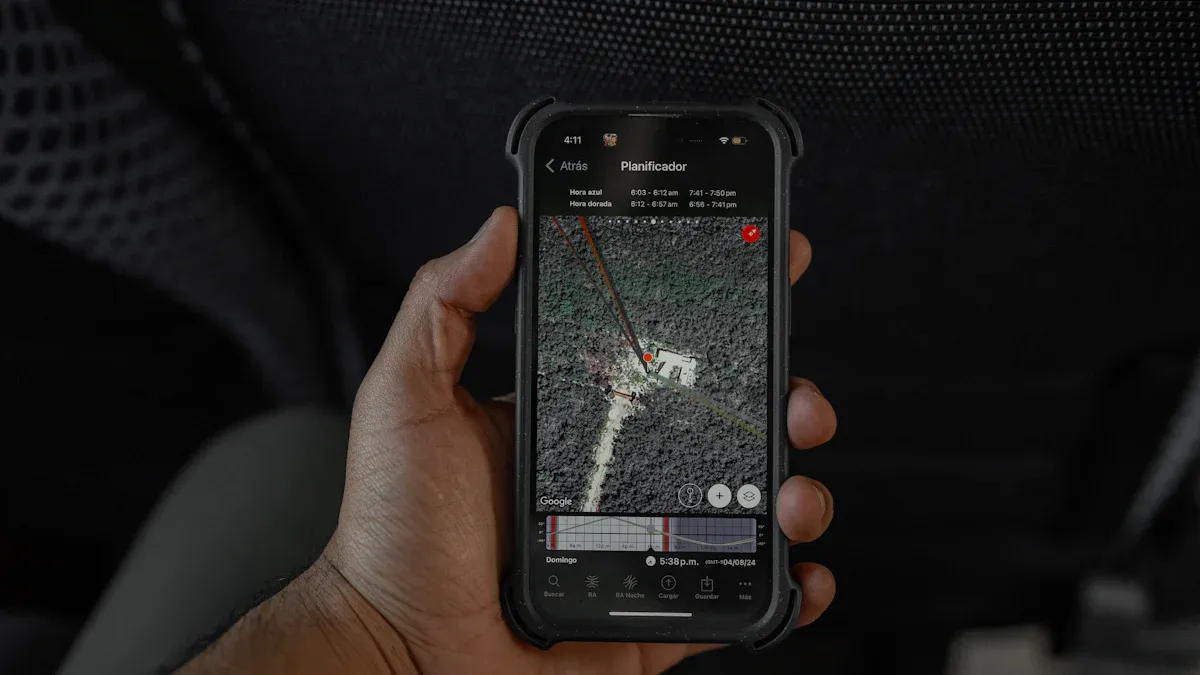
You can see how Horizontal Bore Drilling Live Tracking Cuts Risk when you get drilling data right away. This data helps you not make mistakes. CEGC gives you better tracking in every horizontal directional drilling machine and Trenchless Drilling Rig. With live watching and smart automation, you make work safer and faster on every project.
Key Takeaways
-
Live tracking technology in horizontal bore drilling helps you not make mistakes. It gives real-time data about the drill head’s depth and angle.
-
Using GPS and smart analytics can lower risks a lot. It helps you stay away from underground utilities and other dangers while drilling.
-
Automation and live feedback make drilling faster and safer. Operators can make smart choices and have less downtime.
Horizontal Bore Drilling Live Tracking Cuts Risk
Live Tracking Technology in HDD
You can see how horizontal bore drilling live tracking cuts risk when you use new tracking systems in your hdd work. Live tracking uses a transmitter called a sonde inside the drill head. The sonde sends out a signal that goes through the ground. A locator technician stands above and uses a receiver to find this signal. The receiver shows real-time info about the drill head’s depth, angle, and spot. This helps you steer the drill exactly and avoid mistakes.
Today’s hdd tracking tools include walk-over trackers with different levels of accuracy. Some trackers are simple and can have trouble with certain soils or metal nearby. CEGC’s horizontal directional drilling machine and Trenchless Drilling Rig are ready for tracking. You get standard features and can add data logging or process control if you want. This means you always know where your drill head is, even in hard places.
Tip: Always check for metal or minerals in the soil before you start your hdd job. This helps you get the best live drilling data.
Precision Guidance and Utility Avoidance
Horizontal bore drilling live tracking cuts risk by helping you stay away from underground dangers. The most common risks in hdd are:
-
Hitting underground utilities
-
Dangers from electric lines
-
Accidents like slips, trips, falls, or cave-ins
-
Hazards from the spinning drill string and tool joints
You can use gps, electromagnetic, and AI systems to be more accurate and lower these risks. With gps, you can follow the bore path live and see where the drill head is. This means less guessing and helps you stay on the right path. Electromagnetic tools, with gps and GIS, let you find the exact spot of buried things. You can get very close, even to centimeters.
When you put live drilling data into GIS, you make a digital record that lasts. Contractors and regulators can look at this data. This helps stop problems and makes teamwork better. Telematics systems keep all your hdd project info in one place. This helps you work safer and make good choices.
You can also use gps to stop utility damage. By checking maps and gps before drilling, you don’t hit gas lines, water pipes, or electric cables. This keeps your site safe and helps you follow safety rules.
|
Feature |
New Technology (Telematics) |
Previous Generations |
|---|---|---|
|
Asset Tracking |
Remote tracking, geofencing, and alerts |
Limited tracking capabilities |
|
Productivity |
Metrics on runtime, idle time, and installation data |
Basic performance metrics |
|
Uptime |
Monitoring of operating hours and diagnostic codes |
Manual checks required |
|
Diagnostics |
Enhanced onboard diagnostics via touchscreen |
Technician required for diagnostics |
Automation and Operator Support
Horizontal bore drilling live tracking cuts risk by helping operators, even if you are new to hdd. Automation gives you live data on many drilling things at once. This lowers mistakes and helps you make smart choices. Autodrillers can make drilling up to 30% better. This is great for new operators.
You can use automation to watch the drill’s path, pressure, and speed. If something is wrong, the system tells you right away. This lets you fix problems before they get worse. Live feedback also helps you change your drilling as you go. You can keep the bore on track and stop downtime.
Live drilling data helps you find problems early. You can see changes in well conditions and change your plan. This keeps your project going and cuts wasted time. Watching pressure live keeps the bore safe and stops damage. You also make things safer by catching problems early.
Note: Looking back at old hdd jobs helps you learn and get better. Working with skilled team members can help you in tough spots and make you feel more sure.
Horizontal bore drilling live tracking cuts risk by giving you the tools and info you need. You can avoid big mistakes, keep your team safe, and finish your jobs on time. With CEGC’s horizontal directional drilling machine and Trenchless Drilling Rig, you get the newest tech for every hdd job.
Real-Time Drilling Data for Risk Reduction

Monitoring Drilling Parameters
You must watch drilling parameters to keep your hdd project safe. Real-time drilling data lets you see what happens underground right away. This helps you find problems early and fix them fast. You can use gps and data systems to track the drill head’s spot, speed, and pressure. These tools help you stop stuck pipe, tool wear, and bore going off course.
Here is a table that shows the key drilling parameters for risk reduction:
|
Parameter |
Importance in Risk Reduction |
|---|---|
|
Rate of Penetration (ROP) |
Shows how well you drill and if there is trouble. |
|
Weight on Bit (WOB) |
Changes how the bit works and keeps the hole stable. |
|
Rotary Speed (RPM) |
Affects how fast you drill and how the bit wears. |
|
Torque |
Helps you find if the pipe is stuck. |
|
Standpipe Pressure (SPP) |
Watches fluid flow and checks for blockages. |
|
Flow Rates |
Needed to clean the hole and stop problems. |
|
Hookload, drag & slack-off trends |
Shows if the wellbore is stable or has issues. |
You also need to check entry and exit angles. These angles help the pipe move through the bore without bending or breaking. With gps, you can measure these angles and keep the bore straight.
Tip: Measurements While Drilling (MWD) technology lets you see downhole conditions as you drill. This helps you fix problems before they get worse.
Proactive Management and Downtime Prevention
You can use real-time drilling data to manage your hdd job before problems happen. Watching the drill all the time helps you spot changes, like torque spikes or pressure drops. You can use gps to track the drill’s path and see if it goes off course. If you see something wrong, you can stop and fix it right away.
Here are some ways real-time monitoring helps you:
-
You find problems early and stop hazards before they happen.
-
You save money by cutting downtime and stopping equipment failures.
-
You make your work faster by changing drilling parameters as you go.
-
You keep your team safe by watching for risks all the time.
CEGC’s horizontal directional drilling machine uses load-matched control and anti-stall powertrain. These features help you keep the drill moving smoothly, even in tough ground. You also get mud integration for fluid management. Good fluid systems clean the mud, remove solids, and keep the bore stable. High G force mud cleaners make less waste and lower the risk of spills. You can use gps and data systems to check fluid flow and pressure all the time.
-
You can cut drilling time by 30% and avoid wasted time.
-
Real-time bore tracking lets you model the bore path and find trouble spots.
-
Cleaner fluid systems mean safer sites and less cleanup.
Advanced Analytics and AI Integration
You can use advanced analytics and AI to make your hdd projects safer. These tools look at real-time drilling data and help you make smart choices. AI can find patterns that show a tool might break or a bore might fail. You can use gps and sensors to collect data and send it to the cloud for analysis.
Here is a table showing how analytics and AI help you:
|
Benefit |
Description |
|---|---|
|
Enhanced Accuracy |
AI makes drilling more precise. |
|
Increased Efficiency |
Automation makes drilling faster and smoother. |
|
Improved Safety |
Real-time monitoring makes drilling safer. |
|
Reduced Operational Costs |
Predictive maintenance lowers costs by stopping failures. |
|
Decreased Downtime |
You can plan repairs before things break, so you lose less time. |
|
Better Decision-Making |
Data analysis helps you choose the best actions during drilling. |
AI and predictive maintenance let you see when a part might fail. You can fix it before it stops your job. This keeps your hdd equipment running longer and safer. Studies show predictive maintenance can cut unplanned downtime by up to 50%. You can use sensors and real-time data to check equipment health and plan repairs only when needed.
You must also follow safety rules and standards. This means you need to use safe digging practices and train your team. Following OSHA, EPA, and DOT rules keeps your site safe and legal. A trained person should always watch for hazards and make sure everyone knows what to do.
Note: The future of hdd will use more AI, gps, and automation. These tools will help you work faster, safer, and with less risk.
When you use gps for live tracking, you make work safer. You also get better results with your horizontal directional drilling machine. gps helps you finish projects faster. It lets you use your resources in a smarter way. gps also helps you follow the rules. It helps you not make mistakes. gps keeps your team safe at all times. gps helps you during every part of your HDD project.
FAQ
What is real-time bore tracking in horizontal directional drilling?
Real-time bore tracking lets you see where the drill head is underground. This helps you not make mistakes. It also helps you do a better job on every project.
How does live drilling data help you during a project?
Live drilling data gives you updates right away about how drilling is going. You can make fast choices. This keeps your horizontal directional drilling safe and working well.
Why is data acquisition important for horizontal directional drilling?
You need data acquisition to get real-time drilling data. This information helps you watch how drilling is going. It also helps you plan better for other jobs.


