
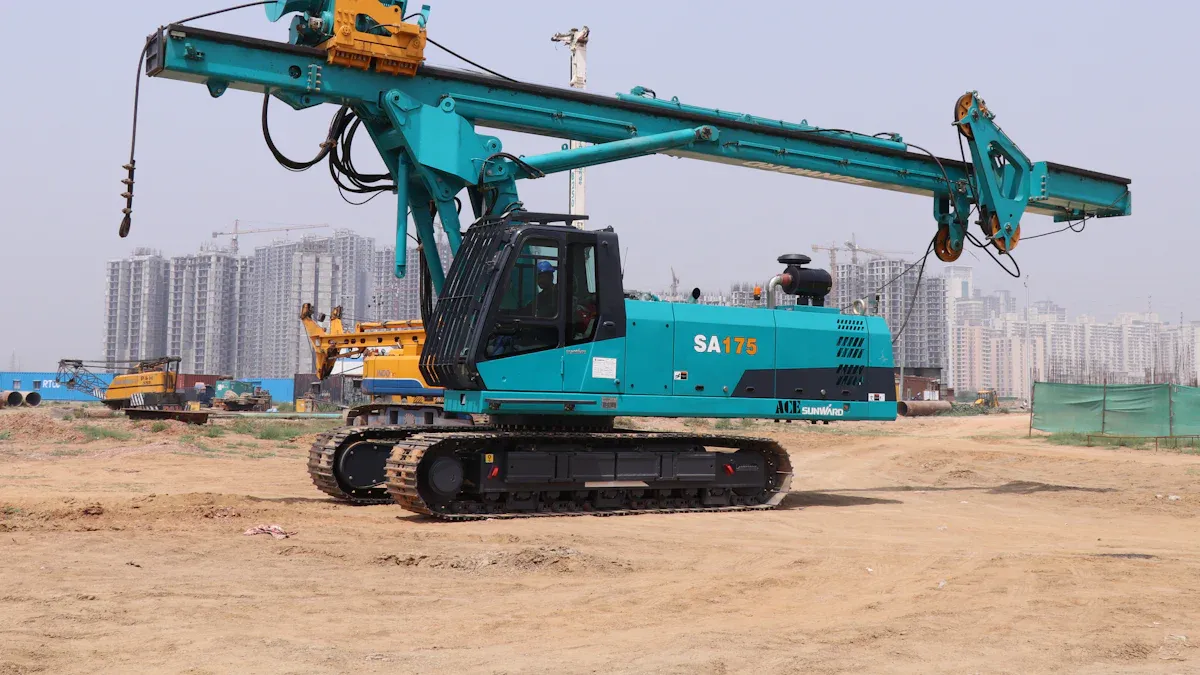
You can measure horizontal directional boring ultra real time depth with special tracking systems and sensors. The ER-GyroTracker-21 has MEMS gyro and fluxgate modules. These tools record depth right away. CEGC gives you good data that helps you be more accurate and keeps drilling safe. You get steady measurements and do not need to check by hand.
Key Takeaways
-
Ultra real-time depth measurement helps workers change the drilling path right away. This makes the drilling more accurate and lowers mistakes.
-
Advanced tracking systems make the project faster and save money. They also help keep everyone safe during horizontal directional drilling.
-
Workers need to train often and take care of their equipment. This helps them solve problems with depth tracking and finish drilling jobs well.
Why Ultra Real Time Depth Matters
Precision in Horizontal Directional Boring
You must measure depth exactly to keep your bore path correct. Using horizontal directional boring ultra real time depth gives you quick feedback. This helps you stop errors and keeps your project going. CEGC has tracking and guidance systems that help you stay precise. These systems show drill head position and depth while you work. You can change your drilling right away and lower the chance of bore deviation.
Risks of Inaccurate Depth
Wrong depth can cause serious trouble. You might need to redo work, pay fines, or fail at crossing. Many projects need accuracy again and again, especially for road, rail, river, or utility crossings. If you miss your target, you could break pipes or cables. Studies say borehole deviation affects heat transfer and hydraulic fracturing treatments. For example:
-
Acuña et al. (2008) found borehole deviation makes heat exchangers work worse.
-
Bulant et al. (2007) showed mistakes in depth measurement change fracture system shape and make treatments less successful.
Industry Demands for Real-Time Monitoring
The industry wants more real-time tracking and guidance. Contractors, utilities, and EPC projects need trustworthy data. They must know drill rig location and depth all the time. CEGC’s horizontal directional drilling machine gives you standard specs and custom options for each project. You get tracking and guidance that match your bore path and geology. This helps you meet strict project rules and avoid expensive errors.
Horizontal Directional Boring Ultra Real Time Depth Technologies
Tracking Systems and Walkover Locators
Tracking systems and walkover locators help measure horizontal directional boring ultra real time depth. These tools show where the drill head is and how deep it goes. Tracking systems give real-time distance and depth. You can steer the drill as you work. Walkover locators use a transmitter in the drill head. The transmitter sends signals about pitch, roll, depth, and temperature. A receiver above ground picks up these signals. It shows the drill head’s position on a screen.
Here is a table that explains how each part works:
|
Component |
Functionality |
|---|---|
|
Tracking Systems |
Give real-time distance and depth info. Let you steer as you drill. |
|
Transmitter (Sonde) |
Sends low-frequency EM signals about pitch, roll, depth, and temperature. |
|
Receiver |
Finds EM fields to show the drill head’s exact spot and direction. |
Walkover systems are good for shallow and short bores. You can set them up fast. They record a two-dimensional profile of the bore path. In cities or deep bores, signals can get mixed up. Wireline systems can track three-dimensional positions for more detail.
Drill Head Sensors and EMWD
Drill head sensors and electromagnetic wave detection (EMWD) systems help measure depth better. EMWD sends real-time data about the drill head’s location and surroundings. You get precise tracking within about 1.5 meters. EMWD works well for drilling under roads, rivers, and other places. It can reach depths up to 21 meters. You can check radiological activity and other environmental things.
Here is a comparison table:
|
Specification |
EMWD System |
Traditional Depth Measurement Technologies |
|---|---|---|
|
Real-time Data |
Yes |
No |
|
Environmental Monitoring |
Yes (like radiological activity) |
Limited or None |
|
Precision Tracking |
Within about 1.5 m (5 ft) |
Varies, usually less precise |
|
Depth Capability |
Up to about 21 m (70 ft) |
Varies, often less than EMWD |
|
Directional Drilling Capability |
Yes (horizontal drilling under things) |
Mostly vertical drilling |
You can use logging-while-drilling (LWD) technology like EarthStar 3D. This service maps formations and fluid boundaries up to 68 meters around the wellbore. You get ultra real-time depth measurement and learn more about what is underground.
Data Processing on Drilling Machines
Drilling machines process data from depth tracking sensors in real time. Monitoring while drilling (MWD) helps measure drill and rock-related things. Vibroacoustic signals from drilling are recorded and checked. You can find energy conditions and make drilling work better. Systems like DynaTrac give wireless depth correlation. You see real-time drilling length and can change your work for better results.
Tip: Real-time data processing helps you find problems early and make fast choices. You save time and avoid big mistakes.
Accuracy and Integration with Trenchless Drilling Rigs
You need accurate tracking and integration with your trenchless drilling rig. Real-time bore tracking and mapping make drilling better. You can put the bore path on digital maps. GPS systems record bore path details like depth, location, pitch, and azimuth. This helps you report your project and follow rules.
CEGC’s horizontal directional drilling machine is ready for tracking-system integration. You can change torque, thrust, rod system, and control package for your bore length and geology. You get standard specs and custom options for your project. You achieve repeatable accuracy and stability for road, rail, river, and utility crossings.
Note: Integrated tracking systems help you meet strict project rules and avoid penalties. You get reliable horizontal directional boring ultra real time depth and better project results.
Benefits and Best Practices
Project Efficiency and Cost Savings
Ultra real time depth measurement helps your project work better. Real-time tracking lets you change the bore path while drilling. You can make quick choices and save money. Here are some benefits:
-
You work better by making changes right away.
-
You spend less time waiting, so you finish faster.
-
You save money by drilling in the best way.
-
You make safer choices to stop well control problems.
Safety and Crossing Success
Safety is important in every horizontal directional drilling job. Real-time tracking helps you stay away from dangers and keep your bore path correct. You can react quickly to changes underground. This lowers risks for road, rail, river, or utility crossings. You protect workers and equipment with advanced tracking systems.
Tip: Always check depth and bore path during crossings to stop expensive mistakes.
Overcoming Challenges in Depth Tracking
You deal with problems like changing ground, broken equipment, and signal interference. These things can make tracking less accurate and harder to control. Keeping equipment in good shape and having skilled workers helps stop failures. Real-time data analytics can help you make better choices on-site.
|
Technique |
Description |
|---|---|
|
Advanced Steering Technologies |
Let you change the bore path in tough places right away. |
|
Measurement-While-Drilling (MWD) |
Watch drill progress for exact depth tracking and bore path control. |
Best Practices with CEGC HDD Rigs
You get the best results by using proven steps. CEGC horizontal directional drilling rigs work well with advanced tracking systems. Operators should take online training courses that last 90–120 minutes and follow OSHA rules. You get a certificate and wallet card when you finish. Hands-on tests with supervision help you learn safety topics.
Note: Training helps you use tracking systems the right way and keep depth accurate for your whole project.
Ultra real time depth measurement makes your work safer and more accurate. Advanced MWD tools help you change the drilling path fast. People working on the project get quick benefits from these systems. CEGC’s tracking solutions help you get better results. Use good steps and new technology for successful horizontal directional drilling.
Real-time data helps you work faster and reach your project goals.
FAQ
What is ultra real time depth in horizontal directional drilling?
Ultra real time depth means you see the drill head’s depth instantly. You can adjust your drilling path right away for better accuracy.
How does CEGC’s tracking system help you?
You get live data on drill position and depth. This helps you avoid mistakes and finish your project faster.
Can you use these systems for all ground types?
Yes. CEGC horizontal directional drilling machines work with many tracking systems. You can drill in soft soil, rock, or mixed ground.


