
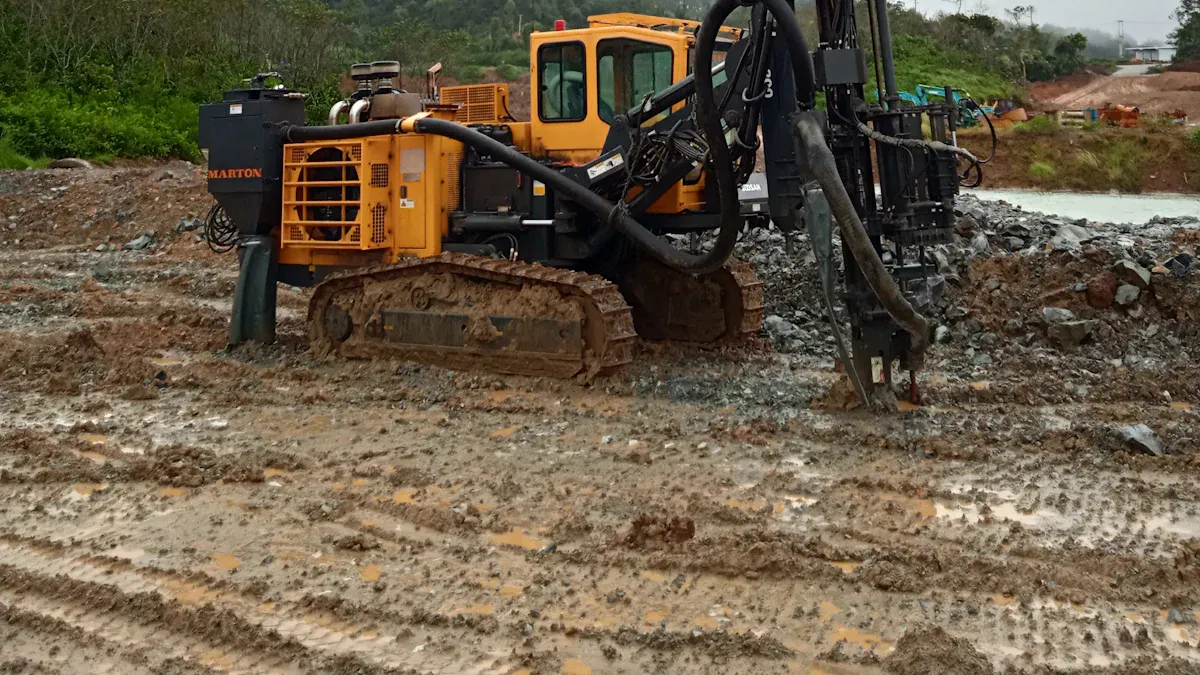
You can achieve Horizontal Directional Drilling Rig Minimal Error by starting with a solid plan and choosing the optimal drilling location while checking for underground utilities. This ensures safety and precision throughout your project. CEGC offers horizontal directional drilling machines that meet market-standard specifications, helping you maintain accuracy and reliability. Proper crew training and real-time monitoring are essential to prevent equipment failures and minimize errors.
-
Common errors include:
-
Striking underground utilities
-
Equipment malfunctions
-
Unexpected ground conditions
-
Regulatory compliance issues
-
Preparing for emergencies allows you to effectively manage drilling fluid returns and address the discovery of unknown utilities, ensuring your horizontal directional drilling rig operates with minimal error.
Key Takeaways
-
Begin with a good plan and check the site well to stop expensive mistakes and keep everyone safe. - Train your crew so they learn more and get better skills, which helps stop mistakes and keeps the job safer. - Use real-time monitoring and quality checks to find and fix problems fast while drilling.
Site Assessment and Planning for Minimal Error
Subsurface Utility Mapping and Soil Analysis
You begin each horizontal directional drilling rig minimal error job by making a map of all the utilities and checking the soil. Early checks help you plan the bore path to go around things in the way. You use tools like ground-penetrating radar and electromagnetic locators to make a full map. You need clear records and digital maps for the team to use. When you put utility maps together with soil data, you can see problems before they happen and stay away from trouble. If you skip a utility check, you might have expensive delays, get fined, or be blamed for mistakes. You keep the work site safe and protect your good name by finding possible problems early.
New ways to study soil let you watch in real time and guess what will happen next. Measuring While Drilling systems check the soil by watching how hard it is to drill and how fast the drill moves. Machine learning models use drilling data to guess what the ground is like. These tools help you drill better and make fewer mistakes. You use both geology and geophysics with utility maps to keep everyone safe.
Tip: Paying for a utility check costs less than hitting a utility.
Bore Path Planning and Permit Compliance
You plan the bore path so you do not hit anything or any utilities. Good planning stops expensive changes and keeps your project on track. For example, moving a sewer line saved $200,000 on one job. You mark where you start and finish, and show overhead lines and utilities with flags or paint. You keep space between your work and power lines to stop damage.
You have to follow rules for getting permits. The table below shows the main rules:
|
Requirement |
Description |
|---|---|
|
Permits |
Get permits from local, state, and federal offices. |
|
Safety Standards |
Follow OSHA, EPA, DOT, and local digging rules. |
|
Clearance |
Stay 5 ft. from distribution lines, 10 ft. from transmission lines. |
|
PPE |
Wear the right PPE as OSHA says. |
|
Documentation |
Give finished drawings and papers to the right people. |
You also follow rules to protect the environment. You use real-time tools to watch drilling and stop mistakes. You check your equipment often and control water to keep the hole safe. You work with environmental groups to lower harm. You handle drilling fluids so you do not pollute and throw away waste the right way.
Equipment Selection and Preparation
You pick horizontal directional drilling equipment based on the job site and what the operator needs. You use feedback control systems to help you see problems and fix them fast. You choose machines with the right specs and special features for the job, like CEGC’s horizontal directional drilling machine. You want things like strong frames, good guidance, and systems that talk to each other and share data.
You get equipment ready by doing these steps:
-
Make sure all marks are easy to see and match your plans.
-
Put the drill rig at the right spot and angle for the bore path.
-
Lock the rig in place the way the maker and soil say.
-
Hook up and test the mud mixing and recycling systems.
-
Check that all locating tools work right.
-
Get pilot bits and reamers ready and check them.
-
Test all ways the crew talks to each other.
-
Go over goals, dangers, and what to do in an emergency.
You use the newest horizontal directional drilling equipment, like machines that steer themselves and send data fast. These tools help you stay on the right path and give real-time info for steering. You also use vibration control and keep mud moving to make the hole better and control pressure.
You mark important spots along the bore path to keep things safe. You use tracking tools to watch the drill stem and help the operator. You find and mark overhead lines and utilities so you do not hit them. You keep plenty of space from other utility lines.
Note: Careful site checks and planning help you reach horizontal directional drilling rig minimal error and make fewer mistakes.
Training, Monitoring, and Quality Control to Reduce Drilling Errors
Crew Training and Best Practices
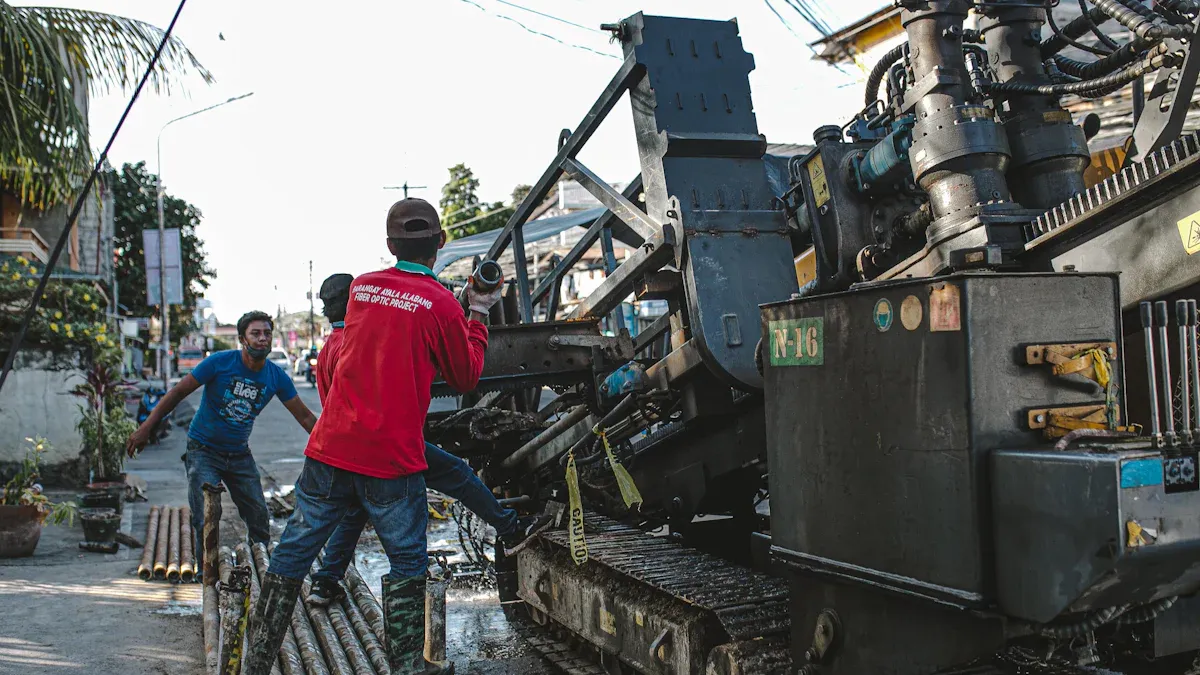
You make your crew strong by giving them good training. Training helps your team learn both the skills and science of horizontal directional drilling. You use lessons from top companies like Vermeer. These lessons are for new and skilled operators. You keep teaching your crew so they are always ready for new jobs.
Some helpful training programs and awards are:
-
You get a Certificate of Achievement when you pass tests.
-
You earn special hardhat stickers to show your skills.
-
Certified crew members get jackets.
-
You learn how to fix tool problems, use all features, and work better in the field.
|
Feature |
Description |
|---|---|
|
Certificate |
You get this after you finish your test. |
|
Jacket |
You can earn an 'Erdos Miller Certified' Jacket. |
|
Sticker |
You get a special Hardhat Sticker. |
|
Skills Developed |
You learn to fix errors and work better. |
You tell your team to share ideas and talk openly. Short meetings let everyone speak up without worry. After each job, you talk about what went well and what did not. You use these talks to do better next time and make fewer mistakes.
Tip: Training and talking with your crew helps you make fewer drilling errors and keeps everyone safe.
Real-Time Monitoring and Performance Evaluation
You use real-time monitoring to keep your project going well. Bi-electromagnetic sensing technology measures drilling length by itself. This means people make fewer mistakes and the work is more exact. Good data helps you learn important things. You clean and check the data so it is correct.
Watching drilling conditions helps you see changes fast. You can stop problems before they start. This saves energy and money. You watch how things are going and change your plan if needed. You use horizontal directional drilling machines with tracking systems for better control.
Note: Watching your work in real time is very important for making fewer mistakes with your horizontal directional drilling rig.
Equipment Maintenance and Error Tracking
You keep your equipment working well by checking it often. You do checks every month and look at things every day. You look at hoisting equipment, drilling rods, mud systems, and drill bits for damage. You check oil and cooling fluids to make sure the engine works right.
Some common problems and fixes are:
-
If the hole bends, hang the drill cone at the bend and scan the hole again and again.
-
If the hole gets bigger or smaller, fix any falls fast and use a mud wall.
-
If the drill gets stuck or buried, check the mud and clear out waste.
-
If the drill sticks, lift it gently.
-
If something drops, pick it up fast with the right tools.
You follow steps before, during, and after drilling:
-
Before drilling: Look for dangers, check utility maps, block off the area, and check machines.
-
While drilling: Make sure everyone wears PPE, keep people away, and check for missed utilities.
-
After drilling: Clean tools and trash, check new pipes for leaks, and make sure all utilities are safe.
You keep track of mistakes and find out why they happen. Automatic checks help you control where the drill goes. You learn how to read drilling problems and fix them. You look at both flat and curved paths to be more exact and make fewer mistakes.
Callout: Checking your equipment and tracking mistakes helps your horizontal directional drilling rig work safely and well.
You can get horizontal directional drilling rig minimal error by working on site checks, making plans, teaching your crew, watching the work, and checking quality. The table below shows how each part helps your project do well:
|
Aspect |
Benefit |
|---|---|
|
Planning |
Finds problems early and helps you change your plans. |
|
Training |
Helps your crew learn skills for safe and good work. |
|
Monitoring |
Finds mistakes quickly and keeps drilling going right. |
|
Quality Control |
Stops bad work and keeps your results safe. |
Pick CEGC’s solutions that you can change for your needs and keep making your work better. You can make fewer mistakes and give good results.
FAQ
What is the main benefit of using a horizontal directional drilling rig?
You can put pipes underground very accurately. There is less mess on the ground above. Roads and grass stay nice while you work on your project.
How do you avoid errors during hdd jobs?
You make a good plan and check where utilities are. You teach your crew what to do. Watching the job as it happens and checking machines helps you make fewer mistakes.
Why is crew training important for directional drilling?
You need workers who know how to use the equipment safely. Training helps your team find problems early. It also teaches them the best ways to do each job.


