
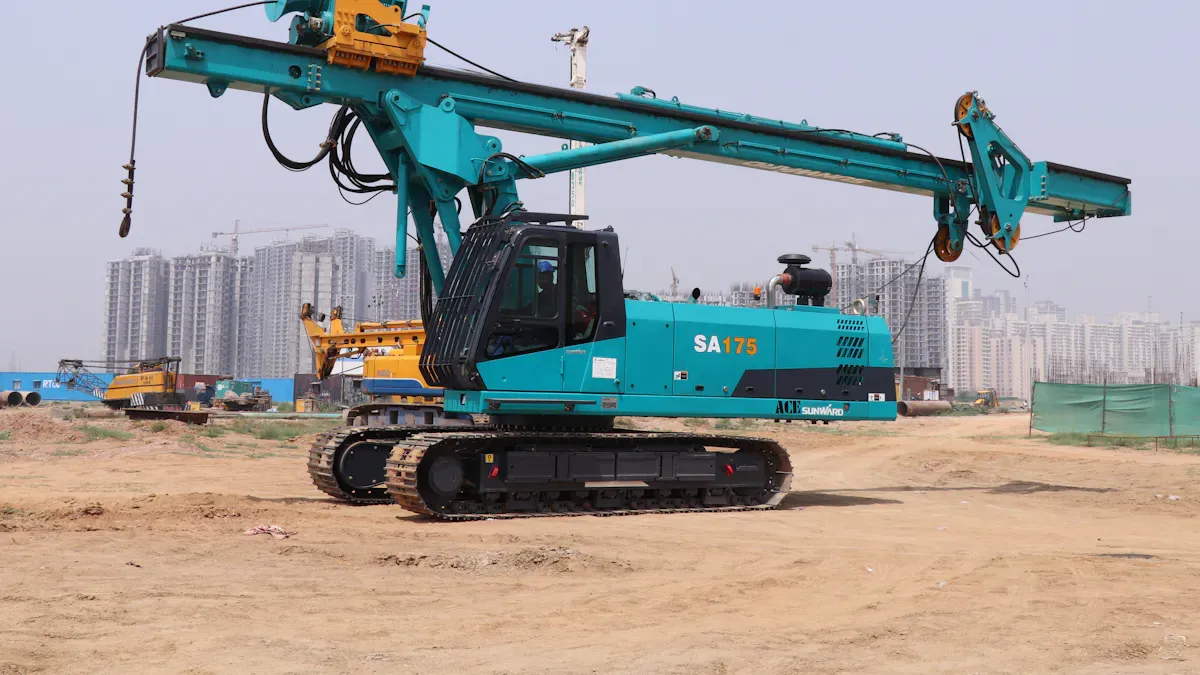
Hydraulic static pile driver uniform force means the pile driver pushes with the same force everywhere on the pile. This force helps the hydraulic static pile driver stay safe and work well. Engineers use tools like APDL, clamp systems, and automatic management to make the design better. CEGC uses hydraulic systems to make less noise and keep the environment safe.
Key Takeaways
-
Hydraulic static pile drivers use the same force to push piles down. This helps keep buildings and bridges safe and steady.
-
Smart sensors and automatic controls help keep the pressure even. This lowers the chance of accidents and helps workers build faster.
-
Better design makes hydraulic pile drivers lighter and stronger. This saves money, makes less noise, and is better for the environment.
Hydraulic Static Pile Driver Uniform Force Explained
Uniform Force Definition
Hydraulic static pile driver uniform force means the machine pushes the pile with the same force everywhere on the pile head. This steady force helps the pile go straight into the ground. Engineers use hydraulic systems to control how much force is used. The system uses oil or fluid to make pressure. The pressure spreads out evenly on the pile.
Other pile driving machines work in different ways. Some use a hammer to hit the pile. The helmet is a heavy steel block between the hammer and the pile. It spreads the hit across the pile head. The helmet must touch the pile evenly. If it does not, the pile can get damaged. The table below shows how uniform force is different from other ways:
|
Method |
How Force Is Applied |
Key Feature |
|---|---|---|
|
Hydraulic Static Pile Driver Uniform Force |
Even, steady pressure from hydraulic system |
Uniform force at all points on pile |
|
Hammer with Helmet |
Sudden blow, spread by helmet |
Helmet must fit well to avoid damage |
Hydraulic static pile driver uniform force gives better control. The pile moves smoothly. There is less risk of cracks or breaks. The hydraulic system design makes this happen. Engineers work to make the system accurate and balanced.
Importance for Performance and Safety
Hydraulic static pile driver uniform force helps performance and safety. When the force is the same everywhere, the pile does not bend or twist. The pile goes straight down. This helps the pile hold up buildings and bridges. Good performance means the pile can carry more weight.
Safety is very important in construction. Uneven force can cause accidents. Workers can get hurt if the pile breaks. Hydraulic static pile driver systems use sensors to check the force. The sensors help keep the force even. The clamp system design is also important. The clamp holds the pile tight. It spreads the hydraulic force evenly. This keeps the pile safe while driving.
Hydraulic systems help the environment too. They make less noise than hammer systems. Less noise means less harm to people and animals nearby. Using hydraulic static pile driver uniform force supports green construction. Engineers use optimization to make the system better. Optimized design means the machine works well and uses less energy.
Hydraulic static pile driver uniform force is important in modern construction. It helps engineers build strong and safe structures. Good design and hydraulic control lead to better results.
Technical Principles and Structural Design

Hydraulic Force Distribution
Hydraulic static pile driver uniform force relies on how power spreads. Engineers use sensors and actuators to change the force. The pile driver uses mechanical ideas to push piles straight down. Structural engineering keeps the force steady while driving piles. Control theory helps control hydraulic forces exactly. The design must work with different soils and conditions. Smart technology makes the system work better by changing settings quickly. The table below shows the main ideas for hydraulic force distribution:
|
Principle Type |
Description |
|---|---|
|
Control System Design |
Sensors and controllers change power for exact operation. |
|
Mechanical Principles |
Force is used well in pile driving. |
|
Structural Engineering |
Force stays steady while driving piles. |
|
Control Theory |
Hydraulic forces are controlled exactly. |
|
Adaptability to Working Conditions |
Designs fit different soils and needs. |
|
Intelligent Technology Integration |
Smart systems change and improve for better results. |
Clamp System and Load Application
The clamp system holds the pile tight. It spreads hydraulic force across the pile head. Engineers make clamps to fit the pile shape and size. This stops bending or twisting. The hydraulic pile hammer uses clamps to keep piles safe. Good clamp design makes performance and safety better. The load must stay even to stop damage. Structural optimization helps engineers make clamps that work well everywhere.
Dimensional Measurement and Accuracy
Dimensional measurement checks pile and clamp sizes. Engineers use sensors to measure and control accuracy. The pile driver uses these checks to keep force even. Static analysis and finite element analysis help engineers study the structure. They build models to make the design better. Better design makes accuracy and performance higher. Construction projects need careful measurement for safety and quality.
Optimization Methods in Design
Parametric Design and APDL/ANSYS
Engineers use parametric design to make the hydraulic static pile driver better. Parametric design lets them change part shapes and sizes fast. They use APDL in ANSYS to build models on the computer. APDL helps them test new ideas without making real machines each time. Engineers use special math tools to find the best design. Particle swarm optimization and improved BP neural networks help make strong but light structures. These methods keep the hydraulic static pile driver safe and working well.
Many engineers use special tests to see how changes affect the machine. Some common test designs are:
-
Orthogonal test design
-
Central composite design
-
Box–Behnken design
-
Latin square design
-
Latin hypercube design
These tests help engineers compare different things. They find the best settings for the hydraulic system and clamp design. This process makes the pile driver more accurate and helps it work better on the job.
Static and Dynamic Analysis
Static analysis checks how the pile driver handles steady forces. Engineers use finite element analysis to study the machine’s structure. They build models to see how the hydraulic force spreads out. This helps them find weak spots and fix them. Static analysis makes sure the pile driver stays strong when working.
Dynamic analysis looks at how the pile driver handles changing forces. Engineers study how the hydraulic pile hammer moves and how the pile reacts. They use computer tools to guess how the machine will work. These tools help them design safer machines. Engineers use both static and dynamic analysis to make the pile driver more accurate and reliable.
Tip: Engineers use finite element analysis to test both steady and changing forces. This helps them build pile drivers that last longer and work better.
Structural Optimization Design
Structural optimization design helps engineers make pile drivers lighter and stronger. They use special models to test different structures. Particle swarm optimization makes the large-body structure of the hydraulic static pile driver better. Improved BP neural networks help lower the weight but keep the strength and stiffness. Engineers use test designs to compare results and pick the best choices.
The table below shows some structural optimization techniques and what they do:
|
Optimization Technique |
Description |
Outcome |
|---|---|---|
|
Particle Swarm Optimization |
Makes the large-body structure of the hydraulic static pile driver better. |
Lowered mass from 82,556.1 kg to 65,046.15 kg (21% less). |
|
Improved BP Neural Network |
Makes the optimization process better with particle swarm optimization. |
Got better results in lowering mass while keeping strength and stiffness. |
|
Experimental Design Methods |
Uses orthogonal test design and others for structural optimization. |
Helped compare test results and design choices with math. |
Engineers use these methods to build better designs. They make sure the hydraulic static pile driver uniform force stays even. This makes the machine work better and keeps it safe on the job. Structural optimization design helps engineers follow rules and build machines that work well in many places.
Automatic Management and Operational Efficiency
Sensing Devices and Precision Control
Modern hydraulic static pile drivers use smart sensors. These sensors check force, position, and movement. The system looks at the data and changes the hydraulic pressure. This keeps the force even on the pile. Engineers use automatic controls for better accuracy. The system design helps workers avoid mistakes. Precision control makes construction safer and faster.
Indentation Force Management
Indentation force management means controlling how hard the pile is pushed. The hydraulic system uses sensors to watch the force all the time. If the force changes, the system fixes it right away. This protects the pile and the machine. Engineers use structural optimization design to keep the force steady. Good design helps the pile driver work in different soils. This makes the job more efficient and reduces equipment wear.
Environmental and Safety Benefits
Hydraulic static pile drivers are good for the environment. They make less noise than hammer machines. Less noise helps people and animals near the site. The automatic system lowers accident risks. Sensors and controls stop the machine if there is a problem. This keeps workers safe. Optimization in design helps the machine use less energy. These features support green construction and make the job more efficient.
Practical Impact and Case Studies
Performance Improvements
Engineers noticed big changes in how well pile drivers work. The hydraulic static pile driver pushes piles with steady force. This makes the piles strong and helps them last longer. Workers can finish their jobs faster because the machine runs smoothly. Sensors and automatic controls help keep the force the same. The pile driver uses less energy and does not make much noise. These things help workers build safer buildings.
Note: Steady hydraulic force helps stop mistakes and keeps piles straight.
Real-World Examples
Many companies use hydraulic pile drivers for city jobs. In one city, workers used this machine to build a bridge. The piles went into the ground without any cracks. The project finished before the deadline. Another team used the machine for a tall building. They saw less damage and did not need many repairs. The machine worked well in both soft and hard ground.
|
Project Type |
Result |
Benefit |
|---|---|---|
|
Bridge |
No pile cracks |
Faster build |
|
High-rise |
Less pile damage |
Fewer repairs |
Optimized Design Outcomes
Engineers use new ways to design better pile drivers. They test models on computers to see what works best. The hydraulic system stays strong but uses less material. Teams say costs are lower and work sites are safer. The machine can be used for many kinds of building jobs. Optimized design helps workers build faster and safer. 🚧
Hydraulic static pile driver uniform force helps engineers build strong and safe structures. Technical design and automatic systems make the machine work better. Optimized design helps save money and time. The table shows how new technology makes the machine more efficient, needs less fixing, and lasts longer.
|
Impact on Lifecycle and Maintenance |
Description |
|---|---|
|
Efficiency Enhancement |
New technology helps the machine work faster. |
|
Reduced Maintenance Needs |
The machine needs less fixing than smaller ones. |
|
Extended Equipment Lifespan |
Using technology helps the machine last longer. |
FAQ
What makes hydraulic static pile drivers safer than traditional machines?
Hydraulic static pile drivers have sensors and clamps. These tools help keep the force even. This lowers the chance of accidents. Workers stay safer when using these machines.
How do engineers achieve high precision prediction in pile driving?
Engineers use computers and sensors to help them. They gather information about the piles. This lets them guess how the piles will move. It helps them plan better and build more accurately.
Why are dynamic characteristics of pile driving important?
Dynamic characteristics show how piles act when pushed or moved. Engineers study these actions to make buildings stronger. This also helps stop damage from happening.
Tip: Engineers look at both steady and changing features for better results.


