

You often see micro tunneling clogs when slurry density drifts high during tunneling jobs. Micro tunneling clogs when slurry density drifts high can make your tunneling work slower. Micro tunneling clogs when slurry density drifts high make the flow thick and hard to control. Micro tunneling clogs when slurry density drifts high make you use more energy. CEGC knows micro tunneling clogs when slurry density drifts high can put your tunneling work in danger.
Key Takeaways
-
Check slurry density often so clogs do not happen. Use tools like Marsh Funnel Viscosity to help the slurry move well. Watch for early signs of clogging, like slow tunneling or strange machine noises. Fix these problems fast to keep things working well. Change the slurry mix if the soil is different. Use less bentonite or add water if the density gets too high to keep tunneling safe.
Causes of micro tunneling clogs when slurry density drifts high
Slurry flow changes and filter cake formation
You face big challenges in micro tunnelling when slurry density rises. High-density slurry changes how the mixture flows through the tunnel. The flow becomes thick and slow. This makes it hard for the tunnel machine to move soil and keep the tunnel face stable. When you use bentonite in the slurry, the particles can start to pile up and block the tiny spaces in the soil.
Filter cake forms when these particles stick together and cover the tunnel face. This layer can block water and slow down the movement of soil and slurry. You see this problem most in granular soils, especially sand. Sand lets the bentonite slurry move in and fill the gaps. The filter cake gets thicker as more particles build up. This can stop the flow and cause a clog.
Here is a table that shows how filter cake forms and what happens when slurry density gets high:
|
Aspect |
Description |
|---|---|
|
Mechanisms of Particle Deposition |
Particles with different sizes fill the soil pores, making the ground stiffer and less able to let water through. |
|
Effects of Slurry Concentration |
Higher slurry concentration makes clogging happen faster. If you raise the concentration from 30 g/l to 60 g/l, the chance of clogging goes up by 2.66%. |
|
Impact of Slurry Pressure |
If you increase the pressure from 30 kPa to 50 kPa, the chance of clogging goes down by 2.41%, but the clogging goes deeper by 13%. |
|
Pore Volume Changes |
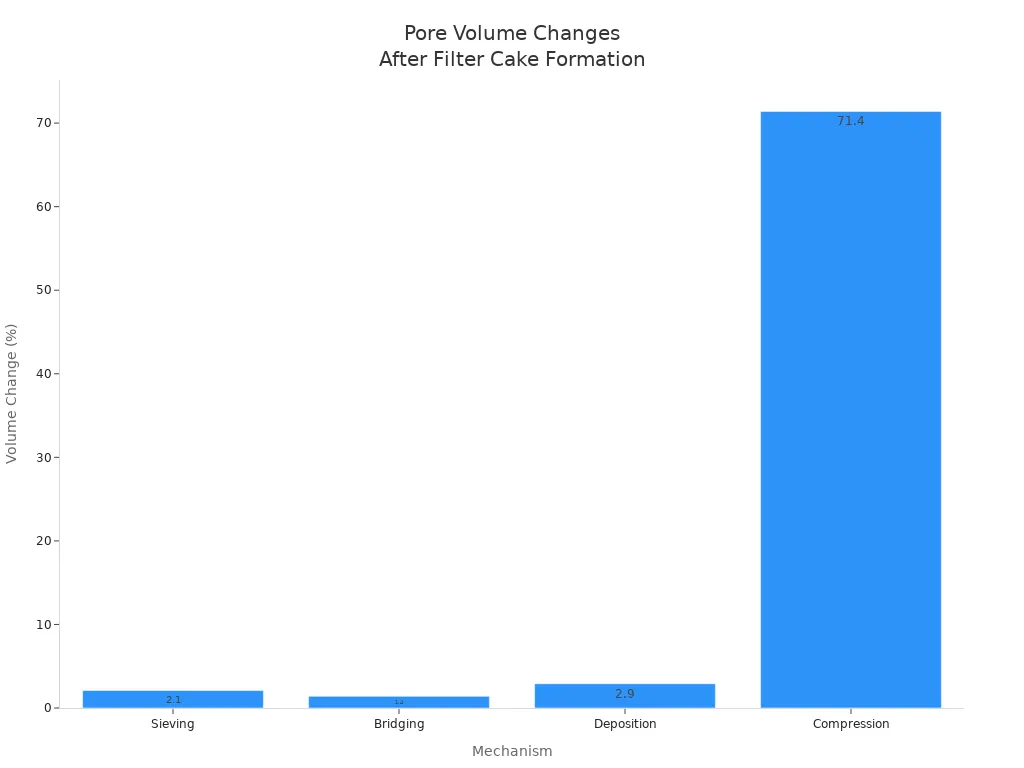
After filter cake forms, the space in the soil drops a lot. Sieving, bridging, and deposition all play a part. The biggest change is in pore compression, which goes up by 71.4%. |
You notice that bentonite works well in many tunnelling jobs, but if you do not control the density, the filter cake can get too thick. This makes it hard for the tunnel boring machine to keep moving. You need to watch the slurry density and adjust it to avoid these problems.
Material buildup and reduced transport
You also see material buildup when the slurry gets too dense. The thick slurry cannot carry soil and rock away from the tunnel face as well. This leads to piles of material inside the pipe or around the cutting head. The tunnel machine has to work harder, and the risk of clogging goes up.
Clay soils make this problem worse. Sticky clay can grab onto the tunnel boring machine and the pipes. The stickiness of clay depends on its plasticity and cohesion. High-plasticity clay with a plasticity index between 20 and 50 and cohesion values from 4.7 to 19.5 kPa can stick to the machine in large amounts. This raises the risk of clogging.
Here is a table that shows how clay stickiness affects clogging:
|
Cohesion Values (kPa) |
Adhesion Amounts (g) |
Clogging Risk |
|
|---|---|---|---|
|
20–50 |
4.7–19.5 |
38–53 |
Significant |
|
Dispersed Foam Agent |
1.8–4.3 |
10–15 |
Reduced |
Fine-grained soils, like clay and silt, can mix with bentonite and make the slurry even thicker. This slows down the movement of material and can stop the tunnel machine. You need to check the soil type before you start tunnelling. If you know you will work in clay or fine sand, you must watch the slurry density closely.
You can see that high slurry density affects both the flow and the transport of material. If you do not manage the bentonite content and the soil type, you will face more clogs and delays in your tunnelling project.
Warning signs and prevention strategies
Recognizing early clogging symptoms
You should look for signs of clogging early. Watch if tunneling slows down or needs more energy. Material might pile up near the tunnel face or inside pipes. The tunnel machine could shake more or make strange sounds. These signs mean slurry density is too high and you must fix it.
Here is a table that shows how energy changes can warn you about clogging:
|
Energy Type |
Description |
Observations |
|---|---|---|
|
Elastic Strain Energy |
Goes up when rocks change shape as clay minerals break away. |
Quick rise happens between 760° and 800° during argillization, showing possible clogging. |
|
Cohesive Energy |
Shows how slurry sticks to the cutter surface. |
Big increase when slurry sticks to the cutter, meaning clogging problems. |
|
Kinetic Energy |
Goes up as slurry moves under the cutter. |
Growth slows as slurry gets heavier, showing clogging might happen. |
Monitoring and controlling slurry density
You need to check slurry density often while tunneling. Use sensors or test by hand to measure density. If density goes up, change the mix right away. Add water or use less bentonite to keep flow smooth. Always control slurry so it matches your soil type.
Tip: Pick the right slurry pumps for your job. Pumps should fit the particle size, density, and thickness of your mix. Use stirring systems to stop sediment from settling in pipes. Make pipelines with the right slope so slurry moves and clogs do not form.
Operational adjustments and maintenance
You can stop clogs by using good maintenance and operation steps. Keep slurry moving faster than the critical speed. Make pipeline routes straight as much as possible. Check reducers and pipe sizes often. Always control slurry concentration, especially with clay or big particles.
-
Use strong pumps to keep slurry moving.
-
Check your system often and fix problems fast.
-
Control the mix and flow to keep tunneling safe and on track.
You can stop micro tunneling clogs if you watch slurry density. Check it often with tools like Marsh Funnel Viscosity and sensors. These tools help your work stay safe and easy:
|
Contribution to Operations |
|
|---|---|
|
Marsh Funnel Viscosity |
Makes sure the flow is good for tunneling |
|
Density Measurements |
Keeps slurry at the right level |
|
Filtration Loss Assessments |
Helps stop drilling problems early |
|
Real-time Monitoring |
Lets you fix problems quickly |
If you use good methods, your work gets better. You also help the environment and save money.
-
Your project stays on schedule.
-
You make less waste and pollution.
-
You follow the rules and standards.
Watch for warning signs and check your system a lot. Good slurry control keeps tunneling safe and working well.
FAQ
What is the main cause of micro tunneling clogs?
You often see clogs when slurry density rises. Thick slurry slows down movement and causes material to build up during tunnelling operations.
How do you keep maximum tunnelling safety?
You should monitor slurry density and use proper slurry pressure shields. These steps help you avoid clogs and keep your team safe.
Why does the tunnel machine slow down in clay?
You notice sticky clay can block the cutter. This slows the machine and increases the risk of clogging.


