
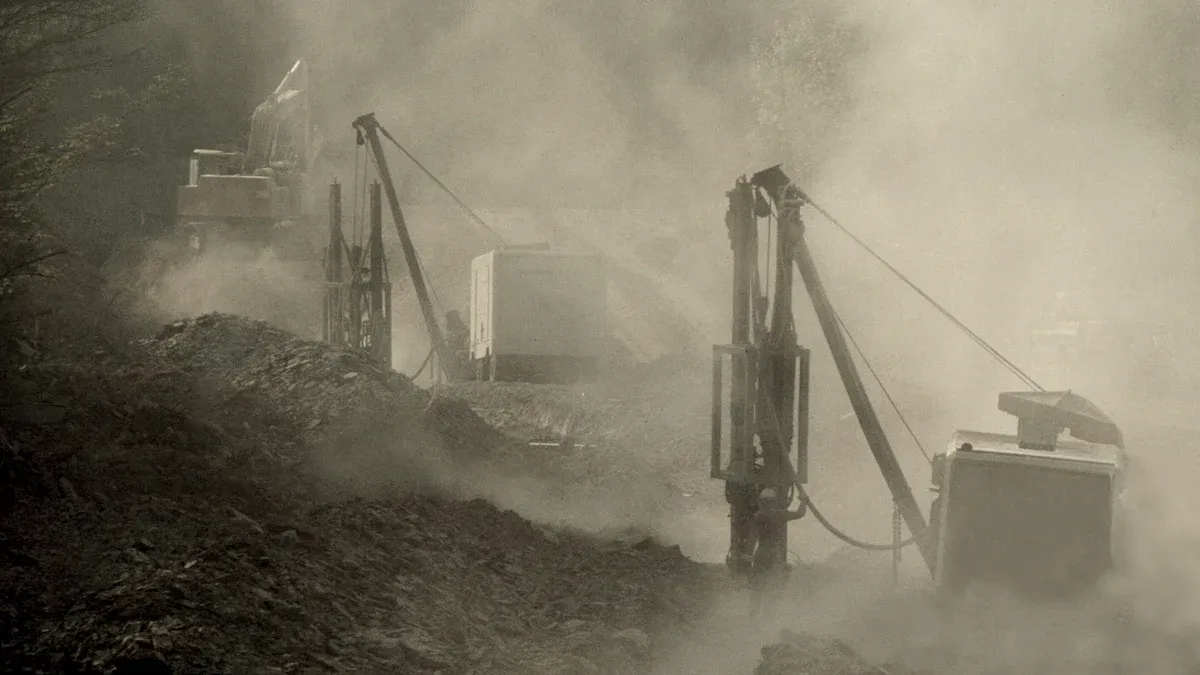
You want to cut your energy bills. Mining Drill Low Power System Beats High Bills gives you that power. With electric drill rigs, you see cooler engines, fewer breakdowns, and less wasted fuel. CEGC users save millions over ten years. You enjoy steady costs and fewer surprises every month.
Key Takeaways
-
Low power mining drills use less energy and save money. They also work better, so you save more over time. Real-time alerts tell you about problems right away. Quick repairs fix things fast and stop long breaks. This helps the work go smoothly and makes more things get done. Picking the right low power system keeps costs down. It also helps the machines work better. This makes mining bring in more money.
Low Power Mining Drills
Key Features And Benefits
You can control mining costs better with low power drills. These systems use less energy and work well every day. You get fewer breakdowns because alerts tell you about problems fast. Repairs happen quicker since you know what is wrong right away. You do not waste fuel and your results stay the same each day.
Check out what makes low power drills special:
|
Benefit |
Description |
|---|---|
|
Alerts help stop delays in your work. |
|
|
Predictable Fragmentation |
Drills follow plans for steady results. |
|
Faster Repairs |
Quick reports mean repairs happen faster. |
|
Reduced Waste Ingress |
Good control keeps waste low. |
|
Elimination of Double Entry |
No lost records or paper saves time. |
|
Real-time KPIs |
You see KPIs almost right away to help you decide. |
You also save energy. Low power drills use less electricity but still dig deep.
How They Differ From Traditional Systems
Low power drills are not like old rigs. They use less energy and need less torque. You pay less for electricity and repairs. Old drills use more power and get hotter, so bills go up and you lose time.
Low power drills give steady results and waste less. You do not have double entry or lose records. You make choices faster with real-time KPIs. Your mining runs well and you save money each month.
Cost And Efficiency Comparison
Initial Investment Vs. Long-Term Savings
You want to make smart choices for your mining operations. You need to look at both the initial investment and the long-term savings. Low power mining drills often cost less to set up. You spend less on equipment and installation. This helps you keep your budget under control.
Some cost factors include the price of the drill, the power supply, and the setup process. You may pay more for advanced technology at first. Over time, you save money because your energy bills drop. You also spend less on repairs and maintenance. Low power systems help you avoid surprise costs. You get steady performance and predictable expenses.
Tip: Always compare the upfront cost with the savings you get each month. This helps you see the real value of your mining operations.
Hash Rate And Power Consumption
You need to check both hash rate and power consumption to measure efficiency. Hash rate shows how fast your mining operations work. Power consumption tells you how much energy you use. If you choose the right system, you get more output for less energy.
Let’s look at how ASIC miners and GPU miners compare:
|
Miner Type |
Power Draw (W) |
|
|---|---|---|
|
GPU |
~1,400,000 J/TH |
~350W |
|
ASIC |
~15 J/TH |
~3,500W |
ASIC miners are built for specific tasks. They give you higher output per watt. You get more consistent returns, especially when electricity prices are low. GPU mining can be profitable during good altcoin cycles. It is more sensitive to market changes and can be risky.
-
ASIC mining profitability depends on network difficulty and hardware lifespan.
-
GPU mining can change quickly based on market conditions.
-
ASIC miners are optimized for certain algorithms and deliver steady results.
-
GPU miners use more energy for each hash and can cost more over time.
You need to consider these cost factors when planning your mining operations. If you want stable returns and lower energy bills, ASIC miners often give you better results.
Maintenance And Downtime
You must think about maintenance and downtime. Low power mining drills need less maintenance. You spend less time fixing problems. This reduces your cost and keeps your mining operations running smoothly.
Old systems break down more often. You pay more for repairs and lose valuable time. Low power systems alert you to issues early. You fix problems before they get worse. This keeps your cost low and your mining operations efficient.
Note: Less downtime means you earn more and spend less. You keep your mining operations active and avoid extra cost factors.
You see the benefits when you choose low power mining drills. You control your cost, improve efficiency, and keep your mining operations steady. You make smart decisions that help your business grow.
Mining Drill Low Power System Beats High Bills: Real-World Impact
Case Studies Of Cost Reduction
You want proof that mining drill low power system beats high bills. Look at real companies. One mining site in Nevada switched to a mining drill low power system beats high bills. Their energy bills dropped by 30% in the first year. They saw fewer breakdowns and less downtime. Another company in Australia used mining drill low power system beats high bills for a remote project. They cut fuel costs by half and finished the job ahead of schedule.
You can see the results in your own operation. Lower bills, faster repairs, and steady performance make a big difference.
Here is a quick look at the savings:
|
Company |
Cost Reduction |
Downtime Cut |
Project Speed |
|---|---|---|---|
|
Nevada Mine |
30% |
25% |
On Target |
|
Australia Op |
50% |
40% |
Faster |
Lessons From Industry Adoption
You learn from others who use mining drill low power system beats high bills. Industry leaders say you get more control over costs. You avoid surprise repairs. You keep your team safe with cooler engines and fewer breakdowns. You also meet green energy goals. When you choose mining drill low power system beats high bills, you set your business up for long-term success.
Take action now. Make the switch and see how mining drill low power system beats high bills in your operation.
Performance And Savings Trade-Offs
Drilling Speed Vs. Efficiency
You want your mining to be fast. You also want it to use less energy. Low power mining drills help you do both. You get steady speed and save energy. You see fewer breakdowns, so your rigs work more. You can check efficiency as you work. You change settings for different rocks and depths. This keeps your mining smooth and easy to plan.
Electric mining systems make things more efficient. You use less fuel and pay less for repairs. You spend less on ventilation underground, sometimes by 40%. You need fewer workers because automation helps rigs work more. You finish more work with fewer stops. You see better efficiency every day.
-
You spend less on fuel.
-
You pay less for repairs.
-
You save money on ventilation.
-
You use your rigs more.
-
Automation makes your mining more efficient.
You control your mining. You make smart choices to boost efficiency and keep your team safe.
Impact On Total Savings
You save money when you use low power mining drills. You spend less on energy and repairs. Your rigs work more, so you finish jobs faster. You track efficiency with digital tools. You find problems early and fix them before they get worse. You enjoy steady costs and good performance.
Better efficiency means bigger savings. You use less energy for each ton of rock. You avoid surprise bills. You reach your green goals and earn more money. Your mining becomes more profitable and better for the planet.
Choosing The Right System
Assessing Mining Needs
You need the best mining drill for your work. First, look at your drill program metrics. These numbers show how your equipment works each day. Check energy, speed, and reliability. Drill program metrics help you see if your system fits your goals.
Use this table to help you decide:
|
Factor Type |
Description |
|---|---|
|
Performance factors |
Things that affect how well you work, like energy, speed, and reliability. |
|
Design factors |
Think about technology, how hard it is to use, and comfort. These change how you use and fix drills. |
|
Support factors |
It matters how easy repairs are, if you need special skills, and if parts and help are easy to get. |
|
Cost factors |
This includes the first price and what you pay to use it. Look at the total cost over time. |
You also need to think about your money plan. Drill program metrics help you plan for costs over time. If you mine at home, you want bills you can guess and less heat. For big sites, you need high use and steady work. Drill program metrics let you compare and pick what works best.
Tips For Selecting Low Power Equipment
You want to spend less and get better results. Use drill program metrics when you pick your tools. Here are some tips:
-
Look at the first price. Drills can cost from $100,000 to more than $1 million. Features like automation and how deep they go change the price.
-
Plan for repairs. Fixing drills can be up to 30% of all costs. Drill program metrics show how often you need to fix things.
-
Set up regular repairs. This can cut downtime by 25%. You keep high use and steady drill program metrics.
-
Watch costs over time. Drill program metrics show hidden costs and help you stay on track.
Pick tools that fit your drill program metrics. High use means you get more for your money. You control costs and reach your mining goals.
You can see how low power mining drill systems help save money. Mining in hard places becomes easier for teams. The cost to mine goes down. Teams do not have as many breakdowns. When using DTH systems, the holes are cleaner and there is less danger. Operators use tables to keep track of costs. Mining needs can change, but low power systems still work well. Costs stay low for mining. In far away places, mining can be hard, but teams use workshops to fix problems. The cost of mining stays about the same. Mining is safer for everyone. Mining gets better and uses less energy. You save money when you use low power systems. These systems always work well. You do not get surprise bills. Mining is a good choice.
-
DTH systems are good for drilling in hard ground.
-
Top Hammer systems are better for soft ground but can cost more.
-
Teams use step-by-step plans to handle changes in mining.
|
Metric |
Description |
|---|---|
|
Shows how much it costs to drill each foot |
|
|
Drilling cost per ton of material produced |
Tells how much it costs to drill each ton |
|
Feet drilled per ton of material produced |
Measures how well drills work for each ton |
You should check your mining work. You can spend less and make mining better. Use low power systems to help your mining.
FAQ
What makes a mining drilling machine better for saving money?
A mining drilling machine uses less energy. This helps you save money. You check cost per meter to see your savings. You get steady results each time. You do not get surprise bills.
How do you measure performance improvement with a mining drilling machine?
You look at drill program budget maintenance. You check cost per meter to see changes. Repairs happen faster and breakdowns are fewer. Digitising drill programs gives you more benefits.
Can a mining drilling machine help with tough ground?
You use a mining drilling machine for hard rock. Drilling stays steady and costs go down. You finish jobs faster and work is safer.


