
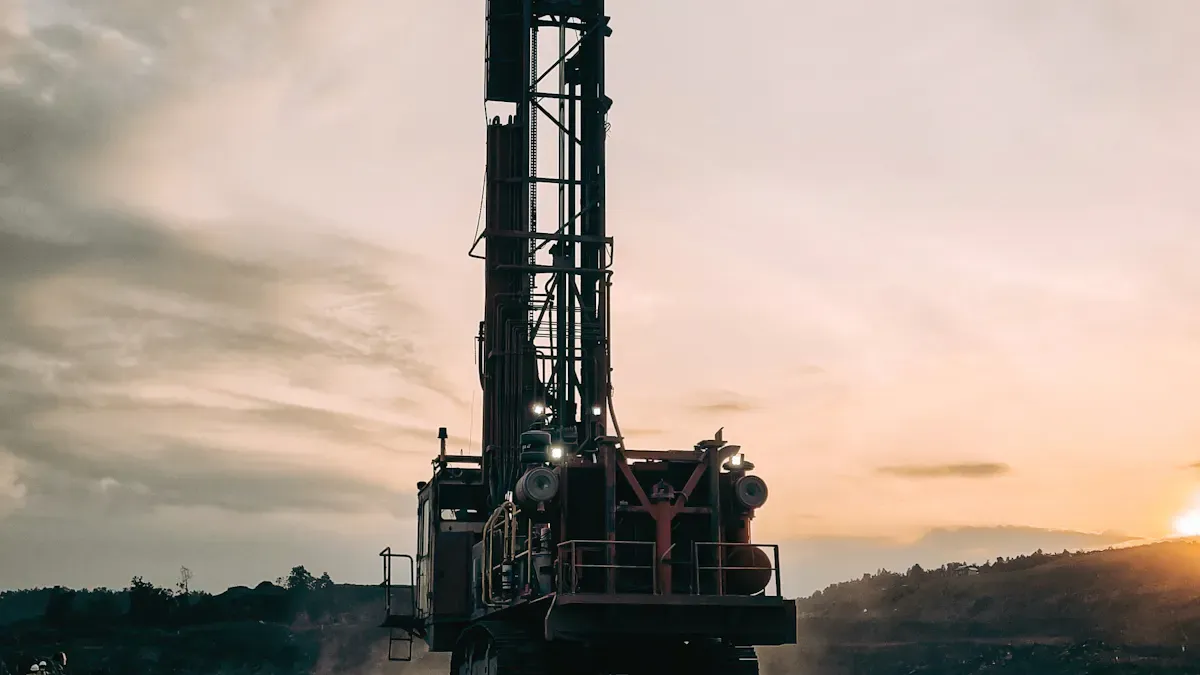
You need to pick a mining drilling machine 320mpa rock crusher that fits the material hardness and your mining job. Think about these things for CEGC work:
-
Material hardness changes how fast parts wear out and how much fixing is needed.
-
Crusher type changes the shape of the finished product.
-
Maintenance and budget change how well it works over time.
Key Takeaways
-
Know how hard the material is. Pick a crusher that fits the rock's strength. This helps the machine work well and last longer.
-
Pick the correct crusher type. Jaw, cone, and impact crushers do different jobs. Choose the one that fits your mining needs. This gives you better results.
-
Think about maintenance and costs. Take care of the equipment often. The right machine can save money over time and work better.
Mining Drilling Machine 320MPa Rock Crusher Requirements
Material Hardness and Compressive Strength
It is important to know what 320MPa means when picking a mining drilling machine 320mpa rock crusher. The number 320MPa tells how strong the rock is when squeezed. This shows how much force the stone crusher must handle. Rocks like granite and basalt are very strong. These rocks make the job harder. Hard rocks need tough machines. The jaw crusher can crush rocks up to 320MPa. The table below shows what each crusher can handle:
|
Crusher Type |
Compressive Strength Capability |
|---|---|
|
Jaw Crusher |
Up to 320 MPa |
|
Cone Crusher |
Up to 350 MPa |
|
Gyratory Crusher |
Up to 350 MPa |
How hard the rock is changes what equipment you need. Hard rocks make drilling slower. You might need more explosive to break them. Cracks in the rock can change how you work. Hard rocks wear out jaw crusher plates faster. This means more money and repairs. Rocks with lots of quartz, like granite and basalt, wear out machines quickly. Recycled concrete with steel can make wear plates last half as long.
Efficiency and Output Size
Efficiency is important in mining. Crushing hard rocks uses more energy and makes the shape of the pieces worse. It also makes repairs harder. You need to pick the right stone crusher for your job. Cone crushers and gyratory crushers are good for first crushing. Impact crushers work for some jobs. Mobile crushers are good if you need to move them. The size of the output changes how you work. The table below shows how the size of the pieces changes at each step:
|
Crushing stage |
Feed size D/mm |
Output size D/mm |
|---|---|---|
|
Coarse crushing |
500-1500 |
100-350 |
|
Medium crushing |
100-350 |
40-100 |
|
Fine crushing |
40-100 |
0-40 |
You need to match the mining drilling machine 320mpa rock crusher to your job. Think about cost, how long the machine lasts, and repairs. What you pick depends on the stone crusher type, the size you want, and what you need for your work.
Types of Stone Crushers and Selection Criteria
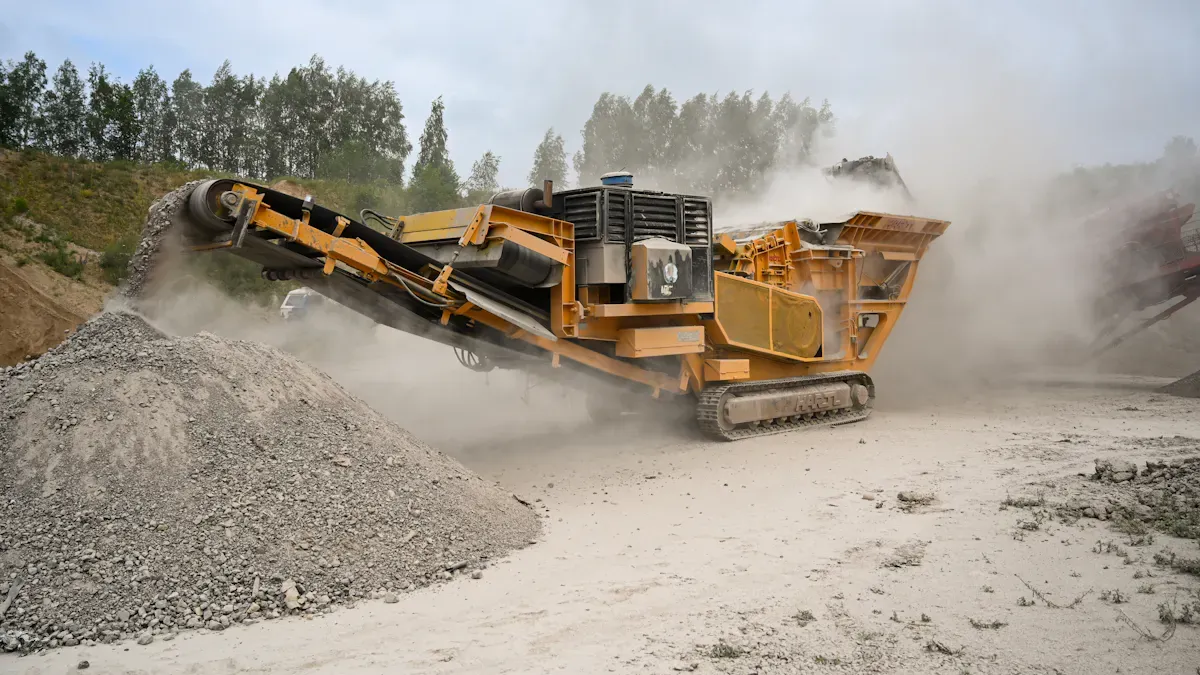
Jaw Crushers for 320MPa Rock
The jaw crusher is the most common stone crusher for hard rocks. It can crush rocks with strength up to 320MPa. You can use it for granite, basalt, pebbles, and iron ore. These materials are good for a mining drilling machine 320mpa rock crusher. The jaw crusher is good for first crushing. It gives medium-sized pieces in one step.
-
Jaw crushers work well for hard and medium-hard rocks.
-
The PEV series European jaw crusher is good for first and second crushing.
-
You can use a jaw crusher with a cone crusher, impact crusher, or sand making machine.
Here is a table with the main good and bad points of jaw crushers:
|
Advantages |
Disadvantages |
|---|---|
|
Strong and works well for tough rocks |
Needs a special foundation pit (costs more) |
|
Easier to move than other stone crushers |
Takes a long time to start, not good for quick jobs |
|
Can handle lots of rocks |
Hard to fix (needs to take apart for liners) |
|
Equipment is tall (costs more to build) |
Think about these things when planning your job. Jaw crushers need regular care. You must change jaw plates and liners often, especially with tough rocks. This can make your costs go up.
Cone and Impact Crushers Comparison
You can use a cone crusher or impact crusher after the jaw crusher. The cone crusher is strong and can crush rocks up to 350MPa. It is good for second and third crushing. The cone crusher uses a strong motor and hydraulic system. It uses more energy than a jaw crusher. You will see energy use between 1.2-2.0 kWh/ton for a cone crusher.
The impact crusher is best when you need smaller pieces. It uses less energy than a cone crusher, usually between 1.0-1.8 kWh/ton. The impact crusher works well for medium-hard rocks. It makes a good shape for the final product. You can use it for recycling or making sand.
You might also use a gyratory crusher for big mining jobs. The gyratory crusher can handle lots of rocks. It is good for first crushing of very hard rocks. It is used in fixed places.
Here is a quick comparison:
-
Cone crusher: Crushes hard rocks, handles lots of rocks, uses more energy, good for second crushing.
-
Impact crusher: Uses less energy, better for small pieces, good for recycling and sand making.
-
Gyratory crusher: Handles lots of rocks, used for first crushing, good for big mining jobs.
You can use a mobile crusher if you need to move your equipment. Tracked mobile crushers work well on rough ground and move fast. Wheeled mobile crushers are easy to move on roads and fit short jobs.
Crusher Selection Factors
You must look at many things to pick a mining drilling machine 320mpa rock crusher. The right choice depends on your job, the stone crusher type, and your site.
|
Selection Factor |
Description |
|---|---|
|
Material Hardness |
Jaw crusher or cone crusher for tough rocks. |
|
Compressive Strength |
Jaw crusher handles up to 320MPa, good for first crushing. |
|
Feed Size and Discharge |
Impact crusher is better for smaller pieces. |
|
Capacity |
Gyratory crusher and cone crusher for lots of rocks. |
|
Mobility |
Mobile crusher for far or changing sites. |
|
Energy Efficiency |
Jaw crusher uses the least energy. |
|
Maintenance |
Pick equipment that is easy to fix. |
|
Operational Ease |
Look for simple parts and controls. |
Think about cost, how long the machine lasts, and spare parts:
-
Cost: Strong machines cost more at first, but last longer and cost less over time.
-
Durability: Tough crushers need fewer fixes. New materials like nano-grain-forged alloy steel last longer.
-
Spare Parts: Make sure you can get jaw crusher jaws, cone crusher liners, and impact crusher hammers easily. Quick parts mean less waiting.
-
Maintenance: Tough rocks wear out parts fast. You may need to change jaw plates every 6-8 weeks. Regular checks and good parts save money.
-
Operating costs: Mobile crushers can cut hauling and labor costs, even if they cost more at first.
Tip: Always match the equipment to your job. The right choice will help you work better, have less downtime, and spend less money.
The stone crushers you pick will affect your mining job. Think about your job, how strong the equipment is, and how easy it is to get parts. The right choice will help you get the best results from your mining drilling machine 320mpa rock crusher.
You need to pick the right stone crusher for your mining job. The table below explains why this is important:
|
Factor |
Impact on Application and Cost |
|---|---|
|
Stone Crusher |
|
|
Equipment |
Works for the site and production needs |
|
Cost |
Goes down with good choice and care |
Choosing the best stone crusher helps your mining job. It lowers costs, keeps machines working, and gives better results.
FAQ
What is the best application for a mobile crusher?
You can use a mobile crusher when you need to move fast. This equipment works well for jobs far away. It helps you spend less money at first.
How does a gyratory crusher compare to a jaw crusher for hard rock application?
A gyratory crusher handles big rocks better than a jaw crusher. It is good for large mining jobs. Use it when you need strong machines and high capacity.
Does the application affect the total investment in mining equipment?
Yes. The job you do decides what equipment you need. Picking a mobile crusher or gyratory crusher can change how much you spend at first and later.


