
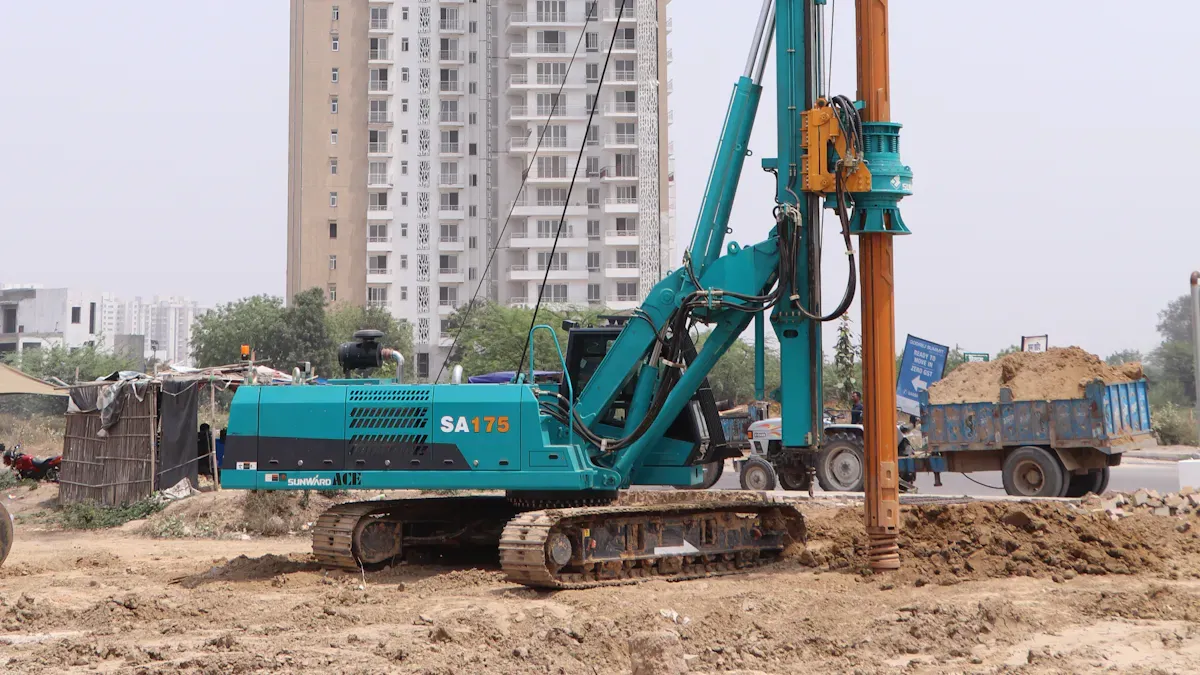
You can count on Pile Driver 0.05kN Accuracy Beats Force Error to help you do your pile driving projects well. When you use CEGC equipment, your work follows strict rules. This accuracy gives you more safety, better trust, and strong rule-following at the site.
Key Takeaways
-
A pile driver with 0.05kN accuracy makes fewer mistakes and keeps the project safer. Good force control makes sure piles go in the right way.
-
You need to check your pile driver often. This keeps it working right and stops expensive mistakes during pile driving jobs.
-
Watching the soil and using dynamic measurements helps you handle problems. This way, you lower risks and make the project work better.
Force Error in Pile Driver Applications
What Is Force Error?
Force error happens when a pile driver does not use the right force. The force might be too much or too little for the job. This can make piles unstable or put them at the wrong height. It is important to know about force error. This helps your pile driver work well and keeps your project safe.
Common Causes: Hammer Size, Hydraulic Issues, Drivability Analysis
Many things can cause force error in a pile driver.
-
If you set the pressure wrong, the hammer may not hit hard enough.
-
Parts like the hammer cushion or drive cap can wear out and lose energy.
-
Hydraulic fluid can leak if seals or hoses are damaged.
You should check your pile driver often to stop these problems. Each issue can change how much force the pile driver gives.
Impact on Pile Driving Projects
Force error can change your pile driving project in many ways.
|
Impact Type |
Description |
|---|---|
|
Structural Integrity |
Piles that are not driven enough may not be stable. If piles are too high, wind can push them more. |
|
Project Delays |
If pile heights are not right, you must measure again and fix them. This slows down the work. |
|
Fixing piles after they are installed takes more time and costs more money. |
Force error makes you do more work, spend more money, and face safety risks. Using the right force helps you avoid these problems and finish your project on time.
Pile Driver 0.05kN Accuracy Beats Force Error
Measurement Technology and Calibration
You can get pile driver 0.05kN accuracy beats force error by using new measurement technology. Sensors check the impact force every time the pile driver hits. These sensors show you data right away. You can see if the pile driver uses the right force. Dynamic measurements help you watch the force as the pile goes down. This lets you find mistakes fast.
Calibration is very important. You need to calibrate your pile driver often. Calibration means you set the sensors and controls to the right force. You use special tools to test the pile driver. You check if the sensor numbers match the real values. If they do not match, you fix the system. This keeps your pile driver working right.
Tip: Calibrating often helps you stop mistakes. You keep the impact force the same. You finish your pile driving jobs with fewer problems.
You can look at a table to see how measurement technology and calibration help:
|
Method |
What It Does |
Why It Matters |
|---|---|---|
|
Sensors |
Measure impact force |
Find errors fast |
|
Dynamic measurements |
Track force as pile moves |
Spot changes in real time |
|
Calibration |
Adjust sensors to correct values |
Keep pile driver accurate |
Addressing Hammer and Hydraulic Errors
Pile driver 0.05kN accuracy beats force error helps you fix hammer and hydraulic problems. You check if the driving system works right. You make sure it follows the manufacturer's rules. If you see a problem, you use dynamic measurements. These measurements help you know if the problem is from the driving system or the soil.
You must keep the hammer straight and working well. If the hammer is not straight, the force goes down. You check the hammer cushion and drive cap. If they are worn out, you change them. You look for leaks in the hydraulic system. If you find broken seals or hoses, you repair them. These steps help you keep the force steady.
-
Check if the driving system works right
-
Use dynamic measurements to find problems
-
Keep the hammer straight and working well
-
Change worn hammer cushion and drive cap
-
Repair hydraulic leaks
Pile driver 0.05kN accuracy beats force error helps you control the force. You make sure every hit is strong enough. You stop mistakes from hammer or hydraulic problems. You use measurements to help your work. You finish pile driving with fewer mistakes.
Note: Using pile driver 0.05kN accuracy beats force error gives you better results. You save time and money. You make your pile driving jobs safer.
Benefits for Pile Driving Projects
Improved Safety and Reliability
A pile driver with high accuracy makes your job site safer. New pile drivers use GPS to guide each hit. GPS helps you avoid mistakes and keeps piles in the right spot. When piles are in the right place, accidents are less likely. Your team stays safe when you use equipment with safety systems. These systems stop bad things before they happen.
-
GPS in pile drivers helps people make fewer mistakes.
-
Accurate piles stop safety problems and keep piles straight.
-
Safety systems work with pile drivers to keep workers safe.
Reduced Material Waste
You use fewer materials with a pile driver that is very accurate. Each pile goes where it should go. You do not need to redo work or use extra piles. This means you use less concrete and steel for each pile. You finish your pile driving jobs faster because you do not fix as many mistakes. Your team works better and uses less energy.
-
Putting piles in the right place helps you finish faster.
-
Fewer mistakes mean less work and less waste.
-
Accurate pile drivers are quiet and clean, which is good for the environment.
Compliance with Engineering Standards
A pile driver with 0.05kN accuracy helps you follow strict rules. Engineering standards say each pile must be strong. Accurate force control helps you get the right depth and strength. You can use these pile drivers for many kinds of piles. This means you can meet all project needs. When you follow the rules, you build things that are safe and strong.
|
Benefit |
How It Helps You |
|---|---|
|
Accurate force control |
Meets strength rules for pile foundation |
|
Versatile use |
Works with many pile types |
|
Reliable results |
Keeps your project safe and strong |
Tip: A pile driver with high accuracy helps you build safely and meet every rule.
Real-World Examples and Case Studies
Successful Project Outcomes
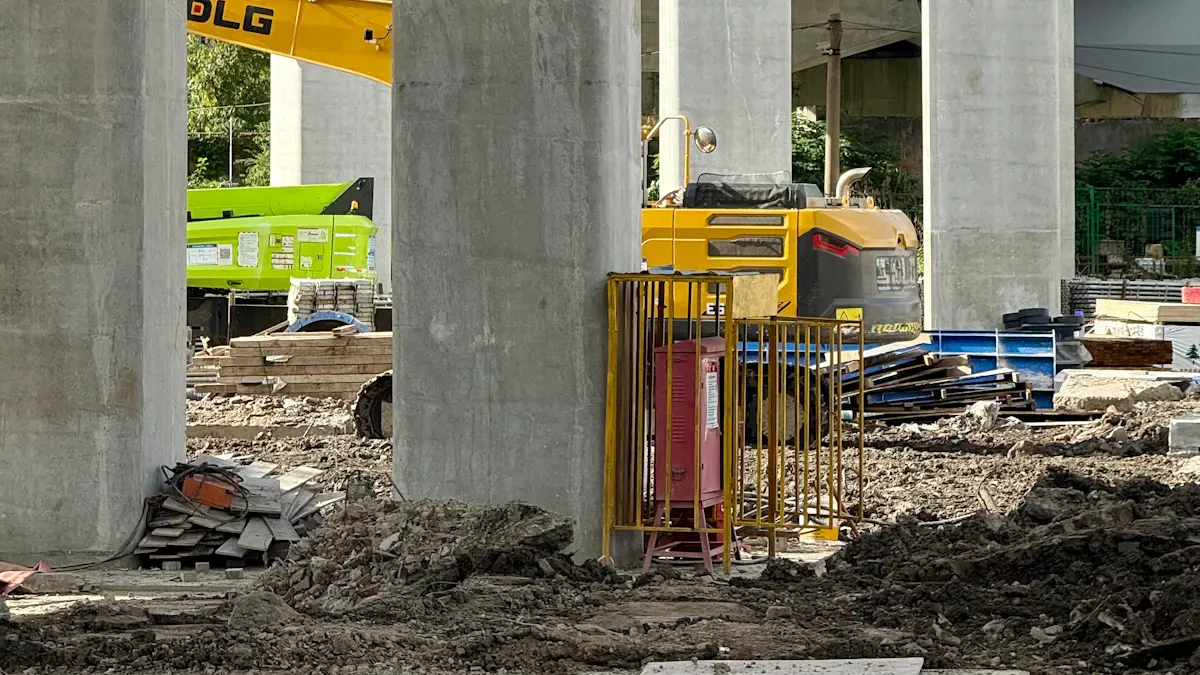
When you use a pile driver with 0.05kN accuracy, you notice big changes. In one city, workers put in piles for a new bridge. They used sensors to check every time the pile driver hit. The team made fewer mistakes and finished the work faster. The piles stayed straight and were very strong. No one had to redo any piles. Using accurate force control helps you drive piles the right way. The project saved money and kept all the workers safe.
Tip: Using accurate pile drivers helps you stop expensive mistakes. You finish your pile driving jobs on time and feel less worried.
Accuracy vs. Traditional Methods
You can look at results from jobs with and without high accuracy. The table below shows what happens with a pile driver with 0.05kN accuracy and with older ways.
|
Method |
Mistakes |
Rework Needed |
Safety Level |
Material Waste |
|---|---|---|---|---|
|
0.05kN Accuracy |
Few |
Rare |
High |
Low |
|
Traditional Methods |
Many |
Often |
Medium |
High |
Accurate pile drivers make fewer mistakes and waste less material. Older ways often do not use the right force. You spend more time fixing piles and use more supplies. Accurate force control gives you better piles and better results.
Overcoming Challenges in Pile Driver Applications
Variable Soil Conditions
Driving piles in different soils can be hard. Soil resistance is not always the same everywhere. Hard soil layers slow down the pile driver. Soft spots make piles go down too fast. You need to watch for refusal. Refusal means the pile stops going deeper because the soil is too hard. You should test the soil before you start working. Soil analysis tells you what to expect. This helps you plan how to drive the piles. If you see refusal, check if the soil changed. You might need to change how you drive the piles. This can help stop too much shaking and damage.
Equipment Limitations
You can beat equipment limits by being smart. First, do strong geotechnical checks. These checks tell you about soil resistance and soil conditions. Pick the best pile type for your job. Use the right pile driver for your project. Watch how deep the pile goes as you work. This helps you see refusal early. If the soil is too tough, use ground improvement tricks. Try to keep noise and shaking low. Change how you drive piles if you see problems. Use pre-drilling or jetting if the soil is very hard. Test the load early to find issues. Always have a backup plan for problems. Keep your hydraulic system in good shape. This stops many problems and lowers shaking.
Consistent Performance
You want your pile driver to work well every time. Skilled workers check the machine and soil first. They watch for refusal as they work. If the soil changes, they change how they drive piles. Follow quality rules to put each pile in the right place. Take care of your hydraulic system often. This stops problems and keeps force accuracy high. Check and fix the hydraulic system a lot. This helps stop too much shaking and keeps the pile driver safe. When you do these things, you get strong piles and fewer problems with refusal.
You get safer and stronger pile foundations with 0.05kN accuracy. You make fewer mistakes and spend less money. Experts say you should ask geotechnical engineers for help. You need to keep your equipment in good shape. Always follow safety rules at the site. In the future, new tools will help you work better. Real-time diagnostics and automation will make your work more exact.
|
Trend |
Description |
|---|---|
|
Real-time diagnostics |
Gives feedback about pile depth and soil resistance |
|
Automation |
Makes work more exact and cuts down on mistakes |
FAQ
What does 0.05kN accuracy mean for pile drivers?
You get very precise force control. This means each pile goes in with the right strength. Your project becomes safer and more reliable.
How often should you calibrate your pile driver?
You should calibrate before each new project. Regular checks help you keep force accuracy high and avoid mistakes.
Can 0.05kN accuracy help with different soil types?
-
Yes, you can adjust force for hard or soft soils.
-
Accurate control helps you handle changing ground conditions with less risk.


