
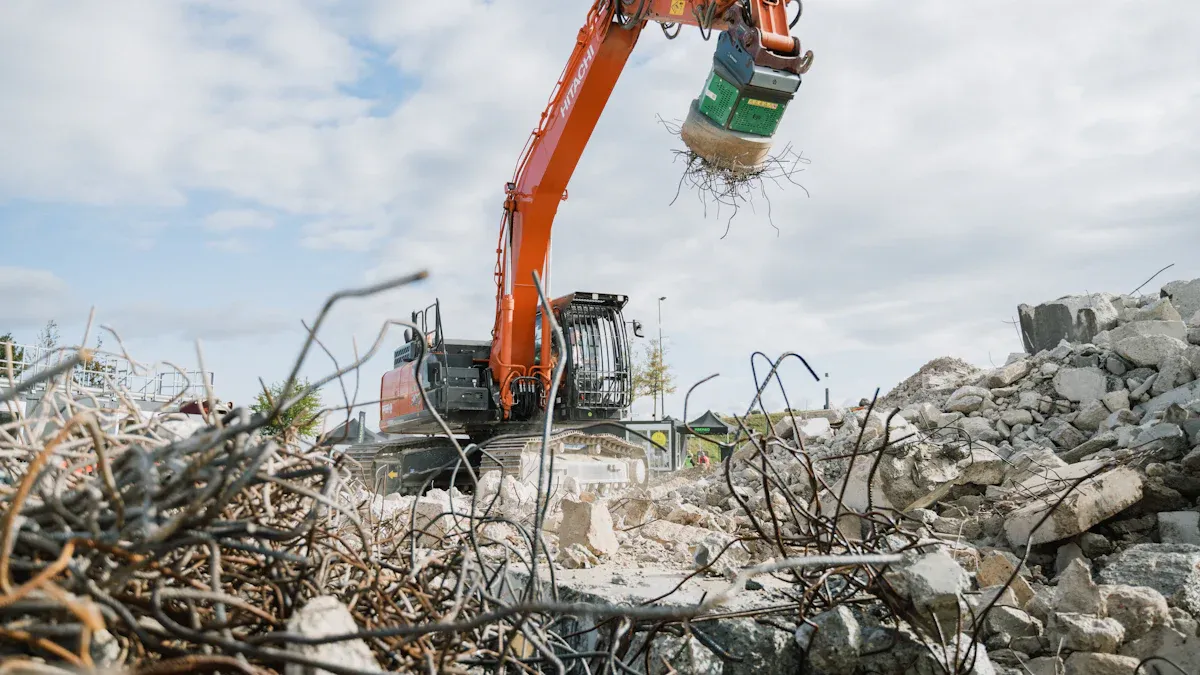
You can get 1.5mm accuracy with the Pile Driver 1.5mm Accuracy Position Controls system. This level of accuracy is special in construction. Most piles do not follow such strict rules. The table below shows how 1.5mm accuracy matches tolerances like EN10219-2 and API 5L. High accuracy makes structures stronger and helps foundations work better. CEGC uses advanced position control technology to meet this standard.
|
Standard |
Tolerance Level |
|---|---|
|
EN10219-2 |
Strict rules for diameter, thickness, and straightness |
|
API 5L |
Needs high accuracy for holding heavy loads |
|
1.5mm Accuracy |
Fits inside the allowed tolerances, showing it is okay |
Key Takeaways
-
Place piles with 1.5mm accuracy for strong and safe foundations. Use advanced position control systems to follow strict engineering rules.
-
Keep your pile driver system in good shape by checking and fixing it often. This helps it work the same way every time and stops expensive errors during building.
-
Use simulation and testing before and after you install piles. This finds problems early and makes sure piles fit the needed limits.
Comparison Criteria
Accuracy
When picking a pile driver control system, accuracy matters a lot. Accuracy means the system puts piles very close to the target spot, within 1.5mm. This kind of precision is not common in building work. High accuracy helps you follow tough engineering rules. It also makes your foundation work better. You can use math and computer models to check if the system is accurate enough. Many engineers use computer models to guess how piles will act when weight is put on them.
Reliability
Reliability tells you how well the system works again and again. You want a system that gives the same results every time you use it. Reliable systems help stop mistakes from happening in building. They also keep your project safe from problems. You can use computer models to test reliability before starting work. If the system does well in computer tests, it will probably work well in real life too.
Integration
Integration means how well the system connects with your other tools. You want a system that works with your software and machines easily. Easy integration saves you time and effort. It also lets you use computer models and math together. This makes building smoother and helps things work better.
Cost
Cost matters for every engineering job. You need to think about price and how well the system works. Some systems cost more because they use special computer models and math tools. You should look at the cost and see if the benefits are worth it. A good system can save money by stopping mistakes with piles.
Application Suitability
Application suitability shows if the system fits your project needs. Some systems work better for big piles or special building sites. You can use computer models and math to check if the system is right for you. This helps you get the best results for your engineering goals.
Technologies for 1.5mm Accuracy
Laser Guidance
Laser guidance uses light beams to show where piles go. It helps you get 1.5mm accuracy. The system starts with GPS to find the first spot. Lasers help make small changes at the end. Here is what laser guidance does for you:
-
Keeps surfaces flat within 1.5mm for 3 meters.
-
Uses GPS to find the starting place.
-
Uses lasers to make tiny, exact moves.
-
Cuts down waste and follows plans closely.
You must check and set the lasers often. Pile driving shakes the tools, so you need to watch and fix the system to keep it accurate.
GPS-Based Systems
GPS-based systems use satellites to find where piles are. You can use these systems for big jobs. They give good accuracy, but weather or tall buildings can block signals. You need to check the system often and reset it if you see mistakes. Shaking can also change GPS receivers, so you must watch for changes while working.
Robotic Total Stations
Robotic total stations use lasers and sensors to measure angles and distances. You use a remote to control the station. This system gives high accuracy, often within 1.5mm. You need to put the station in a steady spot. Regular checks and watching for shaking help keep the system working well.
Hybrid Solutions
Hybrid solutions mix two or more systems, like GPS and lasers. You get the good parts of both. These systems help keep accuracy even if one part has trouble. You must check and set each part to make sure the system stays exact.
Pile Driver 1.5mm Accuracy Position Controls
System Overview
You should know how pile driver 1.5mm accuracy position controls work before starting a pile driven foundation project. This system helps you put piles in the right place. It makes sure every pile follows strict engineering rules. The system uses sensors, lasers, and computers to guide each pile. You can trust this technology for pipe pile construction and prestressed high-strength concrete pipe piles. It gives you great results for projects that need strong foundations.
The system connects to your construction machines. It helps you control each step of putting in piles. You can use numerical simulation and numerical modeling to plan your pile driven foundation. These tools let you test the system before real work starts. You can check the bearing capacity and load-carrying capacity with simulation. This makes your engineering work safer and more reliable.
Tip: Always check the system before you start. This helps you avoid mistakes and keeps your pile driven foundation strong.
Achieving Precision
You want to get 1.5mm accuracy for every pile driven foundation. The pile driver 1.5mm accuracy position controls help you do this. The system guides you from start to finish. You can use numerical simulation to see how piles will act during installation. This helps you plan for problems before they happen.
You need to use static load test and ultimate load testing while installing piles. These tests show if the pile driven foundation can hold the weight you need. You can use simulation to compare test results with your plans. If you find a problem, you can change how you install piles. This keeps your construction safe and strong.
You should use the system to check pile positions during installation. You can use numerical simulation to see if piles are in the right spot. You can also use static load test and ultimate load testing to check the bearing capacity of pipe piles. This proves your pile driven foundation meets all engineering rules.
-
Use simulation before you start.
-
Check piles with static load test and ultimate load testing.
-
Change installation if you find a problem.
-
Use the system to guide each step.
Maintenance and Calibration
You must keep your pile driver 1.5mm accuracy position controls working well. Regular maintenance helps the system work its best. You need to check sensors, lasers, and computers before every job. You can use numerical simulation to test the system without using real piles. This saves time and money.
You should calibrate the system often. Calibration means you set the system to the right values. You can use static load test and ultimate load testing to check if the system works well. If you find a problem, you fix it before the next job. This keeps your pile driven foundation safe.
You need to keep records of every job, test, and calibration. You can use these records for future projects. You can also use them to make your construction technology better. Good records help you learn from each pile driven foundation project.
Note: Always use simulation and testing before and after installation. This keeps your pile driven foundation strong and safe.
|
Maintenance Task |
How Often |
Why It Matters |
|---|---|---|
|
Sensor Check |
Daily |
Keeps installation accurate |
|
Laser Calibration |
Weekly |
Maintains 1.5mm accuracy |
|
Computer Update |
Monthly |
Improves system performance |
|
Static Load Test |
Each Job |
Checks load-carrying capacity |
|
Ultimate Load Testing |
Each Job |
Confirms pile driven foundation safety |
You can trust pile driver 1.5mm accuracy position controls for the best results. You get strong, safe, and reliable pile driven foundation for every project.
System Comparison
Performance Table
This table helps you compare different systems for pile driver 1.5mm accuracy position controls. It shows how each system helps with putting in piles, building, and checking. You can see how simulation and math tools help make the systems work well and stay reliable.
|
System Type |
Installation Accuracy |
Construction Use |
Simulation Support |
Numerical Testing |
Performance |
|---|---|---|---|---|---|
|
Laser Guidance |
1.5mm |
Urban, Offshore |
Yes |
Yes |
High |
|
GPS-Based Systems |
2-5mm |
Large Sites |
Yes |
Yes |
Medium |
|
Robotic Total Stations |
1.5mm |
All Sites |
Yes |
Yes |
High |
|
Hybrid Solutions |
1.5mm |
Complex Sites |
Yes |
Yes |
Very High |
Note: Always use simulation and math tests before you start. This helps you stop mistakes and keeps piles in the right spot.
Summary Points
-
You should check each step with simulation and math tools.
-
Laser guidance and robotic total stations give the best results.
-
Hybrid solutions are good for hard building jobs.
-
Use testing and simulation at every step.
-
Good installation keeps piles strong and safe.
-
Math tools help you plan and check before real work.
-
These systems help make building safer and better.
-
Always test to make sure piles meet rules.
-
Simulation and math checks help stop mistakes.
-
Careful work and testing give the best piles.
Use Cases
Urban Construction
Pile driver 1.5mm accuracy position controls are used in cities. Tall buildings need strong foundations to stay safe. You have to put piles in the right spots. The system helps you with every step. You can work in small spaces without making mistakes. You check where the piles are as you work. This keeps your building safe. The system helps you finish each pile with high accuracy. You can trust the results for every project.
Infrastructure
You use this technology for bridges, highways, and railways. These jobs need lots of piles to hold up the structure. You must control each pile so everything stays strong. The system helps you plan and check every pile. You use sensors to watch piles as you work. After you finish, you test the piles to see if they hold the weight. You keep records for every pile you install. This helps you do better on the next job.
Tip: Always check your steps with the system. This helps you find problems early.
Offshore Sites
Working on water is hard and has special problems. You have to put piles in deep or moving water. The system gives you control for every pile. You use the system to guide piles under water. After you finish, you check if the piles are in the right place. You can use the system for oil platforms and wind farms. You finish each job with strong and safe results.
Pros and Cons
Laser Guidance
Laser guidance helps you put piles in the right place. This technology lets you be very exact when you work.
Pros:
-
You get very good accuracy for each pile.
-
You can check where piles are fast while building.
-
You make fewer mistakes with piles.
Cons:
-
You have to set the system often.
-
Shaking during work can change the accuracy.
-
Lasers need a clear path, which is hard on busy sites.
Tip: Always check the system before you start. This keeps piles in the right spot.
GPS-Based Systems
GPS-based systems help you work on big building sites.
Pros:
-
You can cover large areas and install piles easily.
-
You can watch piles as you build.
-
You save time when you move your machines.
Cons:
-
Tall buildings or bad weather can block signals.
-
You might not get 1.5mm accuracy for piles.
-
You have to reset the system if you see mistakes.
Robotic Total Stations
Robotic total stations give you good control for piles.
Pros:
-
You get high accuracy for every pile.
-
You use sensors to check each step.
-
You can use the system for many building jobs.
Cons:
-
You must put the station on steady ground.
-
You need to check the system often while working.
-
You may need to learn more to use the system.
Hybrid Solutions
Hybrid solutions mix different systems for piles.
Pros:
-
You keep accuracy if one part stops working.
-
You can use the system for hard building jobs.
-
You get strong piles even in tough places.
Cons:
-
You must check and set each part before you start.
-
The system can cost more money.
-
You need extra planning for each step.
Note: Hybrid solutions help you finish hard jobs in construction.
Recommendation
Best Overall
You want the best system for your pile driver project. Hybrid solutions are the top pick. They give you high accuracy and strong results. Hybrid systems use both laser guidance and robotic total stations. This mix helps keep piles in the right spot, even if the site is busy or things change. You can trust the system to guide every step. Hybrid solutions also help you watch embedment and alignment. This is important for keeping structures safe. You get good results for every job.
Tip: Hybrid solutions help you meet strict pile head position tolerance. You can keep piles within 1.5mm accuracy and avoid mistakes during installation.
Best for Specific Needs
Sometimes you need a different system for special jobs. Laser guidance works well in cities where space is small. You can place piles with high accuracy and finish fast. Robotic total stations are good for big projects. You get strong control and can check alignment as you work. GPS-based systems help you cover large areas, but may not reach 1.5mm accuracy. Always check pile head position tolerance and watch embedment during installation. This keeps your construction safe and strong.
|
Project Type |
Recommended System |
Why It Works |
|---|---|---|
|
Urban Construction |
Laser Guidance |
High accuracy in small spaces |
|
Infrastructure |
Robotic Total Stations |
Strong control for many piles |
|
Offshore Sites |
Hybrid Solutions |
Reliable installation in tough spots |
Note: Always match the system to your job needs. Careful work and checking help keep piles in the right place.
Hybrid solutions help you control pile placement very well. These systems let you put piles exactly where you want. High precision makes your construction safe and strong. Pick the best tools so you can build confidently.
FAQ
How do you keep piles accurate during construction?
You check the system often. You use sensors and tests to make sure piles stay in the right place. This keeps your construction safe.
What happens if the system loses accuracy?
-
You stop work.
-
You recalibrate the system.
-
You test piles again before you continue.
Can you use these controls for all types of piles?
You can use position controls for most piles. You check the system for each project to make sure it fits your construction needs.


