
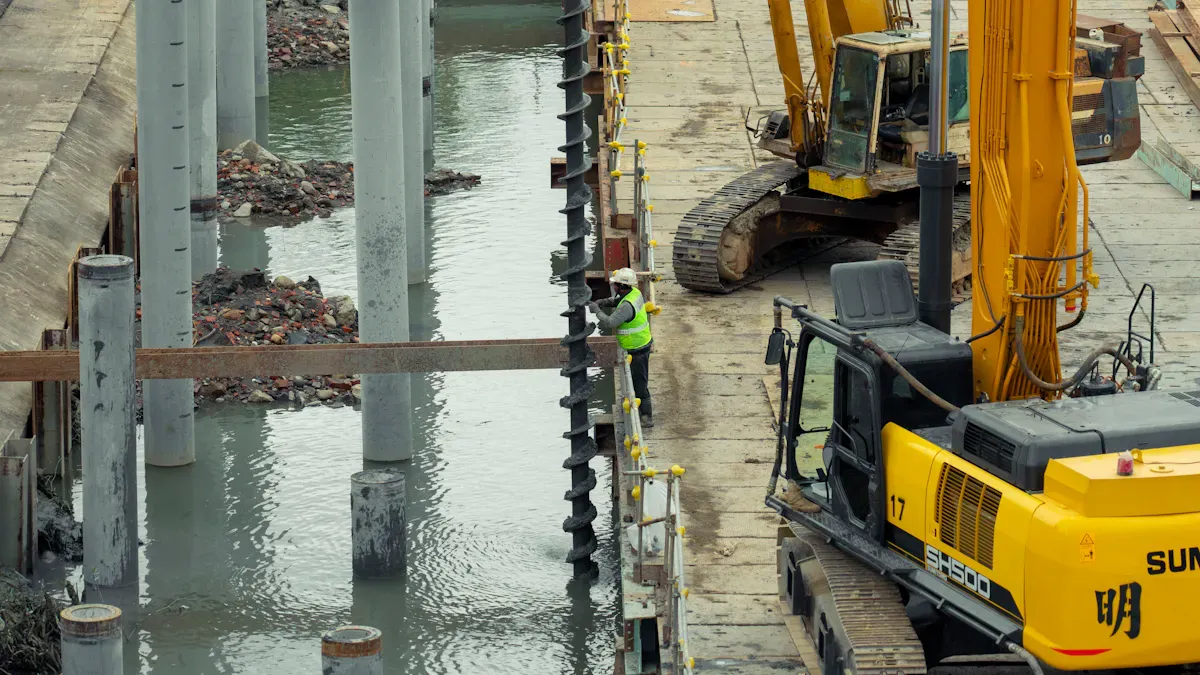
Achieving 87% rate efficiency in pile driving with Pile Driver 87% Rate Efficiency Controls makes projects safer and enhances the installation of piles. Advanced control systems like CEGC play a significant role in this process. They provide real-time monitoring and predictive capabilities, allowing operators to optimize driving settings and perform maintenance before issues arise. Additionally, these systems enable remote supervision. The table below outlines the main benefits of these technologies.
|
Benefit |
Description |
|---|---|
|
Installation Quality |
Critical parameters are checked continuously |
|
Efficiency |
Efficiency increases while equipment stress decreases |
|
Safety |
Ensures structures are safe and protects project timelines |
|
Documentation |
Generates detailed reports on installation |
|
Predictive Capabilities |
Recommends optimal driving settings based on soil tests |
|
Quality Control |
Prevents pile damage through automatic refusal detection |
|
Remote Monitoring |
Allows tracking of progress and facilitates collaboration |
|
Continuous Improvement |
Enhances the process through regular efficiency checks |
|
Proactive Maintenance |
Identifies service needs early, reducing emergency repairs |
Key Takeaways
-
Getting 87% rate efficiency in pile driving helps safety. It also makes installation better. This makes projects more dependable.
-
Advanced control systems let operators watch things in real time. They can change settings to make things work better. They can fix problems before they get worse. This lowers downtime.
-
Wireless and nonstop monitoring helps teams work together. It lets them react fast to changes. This keeps pile driving safe and efficient.
Pile Driver 87% Rate Efficiency Controls Overview
How Control Systems Achieve High Efficiency
Control systems are very important for reaching high efficiency. These systems do many jobs that people used to do by hand. Operators use special features to make each step better. The C-36 control system is a smart tool for the job site. It helps operators get exact results with less work.
Variable Eccentric Moment (VEM) technology also helps with efficiency. This feature lets vibratory hammers change force slowly. It makes less noise and vibration. This keeps nearby buildings safe and makes the site safer. These new ideas make pile driver 87% rate efficiency controls a good choice for today’s building projects.
Tip: Operators can use easy-to-learn screens to train faster and feel more sure at work.
The table below shows how each feature helps with efficiency:
|
Feature |
Contribution to Efficiency |
|---|---|
|
Automatic Piling |
Sets blow energy and rate by itself, saving energy. |
|
Continuous Monitoring |
Finds problems early to keep equipment safe and working well. |
|
Data Management |
Saves all piling data and makes reports and plans easy. |
|
Diagnostic Functions |
Helps fix problems fast, so there is less waiting. |
|
User-Friendly Interface |
Simple screens and controls help operators learn quickly and feel confident. |
These features help operators keep high efficiency and protect the pile driver and foundation. They also help with planning and lower the chance of expensive delays.
Key Performance Metrics
Project managers and engineers use different numbers to see how well pile driver 87% rate efficiency controls work. These numbers help teams watch progress and make smart choices. The next table shows important standards for pile driving:
|
Metric |
Benchmark Value |
|---|---|
|
Average Revenue Per Unit (ARPU) |
Over $3,118.68 by 2026 |
|
Revenue to Fixed Costs Ratio |
Much higher than 1.0 |
|
Gross Margin for Installation |
More than 70% |
|
Payback Period |
Less than 12 months |
These numbers show the money benefits of using advanced controls. High ARPU and gross margins mean pile driver 87% rate efficiency controls can help make more profit. A short payback time makes these systems a smart buy for any pile driving job.
Teams also check load capacity and pile foundation strength. These checks make sure each pile driver is safe and can hold the needed weight. Good controls help engineers build strong, lasting foundations for every project.
Efficiency Technologies in Pile Driving
Visual Displays and Data Acquisition
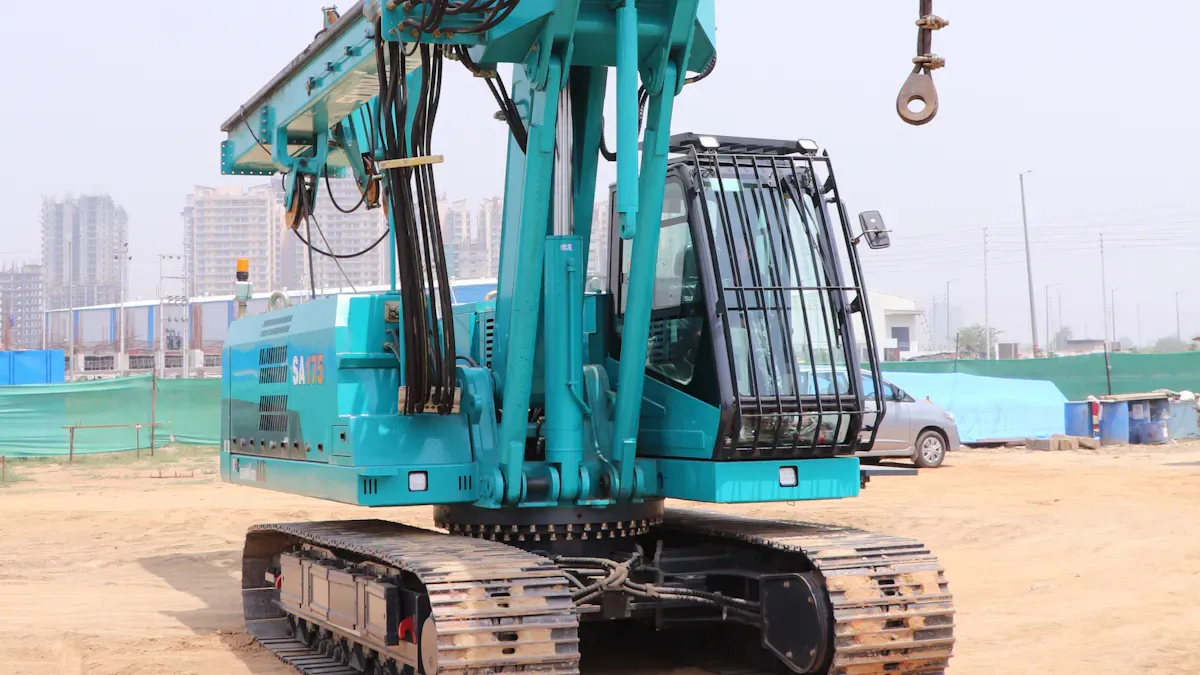
Modern pile driving uses advanced screens and oscilloscopes. These tools help operators watch force and speed during work. Operators check things like how fast piles go in, pressure, frequency, amplitude, and if piles are straight. The screens show when the soil changes or if something blocks the pile. This stops damage to machines and helps work go faster. Vibration checks are very important in cities. They keep buildings close by safe from shaking. Operators can change settings right away if the soil changes or piles act strange. This way of working keeps efficiency high and lowers risks compared to old methods.
-
Operators check how fast piles go in to spot soil changes.
-
Screens show how much piles shake and if they are straight.
-
Data systems save information about the job for later study.
Integrated Control Systems
Integrated control systems help pile driving parts work together. They watch energy and count blows as the job goes on. Operators can change settings to get the best results. Safety systems link to crane load moment indicators. This stops machines from lifting too much and keeps people safe. Communication systems help workers talk better. This means fewer mistakes and faster work. New pile driving uses these systems to keep vibration steady and make sure the job is safe.
Note: Integrated systems let operators fix problems with vibration fast. This makes the job safer and helps it go better.
Purdue University uses a computer system to guess how strong piles are. The table below shows what they found:
|
Findings |
Description |
|---|---|
|
Accuracy of Pile Driving Formulae |
New formulas work better and are more trustworthy than old ones. |
|
Validation Method |
Formulas were checked using real piles with instruments. |
|
Application of Integrated System |
The system gathers and studies data with smart tools. |
Wave Equation Analysis
Wave equation analysis is a common way to guess how well pile driving will go. Engineers use it to pick the right hammer, cushion, and energy. The analysis helps figure out how hard the soil is and how much the pile can hold. It uses data from many gauges to get clear strain readings. Projects that use wave equation analysis are more exact, cost less, and follow safety rules better than old ways.
|
Aspect |
Projects Using Wave Equation Analysis |
Projects Not Using Wave Equation Analysis |
|---|---|---|
|
Accuracy in Predicting Pile Behavior |
Better at guessing how piles will act |
Not as good at guessing |
|
Cost Efficiency |
Costs less money |
Costs more because of mistakes |
|
Safety Compliance |
Follows safety rules better |
May have safety problems |
Wave equation analysis stops pile damage, lowers shaking, and helps install piles well.
Performance Analysis and Optimization
Monitoring Hammer, Pile, and Soil
Watching all parts during pile driving helps keep results good and the foundation safe. Engineers check how the hammer works by writing down things like hammer type, ram weight, and stroke. They count how many times the hammer hits to move piles a set distance. Looking at hammer height shows how much energy goes into the piles. Engineers use tables to see how much weight the pile can hold at any time. The work stops when the pile reaches the right bearing capacity.
-
Write down hammer details (type, ram weight, stroke).
-
Set rules for how strong the pile must be.
-
Count hammer hits for a certain distance.
-
Watch hammer height to check energy.
-
Use tables to check how much weight piles can hold.
-
Stop when the pile is strong enough.
The Chad Method is helpful because operators do not need to look up at the hammer. They use the five-blow count time to know the stroke. After that, they just check if the blows per inch are right.
Engineers use tools like the Saximeter to check hammer work. The Saximeter listens to sound to find out how much energy the hammer gives to the pile. It measures the time between hammer hits and figures out the energy used. These ways help keep pile driving efficient and stop mistakes.
|
Evidence Description |
Impact on System Performance |
|---|---|
|
Checking torque well makes load checks better. |
This makes people trust the foundation more and cuts down on mistakes and delays. |
|
Problems can be found while building, not after. |
This means engineers can fix things early and avoid big problems later. |
|
Keeping torque data the same helps all crews work alike. |
This makes training easier and helps everyone do better work. |
|
Checking torque makes people sure the foundation is strong. |
This is very important when testing is hard or the project must last a long time. |
|
Writing down torque data helps people make smart choices. |
This leads to better results for everyone working on the project. |
|
Checking strength during building lowers guessing and makes things safer. |
This links how the pile works in the field to the plan, keeping the project safe. |
Watching the hammer, piles, and soil closely helps engineers get good results and protect money spent on the project. They can spot problems early and fix them before they get worse.
Real-Time Simulation Challenges
Real-time simulation has some tough parts for pile driving jobs. Sensors check vibration and temperature, like nerves for the building site. High-frequency vibration checks can find small cracks in hammers or piles before they get bad. Time-frequency checks keep both time and sound details, so engineers can find problems fast.
-
Sensors check vibration and temperature to warn early.
-
High-frequency checks find cracks in machines.
-
Time-frequency checks help find problems.
-
CNN image tools help sort out faults better.
Engineers use these tools to fix real-time simulation problems. They use smart methods like convolutional neural networks to spot faults and make hammers work better. These ideas help stop sudden failures and keep piles safe.
Assessing Integrity and Stresses
Checking the strength and stress of piles during and after driving is key for long-term safety. Engineers use different ways to test pile quality and hammer work.
|
Technique |
Objective |
Method Description |
Results |
|---|---|---|---|
|
Low Strain Impact Integrity |
Check if concrete piles are good |
Measures how fast sound waves move through the pile with a hammer tap |
Finds problems and checks if the pile is good |
|
Bi-Directional Load Test (BDLT) |
Show how the pile holds up under load |
Uses a jack to push both ways and measures how much the pile moves |
Checks how the pile bends, holds weight, and acts under pressure |
|
Pile Driving Analyzer Test (PDA) |
See if piles can be driven and are strong |
Sensors record stress waves when the hammer hits |
Figures out how much weight the pile can hold and finds problems using wave checks |
|
Sonic Logging Test (SLT) |
Make sure bored piles have good concrete |
Sends sound through concrete to find problems inside |
Checks if the concrete is even and finds holes or weak spots |
-
ASTM D 5882 is the rule for low-strain impact tests on piles and deep foundations.
-
The test uses sound waves to check if piles are strong.
-
Engineers can use this test on concrete, wood, and steel piles.
Looking at field data with Pile Driving Analyzer and CAPWAP software shows that the pile’s strength from tests is close to what engineers guessed. This means these tests work well to stop pile failure. Studies using artificial neural networks to guess pile strength from PDA test data give better answers. These ways make piles safer and less likely to fail.
Pile Driving Analysis tests are now a big part of making sure piles are good. Using the right geotechnical resistance numbers helps make designs better and piles shorter, which stops problems. In Kolkata, High Strain Dynamic Testing showed that the pile’s strength from computer guesses was only 9% different from real tests. This shows these ways are good for checking pile strength. Using artificial neural networks with PDA test data makes results better, which is important for keeping piles strong.
Comparative Testing and Monitoring Methods
PDA vs. DLT Methods
Pile driving jobs use two main testing ways: Pile Driving Analysis (PDA) and Dynamic Load Testing (DLT). PDA watches the pile as it goes in the ground. Engineers use this to make the hammer work better and keep piles safe. Sensors help operators see hammer hits and pile movement right away. DLT hits the pile after it is put in and checks the data to see how much weight the pile can hold. DLT works with PDA by checking piles after they are installed. This makes the results more trustworthy.
A study looked at stress waves during pile driving. It found that what engineers guessed with wave equation analysis was close to what really happened. The match was good, with numbers over 0.8. But there were some mistakes when guessing the biggest force at the pile toe. PDA gives good data, but it is not always perfect at the pile toe. DLT checks how piles settle under weight using the same kind of sensors. Both ways are useful. PDA is best for watching piles as they go in. DLT is good for checking piles after they are in place.
|
Study/Field Test |
Methodology |
Key Findings |
|---|---|---|
|
Central Artery/Tunnel Project |
Dynamic and static load tests |
Static load tests and PDA results were compared. CAPWAP gave safe numbers. |
Wireless and Continuous Monitoring
Wireless and always-on monitoring has changed how pile driving works. Engineers use wireless sensors to watch hammer hits, pile movement, and how the soil acts. They do not need to check things by hand. These sensors send data right away. Teams can change hammer settings and pile spots fast. Always-on monitoring means less waiting and better safety. Operators can find hammer problems early and stop pile damage. Wireless tools help teams work together and make sure every hammer hit is counted right.
Wireless monitoring lets engineers act fast if the soil or pile changes. This keeps pile driving working well and keeps the foundation safe.
Getting data all the time helps with quality checks and reports. Project managers can check hammer work and pile driving from far away. Wireless systems help teams share news and work together. This makes pile driving jobs faster and better.
Practical Benefits and Implementation
Project Outcomes and Cost Savings
Advanced control systems have changed how teams do pile driving. Project managers now see that jobs are safer and faster. These systems help operators set the hammer just right. They also make planning easier and help stop delays. Foundations built with these tools last longer and are more reliable.
The table below shows how each feature helps projects and saves money:
|
Feature |
Benefit |
|---|---|
|
Intelligent piling algorithms |
Gives better control, so work is more efficient. |
|
Automatic piling option |
Sets blow energy and rate by itself, saving energy and making work better. |
|
Continuous monitoring |
Spots problems early, keeps equipment safe, and lowers damage. |
|
Reporting transparency |
Makes it easy to keep track of data and helps managers make good choices. |
|
Energy waste elimination |
Teams using these systems finish jobs faster and have fewer breakdowns. Hammer settings can be changed right away, so piles do not get damaged. Continuous monitoring helps workers find problems early and keeps foundations strong. These good things work for all types of foundations, like pile-supported and helical pile foundations. Project costs go down because there are fewer repairs and less waiting. Operators also see that saving energy helps a lot on big jobs.
Advanced control systems help teams work better and faster. These systems use new technology and real-time checks to make jobs safer. They also help projects turn out well. Professionals can do a few things to get even better results:
|
Description |
|
|---|---|
|
Data Integration |
Make sure all systems talk to each other before adding new tools. |
|
Pilot AI Applications |
Try using AI on important tasks to help work go faster. |
|
Implement Machine Control |
Put advanced machine controls on main machines to make work more exact and quick. |
|
Training Teams |
Give workers good training so they know how to use new tools. |
|
Scale Successful Solutions |
Use the best new tools in more places if they work well in tests. |
FAQ
What does 87% rate efficiency mean in pile driving?
87% rate efficiency means the pile driver uses energy well. The system puts piles in the ground faster. It also helps stop wasted work.
How do control systems improve safety during pile driving?
Control systems watch force and vibration all the time. They warn operators if something is not safe. This helps stop overloads and keeps equipment from breaking.
Which technologies help engineers monitor pile installation?
-
Visual displays
-
Wireless sensors
-
Real-time data collection
These tools give engineers quick feedback. They help engineers make fast choices.


