
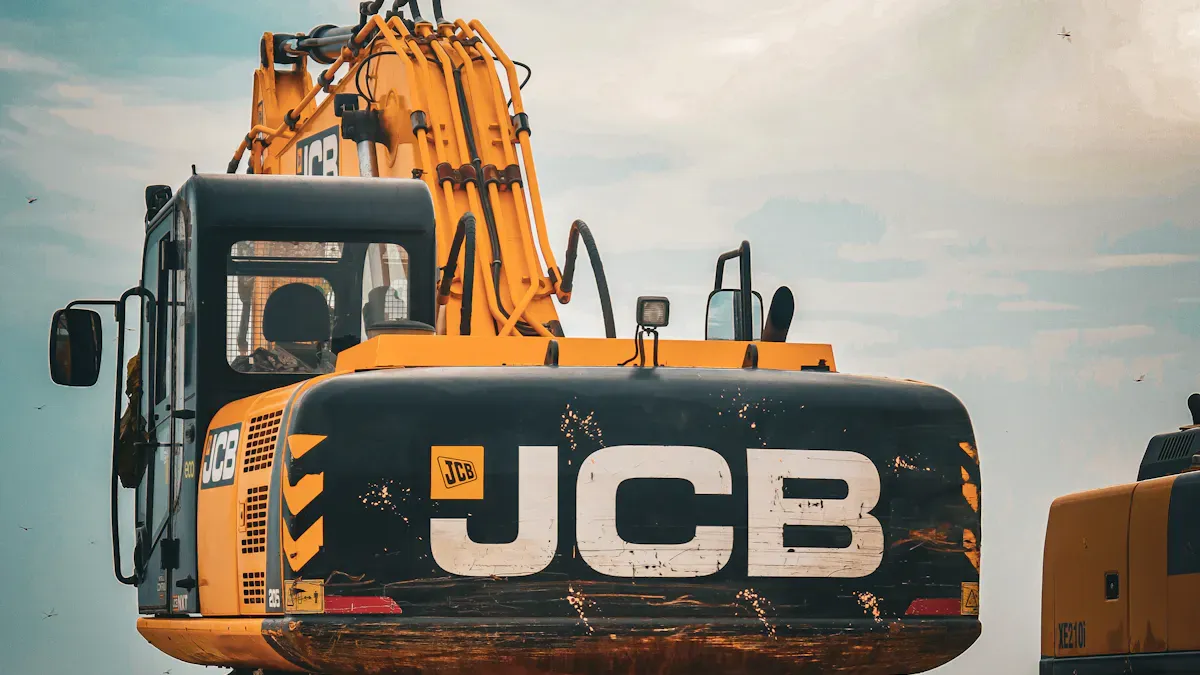
You get faster work done with Pile Driver Equipment 2mm Position Saves Time. Exact placement makes building go quicker and keeps everyone safe. CEGC says that correct energy transfer lowers danger in loose ground.
-
Watching how fast piles go in keeps equipment safe and helps people stay safe.
-
Using the right hammer for the soil makes your building job safer and better.
Key Takeaways
-
Using pile driver equipment with 2mm accuracy helps build faster and keeps workers safe.
-
Placing piles in the right spot stops expensive errors and delays. It also makes the foundation strong.
-
Keeping the equipment in good shape and training workers is important. This helps the job go smoothly and keeps everyone safe.
Why Precision Matters For Pile Driver Equipment
Structural Integrity And Safety
It is important to place the pile driver in the right spot. This keeps the building safe and strong. When you use pile driving equipment with 2mm accuracy, you help stop problems with the foundation. If you do not hit the right spot, the whole structure can be unsafe.
The National Construction Safety Association says about 25% of foundation failures happen because of bad piling work. John Smith from Piling Solutions Inc. says using a pile driver the right way makes buildings safer and lowers risks.
Here are some ways misplaced piles cause problems:
-
If piles are not lined up, racking systems can move and make the project weak.
-
Workers waste time fixing mistakes, which is bad for safety and slows down the job.
-
Small mistakes at the start can turn into big safety problems later.
You want every foundation to last a long time. Accurate pile driver positioning helps you avoid expensive repairs and keeps everyone safe on the job site.
Project Delays From Inaccuracy
If you do not use the pile driver in the right spot, you can have delays and spend more money. Many building jobs slow down because piles are not placed right. Almost 40% of contractors have seen delays from bad piling work.
Here are some common problems from placing piles wrong:
|
Consequence |
Description |
|---|---|
|
Misaligned piles |
Can make the weight spread unevenly. |
|
Insufficient depth |
Makes the pile hold less weight. |
|
Undersized diameter |
Makes the structure weaker. |
|
Improper cleaning |
Makes the pile not stick well to the soil. |
|
Rebar cage misplacement |
Makes the reinforcement not work as well. |
|
Low-quality concrete |
Makes the structure not last as long. |
|
Total structural collapse |
Can cause big delays and cost a lot of money. |
You want your building jobs to finish on time and not cost too much. Using new pile driving equipment helps you stop these problems and keeps your foundation strong.
How Pile Driver Equipment 2mm Position Saves Time
Reducing Rework
You save time and money with pile driver equipment 2mm position saves time. Accurate placement stops mistakes before they happen. You avoid misalignment problems that can cost a lot later. When piles are in the right spot, racking systems stay straight and strong. You do not waste hours fixing errors or moving piles again.
GPS machine control modeling helps you do your best work. This technology lowers human error and keeps piles where they should be. You see fewer problems with racking alignment, so workers are more efficient. You spend less time fixing things and more time building.
Here are ways precise pile driver equipment 2mm position saves time by reducing rework:
-
You lower misalignment, so you do not need to fix piles later.
-
You keep racking systems stable, which makes the job safer.
-
You use GPS modeling to cut mistakes and work faster.
-
You avoid expensive rework, so your project stays on schedule.
-
You help your team focus on building, not fixing errors.
Tip: You can check pile placement with real-time data. This helps you spot mistakes early and keeps your work strong.
Streamlining Construction Schedules
You finish construction jobs faster with pile driver equipment 2mm position saves time. Precise placement lets you move from one task to the next without waiting. You do not wait for corrections or extra checks. Your team works confidently because every pile driver is in the right spot.
You see real time savings when you use pile driving equipment with high accuracy. Projects using advanced pile driver tools often finish early. You keep your work strong and your efficiency high. You do not face long delays from misplaced piles.
Here is a table showing how pile driver equipment 2mm position saves time in construction:
|
Benefit |
Impact on Construction Project |
|---|---|
|
Fewer corrections |
Faster progress and less downtime |
|
Accurate pile driver placement |
Stronger foundation and better safety |
|
Improved performance |
Higher efficiency and lower costs |
|
Streamlined workflow |
Smooth transitions between tasks |
|
Early problem detection |
Quick fixes and less rework |
You boost efficiency and performance with pile driver equipment 2mm position saves time. You keep your project moving and avoid delays. You see better results and stronger buildings.
Note: You can train your team to use pile driver equipment with 2mm accuracy. This helps everyone work faster and safer.
Key Features Of Modern Pile Driving Equipment
RTK GNSS And Real-Time Motion Data
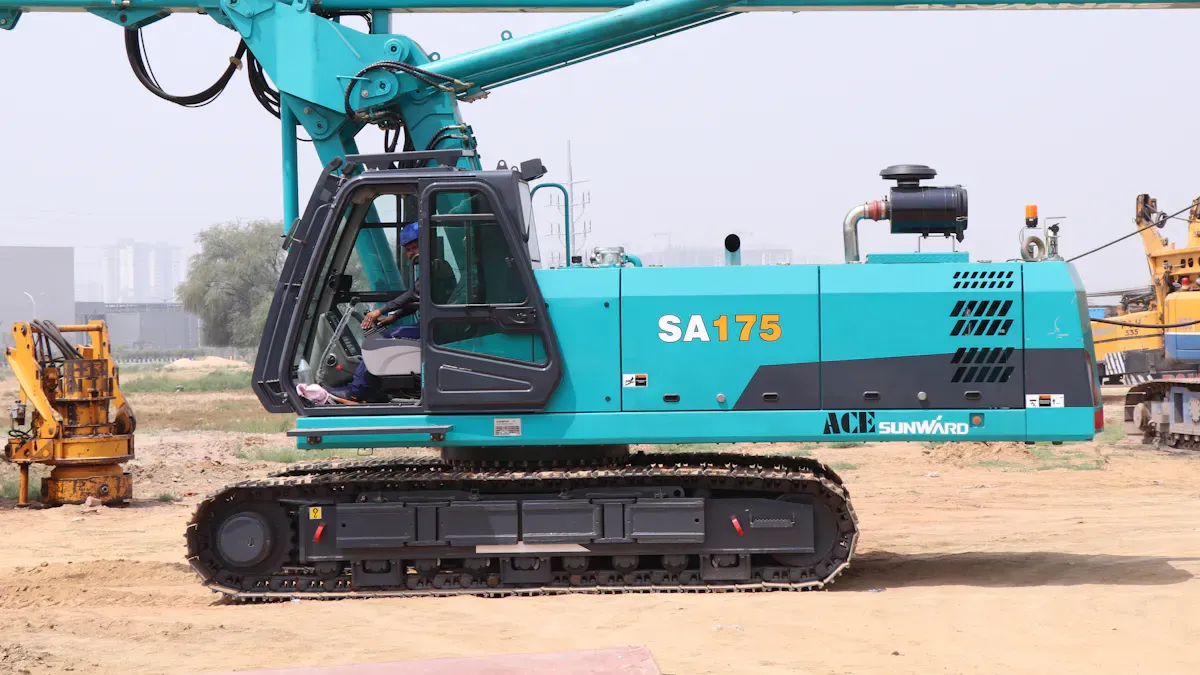
Modern pile driver technology helps you work with great accuracy. RTK GNSS systems let you put piles in the right place. These systems show you real-time data about where the pile driver is. You can also see if the pile is straight. You get a 3D view of the pile and its planned spot. This helps you keep piles straight within 2mm. You do not have to wait for survey crews as much. You finish building jobs faster and make fewer mistakes. Some custom systems use distance lasers to help you meet strict rules for straightness.
-
RTK GNSS gives you exact spots for each pile driver.
-
You can check if piles are straight and lined up right away.
-
You spend half the time placing piles.
-
You do not need as much help from survey crews.
-
You keep your foundation safe and strong.
Advanced Surveying And Alignment Tools
You use special surveying tools to get very close accuracy with pile driving equipment. These tools help you check if piles are straight and in the right place. The table below shows how each method helps you build:
|
Method |
Description |
Accuracy Level |
|---|---|---|
|
Total Station |
Gives very exact results but needs a clear view. Best for important, permanent piles. |
Millimetric accuracy |
|
DGPS |
Uses satellites to quickly find locations. Needs someone to measure on site. |
High precision |
|
Drone Mapping |
Takes clear pictures to make a 3D map. Works well with uneven ground. |
1-3% of actual volume |
You can use these tools to check if piles are straight and lined up for vibratory pile drivers. You keep your foundation safe and your project moving forward.
Equipment Maintenance For Accuracy
You need to keep your pile driving equipment in good condition. Regular checks help you keep piles straight and accurate. You should check calibration before every job. Clean and look at vibratory parts often. Make sure all sensors and lasers work well. Good care keeps your pile driver working right. You avoid delays and keep your building site safe. You protect your foundation and make sure every pile driver stays straight.
Tip: You can make a schedule to care for your vibratory pile drivers. This helps you stop problems and keeps your equipment ready for every job.
Practical Tips For Maximizing Efficiency And Safety
Site Preparation And Ground Leveling
Every building job starts with getting the site ready. This step helps the foundation stay safe and strong. First, pick up trash and look for anything dangerous. Make sure the ground is flat using the right tools. This lets pile driver equipment work better. Always follow safety rules while you get the site ready. Check the area often to find problems early. Use soil compaction and drainage to keep the ground strong. Wear safety gear and follow all safety rules.
-
Remove things that block the site.
-
Test the soil before starting.
-
Use tools to make the ground flat.
-
Mark where each pile will go.
-
Check the site often to keep it safe.
Crane Use For Vertical Positioning
Cranes help put pile drivers in the right spot. Hydraulic systems and pile guides keep piles straight. Computer systems show you how the pile is moving. These tools make work faster and safer. Check cables, sheaves, and hammer parts every day. OSHA says you must do these checks to stop accidents. Use lead systems to guide piles at the start. These steps help you follow safety rules and work better. You get piles straight up and in the right place with crane tools.
-
Look at crane parts before you start work.
-
Move leads to line up piles right.
-
Watch pile spots with digital tools.
-
Always use safety steps when using cranes.
Operator Training And Best Practices
Good training helps operators work safely and fast. Training mixes classroom lessons and real job practice. For example, a pile driver program has over 7,000 hours of hands-on work and 640 hours in class. You learn how to rig, drive piles, and handle emergencies. Best practices mean following safety steps, using guides, and checking tools before use. Guided systems help you make fewer mistakes and reach 2mm accuracy. You get better results and less errors by using these tips.
|
Training Program |
On-the-job Training |
Classroom Learning |
Sample Courses |
|---|---|---|---|
|
Pile Driver Apprenticeship Program |
7,000 hours |
640 hours |
OSHA, pile driving, rigging, first-aid, CPR |
You keep your project safe and strong by working for efficiency and safety every day.
Overcoming Challenges In Pile Driver Accuracy
Handling Ground Variability
You face many challenges when you use a pile driver on different types of ground. Driving piles changes how the soil acts. The soil can move or become weaker. You may see the soil change shape or lose strength. Sometimes, you need more blows to drive the pile, which means the ground is not steady. You should always test the soil before you start. This helps you plan for changes and keep safety high.
To handle these changes, you can use smart strategies:
-
Watch how the pile driver works in real time and adjust your approach.
-
Change the pile length if you see problems.
-
Try pre-drilling to reach the right depth without harming the pile.
These steps help you keep efficiency up and avoid delays.
Adapting To Equipment Limitations
You may find that your pile driver has limits. In cities, signals can bounce off buildings and cause errors. You can use dual-band GPS or GNSS to fix this. These tools track signals on different bands and cut down mistakes. Some systems use special signals that work better in tough spots. New software can also spot and fix errors without extra work from you.
You keep safety strong by using the best tools for your job. You also boost efficiency when you pick the right pile driver for the site.
Maintaining Consistency In Changing Conditions
You want every pile driver to stay accurate, even when things change. You should check your tools before you start. Always look at the zero reading on your instruments. Take more than one measurement and use the average. Make sure your eyes line up with the scale to avoid mistakes. Let your tools settle before you measure. Watch out for drift in electronic tools.
Here are some tips to keep your work steady:
-
Use a tripod to hold your scanner still.
-
Keep people away from the area when you scan.
-
Move slowly in sensitive spots to keep the shape right.
You improve safety and efficiency when you follow these steps. You keep your pile driver accurate and your project on track.
You get better results when you use pile driver equipment with 2mm accuracy. New technology, like GPS and real-time checks, helps you work faster. You can finish jobs up to 40% quicker. You keep buildings strong and make every job more efficient.
-
You stop expensive errors and keep your work fast.
Always work with soil engineers and plan regular maintenance to help your project last a long time.
FAQ
What does 2mm accuracy mean for a pile driver?
You get 2mm accuracy when your pile driver places each pile within two millimeters of the target spot. This keeps your foundation strong and safe.
How often should you check your pile driver for accuracy?
You should check your pile driver before every job. Regular checks help you spot problems early and keep your pile driver working right.
Can you use a pile driver in bad weather?
You can use a pile driver in light rain, but heavy rain or strong wind can make work unsafe. Always follow safety rules when using a pile driver.


