
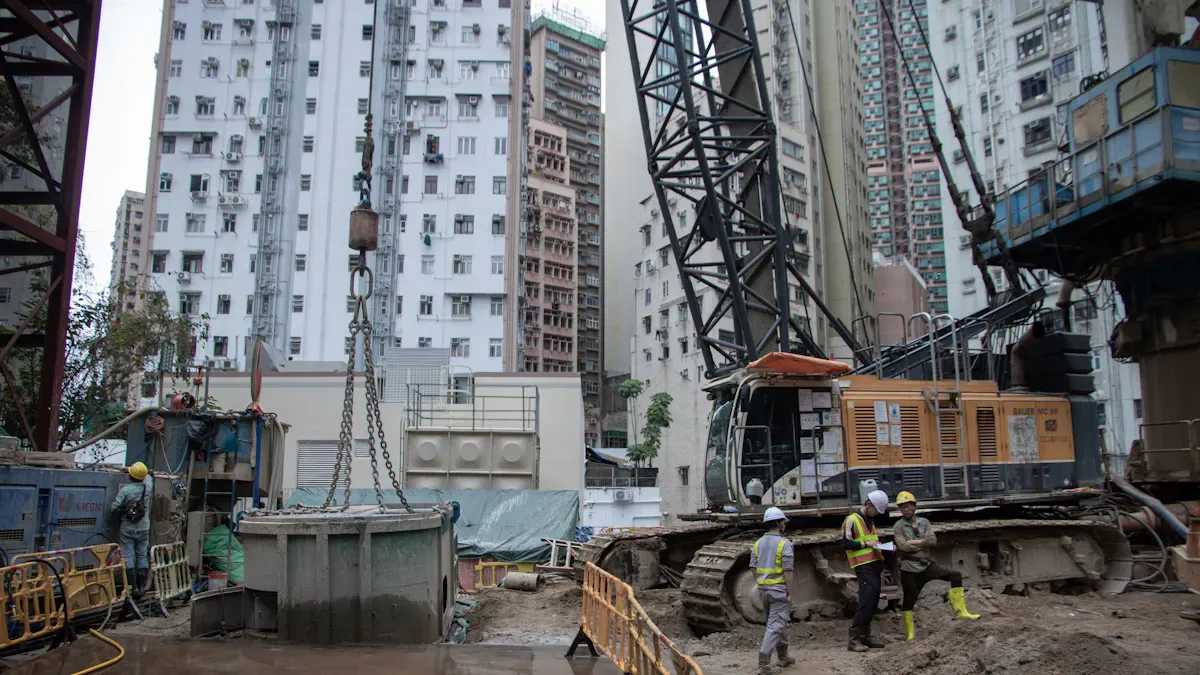
Achieving a Pile Driver Position 98% Efficiency Never Wastes is possible when you ensure that the piles are straight and properly aligned. Placing piles accurately enhances the strength of the foundation. According to CEGC, it's essential to utilize the appropriate equipment tailored to the soil and pile type. By implementing pile-supported foundations, you significantly reinforce the structure. Helical pile foundations are known to deliver excellent results.
Ensuring that piles are positioned precisely not only improves safety but also enhances overall performance.
Key Takeaways
-
Make sure piles are straight and lined up. This helps the foundation stay strong. It also makes things safer and work better.
-
Pick the right tools for your soil and project size. This helps stop mistakes and saves time.
-
Teach your team how to be safe and use the equipment. Workers with good skills finish jobs faster and make fewer mistakes.
Pile Driver Position 98% Efficiency Never Wastes Guide
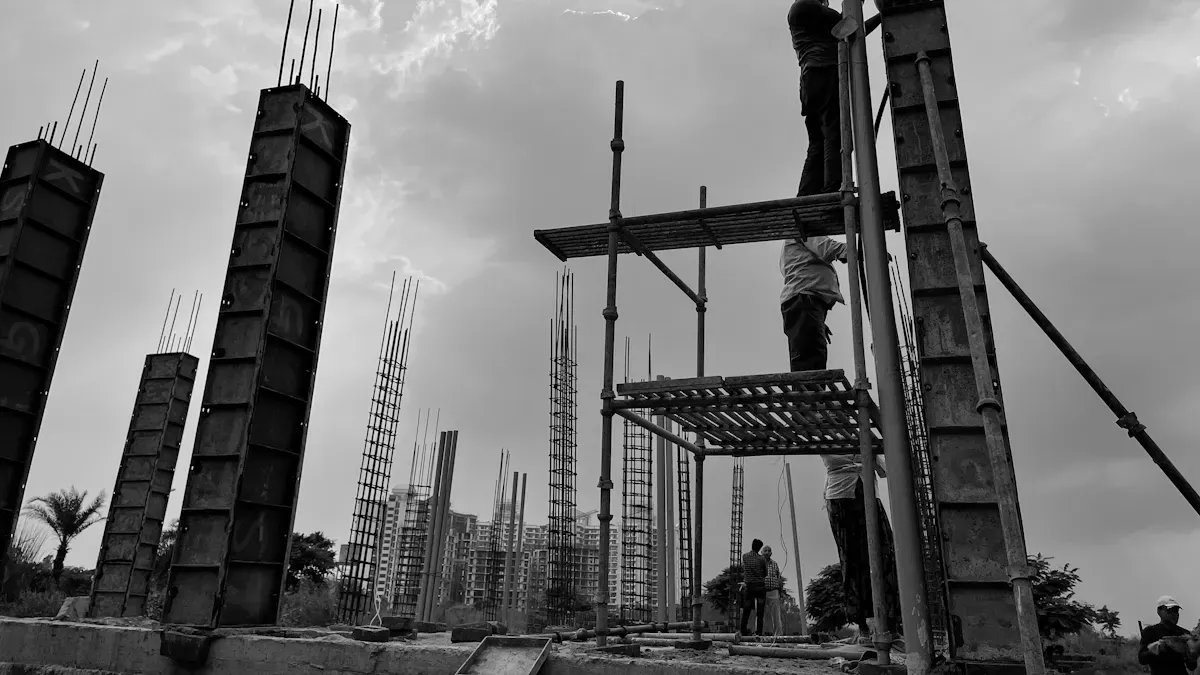
Key Principles For Maximum Productivity
You can get pile driver position 98% efficiency never wastes by using a simple guide. Begin with a geotechnical survey. This helps you pick the best pile type and installation method. Choose equipment that fits your project size and needs. Using the right tools lowers mistakes and saves time.
Teach your team about safety rules and how to use equipment. Workers who know what to do make fewer mistakes and finish jobs faster. Machines with auto plumb features keep piles straight. Compact drivers work well in small spaces. In sandy soils, vibratory pile drivers cut friction and speed up work. For rocky soils, hydraulic impact hammers and high-torque screw pile drivers help piles go deeper and more accurately.
A good guide tells you to check alignment before starting. Control ground conditions to keep piles straight. Use machine controls to get accuracy within 0.5-degree tolerances. Watch hammer performance and pile alignment as you work. This guide helps you make smart choices and change plans if needed.
Focus on mat placement too. Good mats make tight joints and even contact. This stops uneven settling and keeps foundations strong. Handle dynamic loads because pile driving can move mats if not secured. Ground protection mats keep access routes open and control sediment movement. Check mats often during work to find problems early. Planning mat layouts well means you move mats less often. Every step in this guide helps you reach pile driver position 98% efficiency never wastes.
Tip: Always check your pile driver guide before each new phase. This keeps your team focused and cuts down waste.
Verticality And Alignment Control
Keeping piles straight and lined up is key for pile driver position 98% efficiency never wastes. Use modern tools and follow a clear guide to keep piles strong. Automated systems like GPS and robotic guidance help you get exact alignment and depth. These tools make it easier to keep piles straight and lower mistakes.
Here is a table showing why verticality and alignment matter:
|
Evidence Point |
Description |
|---|---|
|
Automated Systems |
Modern pile drivers use GPS and robotic guidance for precise alignment. |
|
Efficiency Gains |
Accurate pile driving shortens construction time and lowers labor costs. |
|
Stability Assurance |
Proper vertical alignment prevents uneven stress and boosts foundation load. |
Cranes and leads are important in this process. Leads guide the pile and hammer as you install them. They keep the pile straight and at the right angle. This makes placement more accurate, safer, and faster. Leads also give stability and guidance, making sure each pile goes where it should.
Here is a quick guide to lead features:
|
Feature |
Description |
|---|---|
|
Stability |
Keeps piles vertical during driving. |
|
Guidance |
Directs pile and hammer for accurate placement. |
|
Precision |
Reduces errors in installation. |
|
Productivity |
Cuts down time spent on pile placement. |
|
Versatility |
Works with different cranes and pile lengths. |
|
Maintenance |
Needs little upkeep due to strong build. |
|
Spotter Functionality |
Allows precise control and placement. |
|
Movement Capability |
Spotters move up to 30 degrees for better alignment. |
|
Installation Time |
Speeds up project completion. |
|
Safety |
Slim design improves visibility for crane operators. |
Good leads show their value in real projects. For example, Austin Bridge and Road used special leads to drive long pipe piles without splices. This made installation three times faster. The right guide and equipment really help.
Different pile driver technologies help you reach pile driver position 98% efficiency never wastes. Hydraulic hammers drive piles fast and give better control. Vibratory pile drivers work quickly and smoothly, especially in sandy soils. Laser-guided systems give exact alignment and real-time data. These tools cut waste by lowering mistakes and soil movement.
A pile driver guide always says to match your equipment to the job. When you follow the guide, you make work safer, save time, and build stronger foundations. Remember, pile driver position 98% efficiency never wastes is not just a goal. It is a process you can reach with the right steps and tools.
Pile Driver Guide To The Pile Driving Process
Orientation And Loading Position
Start by setting up the pile and equipment the right way. The way you turn the pile is important. You have to pick if the pile goes across or along the tracks. This choice changes which guide you need. Where you load the pile matters too. You can load from the back or from the side. Each way changes how the pile driver works and how fast you finish.
Picking the right way to turn and load the pile is very important. How you turn the pile, either across or along the tracks, tells you which guide to use. Where you load the pile, from the back or side, changes how the pile driver works and how fast you finish.
Always check where you load the pile before you start. This helps you not make mistakes and keeps everyone safe.
Lead Capacity And Pile Matching
You have to match the lead capacity to the pile and soil. This keeps the pile straight and strong. The table below shows what to think about when you match leads and piles:
|
Factor |
Description |
|---|---|
|
Soil Parameters |
Soil parameters change how you check pile strength and use wave equations. |
|
Time After Installation |
You must think about how the pile and soil change over time for good results. |
|
Dynamic Testing Methods |
You need to match testing methods with time to see how the soil settles after you drive the pile. |
|
Soil Damping |
Changing soil damping numbers help you fix wave equations for how the soil changes over time. |
Always check the soil and pile type before you pick the lead. This helps you get the best results.
Energy Application And Soil Penetration
You need to follow the right steps to drive the pile deep. Here is a simple guide for the pile driving process:
-
Put the pile into the leads, which keep it lined up.
-
Make sure the hammer and pile are lined up for a straight hit.
-
Lower the hammer onto the top of the pile.
-
Put a pile cushion between the pile and hammer to lower stress.
You need to control the hammer’s energy. This helps the pile go through the soil without bending or breaking. Always check the pile’s line and where you load it at every step. This keeps the pile straight and the base strong.
Advanced Pile-Driving Guidance And Technology
GNSS And Surveying Techniques
You can use high-precision gnss to help guide pile driving. High-precision gnss shows the exact spot for pile driving leads. It lets you place piles with only a tiny error. This is much better than old ways of working. You can finish pile layouts faster and make fewer mistakes. High-precision gnss helps you set up leads quickly. You can even use it on your smartphone for more speed. Many teams now finish pile positioning in just one hour. It used to take half a day. High-precision gnss also lets you check your work as you go. This keeps your pile driving leads in the right place.
|
Evidence Description |
Benefit |
|---|---|
|
RTK positioning can find a spot with only a few centimeters of error. |
Gives very high accuracy for building, so there are fewer mistakes than with old ways. |
|
Reports show big drops in time needed for pile layout. |
Makes work faster and more correct, so projects finish sooner. |
|
Pile-positioning that took half a day now takes about one hour with smartphone RTK guidance. |
Saves a lot of work and helps teams get more done. |
Augmented Reality For Precision
You can use augmented reality to guide pile driving better. AR puts markers on your camera view to show where to put leads. This makes it easy to see the right spot for each pile. You can stop mistakes and avoid doing work again. AR also helps you see pipes and wires underground. You can keep your pile driving leads away from danger. AR gives you updates as you work, so you always know what to do. You can finish jobs faster and stay safe.
|
Benefit |
Description |
|---|---|
|
Enhanced Visualization |
AR tools like Trimble SiteVision help you see pipes and wires underground, which is important for accuracy. |
|
Improved Operator Awareness |
Workers get updates about things underground, so they can keep working without stopping. |
|
Risk Mitigation |
AR lowers the chance of hitting pipes or wires, which can cost money and slow down work. |
|
Situational Awareness |
AR puts 3D models on the real world, so workers know what is around them and stay safe. |
Automation And Safety Tools
You can use automation to make pile-driving guidance even better. Remote control lets you move pile driving leads from far away. GPS works with high-precision gnss to put leads in the right spot. Point-to-point tech moves the machine from one pile to the next with little help. Inclinometers keep leads safe when working on hills. Emergency stops let you stop everything fast if something goes wrong. These tools help you work faster and stay safe.
|
Feature |
Description |
Impact on Productivity and Safety |
|---|---|---|
|
Remote Control |
Workers can run the pile driver from far away, which helps them see better and stay safe. |
Fewer workers need to be on the machine, so it is safer and piles are placed faster. |
|
GPS Capability |
Lets you put piles in the right spot with little help from workers. |
Makes pile driving more accurate and faster. |
|
Point-to-Point Technology |
The machine moves from one pile to the next by itself. |
Workers do less, so work goes faster and is easier. |
|
Inclinometer |
Checks how the machine is tilted and slows it down on hills. |
Keeps workers safe by stopping accidents on bumpy ground. |
|
Emergency Stops |
Red buttons on the machine and remote stop everything right away. |
Gives quick safety if something bad happens. |
You can see big changes with advanced pile-driving guidance. Many projects now use high-precision gnss and pile driving leads to work 20% faster every day. Some teams finish jobs in half the time. You can use fewer workers and build things faster with these tools.
Equipment And Foundations Selection
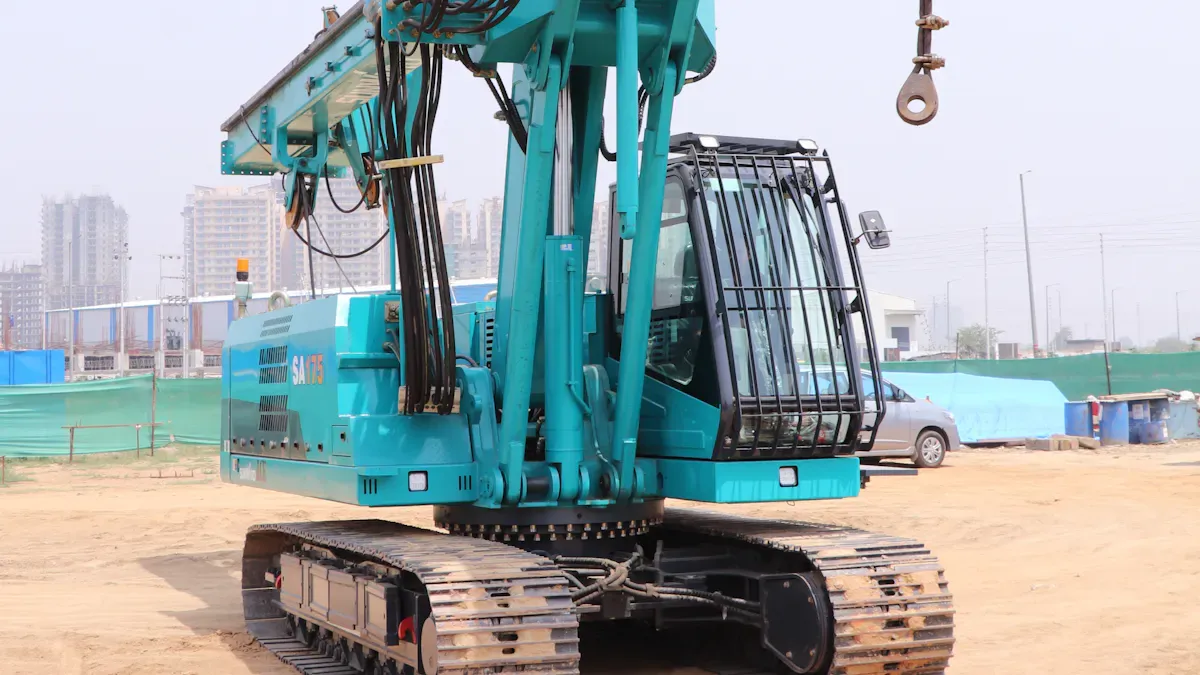
Choosing The Right Pile Driver
You have to pick the right pile driver for your job. First, check the site. Find out what kind of soil is there. Different soils need different ways to drive piles. Look at what your foundation needs to hold. Think about how heavy the building will be and how long it should last. You also need to think about things like noise and weather.
Here are some steps to help you choose a pile driver:
-
Study the soil to find the best pile type.
-
Figure out how much weight your foundation must hold.
-
Look at the area around your site.
-
Think about how much money you can spend and how big your project is.
-
Talk to experts if you do not know what to do.
You must also make sure the hammer opening, direction, and loading spot fit your piles. Check the shape and size of your piles so your tools work right. Using new pile driving ways helps you work faster and keeps people safe.
Tip: The right tools help you work better and follow local rules.
Lead Selection For Different Foundations
You need to match your leads to the kind of foundation you are building. The table below shows that each foundation type needs its own way and tools:
|
Foundation Type |
Key Considerations |
|---|---|
|
Footing Foundations |
Cheap, but depends on water, soil, and buildings nearby. |
|
Driven Pile-Supported Foundations |
Needed for weak soil; check soil, how hard it is to drive, and other buildings close by. |
|
Non-Driven Pile Foundations |
Good for some places; uses drilled piles and special footings. |
|
Special Case Foundation Types |
Used for hard jobs; includes soil nails, anchors, and micropiles. |
Soil type changes what equipment you need. Soft clay and loose sand need gentle tools. Dense sand and gravel need stronger hammers. Hard soil or rock needs the biggest hammers. Using new pile driving ways gives you strong foundations and good results.
Maximizing Productivity In The Pile Driving Process
Site Preparation And Surveying
You make the site better by getting it ready first. Clear away trash and make the ground flat. Mark where piles go using real-time tools. This helps you not make mistakes and builds better structures. Compact pile drivers fit in small spaces. Mini drivers and quiet systems are good for cities. Hydraulic hammers hit heavy piles harder. Adjustable grips move loads safely and keep work strong.
-
Compact pile drivers are best for small sites.
-
Quiet systems help in city jobs.
-
Hydraulic hammers are good for heavy piles.
-
Check grips to move loads safely.
Operator Training And Communication
Training operators and talking clearly makes work safer. Using checklists and teaching your crew saves time. Skilled workers finish jobs faster and make fewer mistakes. Good plans and watching the team help finish projects quickly and keep quality high.
|
Description |
Impact |
|---|---|
|
Setup is faster and work is better |
|
|
Team skill development |
Safety goes up and work is easier |
|
Effective planning |
Projects finish sooner and work improves |
|
Ongoing training |
Standards rise and quality gets better |
Common Mistakes And How To Avoid Them
You stop mistakes by keeping up with maintenance and checking tools often. Scheduled care keeps your pile driver working well. Clean parts every week so dirt does not hurt quality. Calibrate systems each month for accurate data. Watch fuel use and test how things work to keep productivity high. Check engine, battery, and hydraulic parts for safety. Look at hammer and leads for wear to protect quality.
|
Maintenance Practice |
Description |
|---|---|
|
Follow plans for best work and quality |
|
|
Deep cleaning |
Clean parts weekly for better results |
|
System calibration |
Calibrate monthly for accurate work |
|
Energy monitoring |
Track fuel use for top results |
|
Performance testing |
Test each month to keep quality high |
|
Engine and fluid checks |
Inspect often for safety improvements |
|
Battery and hydraulics |
Check for reliable work |
|
Hammer and leads |
Look for wear and keep piles straight |
Tip: Use real-time data to find problems early and keep your work strong and productive.
You can reach 98% efficiency by keeping piles straight. Use real-time tools to check your work. Pick the best equipment for the job. These steps make the foundation stronger and help you work faster. Each part is important:
|
Aspect |
Explanation |
|---|---|
|
Straight piles stop weak spots in the foundation. |
|
|
Real-Time Monitoring and Adjustments |
Quick checks help you fix mistakes right away. |
|
Correct Selection of Drilling Method |
The best method fits what the site needs. |
You get lasting results like fewer hold-ups and better use of your tools.
FAQ
What makes pile driver positioning so important?
You must place piles in the right spot for strong foundations. When piles are straight, the building is safer. Good positioning means you make fewer mistakes. You also use less material and save money. This helps your project turn out better.
How does helical pile positioning improve foundation work?
Helical piles work well in hard soil. Where you put them is very important. Good placement gives deep support and a strong base. When you position helical piles well, you finish building faster.
Can positioning affect the construction method you choose?
You choose how to build based on the soil and project needs. Positioning helps you pick the best way. With good placement, you can use helical piles or other types for better results.


