
You know how frustrating downtime can get in a busy port or warehouse. Reach Stacker fault alerts help plan staffing so you can act fast and keep things running smoothly. With CEGC’s focus on port machinery, you get tools that make your job easier and help your team stay ready for anything.
Key Takeaways
-
Reach stacker fault alerts give early warnings about equipment problems. This helps you fix issues before they stop work.
-
Fault alerts show problems right away. This helps you change staffing quickly. Your team can always be ready to work without waiting.
-
Fault alerts can cut down on downtime and save money. This makes work go smoother and keeps your team safer.
What Are Reach Stacker Fault Alerts?
When you work with heavy machines like a reach stacker, you need to know when something goes wrong. Fault alerts tell you about problems before they get worse. These alerts help you keep your equipment safe and your team ready. CEGC designs these alerts for all kinds of port machinery, including portal cranes, container handlers, and more.
Types of Fault Alerts
You will see different types of fault alerts on a reach stacker. Some alerts come from mechanical parts. For example, a damaged oil seal in the gear pump can trigger a warning. Other alerts come from electrical systems. If a cylinder pump nozzle coil short circuits, you get an alert about the hydraulic system. Safety systems also send alerts. These can warn you if something is not safe, like when a load is not balanced or a safety switch is not working.
-
Mechanical alerts: Problems with gears, pumps, or valves.
-
Electrical alerts: Issues with wires, coils, or sensors.
-
Safety alerts: Warnings about unsafe conditions or failed safety checks.
Importance for Port and Warehouse Operations
You need these alerts to keep your reach stacker running smoothly. When you get a fault alert, you can fix the problem before it stops your work. This helps you avoid long delays and keeps your team safe. In busy places like ports and warehouses, every minute counts. Fault alerts let you plan your staffing better. You can move workers to other jobs or call in help before a breakdown happens. With CEGC’s smart systems, you stay ahead and keep your operations strong.
How Reach Stacker Fault Alerts Help Plan Staffing
Proactive Staffing Adjustments
You want your team to be ready for anything. Reach stacker fault alerts help you plan staffing before problems get worse. When you get a warning, you can move workers to other jobs or call in extra help. You do not have to wait for a breakdown. You can shift people to cover important tasks. This keeps your operation moving, even if one reach stacker needs attention.
If you get a real-time visibility alert about a hydraulic issue, you can reassign your crew to another container handler or portal crane. You might call in a temporary worker for the next shift. You can change your training schedule so new hires learn on working machines. This flexibility means you do not waste time or money. You keep your team safe and your cargo moving.
CEGC’s anti-sway and safe lifting control systems make these changes easier. You get clear alarms and status updates. Your team knows what to do and when to do it. Operator training is smoother because everyone sees the same real-time visibility alerts. You do not have to guess. You act fast and smart.
Real-Time Data for Scheduling
Real-time visibility changes how you schedule your team. You see what is happening with every reach stacker, forklift reach stacker, and container crane. You know which machines need attention and which ones are ready for efficient container handling. This helps you plan your shifts and tasks with confidence.
Check out how real-time visibility from reach stacker fault alerts help plan staffing and boost warehouse planning:
|
Benefit |
|
|---|---|
|
Operational Efficiency |
Managers can step in right away to fix delays. |
|
Enhanced Coordination |
Teams can match activities based on live job statuses. |
|
Reduced Downtime |
Predictive maintenance lowers unexpected failures. |
|
Data-Driven Decision Making |
Helps better planning and execution using data. |
You can see the status of every reach stacker quickly. If a machine sends a real-time visibility alert, you can move your team to another job. You can use remote diagnostics from CEGC to check what is wrong before sending a technician. This saves time and helps you avoid confusion. Your team knows what to expect, and you can change your schedule fast.
Training gets easier, too. When you use real-time visibility, you can show new workers how to handle alerts. Operator training becomes part of your daily routine. Everyone learns how to respond to real-time visibility alerts, so you get more consistent results.
Reducing Downtime and Costs
Downtime costs money. You want to avoid it as much as possible. Reach stacker fault alerts help plan staffing by giving you real-time visibility into every problem. You can fix small issues before they turn into big ones. This means fewer emergency repairs and less overtime.
CEGC’s condition monitoring and predictive maintenance tools give you real-time visibility into your equipment. You see temperature, vibration, and other key data. If something looks wrong, you get an alert right away. You can schedule repairs during slow times, not busy hours. This keeps your reach stacker fleet ready for efficient container handling and container lifting.
Take a look at how reach stacker fault alerts help plan staffing and cut costs:
|
Metric |
Before Implementation |
After Implementation |
Reduction (%) |
|---|---|---|---|
|
Unscheduled Downtime (hours/month) |
142.5 |
82.3 |
42.2 |
|
Emergency Repairs (per month) |
37 |
19 |
48.6 |
|
Mean Time Between Failures (days) |
12.4 |
23.8 |
91.9 |
|
Mean Time To Repair (hours) |
8.6 |
5.2 |
39.5 |
|
Cost Savings (total) |
N/A |
1.399 million |
N/A |
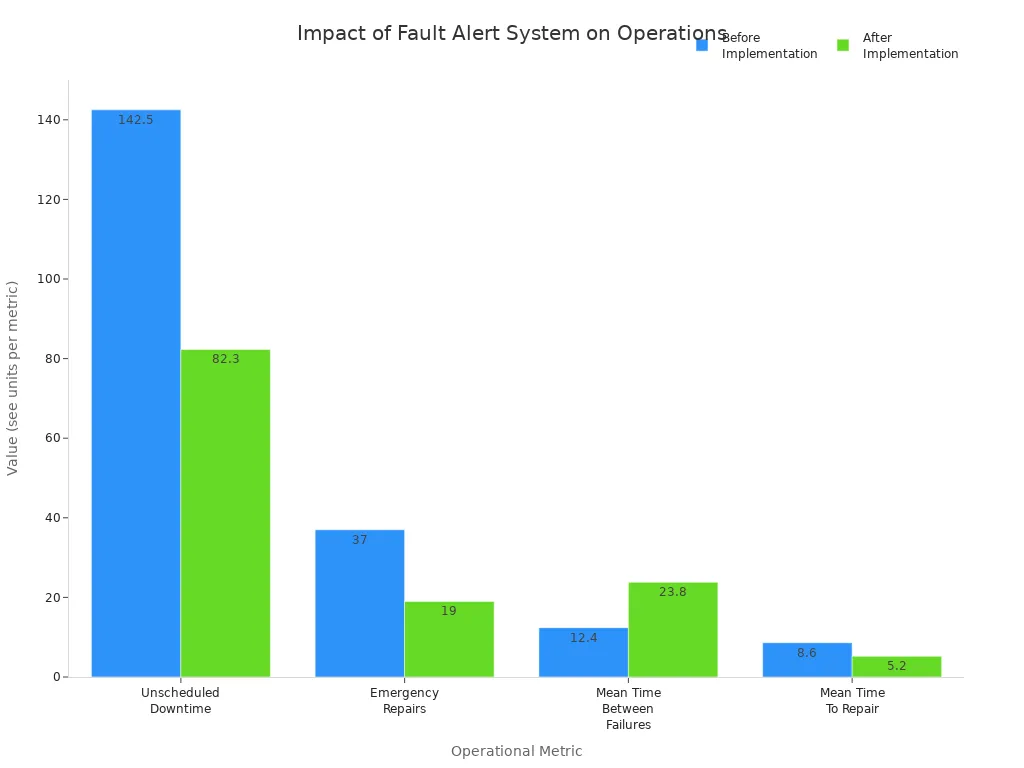
You can see the difference. With real-time visibility, you cut downtime almost in half. You need fewer emergency repairs. Your team spends less time fixing problems and more time on efficient container handling. You save money and keep your operation strong.
Reach stacker fault alerts help plan staffing for every shift. You get better warehouse management, faster response, and safer teams. Real-time visibility means you always know what is happening. You can focus on training, safety, and getting the job done right.
Tip: Use real-time visibility alerts to guide operator training. Show your team how to respond to each alert. This builds confidence and keeps everyone ready for action.
Integrating Fault Alerts into Staffing Workflows
Steps for Implementation
You want to make your staffing plan better. Start by connecting reach stacker fault alerts to your daily work. First, set up your alert system to get updates from every reach stacker. Next, link these alerts to your scheduling tools. When a reach stacker sends a warning, you can move workers to other machines or change shifts. You can use alerts to help with training. If a reach stacker shows a common problem, you can focus your training on that issue.
Create a checklist for your team. When a reach stacker alert appears, your crew knows what to do. You can use remote diagnostics to check the problem before sending staff. This saves time and keeps your reach stacker fleet ready. Make sure your training teaches how to respond to alerts. You want everyone to feel confident when a reach stacker needs help.
Best Practices for Port and Warehouse Managers
You can improve your workflow by connecting reach stacker fault alerts with your terminal operation system. CEGC offers customization so you can match alerts to your needs. Use data to plan your staffing. When you see a pattern in reach stacker alerts, you can change your training and shift schedules.
Operator-centered HMI design makes everything easier. Look at this table:
|
Feature |
Benefit |
|---|---|
|
Operators stay focused on staffing needs. |
|
|
Provides accurate decision support |
You make better staffing choices with real-time reach stacker data. |
|
Differentiates system failures |
You know when to adjust staffing or when actions are intentional. |
You can use these features to improve your reach stacker workflow. Make training part of your daily routine. Show your team how to handle alerts and use real-time data. You keep your operation running smoothly and your reach stacker fleet ready for action.
You can make your team work better with reach stacker fault alerts. These tools help you plan shifts. They also help you cut downtime. Everyone stays safe with these alerts. CEGC’s smart systems match new trends in automation and digitalization:
|
Technology Used |
Benefit |
|---|---|
|
IoT sensors |
|
|
Predictive maintenance |
-
You follow safety rules and work well with your maintenance team.
-
Use predictive maintenance and real-time alerts for easier operations.
FAQ
How do reach stacker fault alerts help you every day?
You get instant updates when your reach stacker has a problem. This lets you move your team fast and keep your cargo moving without big delays.
Can you use reach stacker alerts with other machines?
Yes! You can connect reach stacker alerts with your portal crane or container handler. This helps you manage all your equipment from one place.
What makes a reach stacker alert system from CEGC special?
You get real-time data, easy-to-read screens, and smart safety features. Your reach stacker stays ready, and your team works safer and faster.
Tip: Always check your reach stacker alerts before each shift. This keeps your team safe and your work on track.
|
Benefit |
How It Helps You |
|---|---|
|
Real-time alerts |
Fix reach stacker issues fast |
|
Easy integration |
Use with any reach stacker |
|
Safer operations |
Protect your team and cargo |


