
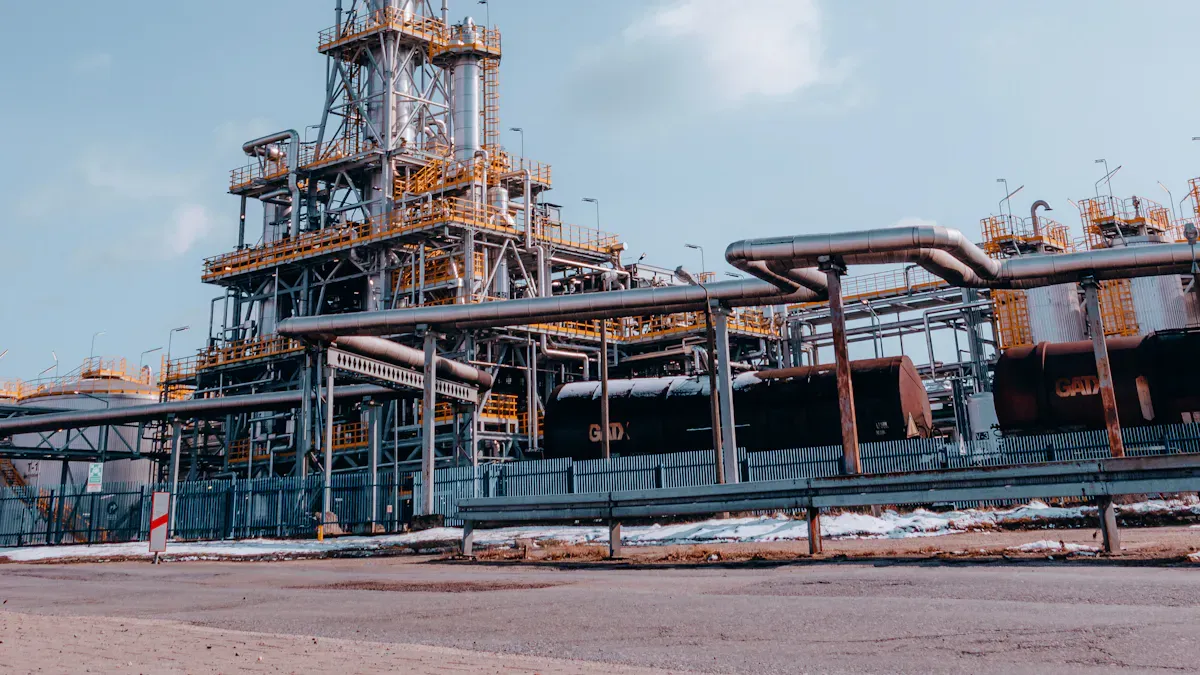
You use a surface drilling rig 1000m deep hole power when you need to drill very deep for mining, exploration, or building. This equipment is special because it can do hard drilling jobs with new technology. > CEGC makes surface drilling rig systems that work well where regular rigs cannot reach.
Key Takeaways
-
Surface drilling rigs can drill down 1000 meters. They are important for mining, oil and gas, and construction jobs.
-
These rigs use advanced technology. This helps them drill faster. It gives better control. It also makes the work safer.
-
Picking the right rig is important. Watching drilling conditions can lower risks. It can also make deep drilling work better.
What Is a Surface Drilling Rig 1000m Deep Hole Power?
Core Features and Capabilities
You use a surface drilling rig 1000m deep hole power when you need to drill deep holes from the ground surface. This drilling rig stands out because it can reach depths up to 1000 meters. You rely on this drilling equipment for tough jobs in mining, oil and gas, and construction. The surface drilling rig works on land, not underground or underwater. You can use it to extract minerals, oil, gas, or water. It also helps you build strong foundations and check soil and rock properties.
-
You can use a surface drilling rig 1000m deep hole power for:
-
Mining: You drill to explore and extract minerals.
-
Oil and Gas: You drill wells to reach underground reservoirs.
-
Construction: You drill holes for building foundations and supports.
-
Geotechnical Investigations: You drill to test soil and rock strength.
-
You get advanced drilling technology with these rigs. You can drill deeper and faster than with standard rigs. You also get more control and safety. You can use different types of surface drilling rigs for different jobs. You choose the right rig based on the drilling depth and the ground conditions.
Key Components of Surface Drilling Rigs
You need to know the main parts of a surface drilling rig 1000m deep hole power. Each part helps you drill deep and keep the rig working well. Here is a table that shows the key components and their roles:
|
Component |
Role in Deep Drilling |
|---|---|
|
Power System |
Supplies energy for all operations. You get stable power for consistent drilling. |
|
Rotary and Feed System |
Cuts rock and moves the drill bit forward. You control drilling speed and hole accuracy. |
|
Compressed Air or Circulation System |
Cleans the hole and keeps drilling conditions stable. You prevent problems and keep drilling efficient. |
|
Control and Monitoring System |
Manages drilling settings for accuracy and safety. You make better decisions and reduce downtime. |
|
Structure and Mobility System |
Gives support and stability. You can drill accurately and move the rig across different terrains. |
You use these components together to drill deep holes. You control the drill string and drill bit to cut through tough rock. You rely on the power system to keep the rig running. You use the control system to check drilling parameters and keep the rig safe.
Depth-to-Diameter Ratio and Engineering Challenges
You face many challenges when you drill to 1000 meters. The depth-to-diameter ratio is important. You need to keep the hole straight and stable as you drill deeper. If the hole is narrow and deep, you risk stuck pipe incidents. You may drill into hard rocks like rhyolite magma. You can lose circulation zones, which makes cementing difficult. High temperatures can reach up to 450 °C. You must protect the casing from thermal stress, corrosion, and scaling. Sometimes the casing collapses or ruptures at different depths.
Tip: You can reduce risks by choosing the right surface drilling rig and using advanced drilling technology. You should monitor drilling conditions and adjust settings to keep the rig safe.
You must plan carefully before you start drilling. You need to select the right types of surface drilling rigs for the job. You must check the drilling depth and the ground conditions. You use strong materials for the drill string and casing. You monitor the drilling process to avoid failures. You keep the rig stable and make sure the hole stays open.
You can use surface drilling rigs for many applications. You get reliable performance and safety. You can drill deep holes for mining, oil and gas, and construction. You can trust surface drilling rig 1000m deep hole power for tough jobs.
How Surface Drilling Rigs Work and Their Applications
Drilling Process and Techniques
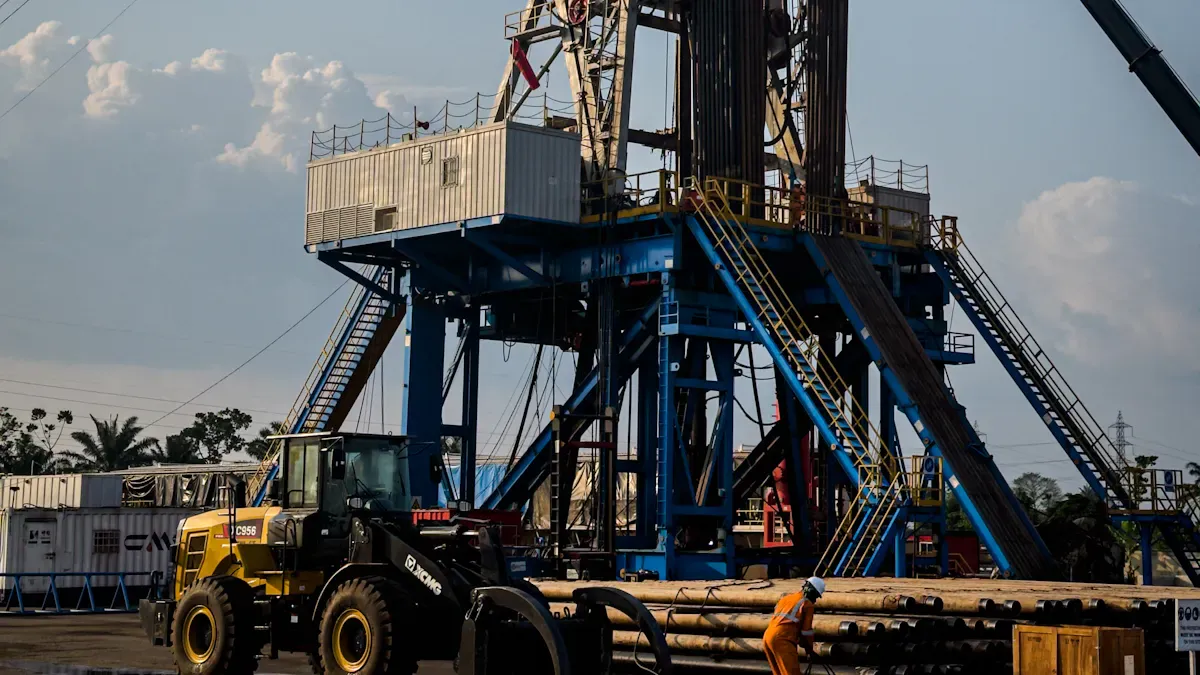
You use a surface drilling rig to make deep holes. The drill bit spins and cuts into the ground. The rig pushes the drill down with force. High-pressure coolant keeps the drill bit cool. It also washes away the rock pieces. You pick different drill bits for each rock type. TCI bits crush hard rocks. PDC bits cut softer rocks. Impregnated diamond bits grind the hardest rocks. You change the speed and pressure to keep drilling smooth.
|
Drilling Head Type |
Suitable Conditions |
Key Features |
|---|---|---|
|
TCI Bits |
Hard, fractured formations |
Crushes rock, ideal for deep hard rock drilling |
|
PDC Bits |
Softer, uniform formations |
High penetration rate, shearing action |
|
Impregnated Diamond Bits |
Abrasive, hardest rocks |
Grinds rock, works where other bits fail |
Types of Surface Drilling Rigs for Deep Holes
You can pick from many surface drilling rigs for deep holes. Most rigs have strong engines and high torque. They also have advanced controls. A typical rig drills up to 1000 meters deep. It spins up to 1100 RPM. The diesel engine gives 132KW power. The rig weighs about 9300kg. Its size is 510022002450mm. You must check the rig’s depth, power, and ground fit before you start.
Applications in Mining, Oil & Gas, and Construction
You use surface drilling rigs in many jobs. In mining, you drill deep to find minerals. In oil and gas, you reach underground reservoirs. Construction needs deep holes for strong foundations. You also test soil and rock strength with these rigs. These jobs need reliable drilling and rigs that work in different ground types.
Benefits: Efficiency, Power, and Safety
You get many benefits from surface drilling rigs. They work fast with powerful engines. You reach deep water and tough rocks. The rig’s design makes it strong and reliable. Safety gets better with special protection features. Automation and remote monitoring help you run the rig safely. They also lower maintenance costs.
Tip: You can use advanced surface drilling rigs to work faster and keep your team safe during deep drilling.
You use a surface drilling rig for deep holes because it makes work faster, safer, and more exact. These rigs help in mining, building, and making things. People often want to know why these rigs are good, how they help with projects, and how deep they can drill. You can pick new rigs that fit what your project needs.
FAQ
How many wells can you drill with one drilling rig?
You can drill up to sixteen wells with one drilling rig. You must check the rig’s power and the ground type before you start each well.
What is the main job of a surface drilling rig?
You use a surface drilling rig to drill deep wells. This rig helps you reach minerals, oil, or water that sit far below the ground.
Can you use one drilling rig for different types of wells?
Yes, you can use one drilling rig for many wells. You must change the drill bit and settings to match the well’s depth and ground conditions.


