
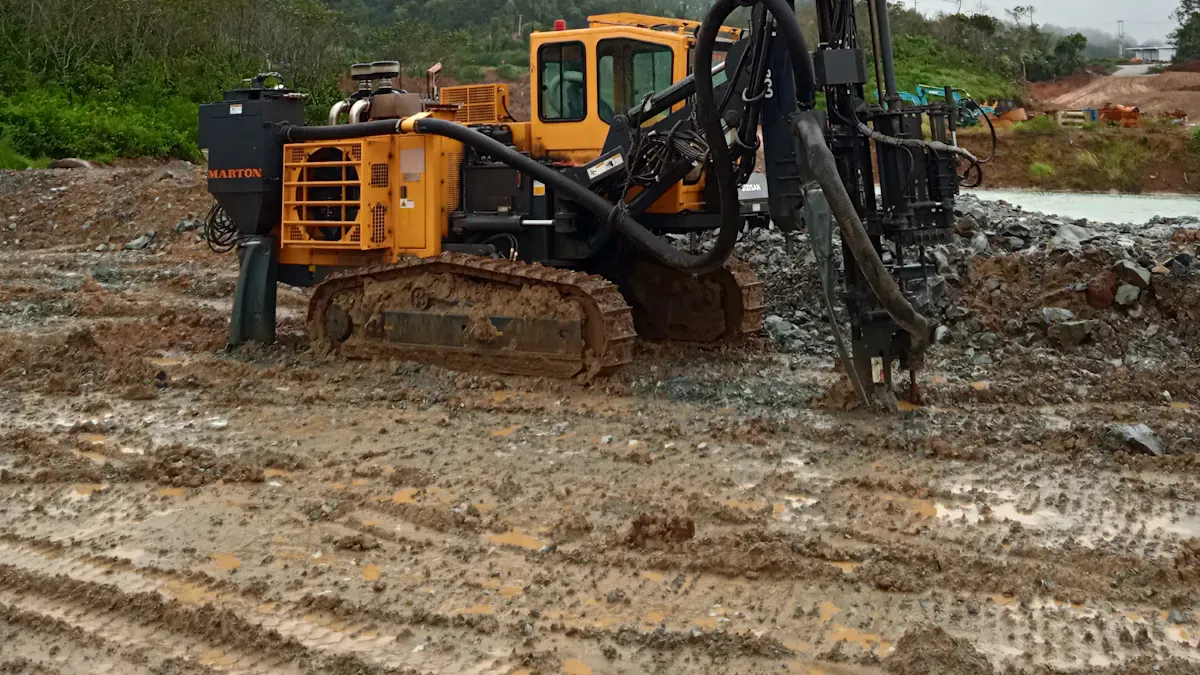
Safety is very important when you use a surface drilling rig 2000m maximum depth. You need to check and fix your equipment often. This helps your equipment stay strong and work well. You must follow CEGC rules and keep learning new things. These actions keep you, your team, and your equipment safe each day.
Key Takeaways
-
Check your drilling rig often. Keep it in good shape. This helps stop problems and keeps people safe.
-
Wear the correct PPE every time. It keeps you safe while you work.
-
Change your drilling methods if the ground changes. This makes the job safer and faster.
Surface Drilling Rig 2000m Maximum Depth Overview
Key Features and Capabilities
A surface drilling rig 2000m maximum depth helps you drill deep holes. This rig uses energy well and has strong torque. You can change the drilling angle from 45° to 90°. The rig works on many types of ground. It is easy to use and drills very accurately. The automatic system lets you drill up to 2000 meters. You can use this rig for jobs above or below ground.
Tip: Always look at the digital control panel for updates and alerts before drilling.
Here is a table that lists some main features and specifications:
|
Feature |
Specification |
|---|---|
|
Engine |
162kW YUCHAI engine |
|
Hydraulic System |
460L/min high-flow |
|
Torque |
|
|
Feed Stroke |
3800mm |
|
Pull-up Force |
40 tons |
|
Hoist System |
Dual-rope, 1000kg and 15,000kg |
|
Mud Pump |
BW-320 |
|
Generator |
11kW maintenance-free |
The dual-rope hoist system makes work safer and faster. The BW-320 mud pump keeps flushing going all the time. The generator does not need much care and keeps the rig working.
Essential Drilling Rig Equipment
You need to pick the right equipment for deep drilling. You should know about different machines, like hydraulic or electric. Think about what your project needs, such as how deep you must drill and what material you will drill through. Set up your rig on flat, steady ground. Make sure you have enough space, good anchors, and emergency gear.
-
Check your equipment every day.
-
Do regular maintenance to stop problems.
-
Always listen to safety talks and review job hazards.
Picking the right surface drilling rig 2000m maximum depth and taking care of your equipment helps you stay safe and work well.
Safety Protocols for Drilling Operations
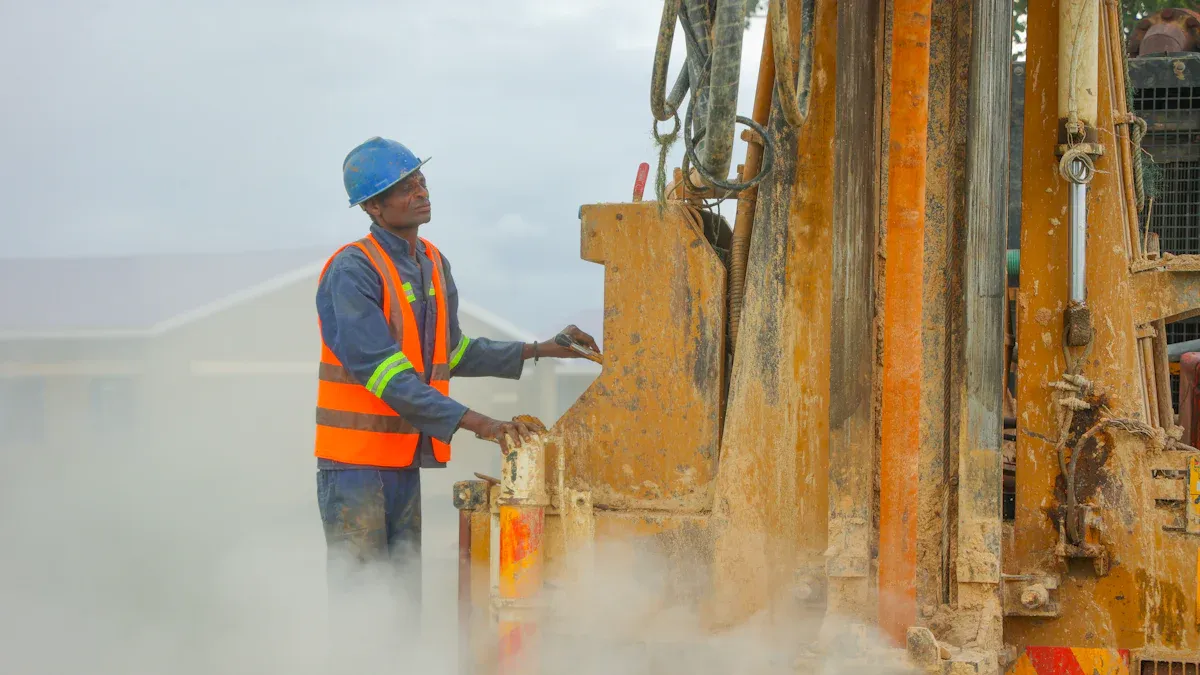
Rig Positioning and Stability
You need to set up the rig with care. Always place the rig next to slopes. This keeps the rig steady and stops accidents. Use the parking brake before drilling. Put wedges under the wheels. Look at the ground for rocks or loose dirt. Check under snow for hidden loose soil. Make sure the jacks are level. Lock everything tight. Keep the rig away from tree branches and power lines. Move drilling fluid away from the rig. This stops dirt from washing away under the jacks. Check the rig often to make sure it stays stable.
|
Safety Measure |
Description |
|---|---|
|
Back the rig straight to the slope for a flat setup. |
|
|
Jack Leveling |
Keep jacks as flat as you can. |
|
Soil Erosion Prevention |
Move fluid discharge away from the rig. |
|
Emergency Brake |
Set the brake after you place the rig. |
|
Wheel Wedge |
Put wedges under wheels for better grip. |
|
Terrain Consideration |
Look for rocks and loose dirt. |
|
Snow Inspection |
Check for loose dirt under snow. |
|
Stability Checks |
Inspect the rig often while you work. |
Personal Protective Equipment (PPE)
Wear the right PPE every day. Pick OSHA-approved hard hats to protect your head. Use safety glasses or face shields for your eyes. Wear hearing protectors if it is loud. Put on bright reflective clothes. Use dielectric shoes and gloves for high voltage jobs. Carry devices to talk to your team. Use remote breakout wrenches and quick connect tools for safer repairs.
-
Hard hats
-
Safety glasses or face shields
-
Hearing protectors
-
Reflective clothes
-
Dielectric shoes and gloves
-
Communication devices
Emergency Procedures
You must know what to do if there is an emergency. Find the Emergency Kill switch on the control panel. Make sure your team follows the emergency plans. Go to safety training often. Use sensors to find hazards fast. Keep safety lights and signs easy to see. Check and fix equipment often to stop failures. Practice hands-on training and use many languages so everyone understands.
|
Safety Precautions |
Description |
|---|---|
|
Emergency Response Plans |
Help you act during emergencies. |
|
Regular Safety Training |
Get teams ready for emergencies. |
|
Detection Sensors |
Find hazards quickly. |
|
Safety Lighting/Signage |
Make sure signs and lights are easy to see. |
|
Machinery Maintenance |
Stop failures and lower injury risk. |
Tip: Checking and fixing your rig often helps you find problems early and keeps your rig safe.
Preventive Maintenance for Drilling Rig Equipment
Daily and Weekly Maintenance Checks
You need to follow a strong preventive maintenance routine to keep your rig safe and working well. Daily and weekly checks help you find problems early. This keeps your equipment running and your team safe. You should look at all main parts of your rig every day and every week. Use this table to guide your checks:
|
Component |
Maintenance Check Description |
|---|---|
|
Hoisting Equipment |
Inspect for wear and damage. Make sure all parts move smoothly. |
|
Drill Rods |
Look for worn or bent sections. Replace any that look weak. |
|
Mud Circulation System |
Clean the system. Check fluid levels. Change filters when needed. |
|
Drill Bits |
Check for cracks or dull edges. Sharpen or replace if needed. |
|
Engine |
Change oil and filters. Look for leaks. Watch fuel use. |
|
Hydraulics |
Check fluid levels. Look for leaks in hoses. Make sure pressure is right. |
|
Filters |
Replace filters as the manual says. This keeps fluids clean and parts safe. |
|
Hoses |
Check for cracks or leaks. Replace if you see damage. |
Early checks help you spot problems before they get big. This saves money and keeps your team safe.
When you do these checks, you stop small problems from turning into big ones. You also make your rig last longer. You save money because you do not have to fix big breakdowns. You also keep your work safe and smooth.
Mud Pump and Fluid System Care
You must take care of the mud pump and fluid system every day. These parts help your rig drill deep and keep everything cool and clean. Regular maintenance of the mud pump and fluid system makes your equipment last longer. It also helps your rig work better. If you change worn parts on time, you stop the pump from breaking when you need it most. This keeps your drilling job moving and protects your money.
A good preventive maintenance plan for the mud pump means you check fluid levels, look for leaks, and change filters often. You should also clean the system and replace worn parts before they fail. This keeps the solids control system working well. You avoid sudden stops and keep your team safe.
Tip: Write down every check and repair in a logbook. This helps you remember what you did and plan your next steps.
Drill String and Pipe Inspection
You need to inspect the drill string and pipes often to stop failures during deep drilling. Set up a regular inspection schedule based on how many hours you use the rig or the ground conditions. Always handle pipes with care to avoid dents or bends. Use the right fluids to stop rust and keep pipes strong.
Follow these best practices for preventive maintenance:
-
Look at threads for damage using your eyes.
-
Use special tests like Magnetic Particle Inspection to find cracks.
-
Try Electromagnetic or Ultrasonic Testing to find hidden problems.
-
Keep a record for each pipe. Write down when you checked it and what you found.
-
Train your team to handle pipes the right way.
-
Use digital tools to track pipe life and plan replacements.
You should always check for signs of wear, cracks, or thinning walls. Non-destructive testing helps you find problems you cannot see. Good records help you know when to replace a pipe before it breaks. Training your team helps everyone work safely and keeps your rig in top shape.
Note: Preventive maintenance is not just about fixing things. It is about stopping problems before they start.
Effective Drilling Rig Maintenance Practices
Hydraulic System Checks
You should check the hydraulic system a lot. This keeps your rig safe and working well. The hydraulic system helps your rig move and drill deep holes. If there are problems, your work can stop. Repairs can cost a lot of money. You need a plan for maintenance. This plan should have regular checks and quick fixes.
Hydraulic systems can fail for many reasons. Some causes are dirty fluid, overheating, leaks, pressure spikes, air in the system, and bad maintenance. You can stop these problems by doing these things:
-
Check fluid levels every day.
-
Look for leaks in hoses, seals, and gaskets.
-
Watch the temperature of the hydraulic fluid.
-
Use the control panel to see pressure spikes.
-
Make sure all connections are tight.
-
Use the right hydraulic fluid for your rig.
-
Fix worn parts fast.
Tip: Write down your maintenance in a logbook. This helps you find problems and plan your next checks.
A clean hydraulic system works better. It keeps your rig running smooth. You keep your team and equipment safe by finding problems early.
Filter Replacement and Care
Filters keep oil and fluids clean in your rig. Dirty filters can hurt your rig and stop it from working. You need to change filters often to keep your rig safe.
Change hydraulic filters every 3 to 6 months. Change lubrication filters every 4 to 8 months. If you work in tough places, change them sooner. Check oil, how clean it is, and if there is water in it.
Here is an easy checklist for filter care:
-
Change filters on time.
-
Check oil for dirt often.
-
Look for water in the oil.
-
Use good filters.
-
Write down when you change filters.
Clean oil helps your rig last longer. Less dirt means less damage to parts. Keeping things clean is very important for your rig. A good maintenance plan makes your rig work better and last longer.
Proper Torque and Pipe Handling
You must use the right torque when you connect pipes. The right torque keeps pipes tight. This stops pipes from coming loose. Loose pipes can cause big problems. Good torque also keeps pipe threads safe and makes them last longer.
Here are some best ways to handle pipes:
-
Use a torque wrench to set the right torque.
-
Check pipe connections before you drill.
-
Handle pipes gently to stop dents and bends.
-
Use strong pipes for deep drilling.
-
Teach your team the right way to handle pipes.
Note: Good pipe handling and the right torque help you avoid damage and keep your job safe.
You can stop equipment damage by following these steps. Your rig will work better and last longer. Good maintenance depends on careful pipe handling and using the right torque.
Adapting to Geological Conditions
Monitoring Drilling Fluid Properties
You need to watch drilling fluid properties closely when you work with a surface drilling rig. The right fluid helps you keep the wellbore stable and safe. You can check things like how thick the fluid is, how well it cleans the hole, and how much it stops leaks. Good fluid management keeps your equipment running and protects your team.
Here is a table that shows how fluid properties affect your work:
|
Fluid Property Management |
Impact on Safety and Efficiency |
|---|---|
|
Rheological properties |
Cleans the wellbore, lowers pump pressure, and stops fluid from entering the wrong places. |
|
Potassium chloride use |
Stops clay from swelling and keeps the wellbore strong. |
|
Low fluid filtrate |
Keeps the wellbore stable and stops the drill string from sticking. |
You should check fluid levels and quality every day. Use sensors to get real-time data. Write down changes in a logbook. These steps help you avoid problems and keep your drilling job safe.
Adjusting Drilling Methods
You must change your drilling methods when the ground changes. Different rocks and soils need different tools and ways to drill. You can use reaming to smooth the hole or clean out cuttings to stop blockages. You can also use sensors and data to make quick changes.
Here are some key geological factors that affect your work:
|
Geological Factor |
Description |
|---|---|
|
Porosity |
Shows how much gas the rock can hold. |
|
Permeability |
Tells you how easily gas can move through the rock. |
|
Reservoir Thickness |
Thicker layers mean more gas and better drilling. |
|
Gas Content |
High gas means better production. |
|
Fracture Density |
More fractures help gas flow better. |
You can use models to predict problems and work with experts to solve them. Training helps you learn new skills. When you adapt your methods, you drill faster and safer.
Tip: Always check the ground and fluid before you start. This helps you pick the best way to drill.
Troubleshooting and Maximizing Efficiency
Common Operational Issues
Drilling can be hard because things break. Engine, motor, and generator problems can stop work and cost money. You need to check these parts often to keep them working well. Drawworks must move smoothly so the rig works right. Drilling lines wear out fast, so check them every day. Hydraulic leaks waste fluid and make the rig less efficient. Electrical problems, like bad wires or loose parts, can stop the rig. Vibrations mean something is not lined up or there is rust. You should look into vibrations to keep the rig safe and working well.
Quick Fixes and When to Call for Service
You can fix many problems quickly. For hydraulic leaks, tighten parts and change broken hoses. For electrical problems, check wires and control panels. If you see too much vibration, line up parts and check for rust. Use good oil to stop friction and rust. If you cannot fix a problem or it keeps happening, call experts for offshore rig maintenance. You need big help when rust or oil problems hurt performance.
Tip: Write down every repair and oil job in a logbook. This helps you see how your rig is doing and find problems early.
Reducing Downtime
You can stop downtime by using smart steps. Preventative maintenance finds problems before they get big and expensive. Dustless blasting helps stop rust and makes maintenance faster. Writing down what you do helps you follow safety rules and keep the rig reliable. Use rust prevention and oil often to protect your rig. These steps help you avoid downtime and keep your rig working well.
|
Strategy |
Benefit |
|---|---|
|
Preventative Maintenance |
Stops problems early and saves money. |
|
Dustless Blasting Technology |
Makes maintenance faster and stops bad rust. |
|
Documentation of Activities |
Helps you follow rules and stay safe. |
Note: Using oil and checking for rust often keeps your rig working and stops expensive downtime.
Doing daily checks, learning new skills, and using the right tools help keep everyone safe. Teams that practice a lot can find problems early. This helps the rig work without stopping. Taking care of your rig before it breaks saves money and time.
|
Benefit |
Result |
|---|---|
|
Preventive maintenance |
Fewer accidents, lower costs |
|
Faster, safer drilling |
Remember: Simple actions every day keep your rig and team safe.
FAQ
How often should you check the drilling rig for safety?
You should check your rig every day before you start work. This helps you find problems early and keeps your team safe.
What is the best way to prevent rust on rig parts?
Tip: Clean and oil all metal parts after each use. Store tools in a dry place. This stops rust and keeps your rig strong.
Can you use the rig in cold weather?
Yes, you can use the rig in cold weather. Use special fluids and check all systems for ice. Warm up the engine before drilling.


