
You use TBM tunnel telemetry to stop failures in tunnel building. Real-time data and smart monitoring help you find problems early, keeping your crew ready for surprises. TBM tunnel telemetry keeps crews ahead of failures by addressing issues like utility conflicts and flood water. CEGC provides safety and reliability with trusted tunnel machine solutions.
Pain Points |
Remedies |
|---|---|
Utility conflicts |
Special TBM setups |
Heritage settlement |
Better slurry |
Flood ingress |
Stronger segment gaskets |
Interface risks |
Special TBM and segment gaskets |
Key Takeaways
TBM tunnel telemetry lets crews watch things as they happen. This helps them find problems early and stop failures.
Telemetry helps with predictive maintenance. Crews can plan repairs before things break. This means less time is lost and money is saved.
Digital twin technology makes things safer. It can guess how the ground will act and spot dangers in the environment fast.
What is TBM tunnel telemetry?
Definition and Core Functions
TBM tunnel telemetry helps you watch and control tunnel boring machines underground. Sensors on the machine collect data and send it to your control center. This system lets you see what is happening with the machine right away. You can find problems before they turn into failures.
TBM tunnel telemetry does many important jobs for tunnel boring machines:
You check and change TBM settings as it moves underground.
You look at what happened to learn why problems started.
You collect data for small and big studies, so you know how the machine works with the ground.
You use the data to make the work better and faster.
You plan repairs before things break, so the machine keeps working well.
CEGC puts TBM tunnel telemetry in every tunnel boring machine as a standard feature. You get safe and steady performance with each machine.
Role in Tunnel Machine Operations
You count on TBM tunnel telemetry to keep tunnel boring machines safe and working well. The telemetry system helps you make fast choices using live data. You can change machine settings, react to new ground conditions, and stop long delays.
CEGC lets you pick TBM tunnel telemetry features for your project. You choose what fits your needs. The system matches industry rules, so you meet tough standards for city and utility tunnels. TBM tunnel telemetry helps you trust that your tunnel boring machines will work the same every time.
How tbm tunnel telemetry keeps crews ahead of failures
Real-Time Monitoring and Early Detection
You use tbm tunnel telemetry keeps crews ahead of failures to watch your tunnel machine all the time. Sensors check torque, thrust, and cutterhead activity. If torque or thrust changes, you notice cutter loss or cutterhead wear early. Watching sensors in real time helps you act before things break. You use data filters to see the most important sensor numbers. This helps you find problems like ground settlement, face instability, and water coming in before the tunnel collapses.
You can use digital twin technology to match live sensor data with a virtual tunnel model. This lets you guess how the ground will act and stop sudden collapses. You see the tunnel’s health right away and make fast choices.
Sensors warn you about strange vibration or heat.
You notice water coming in before it gets bad.
You check ground control system readings to stop settlement.
Predictive Maintenance and Wear Management
You use tbm tunnel telemetry keeps crews ahead of failures to plan repairs before things break. Sensors watch for wear on bearings, gearboxes, and cutterheads. You use digital twin technology to know when parts need changing. This stops surprise breakdowns and saves money on spare parts. AI looks at sensor data and warns you if something is too hot or has too much resistance.
Function |
|
|---|---|
Bearing |
Watches for wear and overheating using AI. |
Gearbox |
Checks how it works and warns about resistance. |
Cutterhead |
Follows cutting resistance to guess wear and repair time. |
Thrust Sensors |
Gives data for checking TBM health. |
You use real-time monitoring and data filters to focus on key sensor numbers. Planning repairs early keeps your tunnel boring machine working well and avoids big delays.
You watch cutting resistance to guess cutterhead wear.
You use AI to find strange sensor patterns.
You plan repairs using digital twin technology and sensor warnings.
Environmental Hazard Alerts
You use tbm tunnel telemetry keeps crews ahead of failures to find dangers in the tunnel. Sensors check ground control system readings, water pressure, and soil movement. You get warnings if water comes in or the ground is not stable. Digital twin technology matches sensor data with a virtual tunnel to guess hazards.
You see water coming in before it floods the tunnel.
You notice face instability and ground settlement.
You use real-time monitoring to watch for changes.
When you get a warning, you act fast to keep your crew and tunnel safe. You change face pressure or turn on ground control system features. You use predictive maintenance to check if the tunnel machine needs repairs after a hazard.
Alignment and Guidance Assurance
You use tbm tunnel telemetry keeps crews ahead of failures to keep the tunnel machine on the right path. Sensors track the machine’s position, line, and grade. You use digital twin technology to compare the real tunnel with the plan. Watching in real time helps you spot if the tunnel is off track or cut too much.
You use guidance systems to keep the tunnel machine straight.
You check sensor numbers for line and grade.
You use ground control system data to steer right.
You avoid doing work again and hitting utilities by keeping the tunnel machine lined up. Planning repairs early keeps guidance sensors working well. You trust tbm tunnel telemetry keeps crews ahead of failures to give good results every time.
You get CEGC’s standard specs and can pick what you need for your project. You choose the right digital twin technology, sensors, and ground control system features for your tunnel. You see how tbm tunnel telemetry keeps crews ahead of failures in real projects. For example, you find cutterhead wear early and fix it before it breaks. You spot water coming in and change face pressure to stop tunnel collapses. You keep your tunnel boring machine running safely and with little downtime.
Key telemetry parameters and project benefits
Critical Parameters Monitored
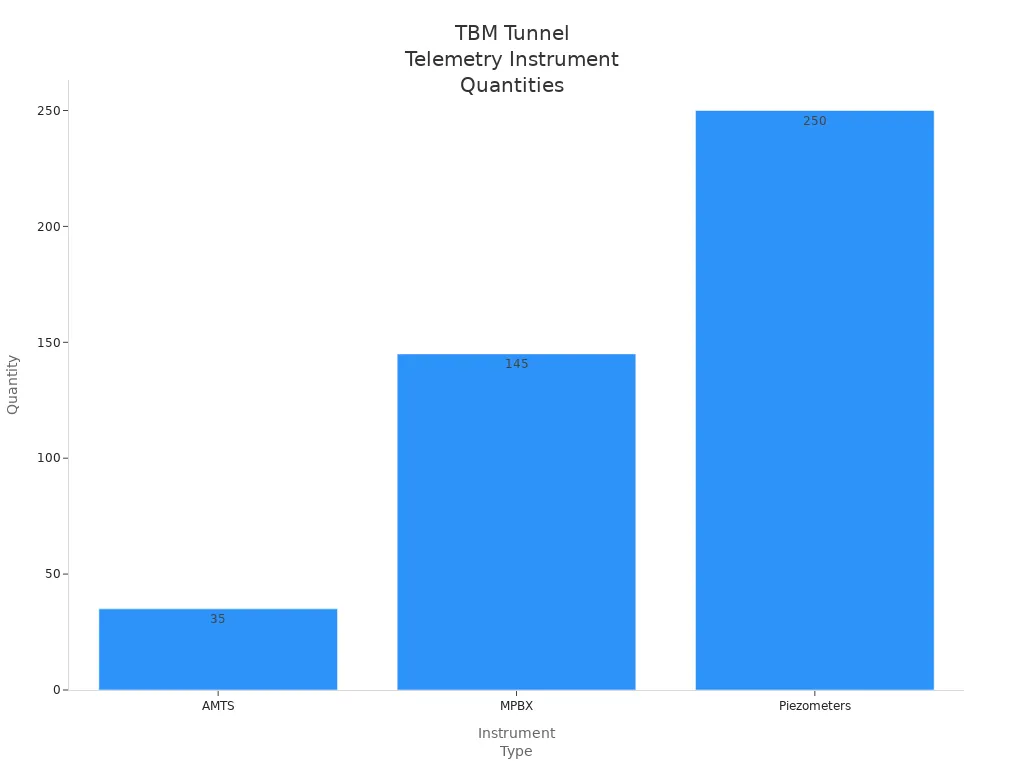
TBM tunnel telemetry helps you watch many important things. These include pressure, temperature, alignment, and vibration. You use these numbers to guess problems before they happen. You also connect them to your control systems. The table below shows some main tools and what they do:
Quantity |
Purpose |
|
|---|---|---|
AMTS |
35 |
Watch for deformation |
MPBX |
145 |
Check pore pressure |
Piezometers |
250 |
Watch ground conditions |
You also use inclinometers, tiltmeters, and extensometers to get more data. These tools help you see ground movement, tunnel safety, and soil changes. You put MPBX at different depths to get better data and make good guesses.
Configuration |
Location Above Tunnel Crown |
Location Below Grade |
|---|---|---|
MPBX |
5 feet, 10 feet |
20 feet |
How Monitoring Prevents Failures
You use smart guessing to find problems before they get bad. Watching cutterhead torque and thrust pressure helps you spot machine trouble early. Sensors that do not break from shaking give you live feedback. If you see fast changes in pressure or vibration, you know something is wrong. This can warn you about ground problems or cutterhead wear. You use all these numbers together to make quick choices.
The table below shows how each tool helps stop failures:
Function |
|
|---|---|
Inclinometers |
Measure sideways ground movement for tunnel safety and smart guessing. |
Tiltmeters |
Watch angle changes for tunnel checks and data systems. |
Piezometers |
Check water pressure to stop ground problems and water leaks. |
Extensometers |
Find tunnel lining moves for early fixes and data checks. |
You use smart data to change face pressure and cutterhead speed. This keeps your tunnel boring machine safe and working well.
Benefits for Crews and Projects
You get many good things from using TBM tunnel telemetry with smart guessing and data checks. Here are some main benefits:
You make work safer with automatic alerts and data.
You have less downtime by fixing things before they break.
You save money by stopping problems early.
You follow city rules with live data and reports.
You work faster by watching every part of the tunnel machine.
You lower risks from ground problems and water leaks.
You keep your crew safe with smart data and checks.
CEGC gives you strong data systems and custom setups for your project. You get smart guessing, good data, and high work speed for every tunnel machine. You can count on CEGC to help your business with advanced data and smart tools.
You use TBM tunnel telemetry to help stop failures. It keeps your tunnel boring machine safe. CEGC’s real-time monitoring lets you act fast. This helps you avoid safety problems. You have less downtime with predictive maintenance. Smart monitoring systems help you fix things before they break. The table below shows how CEGC helps you save time and stay safe.
Feature |
Benefit |
Source |
|---|---|---|
Real-time monitoring |
Quick changes to torque and thrust for better safety |
|
Predictive maintenance |
Cuts downtime by up to 15% |
|
Monitoring systems |
Prevents delays, saving 5-10% downtime |
You help crews stay ahead of failures and downtime. You get good performance and setups made for you. You should pick TBM tunnel telemetry for your next tunnel job. This will help you lower downtime and make your project safer.
FAQ
How does TBM tunnel telemetry improve tunneling operations?
TBM tunnel telemetry lets you watch data as it happens. You find problems early and keep tunneling safe. You control the machine better and act fast.
What is sensor integration in tunnel boring machines?
You put sensors on your tunnel boring machine. Sensor integration helps you check machine health and ground conditions. You also track how well the machine works. This makes tunneling safer and easier.
Tip: Predictive analytics lets you plan repairs before things break.
Can predictive analytics reduce downtime in tunnel projects?
Predictive analytics looks at sensor data for you. You plan repairs early and keep the machine working well. This lowers downtime and saves money.


