
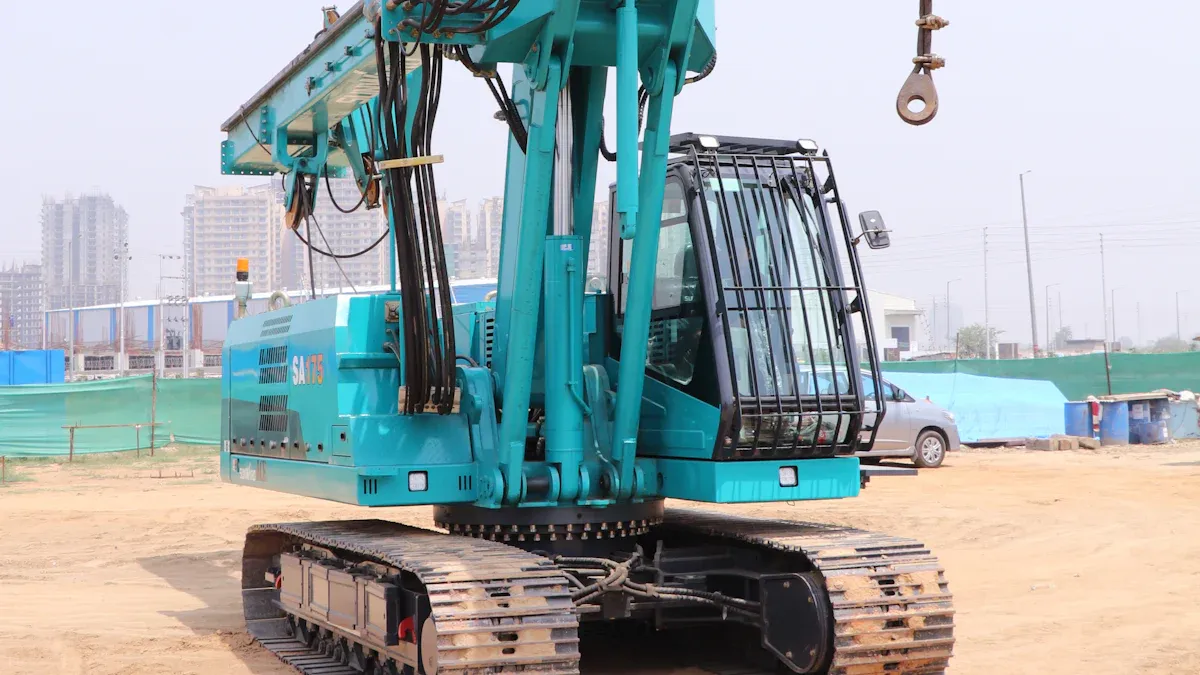
You want every project to be correct. CEGC gives you this with Trenchless Drilling Rig Ultra Low Error Beats Variance. The rig uses smart guidance, automation, and a strong build. These help you get exact results. Skilled workers use standard specs and can change things for each job. You get the right performance for utilities, city work, and business contracts.
Key Takeaways
-
Use precision guidance tools to help your drilling stay straight. These tools stop mistakes and make sure results are correct.
-
Use real-time data checks and strong QA/QC steps. This helps you find problems early and keep the project right.
-
Spend money on operator training and set rules for work. Teams that learn well use best ways, so drilling is safer and works better.
Trenchless Drilling Rig Ultra Low Error Beats Variance
Precision Guidance & Monitoring
You want your drilling to go as planned. Precision guidance helps you do this. New horizontal directional drilling machines use smart technology. These help you get trenchless drilling rig ultra low error beats variance. The systems give you control, even when things get hard.
-
ParaTrack2 sends out a strong AC magnetic signal. You can follow the drill head down to 1500 feet. This lets you find the drill head early and stop mistakes.
-
At Bit Inclination Assembly gives you numbers right at the drill bit. You see the angle and direction right away.
-
DigiTrak Falcon Plus uses iGPS and Log-While-Drilling together. You get fast reports and better tracking.
-
Wire-line navigation uses special tools for exact drill head spots.
-
ParaTrack Steering Tool mixes magnetic and gravity sensors. You get good survey data and can use many tracking ways at once.
These tools help you keep the bore straight. You do not have to redo work or worry about crossing failure. You do not need to only trust the operator’s skill. The trenchless drilling rig ultra low error beats variance by using these smart tools.
Precision monitoring is also important. You can see how much your drill bit is wearing out. You get alerts if something is wrong. This keeps your project safe and working well.
|
Aspect |
Impact on Trenchless Drilling Operations |
|---|---|
|
You get quick data on drill bit wear and machine settings. This makes your work more accurate and fast. |
|
|
Drill Bit Wear Prediction |
Good data helps you know when to change bits. You keep your bore on track. |
|
Anomaly Detection |
Early warnings help you fix problems fast. You stop accidents and save money. |
With these features, you can trust your trenchless drilling rig ultra low error beats variance to give you the results you want.
Real-Time Data & QA/QC Procedures
You need more than just good machines. You need a plan that checks every step. Real-time data and strong QA/QC steps help you get trenchless drilling rig ultra low error beats variance.
You use MWD data cleaning and fixing. This means your data is clear and right. You can find problems before they get big. Tracking-system ready tools let you record every move and control the job.
You follow strict QA/QC steps. You check the path at every stage. You compare your bore path to the plan. If you see a drift, you fix it fast. CEGC rigs meet top specs for accuracy and control. You can change the system for your project.
You do not have to worry about bore drift or crossing failure. The system helps you stay on grade and on line. You get the same results, even if the ground changes or the job is hard. Operator skill still matters, but the system helps you at every step.
Tip: Always check your real-time data and QA/QC logs before you move to the next step. This habit helps you keep trenchless drilling rig ultra low error beats variance on every job.
You can trust your horizontal directional drilling machine to give you the accuracy you need. With these tools and steps, you stop costly mistakes and keep your jobs on time.
Automation, Rig Design & Operator Protocols

Automated Control & Feedback
You want your drilling to stay on track. The ground can change a lot. Automated control systems help you with this. These systems use sensors and smart software. They change drilling settings right away. You do not need to count only on the operator. The machine learns as it works.
-
The adaptive drilling application keeps your project smooth. It changes for new ground and stops problems early.
-
Autonomous Bottom Hole Assemblies (BHAs) mean you need fewer skilled workers. Fewer people on site means it is safer.
-
The system reacts fast to changes underground. You get better accuracy and make fewer mistakes.
-
Intelligent drilling optimizers use AI to handle vibrations and ground changes. You do not need to change things by hand a lot.
-
The system keeps drilling well, even if your crew is new.
Real-time parameter adaptation helps a lot. The system watches important things and changes them as needed. This keeps drilling steady and cuts down on errors.
|
Parameter |
Impact on Drilling Performance |
Notes |
|---|---|---|
|
Quick changes can make drilling faster |
Too much WOB can cause problems |
|
|
RPM |
Can be set for better work |
Too high RPM can make trouble |
|
Flow Rate (FR) |
Changes help clean the hole |
High flow can hurt the wellbore |
You get load-matched control, anti-stall powertrain, and overload protection. These features keep drilling safe and working well. The system feels the hydraulic load and manages pressure. It speeds up and slows down smoothly. This stops shocks to rods and tools.
High-Rigidity Frame & Carriage Alignment
You need a strong rig to keep drilling straight. High-rigidity frames and good carriage alignment help you do this. The frame does not bend or shake, even with heavy loads. This keeps your drilling path straight.
|
Aspect |
Explanation |
|---|---|
|
Resistance to Deformation |
Strong frames do not bend during drilling. |
|
Vibration Reduction |
Rigid frames cut down on shaking, so drilling is more exact. |
|
Maintenance of Alignment |
The frame stays lined up, so drilling does not go off track. |
A strong support frame with good shape cuts down on movement and keeps holes straight. The frame also stops misalignment when clamping and fights uneven forces during injection. You get tighter fits and better results.
You can pick from CEGC’s options. Choose the right torque, thrust, and rod system for your job. This helps you match the rig to the ground and the work.
|
Specification |
Value |
|---|---|
|
Max. Thrust & Pullback |
|
|
Max. Torque |
180,000 N·m (132,774 ft·lbs) |
|
Drill Rod Size |
Φ140-Φ219 mm (Φ5.5-Φ8.6 in) |
|
Drill Rod Length |
9600 mm (31.5 ft) |
Operator Training & Standard Procedures
You want your team to work safely and do a good job. CEGC gives strong training for every operator. These programs teach all the steps to run a horizontal directional drilling machine.
|
Training Component |
Description |
|---|---|
|
Equipment Operation |
Learn how to use the drilling rig the right way. |
|
Maintenance Procedures |
Follow steps to keep the rig working well. |
|
Safety Protocols |
Practice safety to protect people and machines. |
|
Troubleshooting |
Find and fix problems fast during drilling. |
You follow the same steps for every job. This means you check the rig, look at the plan, and watch drilling at each stage. You keep logs and make changes if needed. These habits help you avoid mistakes and keep drilling on target.
Note: Training often and having clear steps helps your team get good results every time.
You get the best results when you use smart automation, a strong rig, and skilled workers. CEGC’s horizontal directional drilling machines give you the tools and help you need for ultra low error and low variance in every job.
Case Studies & Results
Successful Crossings & Ultra Low Error
You see how helpful a horizontal directional drilling machine is when you finish a crossing with ultra low error. CEGC rigs help you drill very accurately for roads, railways, rivers, and utilities. You get a drilling rate index that fits your project. Many workers say their bore paths stay on track. You do not have to pay for mistakes or do work again. The system checks your work and tells you how accurate it is at every step. You can count on the machine to stay accurate, even if the ground changes.
You keep your project safe by watching real-time data. The rig warns you if there is error or variance. You fix problems before they get worse. This way, you finish crossings with the same good results every time.
Repeatable Accuracy in Challenging Conditions
You work in tough dirt and places that change a lot. CEGC rigs use smart guidance and monitoring to keep accuracy high. Studies show that high-throughput platforms can measure root traits with good accuracy in many places. You get the same kind of results with your drilling rate index. The rig works in sand, clay, or rock. You see low error and variance, even in hard jobs. You trust the system to check accuracy and keep your bore path straight. You do not worry about drift or crossing failure.
CEGC Customization for Reliable Outcomes
You want a solution that fits your project. CEGC lets you pick what you need for every horizontal directional drilling hdd job. You choose torque, thrust, and rod size. You get expert advice and help with setup. Factory-trained workers test the rig for accuracy and predictive accuracy. You get trenchless engineering support for hard crossings. The table below shows how CEGC helps you get good results:
|
Service |
Benefit |
|---|---|
|
Matches rig to your project |
|
|
Technical Consulting |
Makes drilling rate index and accuracy better |
|
On-Site Installation |
Keeps error and variance low |
|
Engineering Support |
Keeps predictive accuracy |
You finish your project with the same good results every time. CEGC gives you the tools and help you need.
You can see that CEGC’s trenchless drilling rigs work with very low error and less variance. These rigs use smart technology, strong design, and skilled workers to do a great job. Getting things right is important for your project. You do not have to redo work, you follow the rules, and you get results you can trust.
-
New drilling technology helps you drill more accurately and faster. You have fewer risks and spend less money fixing mistakes or waiting.
-
Changing the drill point shape means you need less force. The holes are better, and you save money on each job.
|
Specification |
Importance |
|---|---|
|
ISO 9001 and CE certification |
Makes sure the rig is safe and high quality |
|
OSHA standards for hydraulic systems |
Keeps the pressure system safe for everyone |
|
Makes sure the rig fits what your project needs |
|
|
Compliance with local environmental and noise regulations |
Follows the rules for noise and the environment |
You pick CEGC’s horizontal directional drilling machines for your next job. You can change them to fit your needs and get the best results.
FAQ
What makes CEGC’s trenchless drilling rig accurate?
You get good accuracy from smart guidance and strong rig design. Real-time monitoring helps you keep the bore path straight. The system uses prediction to lower errors.
How does real-time data help during drilling?
You see live data as you drill. Prediction helps you spot problems early. You fix issues fast and keep drilling on track.
Can I customize the rig for my project?
You can pick torque, thrust, and rod size. Prediction matches your needs and improves results for each job.
How does prediction improve drilling safety?
Prediction finds risks before they cause trouble. This keeps your team safe and your project running well.
Why is prediction important for horizontal directional drilling?
Prediction helps you plan each step. You avoid mistakes and finish your project with less error and less rework.
Does prediction help with tool wear?
Prediction tells you when to change tools. This saves money and keeps drilling efficient.
How does prediction reduce downtime?
Prediction spots problems early. You fix them before they stop your work. This keeps your project moving.
Can prediction help in tough ground conditions?
Prediction adjusts settings for sand, clay, or rock. This keeps your bore path straight and lowers errors.
How does prediction support QA/QC procedures?
Prediction checks your work at every stage. This helps you meet project specs and avoid costly mistakes.
Does prediction help with compliance?
Prediction helps you follow safety and environmental rules. This keeps your project legal and safe.
How does prediction affect project costs?
Prediction saves money by avoiding errors, reducing tool wear, and cutting downtime.
Can prediction improve operator training?
Prediction teaches best practices. New operators learn faster and make fewer mistakes.
How does prediction help with bore deviation?
Prediction keeps the drill on line and grade. This lowers the risk of bore deviation.
Does prediction help with crossing failure?
Prediction helps you plan and watch crossings. This lowers the chance of failure and rework.
How does prediction work with automation?
Prediction works with automated controls. The system changes settings in real time for better results.
Can prediction help with stuck pipe issues?
Prediction spots risks for stuck pipe. You act early and avoid downtime.
How does prediction improve fluid management?
Prediction sets flow and pressure. This keeps mud properties stable and lowers stuck risk.
Does prediction help with tool compatibility?
Prediction matches tools to ground conditions. This improves hole cleaning and lowers tool wear.
How does prediction support maintenance?
Prediction schedules maintenance before problems start. This keeps your rig running well.
Can prediction help with project planning?
Prediction plans bore paths, tool changes, and schedules. This makes your project more efficient.
How does prediction help with reporting?
Prediction creates clear reports. This shows project progress and meets client needs.
Does prediction help with environmental protection?
Prediction avoids frac-out and loss of returns. This protects the environment and keeps your site safe.
How does prediction improve project outcomes?
Prediction helps you finish jobs on time, on budget, and with fewer errors.
Can prediction help with operator errors?
Prediction guides operators and lowers mistakes. This leads to better results.
How does prediction help with equipment selection?
Prediction helps you pick the right rig and tools for each job.
Does prediction help with client communication?
Prediction gives clients clear updates and accurate timelines.
How does prediction help with regulatory compliance?
Prediction helps you meet all rules and standards for your project.
Can prediction help with risk management?
Prediction finds and fixes risks before they cause problems.
How does prediction help with resource allocation?
Prediction plans labor, equipment, and materials. This saves time and money.
Does prediction help with project scalability?
Prediction handles small and large projects with the same accuracy.
How does prediction help with data analysis?
Prediction turns data into useful insights for better decisions.
Can prediction help with continuous improvement?
Prediction helps you learn from each job and improve future projects.
How does prediction help with documentation?
Prediction keeps accurate records for audits and reviews.
Does prediction help with team coordination?
Prediction shares information and keeps everyone on the same page.
How does prediction help with scheduling?
Prediction sets realistic timelines and avoids delays.
Can prediction help with cost estimation?
Prediction makes better cost estimates and controls spending.
How does prediction help with quality control?
Prediction checks work quality at every step.
Does prediction help with troubleshooting?
Prediction finds and fixes problems quickly.
How does prediction help with customer satisfaction?
Prediction delivers reliable results and meets client expectations.
Can prediction help with innovation?
Prediction lets you try new methods and improve drilling performance.
How does prediction help with training updates?
Prediction updates training programs with the latest best practices.
Does prediction help with safety audits?
Prediction prepares for and passes safety audits.
How does prediction help with equipment upgrades?
Prediction tells you when to upgrade or replace equipment.
Can prediction help with workflow optimization?
Prediction streamlines tasks and improves efficiency.
How does prediction help with supply chain management?
Prediction plans orders and avoids shortages.
Does prediction help with energy efficiency?
Prediction uses less energy and lowers costs.
How does prediction help with stakeholder reporting?
Prediction keeps stakeholders informed with accurate data.
Can prediction help with regulatory changes?
Prediction adapts quickly to new rules.
How does prediction help with project documentation?
Prediction keeps records organized and easy to find.
Does prediction help with warranty claims?
Prediction supports warranty claims with clear data.
How does prediction help with after-sales support?
Prediction solves problems and answers questions quickly.
Can prediction help with remote monitoring?
Prediction lets you watch your rig from anywhere.
How does prediction help with performance benchmarking?
Prediction compares results and sets new goals.
Does prediction help with sustainability goals?
Prediction reduces waste and meets green targets.
How does prediction help with future planning?
Prediction helps you plan for new projects and growth.


