
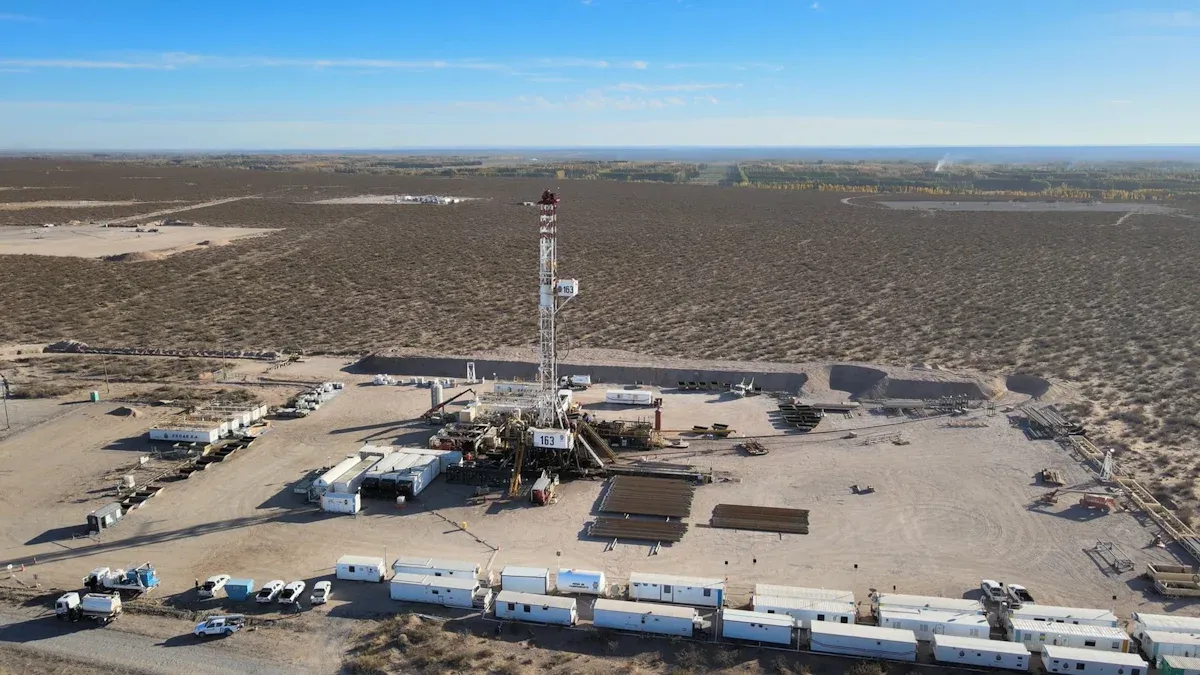
Core Pain Points & Technical Solutions for Horizontal Directional Drilling Machines
Product: Horizontal Directional Drilling Machine (HDD)
Audience: B2B contractors, utilities, municipal projects, EPC
Positioning: Market-standard specs; project-based customization available
Bore Deviation & Crossing Failure → Precision Guidance & Stability System
User Pain Points: Off-line/off-grade bores cause rework and penalties; road/rail/river/utility crossings demand repeatable accuracy; outcomes depend on operator skill.
Technical Solutions: Our horizontal directional drilling machine features load-matched control coordinating thrust/pullback, rotation, and feed. A high-rigidity frame combined with carriage alignment reduces vibration and walk, ensuring precise operation. The system is tracking-system ready, with optional data logging and process control for enhanced accuracy.
Technical Specs: This directional drilling machine offers market-benchmark accuracy and control for its class. Customizable torque/thrust, rod system, control package, and tracking integration are available per bore length and geology.
Stuck Pipe, Torque Spikes & Downtime → Anti-Stall Powertrain & Overload Protection
User Pain Points: Stuck pipe drives recovery cost and schedule loss; torque spikes damage rods/threads/tooling; hard/mixed ground reduces consistent daily output.
Technical Solutions: Our Trenchless Drilling Rig boasts high-torque output with a wide RPM range. Hydraulic load sensing and pressure management, along with controlled ramp-up/ramp-down, reduce shock loads on rods, swivels, and tooling, preventing damage and downtime. This robust design ensures your horizontal directional drilling hdd operates smoothly even in challenging conditions.
Technical Specs: Power and torque are aligned with competitive rigs. An optional “rock package” (including enhanced cooling, filtration, torque reserve, and heavy-duty components) is available for demanding applications. This horizontal directional drilling solution is built for endurance.
High Consumables Cost & Tool Wear → Tooling Compatibility & Durability Package
User Pain Points: Fast reamer/cutter wear increases cost per meter; tooling mismatch causes poor hole cleaning/under-gauge bores/pullback risk; frequent tool changes cut utilization.
Technical Solutions: The CEGC Horizontal Directional Drilling Rig ensures compatibility with blade/fluted/rock/barrel reamers. Smoother torque delivery reduces chatter and uneven wear, extending tool life. Service-friendly access allows for faster maintenance, maximizing uptime for your horizontal directional drilling projects.
Technical Specs: Our drill rig uses standard consumable interfaces. Customizable rod diameter, tool joint specs, and high-wear protection are available to match geology and preferred tooling, optimizing your operational costs.
Poor Fluid Performance & Frac-Out Risk → Mud Integration & Fluid Management Solution
User Pain Points: Low flow/pressure increases torque and stuck risk; loss of returns/frac-out creates compliance and cleanup exposure; unstable mud properties reduce bore stability.
Technical Solutions: We provide pump sizing guidance (flow/pressure vs. length/diameter/formation) and ensure circulation path and filtration readiness. Our solutions support mud program discipline, including mixing targets, monitoring, and routine adjustments, crucial for successful Well Drilling Rig 50000Nm Handles Heavy Loads operations.
Technical Specs: Our systems work seamlessly with mainstream electric/diesel mud pumps. Customizable integrated pump packages, filtration/cooling upgrades, and site-specific fluid handling solutions are available to ensure optimal fluid performance and minimize frac-out risks.
Key Takeaways
-
A 50,000 Nm drilling rig offers great power. It drills deep holes. It works well in hard ground.
-
This rig has smart systems. They help drill straight. They protect tools from breaking.
-
The rig uses strong engines and smart controls. This makes drilling safe and efficient. It helps save money.
Understanding Heavy Loads: The 50000Nm Rig Advantage
Defining Heavy-Duty Drilling for 2026
You have more drilling work. You need to know what heavy-duty drilling means. It has many important parts. Think about how deep you must drill. Consider the size of the hole. Look at the ground conditions. This often means hard rock. Or it could be shaky ground. These tough spots need a strong rig.
Practical Impact of 50000Nm Torque
A 50,000 Nm torque rig helps a lot. Rigs with high torque are strong. They give you much power. This power helps drill deep. It makes big holes in hard rock. Their strong parts use big drill bits. They cut hard rock better. A 1500 HP top drive rig is powerful. It makes up to 50,000 Nm of torque. This makes drilling faster. This is true for hard rock. It also works for rough ground. This high torque gives you the force needed. It cuts through tough ground layers. This makes a Well Drilling Rig 50000Nm Handles Heavy Loads key for your hardest jobs.
Key Rig Classifications and Types for Heavy-Duty Work
You have choices for strong drilling rigs. Rotary rigs spin to cut. Percussion rigs hit the ground. Down-the-hole (DTH) rigs put the hammer deep. Top hammer rigs hit from the top. Each type helps with different hard jobs. Pick the best rig for your project.
Core Technical Specifications for a Robust 50000Nm Well Drilling Rig
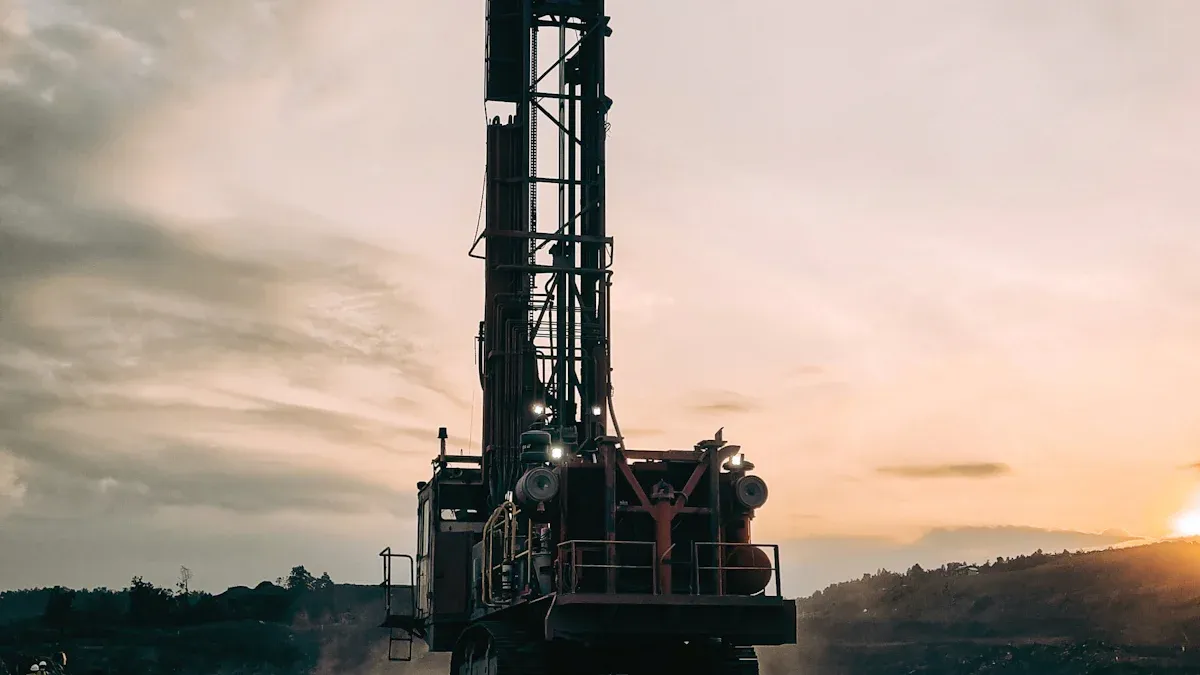
Engine Power and Hydraulic System Efficiency
You need a strong engine. It powers your hydraulic system. This helps deliver 50,000 Nm of torque. A strong engine works well always. Think about a Caterpillar C-15 engine. It has 540 horsepower. This engine uses diesel. It can use 109.5 liters per hour. This is for full power. You get high torque. This helps drill in tough ground. This power is key for a Well Drilling Rig 50000Nm Handles Heavy Loads.
You can see the engine details here:
|
Category |
Attribute |
Value |
|---|---|---|
|
Engine |
Make and Model |
Caterpillar C-15 |
|
Engine |
Fuel Type |
Diesel |
|
Engine |
Maximum Engine RPM |
2100 rpm |
|
Engine |
Gross Horsepower |
540 hp (402.7 kW) |
|
Engine |
Aspiration |
Turbocharged |
|
Engine |
Max Fuel Consumption |
28.9 gph (109.5 lph) |
|
Operational |
Thrust |
340000 lbs (1512.4 kN) |
|
Operational |
Pullback |
340000 lbs (1512.4 kN) |
|
Operational |
Max Carriage Speed at Max Engine RPM |
56 ft/min (17.1 m/min) |
|
Operational |
Max Spindle Torque (Low at Max Engine RPM) |
50000 ft-lb (67791 Nm) |
|
Operational |
Max Spindle Torque (Medium at Max Engine RPM) |
37500 ft-lb (50843.3 Nm) |
|
Operational |
Max Spindle Torque (High at Max Engine RPM) |
25000 ft-lb (33895.5 Nm) |
Mast Capacity and Pullback Force
Your rig's mast must be strong. It holds heavy drill strings. It also handles large casing. A strong mast stops bending. It keeps things steady when drilling. You need strong pullback force. This force helps get drill strings back. It pulls casing into place. A rig with 340,000 pounds of thrust and pullback is great. This handles your heaviest loads.
Rotary Head Design and Durability
The rotary head is important. It spins the drill string. You need a tough design. Look for strong materials. These materials resist wear. The bearings must hold heavy loads. Good seals keep dirt out. This protects inside parts. A good rotary head lasts longer. It gives steady torque.
Advanced Control Systems for Precision and Stability
Being exact is key for drilling. Smart control systems help you. They stop drilling off-course. They prevent crossing failures. Your rig uses load-matched control. This system links thrust and pullback. It manages rotation and feed. A stiff frame lessens shaking. It keeps the carriage straight. This stops the rig from moving. You can add tracking systems.
These systems use wellbore surveys. They use Measurement While Drilling (MWD) tools. MWD tools give live data. They use gyroscopes and magnetometers. Accelerometers also help. This data helps you fix things fast. You can change the Bottom Hole Assembly (BHA). This helps you drill straight. Downhole motors change direction. They only spin the drill bit. Rotary Steerable Systems (RSS) are advanced. They steer while the drill string spins. This makes drilling work well.
Advanced control systems offer many features:
-
Wellbore Surveys: Special tools find tilt and direction. Data is gathered often. This lets you change the path. MWD tools give constant underground info. They use gyroscopes, magnetometers, and accelerometers. This allows for instant direction changes.
-
Bottom Hole Assembly (BHA): You can set up drilling gear. This helps drill straight. It can also make turns when needed.
-
Downhole Motors: These special mud motors only spin the drill bit. This lets you change direction carefully. Most of the drill string stays still.
-
Rotary Steerable Systems (RSS): Advanced RSS tech lets you steer. This happens even when the whole drill string spins. It makes things work better and gives more control.
You get live data. This includes depth and position. It tracks pressure and torque. It checks fluid return and what's in it. You also watch ground movement. Communication systems are good. They let people talk. They share digital data. This happens between locators and control rooms. Rules for records are important. You keep plans of the actual path. You write down mistakes. You record fixes. You track drilling numbers. These systems give you exact control. They keep your projects steady.
Anti-Stall Powertrain and Overload Protection
You want to avoid stuck pipes. You need to stop sudden torque spikes. An anti-stall powertrain helps. It gives high torque. It works at many speeds. Hydraulic load sensing is vital. It controls pressure. It makes sure flow is right. This stops one part from taking too much power. Slow ramp-up and ramp-down reduce shocks. This protects rods and tools.
Load-sensing systems help prevent overload. They make sure only needed flow and pressure go to parts. A feedback path sends pressure. It comes from the busiest part. This goes back to a compensator. This makes sure each part gets flow. This happens no matter the load. It stops too much pressure. It allows parts to move together. This happens even with many controls. This stops one part from 'stealing' flow. This could cause problems or overload.
Spool design is very important. It controls how fluid flows. This stops sudden pressure spikes. It helps prevent overload. Precision-ground spools have special cuts. They measure flow as they move inside the valve. The shape of the spool affects fluid flow. It controls how flow starts or slows. This allows exact control of speed. This controlled flow stops sudden pressure changes. These changes could cause dangerous overloads. It makes things work smoothly and safely.
Multi-directional control valves often have extra relief valves. They also have port reliefs. These protect parts from overload. For example, they stop a hydraulic motor from getting too much pressure. This happens if it suddenly stops. This helps prevent overload. It gives local safety. Drilling rigs use these multi-way valves. They send hydraulic power. The load-sensing and spool design, with relief valves, manage hydraulic power. They prevent overloads. This system protects your rig. It keeps your work going well.
Operational Efficiency and Durability for Heavy-Duty Applications
Drill Pipe and Casing Handling Systems
You handle very heavy drill pipes and large casings. This work needs smart systems. Automated or semi-automated systems make this job easier and safer. These systems move pipes from horizontal to vertical. They guide them into the wellbore. This reduces hard manual labor.
Many types of automated elevators exist. They help you lift and move pipes.
-
Air Operated Elevators use air power. They can handle many pipe sizes, from small to large. They lift heavy loads, up to 500 tons. You get a signal when the elevator is closed.
-
Xtreme Performance Elevators use hydraulics. You can control them from your cabin. They work with specific pipe tapers and lift up to 1250 tons.
-
AMS Hydraulic Operated Elevators have two doors. They use slips to grip pipes. They handle pipes from 2 3/8 inches to 17 inches. They also give a signal when slips are set.
-
Hydraulic Center Latch Elevators use a bushing system. They work with many pipe types, including drill pipe and casing. They lift up to 1250 tons. They connect with top drives from all makers.
-
AMP Hydraulic Operated Elevators also have two doors. They handle very large pipes, up to 22 inches. They lift up to 1500 tons. They have a built-in load cell and can rotate pipes.
-
Automated Side Door Elevators are fully automatic. They quickly and safely pick up many types of pipes. They move casing from flat to upright. They have many safety features.
The drilling industry wants bigger holes. It also wants remote control. This means more machines handle rods. These systems include rod magazines on the rig. They also include external systems on excavators. These machines keep workers safe. They move heavy pipes without people touching them. This greatly reduces injuries. Automated systems remove people from dangerous spots. They replace old manual tools. Fully automated pipe handling means fewer people on the rig floor. Automated casing stabbing systems keep people out of the derrick. This has cut down on accidents. Automatic side doors stop hand, finger, and back injuries. Power tong positioning systems move heavy equipment. This makes work safer, even in bad weather. Incidents with casing and pipe handling have dropped a lot. This shows automation makes drilling much safer.
Tooling Compatibility and Wear Reduction
Your rig needs the right tools. It must work with different reamers. These include blade, fluted, rock, and barrel reamers. Good compatibility means you can use the best tool for the ground. Your rig delivers torque smoothly. This reduces chatter. Chatter is when the tool vibrates too much. Less chatter means less uneven wear on your tools. This makes your reamers and cutters last longer. Longer tool life means you spend less money on new parts. This lowers your overall drilling costs.
Mud Integration and Fluid Management Solutions
Drilling needs good fluid. You need to pick the right pump size. This depends on how long and wide your bore is. It also depends on the ground you drill through. The fluid must flow well. It needs a clear path. You also need good filters. Filters keep the fluid clean. This stops problems. You must follow a mud program. This means mixing the mud correctly. You monitor it often. You make small changes when needed. This stops the fluid from working poorly. It also prevents frac-out risk. Frac-out is when drilling fluid escapes into the ground.
Dirty fluid causes many problems. It makes drilling less efficient. It can stop work. Special valves, like Gilmore valves, help. They work well even with some dirt in the fluid. This makes your system more reliable. It means you do not need to clean the fluid as much. This helps prevent poor fluid performance. It also reduces the risk of frac-out. This ensures your Well Drilling Rig 50000Nm Handles Heavy Loads operates smoothly.
Mobility, Setup, and Maintenance Considerations
Think about how you move your rig. Can you transport it easily? How fast can you set it up? How quickly can you take it down? A rig that moves easily saves time and money. Its design should also make maintenance simple. You need easy access to parts. You also need spare parts to be available.
Regular checks keep your rig running. You must inspect key parts often.
-
Check hoisting equipment to prevent failures.
-
Look at drill rods for wear or damage.
-
Clean the mud system. Check fluid levels and change filters.
-
Inspect drill bits for damage. Sharpen or replace worn bits.
-
Change engine oil and filters. Look for leaks. Check fuel use.
-
Check hydraulic fluid levels. Look at hoses and seals for leaks. Make sure pressure is correct.
-
Replace all filters regularly.
-
Inspect hoses often and replace them if needed.
You should do daily checks. Look for leaks in hydraulic lines. Check all oil and fluid levels. Look for wear on drill bits, hoses, and cables. Replace filters as the maker suggests. Lubricate joints to reduce rubbing. Fix or replace worn parts quickly. Clean your equipment well after each use. Store it in a clean, dry, and safe place. Keep good records of all maintenance. Write down dates, what you saw, and any problems.
A plan for maintenance is very important. Plan and schedule your checks ahead of time. Train your staff on how to do maintenance safely. Keep records and check if your plan works well. Having spare parts ready is also key. Manage your inventory of parts, tools, and supplies. This means you have what you need when you need it. This stops delays and keeps your rig working.
Your 50000Nm Rig: Ready for the Future in 2026
Smart Tech and Remote Checks
You can make your rig work better. Use smart tech. Data analysis helps. The Internet of Things (IoT) is useful. Remote checks improve things. They help fix issues early. Thermal cameras find problems. This keeps things running well. Special cameras stop fires. They work in risky spots. Wide cameras watch a big area. They spot strange things. Remote checks keep people safe. They make work faster. You get live info. This helps you decide fast. You watch gear to find issues. This keeps workers safe. It follows safety rules. It helps in emergencies. You get important info right away.
Green Rules and Saving Energy
New rigs follow strict green rules. They make less pollution. They are quieter. Designs save energy. This means less fuel used. Rigs often meet Tier IV rules. This means low pollution. They are quiet, under 85 decibels. New shakers make less ground shake. They are also quiet. Cat® Smart Engine Systems save energy. They run the engine less. This uses less fuel. It makes less pollution. Exhaust Gas Recirculation (EGR) cuts bad gases. High-pressure fuel sprays reduce soot. Electric and hybrid rigs cut carbon. They also make less noise.
Picking a Maker and Custom Choices
Pick a good maker. Look for companies like CEGC. They have standard specs. They can also change things for your job. Makers should have ISO 9001. They should have API-4F. These show good quality. Look for big factories. They need good engineers. Ask for quality papers. These include material tests. They also include load tests. Outside checks prove new tools. Makers should offer custom rules. They give help with making. This makes sure your rig is right.
You now know what is important. This is for picking a Well Drilling Rig 50000Nm Handles Heavy Loads. Think about its torque power. Look at its strong technical specs. Consider how well it works. Find new technologies for the future. Make a smart choice. This makes sure your rig works well. It handles heavy loads. This choice solves hard drilling problems. It also gives you good money back.
FAQ
What makes a 50,000 Nm rig special?
A 50,000 Nm rig offers superior torque. This helps you drill through hard rock. It also handles large casings. This power makes tough jobs easier.
How do you define heavy-duty drilling?
Heavy-duty drilling involves deep holes. It means large diameters. You drill in challenging ground. This includes hard rock or unstable formations.
How does the anti-stall powertrain protect your rig?
The anti-stall powertrain prevents stuck pipes. It stops torque spikes. It uses hydraulic load sensing. This protects your rods and tools.


