
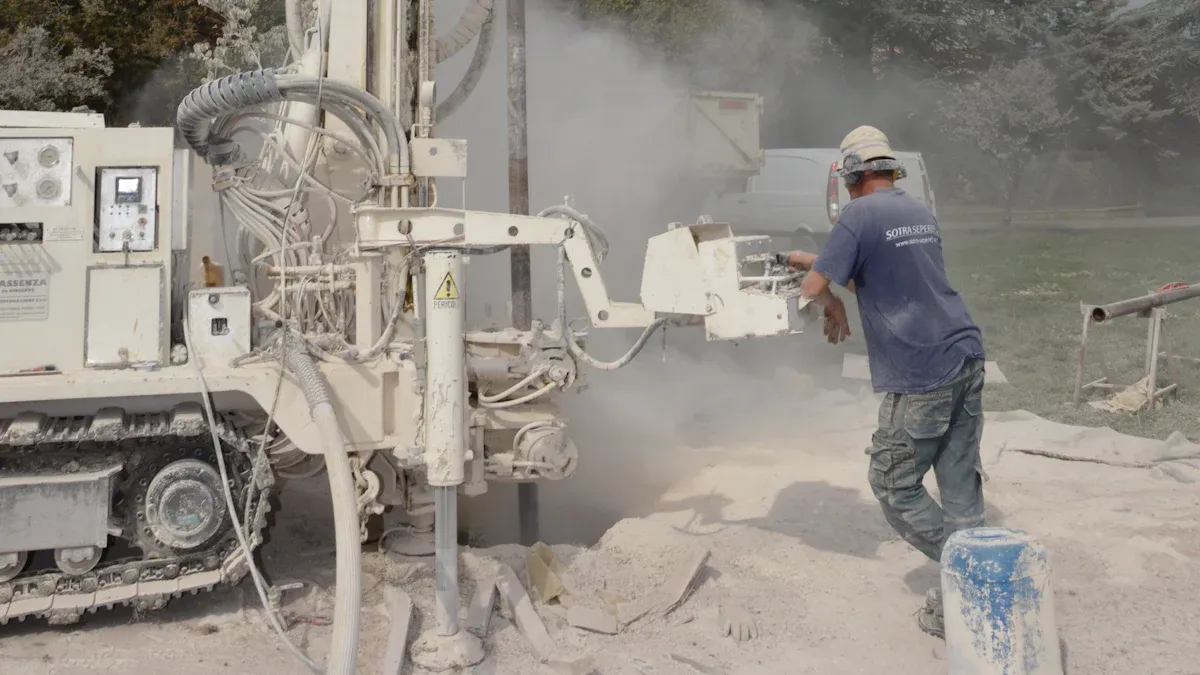
When your project demands a Well Drilling Rig Heavy Joint Handles High Load, CEGC delivers the strength and reliability needed for challenging jobs. CEGC’s advanced drilling solutions are trusted by B2B contractors and utilities for their robust performance and durability. As the global market expands, professionals encounter common challenges such as bore deviation, stuck pipe, and tool wear. These key pain points are outlined below:
|
Pain Point |
Description |
|---|---|
|
Bore Deviation |
The drill moves away from the planned path during drilling. |
|
Stuck Pipe |
The drill pipe gets stuck in the borehole. |
|
Drilling Mud Loss |
Drilling fluid is lost, causing problems with circulation. |
|
Drill Pipe Failures |
The drill pipe breaks from too much load or from wearing out. |
Key Takeaways
-
Pick a well drilling rig that can handle heavy joints for hard jobs. This makes the rig work well and stay strong in tough places.
-
Find rigs that have precision guidance systems. These systems help keep the drill straight and make drilling more exact.
-
Think about ways to customize your rig. Changing features for your project helps the rig work better and keeps people safe.
Why Heavy Joint and High Load Handling Matters
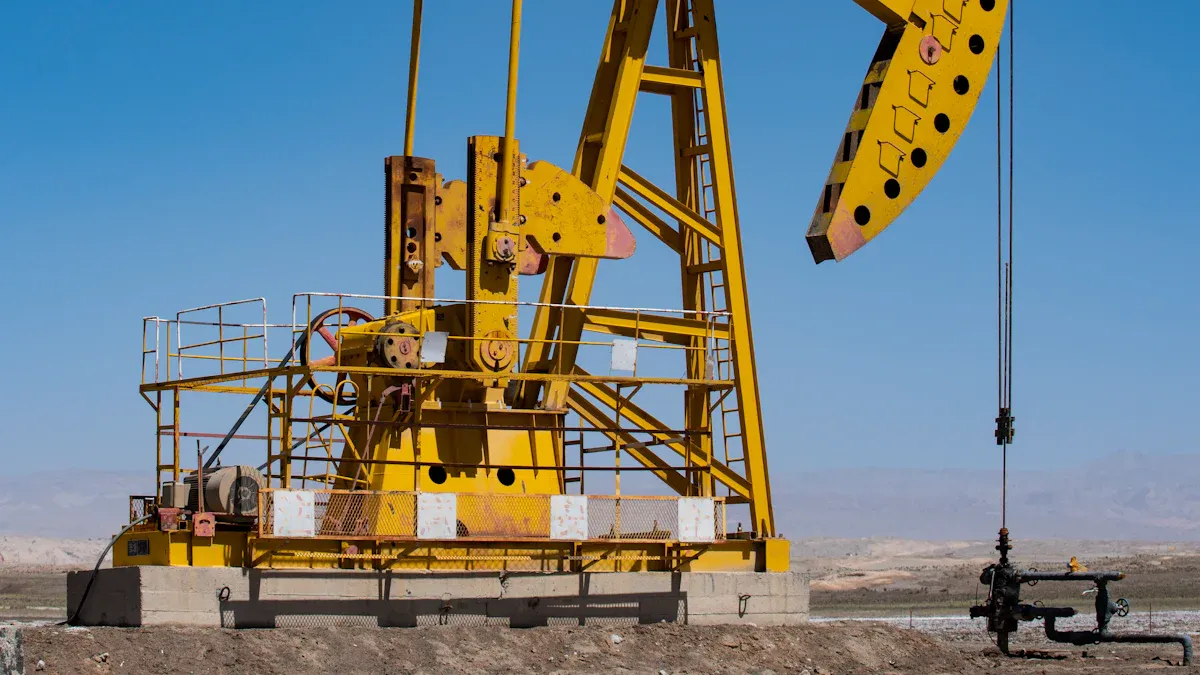
Project Challenges and Risks
If you work on a well drilling rig heavy joint handles high load project, you will face many problems. Equipment integrity is very important. Tough rocks and ground can make things harder. Operator skills also matter a lot. The table below shows how much each factor affects your project:
|
Risk Factor |
Percentage Impact |
|---|---|
|
Equipment Integrity |
59% |
|
Geological Conditions |
55% |
|
Operational Skills |
51% |
You might see issues like bore deviation, stuck pipe, and tool wear. For example, drilling into hard rock can make the drill string get stuck. Unstable ground can cause the same problem. Poor hole cleaning can lead to stuck pipe or bore deviation. High-pressure areas can also cause trouble. If you do not handle these risks, you may spend more money. You might have more downtime. Safety can become a problem too.
Key Features for High Load Rigs
To fix these problems, you need a well drilling rig heavy joint handles high load with special features. Modern rigs use heavy-weight drill pipe designs. These designs balance stiffness and flexibility. This helps stop fatigue failure. It also makes the rig more reliable. You also get:
-
Precision guidance systems help keep drilling straight and lower bore deviation.
-
Anti-stall powertrains deal with torque spikes and protect the drill string.
-
Durability packages use strong materials and coatings to cut down tool wear.
-
Real-time monitoring finds tool fatigue early and stops breakdowns.
-
Smart fluid management systems help clean holes and control pressure.
These features let you drill deeper and safer. They help you finish jobs faster. You also spend less on maintenance. Picking the right rig improves drilling and keeps your team safe.
Best Drill Rigs for Heavy Joints and High Loads
Choosing the best drill rigs for your project can make a big difference. You need a well drilling rig heavy joint handles high load to work in tough conditions. Let’s look at how the top rigs perform and what makes them stand out.
CEGC Horizontal Directional Drilling Machine
You can count on the CEGC horizontal directional drilling machine for high-load jobs. This rig uses a strong frame and advanced control systems. You get precise guidance, which helps you avoid bore deviation. The anti-stall powertrain protects your drill string from torque spikes. CEGC rigs also offer a durability package. This means you spend less on tool wear and maintenance. You can customize the rig for your project. Choose the right rod diameter, tool joint, and fluid management system. CEGC’s trenchless drilling rig works well for utilities, municipal projects, and large EPC jobs. You get market-standard specs and project-based customization.
Schramm DM450 Water Well Drill Rig
The Schramm DM450 stands out as one of the best drill rigs for heavy joints and high loads. You get strong pullback and crowd force. This rig can handle casing sizes up to 16 inches. Here is a quick look at its main specs:
|
Specification |
Value |
|---|---|
|
Maximum Pullback |
|
|
Crowd Force |
15,000 lbs |
|
Casing Size Capability |
Up to 16 inches |
You can rely on the DM450 for high performance under load. It gives you both torque and speed for many drilling applications. The design keeps maintenance low, so you get more uptime. You can also choose from many options to fit your drilling needs.
Sandvik and Atlas Copco Rigs
Sandvik and Atlas Copco rigs help you drill straight and avoid common problems. Sandvik’s T35 system improves hole straightness and reduces ground vibration. This helps you avoid bore deviation. Atlas Copco ROC 542 rigs drill straight holes even in tough ground. Both brands use stiffer rods. This gives you better stability and accuracy during drilling. You can trust these rigs for reliable performance in hard conditions.
Other Leading Rigs (Epiroc, Boart Longyear, Caterpillar, SIMCO, Lone Star, Junttan)
You have many choices when looking for a well drilling rig heavy joint handles high load. Boart Longyear rigs use XQ joints with double-start threads. These joints give you better load response and more contact area. You can drill deeper—up to 4,000 meters. The self-aligning thread design stops wedging and jamming. This means you get better productivity and longer tool life. The V-Wall tubing option reduces drill string weight by 30%. This makes drilling safer and lets you reach greater depths. Other brands like Epiroc, Caterpillar, SIMCO, Lone Star, and Junttan also offer rigs with strong load capacity and advanced joint handling.
Feature Comparison and Customization
You want the best drill rigs for your project. Each rig offers special features. Here is a quick comparison:
|
Feature/Aspect |
CEGC HDD Rig |
Schramm DM450 |
Sandvik/Atlas Copco |
Boart Longyear XQ |
|---|---|---|---|---|
|
Max Load Capacity |
Project-based |
25,000 lbs |
High (varies by model) |
Depth > 4,000 m |
|
Joint Handling |
Customizable |
Up to 16" casing |
Stiffer rods |
Double-start threads |
|
Bore Deviation Control |
Precision guidance |
Yes |
Yes |
Yes |
|
Durability |
Durability package |
Low maintenance |
High |
V-Wall tubing |
|
Customization |
Yes |
Yes |
Yes |
Yes |
You can pick a heavy-duty drilling rig for large projects. You might need a hydraulic drilling rig for more power and control. Auger drilling rigs work well for fast hole creation. Piling rigs help you install piles in the ground. You can also choose high-power rigs for the most demanding jobs. Customization lets you match the rig to your project’s needs.
Tip: Highly mobile rigs often cost less to own and run. They save you time and lower the risk of accidents. You get more value and safety for your investment.
When you select the best drill rigs, you improve drilling performance and safety. You also reduce downtime and costs. Always match the rig’s features to your project’s requirements.
Best Water Well Drilling Rig Selection Guide
Selection Criteria
You need to pick the best water well drilling rig for heavy joints and high loads. First, check the rig’s torque capability. This shows how much force the rig can handle. Look at the maximum hookload and mast limits. These numbers tell you if the rig can lift heavy parts. Think about how deep you need to drill and the dogleg severity. Deep wells need rigs with strong hoisting power. Check the hole size and hydraulics. These features help you choose the right drilling fluid and air program. Make sure the rig has thread compatibility. This lets you use your tools and subs.
Here is a list to help you pick a water well drilling rig:
-
Rig torque capability
-
Max hookload and mast limits
-
Target depth and dogleg severity
-
Hole size and hydraulics
-
Required thread compatibility
-
Pick OD and wall for stiffness and torque
-
Pick grade for strength and fatigue resistance
-
Standardize connections for less downtime
You can see how these factors affect your drilling project in the table below:
|
Factor |
Description |
|---|---|
|
Reservoir Depth and Formation |
Deeper wells need rigs with more hoisting power and higher pressure ratings. |
|
Technical Capabilities |
The rig must fit your drilling program needs. |
|
Hoisting and Drawworks Capacity |
The rig must lift the weight of the drill string and casing. |
|
Power Generation and Distribution |
The rig must have enough power for peak drilling operations. |
Customization and Support
You can change your water well drilling rig to fit your project. Choose accessory options from top brands for reliability. Adjust the rig setup based on construction conditions and geology. Add or remove parts as needed. You can ask for professional OEM or ODM services for custom design and installation. Special equipment like mud pumps and hydraulic welders can be added. You can update your rig to meet the newest standards. Custom solutions are delivered fast, often within 20 days.
Tip: Customization helps you fix special drilling problems and boosts performance. You get help from experts who know water well drilling and high load jobs.
You have many well drilling rigs to pick from for heavy joints and high loads. CEGC and other top brands give you strong choices for drilling. If you match the rig to your project, you get better results. You should think about these things:
-
Check how big your project is and what it needs. This helps you drill better.
-
Pick the right rig to stop delays and lower repair costs.
-
Make sure the rig fits your project to keep workers safe and work fast.
-
Look at the bore design, like how deep and wide it is. This is important for good drilling.
-
Make sure you have enough torque, crowd force, and speed. This makes drilling more reliable.
You can talk to CEGC for custom rigs and help with your project. This lets you get the best drilling results for your work.
FAQ
What makes a drilling rig handle heavy joints and high loads?
A drilling rig needs a strong frame. It also needs advanced control systems. Precise guidance is important too. These things help the rig work with heavy joints. They also help the rig handle high loads safely.
How do you reduce bore deviation during drilling?
You use precision guidance systems to help. Stable carriage alignment is needed as well. These tools keep the drill path straight. They also lower the chance of bore deviation.
Can you customize a drilling rig for different projects?
You can pick the rod diameter you want. You can choose tool joint specs too. Fluid management options are also available. Customizing helps the rig fit your project. It also makes the rig work better.


