
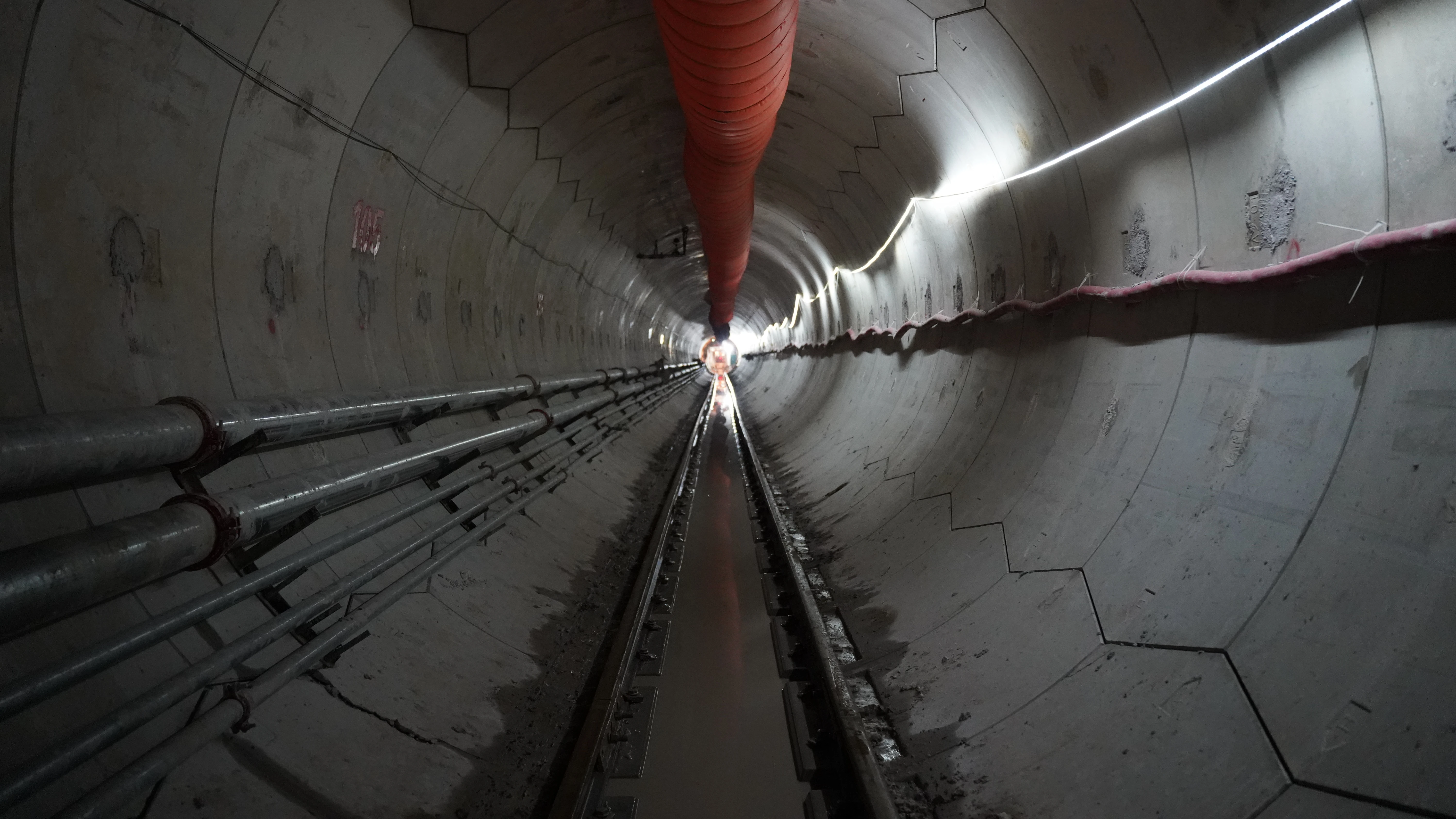
Adaptability cuts downtime in transition zones for TBM machines. Downtime is a significant issue when tunnel boring machines stop working. To minimize downtime, efficiency is key, along with effective ground conditioning and reliable suppliers. CEGC demonstrates that adaptability is crucial in reducing downtime in transition zones for TBM machines. They utilize models that enhance project performance.
|
Model Name |
|
|---|---|
|
Wachter’s Model |
Works well in changing ground conditions |
|
Wais & Wachter’s Integrated Model |
Great for hard tunneling projects |
Key Takeaways
-
Adaptability is very important for tunnel boring machines (TBMs). It helps reduce downtime in transition zones. Pick machines that can change quickly to new ground conditions.
-
Real-time monitoring and AI tools make work safer and faster. Use these tools to find problems early. Change TBM operations using live data.
-
Good supplier support is very important. Choose suppliers who give local after-sales help. Make sure they provide spare parts fast to keep your project on time.
Transition zones and downtime
What are transition zones?
Transition zones happen when a tunnel boring machine moves through different underground areas. These places can have mixed soil, rock, or faults. The ground changes fast in transition zones. You need to adapt to keep the TBM machine running well. Geological studies help you learn about these zones before digging starts. The Izmir Metro Tunnel Project showed that shallow faults and weak rock can be dangerous. Some tunnel routes also have special water features, so adaptation is very important.
|
Geological Factor |
Description |
|---|---|
|
Geological Profile |
Has many types of geomaterial zones from complex processes. |
|
Geological Surveys |
Give important details before building starts. |
|
Cross-borehole Region |
Means guessing what is between boreholes. |
|
Reliability of Inference |
Helps plan better and makes geological checks more efficient. |
You use geotechnical monitoring to watch for changes and plan how to adapt. This monitoring lets you react to new ground conditions and keeps your project safe.
Why do transition zones cause downtime?
Transition zones cause more downtime because the ground acts in unexpected ways. You might find new geological features that make tunneling harder. If you do not have good geo-information, you may face surprises that hurt safety and slow the project. Many tunnel accidents happen because geological checks were not good enough.
|
Cause of Downtime |
Description |
|---|---|
|
Fault zones can make the TBM cutterhead get stuck. |
|
|
Thrust System Overload |
Bad conditions can overload the thrust system and damage equipment. |
|
High Impact Loads on Cutter Rings |
Sudden changes can break cutter rings. |
|
Unstable rock can collapse or let water in, slowing work. |
You need adaptation plans and geotechnical monitoring to stop downtime. Supplier skill is important. CEGC gives you advanced tunnel machine solutions and good after-sales help. Their knowledge helps you handle different ground and keep your project moving.
Adaptability cuts downtime in transition zones for TBM machine: solutions
Adaptive TBM features and strategies
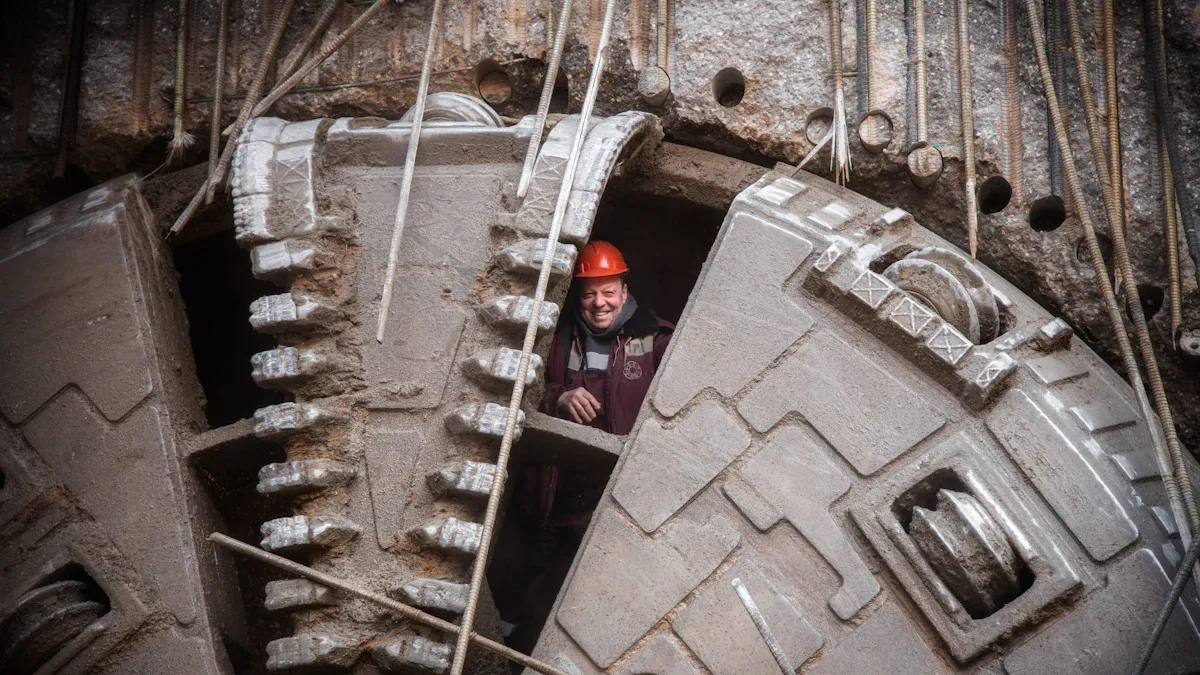
Transition zones bring many geomechanical challenges. The ground can change fast from soft soil to hard rock. You need adaptive features to keep your tunnel boring machine moving. Modern TBMs have cutterheads that switch cutting modes. This lets you work in mixed ground without stopping. Some machines use modular parts. You can build these underground, which helps in cities with little space. This flexibility helps you deal with new geomechanical problems as they come up.
Shield mode changes are useful too. When the ground shifts, you can adjust the shield to fit new conditions. This lowers the chance of cutterhead jamming or overload. Adaptive TBM solutions keep machine performance high, even when geology is unpredictable.
Safety matters a lot. You should look for safety features like emergency stop buttons and fire suppression systems. These features follow industry rules and protect your team during tough geomechanical challenges.
|
Feature |
Benefit in Transition Zones |
|---|---|
|
Versatile Cutterheads |
Handle mixed ground without stopping |
|
Modular Components |
Allow assembly in tight spaces |
|
Shield Mode Changes |
Adapt to sudden ground shifts |
|
Advanced Safety Features |
Meet safety standards and protect workers |
Real-time monitoring and AI solutions
Strong monitoring is needed in transition zones. Real-time monitoring gives early warnings about weak zones or water leaks. This helps you find problems before they cause downtime. You can change TBM thrust, torque, and face pressure using live data. This keeps your machine safe and efficient.
-
Real-time monitoring helps you spot weak zones or water leaks early.
-
You can change TBM settings based on ground feedback.
-
Monitoring stops collapses and settlements, which are common geomechanical problems.
-
Safety gets better because you avoid risky actions.
AI management systems make tunneling easier. These systems use machine learning to change TBM operations in real time. They look at sensor data and operator input. This creates a feedback loop to predict ground behavior. Tools like Ground Penetrating Radar and pressure sensors send data to the system. AI can predict jack speed and torque, which lowers human mistakes and makes tunneling more sustainable.
Automation and skilled operators work well together. Operators use monitoring data to make smart choices. Automation keeps the machine running smoothly and reduces tiredness. Machine learning helps you improve cutting and predict maintenance needs. This lowers downtime and keeps your project moving.
Case studies of reduced downtime
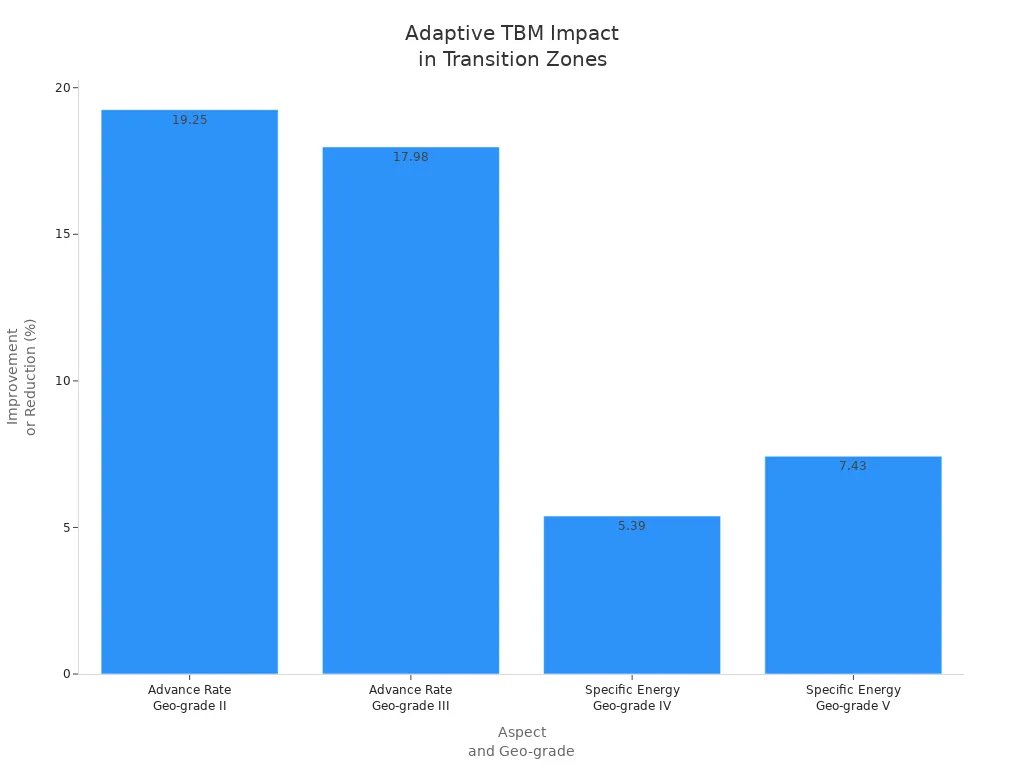
Adaptive TBM solutions help real projects. Using adaptive features improves advance rates and lowers energy use, even in tough geomechanical conditions. The table below shows how adaptive solutions help in different ground grades:
|
Aspect |
Result |
|---|---|
|
19.25% |
|
|
Advance Rate Improvement (Geo-grades III) |
17.98% |
|
Specific Energy Reduction (Geo-grades IV) |
5.39% |
|
Specific Energy Reduction (Geo-grades V) |
7.43% |
|
Prediction Accuracy (R²) |
> 0.95 |
Monitoring and predictive modeling help you manage risk. In high-risk areas, you can increase monitoring, change TBM settings, and use warning systems. In lower-risk places, routine monitoring and standard support measures work well. For special risks, you can watch rock movement and make emergency plans.
Supplier support is important for less downtime. CEGC gives after-sales service and keeps spare parts in local warehouses. This means you get quick help when needed. You avoid long waits for parts or repairs. With good support, your TBM machine keeps running and your project finishes faster.
Cost matters too. Adaptive TBM features often cut operational costs by 20-30% compared to traditional machines. You spend less on maintenance and finish projects sooner. Adaptive solutions are a smart choice for any tunneling project with geomechanical challenges.
You need to be able to adjust to keep your tunnel boring machine working in hard ground. The ground can change quickly and stop the work. You should look for machines with special features that help them adapt. It is also important to have a good supplier who can help you. These things help you avoid stopping work. Pick machines that can handle tough ground problems. Making smart choices keeps your project safe in any kind of ground.
FAQ
What warranty should you expect with a tunnel boring machine?
You should get a warranty for at least 12 months or 2,000 hours. This helps protect your money and gives you good support.
How do you compare proposals from different TBM suppliers?
Look at the technical features and after-sales support. Check if spare parts are easy to get. See if the supplier has worked on other projects. Ask for clear information about service and delivery times.
Why is local after-sales support important for your TBM project?
Local support helps you get repairs and spare parts faster. This means less downtime and your project stays on track.


