
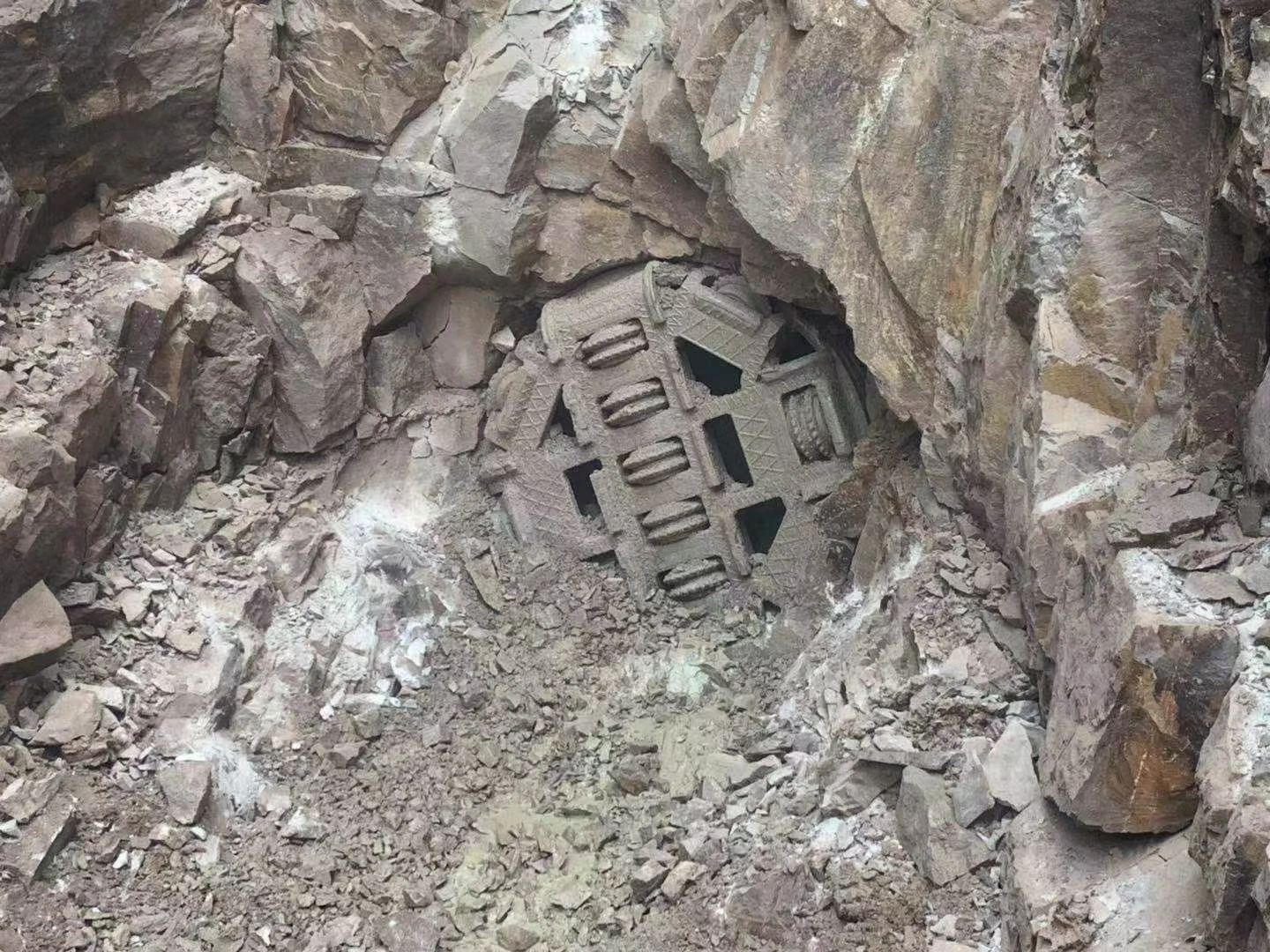
Better survey control improves TBM tunnel grade holding, ensuring that the tunnel remains straight and accurate. By utilizing advanced systems like those from CEGC, you can significantly lower risks associated with the tunnel going off track and the costly mistakes that may arise from such deviations. A prime example of this is the Keswick WPCP Effluent Outfall Expansion project, which demonstrates how precision contributes to project success.
|
Project Name |
Description |
Guidance System Used |
Outcome |
|---|---|---|---|
|
Keswick WPCP Effluent Outfall Expansion |
The Water Pollution Control Plant was expanded, and a second outfall was added to Lake Simcoe |
VMT SLS LT MTBM guidance system |
This was the first trenchless project in Canada to use planned microtunnel curves in its path and the first time a MTBM was taken out from a lake bed in Canada while still wet. |
Key Takeaways
-
Good survey control helps tunnels stay straight and correct. It lowers risks and stops expensive errors.
-
Watching the tunnel in real time helps it work better. It lets workers fix problems fast and makes fewer mistakes.
-
Using smart tools like laser-guided machines and drones helps gather data. It also helps people make better choices while digging tunnels.
TBM tunnel grade holding explained
What is grade holding?
Grade holding means keeping the tunnel at the right slope and direction. It helps the tunnel boring machine stay on the planned path. This is important for all tunnel projects, especially underground ones. Grade holding uses control systems and monitoring to check the tunnel’s position. When you use a TBM, you need good control to stop mistakes. Monitoring data lets you see if the tunnel stays on grade. Good grade holding helps you find risks and keeps the tunnel safe.
Why grade holding matters in tunnel projects
Strong grade holding keeps the tunnel straight and stable. If you lose control, the tunnel can move or bend. This can make the tunnel weak over time. In tunnelling, you must check for risks and problems. The tunnel’s strength depends on the rock around it. The fragmentation coefficient shows how strong and bendy the rock is. This helps keep tunnels safe in deep rock. The table below shows how rock grade changes tunnel performance:
|
Rock Grade |
Maximum Bolt Axial Force (P_u) |
Shear Strength (s_u) |
Deformation (d_u) |
|---|---|---|---|
|
Grade IV |
Higher |
Lower |
Lower |
|
Grade III |
Lower |
Higher |
Higher |
Risks of poor grade control
If you do not use good control, the tunnel can go off track. This can cause more work, higher costs, and safety problems. Bad grade holding can make the tunnel miss its target, so you have to fix it. You might get delays or claims. Risk analysis and risk assessment help you find these problems early. You can use the excavation compensation method to fix small mistakes. CEGC’s TBM and microtunnelling machine solutions give you the control and monitoring you need for safe tunnelling.
How better survey control improves TBM tunnel grade holding
Survey control and tunnel alignment
Strong survey control helps keep the tunnel on track. It connects the tunnel boring machine to the planned path. Guidance systems use survey control to watch the machine’s position. Operators check if the tunnel moves away from the design line. They can fix mistakes fast. Automated systems help the machine change direction. The machine uses jacking pressures and articulation cylinders to stay on course. This process lowers alignment errors and helps with risk checks. You avoid expensive rework and improve risk checks. Better survey control gives real-time feedback and correction.
-
Guidance systems use survey control in tunnel boring machine work.
-
Operators watch for tunnel alignment errors and fix them.
-
Automated systems change direction using monitored data.
-
You lower risk check mistakes and improve risk checks.
-
Tunnel alignment stays correct, even in long tunnels.
Survey control also helps with the excavation compensation method. You can fix small mistakes before they get bigger. This keeps the tunnel stable and supports design for rock control. Better survey control makes tunnel alignment more dependable.
Real-time monitoring for grade accuracy
Real-time monitoring helps you keep the tunnel at the right slope. You use monitoring data to check the tunnel’s position all the time. Advanced technology like digital twin models makes tunnel boring machine work better. You see a 21.12% improvement in tunnel performance with real-time monitoring. The digital twin model gives reliable estimates for risk checks. You can spot alignment errors early and use the excavation compensation method to fix them.
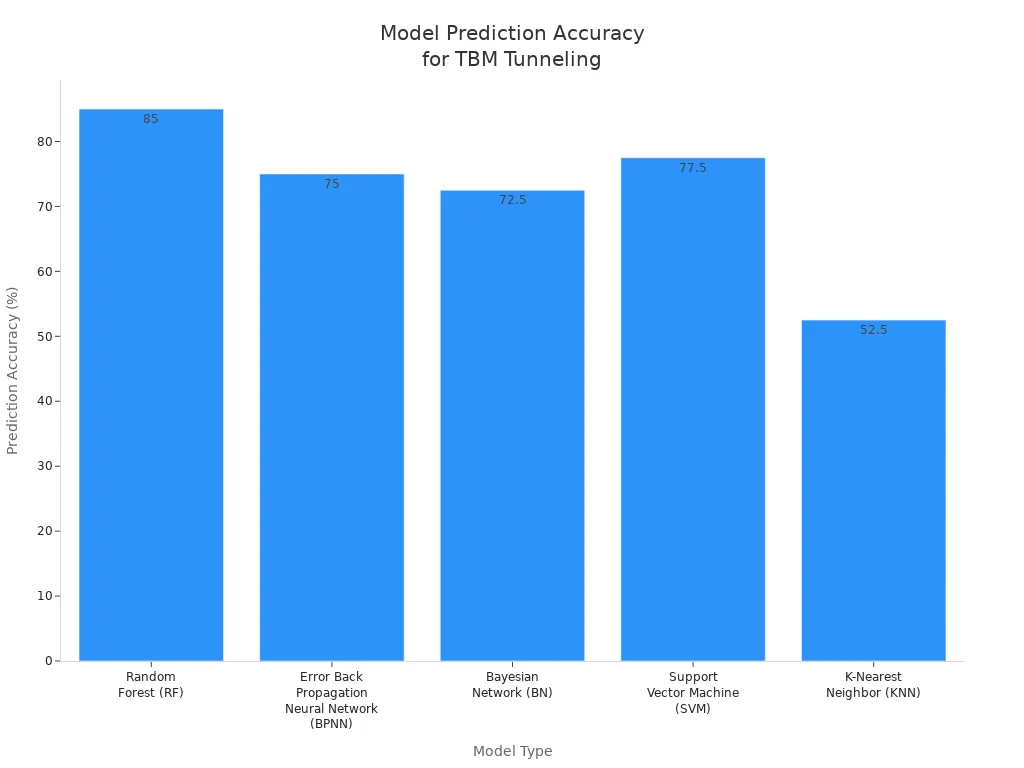
Different models help with monitoring. Random Forest gives 85% prediction accuracy. Error Back Propagation Neural Network gives 75%. Bayesian Network, Support Vector Machine, and K-Nearest Neighbor also help with grade accuracy. You pick the best model for your tunnel project. Real-time monitoring helps with risk checks. You keep the tunnel stable and avoid expensive mistakes.
|
Model Type |
Prediction Accuracy (%) |
Running Time (s) |
|---|---|---|
|
Random Forest (RF) |
85 |
0.8832 |
|
Error Back Propagation Neural Network (BPNN) |
75 |
0.9338 |
|
Bayesian Network (BN) |
72.5 |
0.1406 |
|
Support Vector Machine (SVM) |
77.5 |
1.3335 |
|
K-Nearest Neighbor (KNN) |
52.5 |
0.3095 |
You also use variational autoencoders and isolation forests to find problems. These tools spot issues outside mapped fault zones. You can make changes quickly. Real-time monitoring helps with risk checks in underground tunnel building and tunneling in deep rock.
Guidance systems in TBM machines
Guidance systems in tunnel boring machines help keep grade and line. You use active direction control to match the machine’s position to the design reference. Remote control systems let you operate and adjust the machine from far away. Position monitoring gives real-time data on the machine’s location. You keep the tunnel stable and use risk checks to avoid problems.
|
Feature |
Description |
|---|---|
|
Active Direction Control |
Controls line and grade by matching the TBM’s position to a design reference. |
|
Remote Control Systems |
Lets you operate and adjust from far away, making work flexible. |
|
Position Monitoring |
Gives real-time data on the TBM's position for accurate grade holding. |
You use guidance system integration readiness to support common workflows. Survey control, real-time steering, and as-built reporting help keep the tunnel on track. Strong machine structure lowers mechanical drift. Controlled excavation profile limits overcut and helps install segments. CEGC’s guidance, steering, and line/grade assurance systems give market-standard performance and project-based customization. Better survey control lowers alignment errors and overcut risk. You use risk checks to keep the tunnel safe and stable. The excavation compensation method helps fix small mistakes and keep tunnel quality high.
Better survey control helps in mechanized tunneling and underground tunnel building. You use monitoring, control, and guidance systems to keep the tunnel safe, stable, and accurate. You support design for rock control and use monitoring data for risk checks. CEGC’s solutions help you get reliable tunneling in deep rock and keep tunnel stability during your project.
Methods and benefits of improved survey control
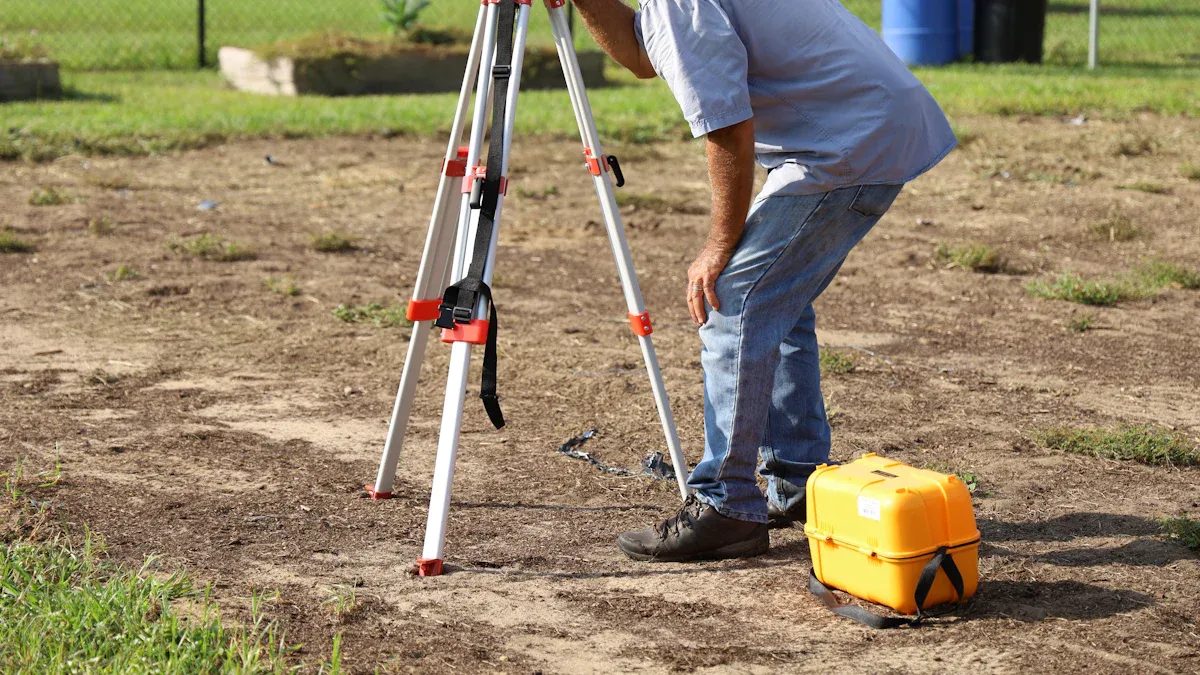
Advanced survey control techniques
You can use special survey control methods to make tunnels more accurate. Laser-guided systems help keep the tunnel boring machine on the right path. Real-time monitoring lets you watch the TBM and its guidance system all the time. You can use drone photogrammetry and drone LiDAR to get tunnel data fast. Total stations and drone surveys are more accurate and faster than old ways. These tools let you collect data right away, so you can make quick choices during tunneling. Automated surface analysis and apps like Leica Captivate Inspect Surfaces help you check tunnel surfaces and make heatmaps for quality checks.
-
Laser-guided systems help with tunnel alignment
-
Real-time monitoring lets you fix mistakes right away
-
Drone photogrammetry and LiDAR collect tunnel data fast
-
Automated surface analysis helps check quality
|
Method |
Accuracy |
Time Efficiency |
Cost |
|---|---|---|---|
|
Drone Photogrammetry |
1-5 cm GSD |
Fast (few hours) |
Cost-effective |
|
Drone LiDAR |
1-3 cm precision |
Fast |
Higher cost, but very accurate |
|
Traditional Surveying |
1 cm |
Time-consuming (days/weeks) |
Expensive (labor-intensive) |
Project benefits: safety, cost, and quality
Better survey control gives you many good things in tunnel projects. Real-time monitoring gives you data right away, so you can make decisions fast. This helps stop delays and mistakes. You make fewer manual errors, which saves money and makes the tunnel better. Improved workflows help you use resources well and lower costs. Making quick choices keeps people safe and lowers risks. The Autonomous ROI Engine tracks tunnel data and shows a 28% drop in unplanned downtime and a 12% rise in equipment effectiveness. Visualized deviations help you see underbreak and overbreak, so the tunnel matches the design. You use risk analysis and risk assessment to keep the tunnel safe and strong.
|
Aspect |
Contribution to Cost Savings and Quality Improvements |
|---|---|
|
Real-time monitoring |
Gives data right away, so you avoid delays and mistakes. |
|
Reduced manual errors |
Stops costly mistakes and makes the project better. |
|
Optimized workflows |
Makes work smoother and saves money. |
|
Quick decision-making |
Helps you fix problems fast, making things safer and less risky. |
Overcoming survey control challenges
You face many problems when building tunnels underground. Intelligent inversion and geological identification use lots of data and artificial intelligence to find and study the ground. These methods help you deal with tricky tunnel areas and support rock control design. Smart monitoring systems with many sensors and AI give better real-time data and feedback. Robotic inspection and digital twin-based risk checks help keep tunnels safe and working well. Custom survey control solutions from CEGC give you fast and reliable ways to work at every tunneling stage. You measure movement of important structures to stop problems. You use injection resin, handle tough ground and water, and use waterproofing skills to fix ground issues. The excavation compensation method helps you fix small mistakes and keep the tunnel good.
Tip: You can use automated deformation monitoring to watch tunnel changes and keep everyone safe during construction.
You can make tunnel grade holding better with good survey control. This helps keep the tunnel safe and more accurate. It also saves money on the project.
-
Try CEGC’s advanced systems for your next tunnel or microtunnelling job. These systems give you results you can trust.
Tip: Always put survey control first if you want your tunnel project to work well.
FAQ
Why is tunnel grade holding important for underground tunnels?
Tunnel grade holding keeps the tunnel steady and safe. Good control stops mistakes from happening. Risk assessment helps workers stay safe during tunnel building.
How do risk analysis and risk assessment help tunneling?
Risk analysis finds problems before they get big. Risk assessment checks if the tunnel is safe. These tools help keep tunneling steady and support safe building.
Can the excavation compensation method fix tunnel alignment?
The excavation compensation method can fix tunnel alignment issues. It helps control the tunnel and checks for risks. This method keeps the tunnel steady and lowers extra work.
Tip: Always use monitoring and risk assessment to check tunnel stability and make tunneling better.


