
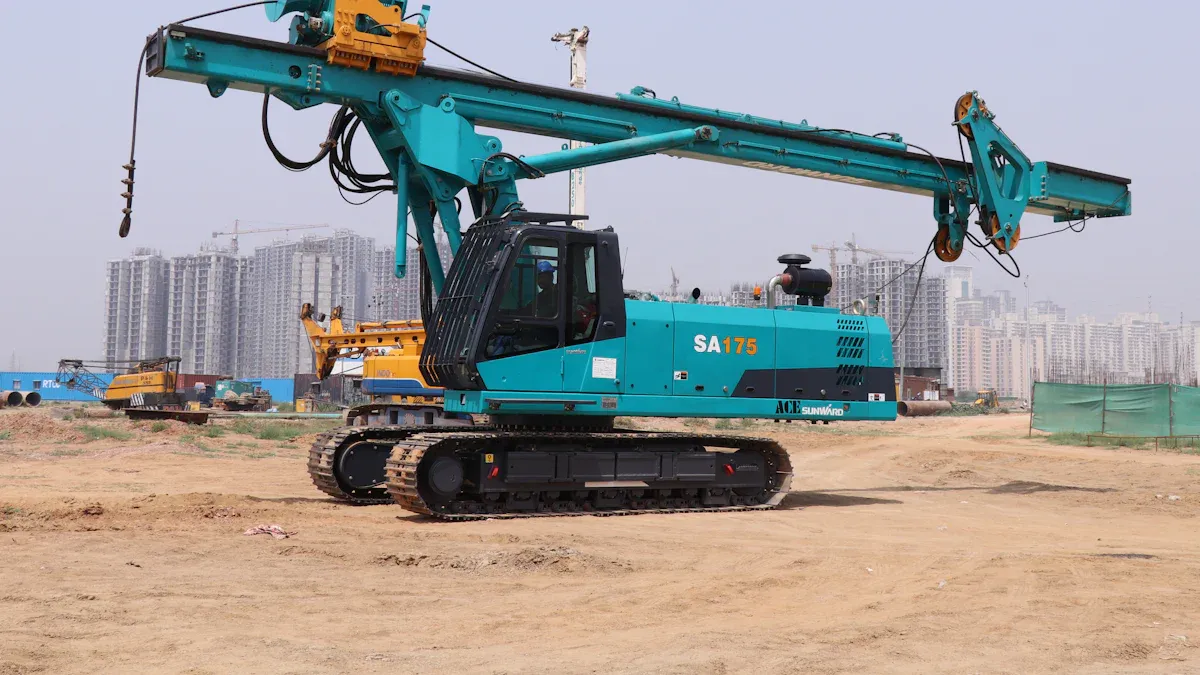
Imagine a horizontal directional drilling machine. It has great power. It also has tiny precision. This "biggest horizontal directional drill 1mm accuracy" will change underground building. This will happen by 2026. Right now, there are problems. Toolface control is one. Survey errors are another. These problems slow down projects. Our study shows something. The horizontal directional drilling market needs this exactness. It is worth USD 10.69 Billion in 2024. This market study shows a clear need. CEGC's new ideas are important. They are for busy city areas. A careful look proves this need is growing.
Key Takeaways
-
New horizontal directional drills will be very exact. They will drill with 1mm accuracy by 2026. This stops mistakes and puts pipes in the right place.
-
These new drills use strong machines and smart tools. They have bionic cutting tools and good mud systems. This makes drilling faster and safer.
-
This technology helps build smart cities and protects nature. It also makes energy drilling better. It uses less energy and causes less pollution.
What is the Biggest Horizontal Directional Drill with 1mm Accuracy?
Size and Strength: The 'Biggest' in HDD
"Biggest" means very strong machines. They push and pull hard. They twist with great force. They can make big holes. These powerful machines dig large tunnels. They dig very long tunnels. For example, American Augers Maxi-Rigs push and pull. They use up to 1.1 million pounds of force. Other companies also make strong machines. Barbco models like the BD250HP push and pull. They use 250,000 pounds of force. Vermeer's D550 HDD also pushes and pulls. It uses 550,000 pounds of force. These machines can use large pipes. AGRULINE offers pipes up to OD 3500. These are for HDD projects. Modern HDD machines drill for many kilometers. The longest HDD hole was about 6 kilometers. This size helps with big building jobs. We look at project needs. This often shows we need strong equipment.
1mm Accuracy: Very Exact Drilling
Getting 1mm drilling accuracy is a big step. This means drilling is very exact. It stops the drill from going off course. It prevents mistakes. This is a common problem now. It puts pipes in the right spot. This exactness will change building underground. It goes past old ways. Old systems depend on the worker's skill. Looking at project problems shows this. We need better drilling accuracy. This helps with reliable installations. It lowers the risk of expensive fixes. It also stops projects from failing. More study shows this exactness helps. It makes projects better and safer. The biggest horizontal directional drill 1mm accuracy will set new rules.
Horizontal directional drilling (HDD) has gotten much better. But, current ways are not always exact. The drill often goes off course. This costs a lot to fix. It also makes projects late. We need 1mm accuracy by 2026. This needs big changes. CEGC and others are making new tools. These tools will help us get this exactness. They fix big problems in the industry.
Current HDD Capabilities and Accuracy Benchmarks
Today's HDD machines are good enough for many jobs. They use different guides. These guides help steer the drill. But, being super exact is rare. Most jobs allow for a few centimeters off. This works for big pipes. But, it is not good enough for busy cities. It also fails for important projects. These jobs need perfect placement. Current ways depend on the worker's skill. This can cause mistakes. We clearly need more exact drilling.
Precision Guidance and Stability Systems for 1mm Accuracy
To get 1mm accuracy, we need better guides. We also need stable systems. The drill going off course is a big worry. New systems match the load. They control push, pull, twist, and feed. Strong frames stop shaking. They keep the drill straight. This makes sure the drill stays on track. Tracking systems can record data. They can also control the process.
Modern steering tools use an offset bit. They use a sub or motor. A sensor shows the tilt. It shows the roll angle. This helps control direction. Workers turn the offset. They slide the drill without spinning. Survey tools find the pilot bore. They use sensors for tilt. Magnetic or gyro sensors show the hole's direction. Readings combine with depth. This finds the hole's spot. A math method is often used. Tracking systems check the survey spots. They use direct measures. They compare to outside points. Examples are ParaTrack2 cable. There is also Beacon Tracker. Microcoil is another. A tracking source is put in a known spot. It sends out a signal. Sensors in the tool feel this signal. This gives more points. It makes it more exact.
|
Tool Type |
Sensors Used |
Accuracy/Cost |
Best Use Case |
Limitations/Considerations |
|---|---|---|---|---|
|
Magnetic Tools |
Magnetometers, Gravity Sensors |
Very exact, not too costly |
When magnets will not cause problems |
Can be messed up by magnetic things |
|
Gyro Tools |
Gyroscopes |
Usually costs more |
Good in crowded cities or when magnets cannot be used |
Higher cost means thinking about project money |
|
Combined Use |
Both magnetic and gyro sensors |
Most exact way |
Gives many ways to find location for best results |
Uses good parts of both to fix their weak spots |
Using both magnetic and gyro tools is best. It gives many ways to find the spot. This makes sure results are great. This way fixes weak spots. It makes the path analysis better.
Anti-Stall Powertrain and Overload Protection for Mega-Drills
Stuck pipes cost a lot. They also cause delays. This is true in hard ground. It lowers daily work. New mega-drills have anti-stall engines. They have strong twisting power. They work at many speeds. Hydraulic sensors stop sudden shocks. Controlled start and stop reduce stress. This protects rods and tools. It stops them from breaking.
Advanced machines have strong protection. They have emergency stops. Worker safety locks are standard. These keep equipment safe. They also keep workers safe. They make sure drilling is safe. This lowers the risk of breaks. It also lowers costly fixes.
Advanced Tooling: Bionic Cutting Tools and Durability
High tool costs are a big problem. Tools wear out fast. This makes each meter more expensive. Wrong tools clean holes poorly. They make holes too small. They risk getting stuck. Changing tools often wastes time. The biggest horizontal directional drill 1mm accuracy will use bionic cutting tools. These tools copy nature. They work better and last longer.
These bionic cutting tools have changeable heads. This lets you swap the head fast. You do not need to take out the whole tool. This saves time. It makes work faster. It lowers tool costs. It creates less waste. This is good for big jobs. Special coatings make them strong. Materials like carbide help. They let heads handle heat. They handle pressure. This makes them good for tough jobs. Their shape helps cut better. It helps clear chips. This makes cutting more efficient. Inside channels cool the tool. They make it last longer. A strong head lock keeps it steady. It works well in tough spots. This includes slanted or cross holes.
Kennametal makes new tools. They offer strong parts for building. Their tools cut best. They last long. They want to save time. They want to lower costs. They use new tech. They use good materials. Picking the right tool is key. Think about sharpness. Think about shape. Think about coating. Think about what it does. This makes tools last. It makes work better. Also, know your equipment. Know its age. Know what tools it can hold. This careful check stops tools from breaking. It makes drill pipes better. These bionic cutting tools are a big step. They cut well every time. They do not break easily.
Integrated Mud Management for Optimal Fluid Performance
Bad fluid causes problems. It can make a mess. Low flow or pressure makes things stuck. Bad mud makes the hole shaky. Integrated mud management systems are key. They make sure fluid works best. These systems mix things. They store mud. They control solids. They come in parts. They can be on skids.
Key parts include:
-
Integrated Design: It mixes solids control (shakers, desanders, desilters, centrifuges). It mixes mixing tools (jet mixer, agitators). It mixes mud storage/pumping.
-
Solid Phase Control: It quickly separates solids. It takes them from used fluid.
-
Rapid Mixing: It quickly adds things.
-
Mud Reserve: It stores clean mud.
-
Foundational Elements: Jet Mud Mixers, Mud Agitators, Shear Pumps, Centrifugal Pumps.
-
Closed-Loop Processing: Shale Shakers, Desanders & Desilters, Decanter Centrifuges, Vacuum Degassers, Mud Cleaners.
A typical system might have two sets of shakers. It could have two desander units. Ten desilter units are common. Two feed pumps are used. One mixing pump with a hopper finishes it. Other gear includes agitators. It includes mud guns. It includes an 11.5 m³ mud tank. An electric control system makes it run smooth. These systems have spots for fluid. They have spots for mixing. They have spots for treating. Agitators stop solids from settling. They keep fluid even. Lines move fluid around. Shakers and solid control are often on top. Walkways and safety make it safe.
Watching mud in real-time helps drilling. It makes the hole stable. Automated Fluid Monitoring (AFM) systems check things. They measure fluid properties. They check density and flow. This check is key for well safety. It makes drilling better. Bad properties cause risks. They cost more. AFM systems make fewer human errors. They are more exact. They show problems faster. This means quicker fixes. It means less downtime. It means fewer risks.
An AFM system helped with barite sag. Barite sag causes bad well control. It causes stuck pipes. It blocks formations. The AFM system watched in real-time. It analyzed things. It showed the problem in 30 minutes. Treating the fluid early fixed it. It brought back density and flow. This avoided long fixes. It let drilling go on. This helps with speed and stability. Automated measures reduce errors. They make things more exact. They are more consistent. They find fluid changes better. They do it faster than by hand. They give automatic advice. This helps with speed. It helps with pressure. It helps clean the hole. It lowers twisting and drag. Engineers watch key things. They watch mud weight. They watch thickness. They watch solids. This lets them fine-tune fluid. They react to ground changes. They make changes on the fly. This keeps the hole stable. It avoids costly failures.
New Uses and Industry Changes
The biggest horizontal directional drill 1mm accuracy will change many fields. It makes new projects possible. It also improves old projects. This new way of drilling helps many areas.
Important City Systems: Smart Cities and Utility Lines
This exact drilling helps build smart cities. It makes utility lines better. Workers can put pipes and wires in the right spot. This is key in busy city areas. It stops damage to old underground lines. This exact spot saves money. It also lowers project costs. This method helps modern city systems grow.
Nature and Ground Projects: Drilling with Little Harm
Exact HDD drilling helps nature a lot. It keeps sensitive places safe. Drilling under the ground leaves nature alone. This includes wet areas and animal homes. It keeps underground water clean. A closed drill path means less pollution. This keeps water safe. Fewer big machines mean less bad air. This causes little harm to the surface. It keeps most of the ground whole. This stops dirt from washing away. It keeps the ground stable. This shows how good it is for nature. It lets pipes go where they are hard to reach. This avoids bothering untouched land.
Energy Field New Ideas: Green and Guided Drilling
Guided drilling helps the energy field. It gets to oil and gas. These are hard to reach with old ways. This includes places under cities or mountains. It is very important for tricky ground. This includes shale and tight sands. Directional drilling touches more oil. This makes more oil come out. It makes smaller oil spots useful. One spot on the surface can get to many oil spots. This gives more resources. This look at drilling shows its worth. It makes drilling work better. This method makes hard drilling possible.
The future of horizontal directional drilling machines will change a lot. It will use automation. It will use telematics. It will use hybrid power. AI now watches how things work. It gives real-time information. This makes work better. AI and machine learning change drilling settings. They do this as needed. This helps drill through different soils. It makes fewer mistakes. AI also helps guess when machines need fixing. This keeps machines working well. It stops them from breaking down.
New machines have better steering sensors. They also have auto-alignment systems. These make drilling more exact. They need less human help. This makes things more steady. It makes workers less tired. It helps with hard drilling jobs. Watching the drill path helps too. Ditch Witch has special auto features. Automated Rod Exchange (ARE) makes changing rods easy. A computer does this with one button. It puts parts in place. This helps parts last longer. Virtually Assisted Makeup and Breakout (VAM) is software. It makes sure drill pipes are correct. This happens when connecting tools. It keeps drill pipes safe. It makes work simpler.
Telematics systems watch things from far away. Ditch Witch's Orange Intel tracks machines. It checks how much work they do. It also checks how long they run. Vermeer's InSite System is like a "black box." It sends machine data right away. This includes status and condition. Companies can fix machines before they break. Jon Kuyers, a Vermeer manager, says the system shows "real time machine location, use, and health." This saves companies "time, energy, and money." They make "smarter business choices faster." This makes the whole business better. Telematics systems give "fault codes." These tell users about problems. An Alliance Utilities worker said InSite Fleet's alerts make "keeping up with the drill very easy." This means no more paper maintenance books. Tracking fuel use saved his team about 25% on fuel. This shows how it helps drilling. Remote systems let service teams watch drills. They track things like engine heat. They track hydraulic pressure. Alerts are sent right away. This helps fix things from far away. It makes sure workers have the right parts. This means faster help. It means less work. It also means less downtime.
Hybrid HDD rigs are another new idea. These systems put braking energy back into the machine. This means less energy is needed. They store extra energy. It goes into a big battery. This allows flexible use. Hybrid HDD rigs are quieter. They make less pollution. This helps meet new environmental rules. Electric power means less carbon. It means less harm to nature. It helps make air cleaner. It helps with green efforts.
Advanced drilling rigs help nature a lot. Hybrid HDD systems use less energy. They make less pollution. This includes bad gases. They help make a cleaner future. Levings says less harm to nature and less noise are key reasons. The industry is changing. Electric power means less carbon. It means less harm to nature. This is better than old diesel machines.
Advanced drilling digs up less dirt. It moves less dirt. This is different from old digging methods. Digging a 1 km sewer line 2.4 m deep. This uses old methods. It makes about 1,100 loads of dirt. This means a lot of cutting. A lot of digging. A lot of moving dirt. A lot of filling. A lot of repaving. New drilling ways, like HDD, dig much less. This means much less energy for digging. Less energy for moving dirt. Less energy for transport. Studies show new drilling can cut carbon by about 50%. One study found new drilling made 887 tons of CO2. Old methods made 5379 tons for a similar job. This cut comes from less digging. Less moving dirt. Less building work. Groups like NASTT-BC made calculators. These show how much carbon new drilling saves. This shows the industry cares about nature.
Better drilling makes projects better. It means less redoing work. Automation and robots make drilling faster. They make it more exact. They make fewer human mistakes. They let work go on all the time. Exact drilling works in tough places. It causes little trouble. It gets the job done. GPS and location services make drilling better. Location services help with exact placement. This means fewer mistakes. Exact location data means drilling is in the right spot. This stops costly mistakes. It stops redoing work. It makes projects better.
Advanced CNC technology is very exact. CNC Gantry Drilling Machines are very accurate. They stop mistakes from hand drilling. Computer drilling makes holes exact. It follows pre-set plans. Multi-axis drilling puts holes in big steel. This technology is always the same. It makes fewer errors. It means less redoing work. For example, in bridge building. CNC Gantry Drilling Machines make holes line up perfectly. This means fewer assembly mistakes. It makes structures stronger. Auto work makes things better. CNC Gantry Drilling Machines automate tasks. These include placing, drilling, and adjusting. This makes things much better. Features include auto drilling plans. Multi-spindle drilling makes many holes at once. Batch processing handles big steel sheets. All these make production faster. A steel company making wind turbine bases. It doubled its production speed. It finished projects in half the time. This happened by using CNC automation. It kept high accuracy. Investing in CNC Gantry Drilling Machines saves a lot of money. It wastes less material. It lowers labor costs. It makes work better. Exact drilling stops waste. Automation means fewer workers are needed. New machines use power well. A construction company saved 40% on costs. This was after using CNC drilling automation. This was due to faster work. It was due to less material loss. This shows the money benefits. It lowers the chance of project failure.
Rules for horizontal directional drilling will change by 2026. They will focus on being green. They will focus on environmental rules. This makes the industry use new tech. This tech helps manage resources well. It checks pollution. It helps with green work. Investing in digital changes helps meet strict environmental rules. This is true in cities and sensitive areas. New US tariffs in 2025 will affect drilling. These tariffs change costs. They make the industry change how it gets supplies. They make it use more local parts. They use modular designs. This affects prices. It affects supply chains. It increases demand for fixing old equipment.
Advanced drilling tech helps with safety. It helps manage risks. Better drill bits and navigation systems. They make drilling exact. This lowers the risk of accidents. It protects underground pipes. It protects nature. Mud recycling systems clean drilling fluids. They reuse them. They harm nature less. They make work safer. They manage waste better. Automation and remote watching make things safer. They mean fewer people in dangerous spots. They let people watch drilling all the time. Strict safety rules are key. These include checking risks. They include stopping accidents. Using best practices for equipment is important. Special safety training lowers risks. AI and sensors help control drilling. They give better soil analysis. This makes things safer. New rules make safety better. They make training better. This lowers the chance of things going wrong. This full look at safety makes work safer. It lowers the chance of machines breaking.
The biggest horizontal directional drill with 1mm accuracy changes how we build underground. It fixes problems with drills going off course. It makes work better. This new tech sets high standards. It allows for projects we could not do before. It helps us build in a way that is good for the earth. It is also fast and safe. This makes everything safer. It makes work sites safer too. By 2026, it will change building everywhere. It will make things much safer.
FAQ
What is the main benefit of 1mm accuracy in HDD?
This exactness stops the drill from going off course. It prevents mistakes. It puts pipes in the right spot. This lowers extra work. It cuts project costs a lot.
How does this technology help the environment?
It causes little harm to the ground. It makes less bad air. It keeps nature safe. This helps build things in a green way.
What role does automation play in these new drills?
Automation makes things more exact. It makes work better. It lowers human mistakes. It lets work go on all the time. It allows watching from far away.


