
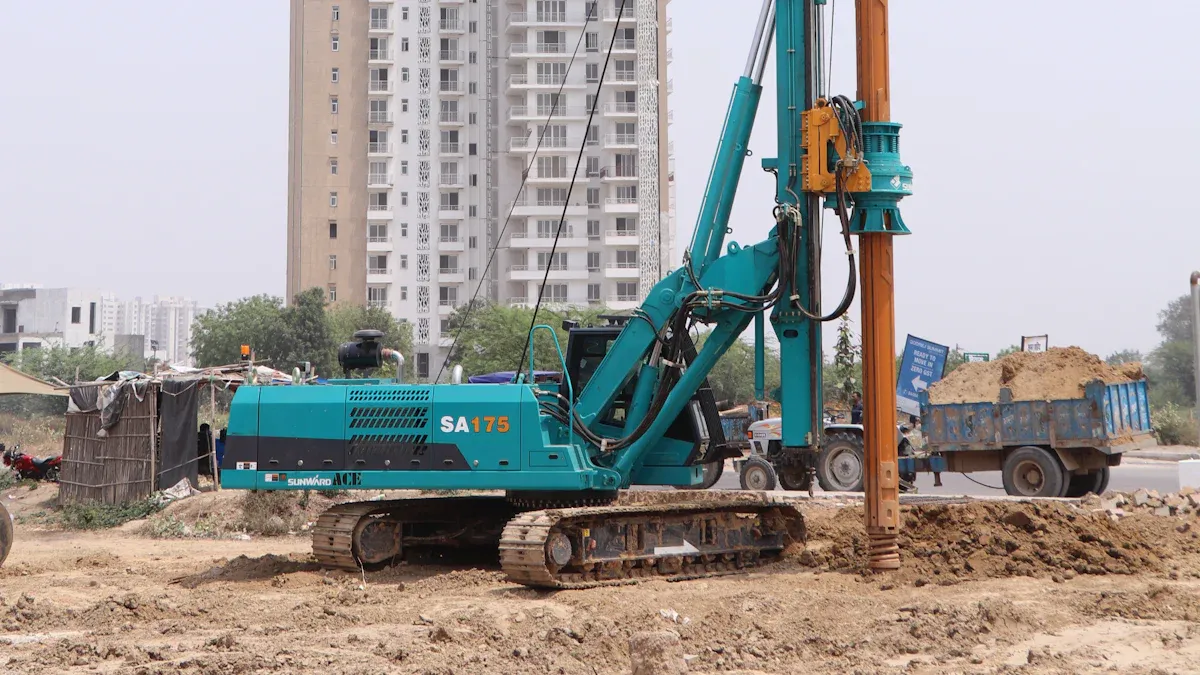
"Biggest Horizontal Directional Drill All Soil Types" signifies extensive capability and adaptability across diverse ground conditions. Identifying the optimal horizontal directional drilling machine is crucial for navigating various soil types in 2026. The horizontal directional drilling market is projected for substantial growth, with an anticipated increase of 12.33% from 2025 to 2032. This expansion underscores the rising demand for advanced Trenchless Drilling Rigs. CEGC provides robust solutions to meet these evolving requirements.
Key Takeaways
-
The best horizontal directional drill is very big. It has strong power. It has precise control. It has smart systems. It works well in any ground.
-
Pick the right drill. Look at its power. See how exact it can be. Check its ability to handle different ground. Also, check its fluid management.
-
New ideas are coming. These include AI and automation. Eco-friendly methods are also new. They make horizontal directional drilling better. It is safer. It is more adaptable for future projects.
Defining the Biggest All-Soil Directional Drilling Rig
Capability Beyond Physical Size
The biggest horizontal directional drill all soil types is not just about its physical dimensions. It is about its ultimate capability. Key indicators show a machine's true power. For example, a rig might offer 40,000 lbs (177.9 kN) of thrust and pullback. It can achieve a maximum carriage speed of 188 ft/min (57.3 m/min). The maximum spindle torque (low) can reach 5,500 ft-lb (7457 Nm). Spindle speed can be up to 227 rpm. These numbers show strong capability. The machine can bore a minimum diameter of 4 inches (10.2 cm). It also has a maximum ground drive speed of 3.3 mph (5.3 km/h). These specifications define a rig's ability to handle tough jobs.
The Demand for All-Terrain Performance
Projects often face varied ground conditions. This creates a strong demand for all-terrain performance in directional drilling. A machine must work well in soft soil, hard rock, and everything in between. The engine is vital for this. A John Deere 4045 engine, for instance, provides 140 hp (104.4 kw) gross horsepower. It uses ultra-low sulfur diesel. This engine can operate at a maximum of 2400 rpm. It has a maximum fuel consumption of 7.4 gph (28 lph). Fluid management is also key. A system might offer a maximum flow of 50 gpm (189.3 L/min) or even 70 gpm (265 L/min). Maximum pressure can be 1050 psi (72.4 bar) or 1100 psi (75.8 bar). On-board tank capacity is typically 6 gal (22.7 L). These features ensure consistent operation.
Innovations for All-Soil Adaptability
Modern directional drilling relies on continuous innovation. New technologies make rigs more adaptable to all soil types. These advancements include better control systems and stronger materials. They allow machines to switch between different ground conditions smoothly. This adaptability reduces downtime and increases efficiency.
Key Evaluation Criteria for All-Soil HDD Rigs
Picking the best horizontal directional drilling machine needs careful thought. Many things must be considered. These points make sure the machine can work in different ground types. It will also give good results every time.
Power and Torque for Diverse Geology
A horizontal directional drilling machine needs a lot of power. It also needs a lot of torque. This is very important for drilling through different kinds of ground. Deeper and longer holes need more horsepower. This is because there is more rubbing when drilling. Harder ground also needs drills with more horsepower. This helps them dig through the ground well. Horizontal drilling needs more horsepower than vertical drilling. This is because the holes are longer. More energy is needed to pump drilling fluid. It also helps keep the drill going in the right direction.
The best power for drilling speed is about 6.4 kW. The best spinning speed is 240 rotations per minute. The best pushing force is 3800 N. A 7-button drill bit works best for drilling speed. How much the drill string twists depends on its length. It also depends on how much it bends and changes direction. The drill string's width mostly affects how much it twists. Twisting gets lower with things like KL and V. These are about how thick the mud is. Thicker mud can lower twisting. It does this by taking away more dirt. This mix of power and twisting makes the machine work great. It works well even in tough places.
Precision Guidance and Stability
Drilling straight and steady is very important. This helps directional drilling work well. If the drill goes off course, it costs a lot to fix. It also causes delays. Projects that cross roads, trains, rivers, or pipes need to be very exact. How well it works often depends on the person running it. Special tools help with these problems. A system matches the load. It controls pushing, pulling, spinning, and feeding. A strong frame and straight carriage lower shaking. This also stops the machine from moving around. It is also key to have a tracking system ready. This includes optional ways to record data and control the process.
New drilling machines have smart systems. CAN bus systems make controls simple. They use less wire. They also help find problems. They allow for automatic features. Automated Rod Exchange (ARE) changes rods by itself. This means the operator does less. It also makes sure things work the same every time. Advanced systems on board find problems. They use touchscreens. They help operators fix issues. This means less time wasted. Bore planning apps use GPS. They use pictures from the air. They also use math tools. These make exact drilling plans. They also make maps of pipes. They create detailed papers.
Anti-Stall Powertrain and Overload Protection
A stuck pipe, sudden twists, and downtime are big worries. These happen in horizontal directional drilling. A stuck pipe costs money to fix. It also causes delays. Sudden twists can harm rods, threads, and tools. Hard or mixed ground makes it hard to work steadily each day. A system that stops stalling helps. It also protects against too much load. This lowers these risks. It gives a lot of twisting power. It works at many different speeds. Hydraulic load sensing is key. Pressure management is also key. Controlled starting and stopping reduce sudden shocks. These shocks can harm rods, swivels, and tools. For very tough spots, a "rock package" is an option. This package has better cooling. It has better filters. It has extra twisting power. It also has strong parts. These features make the machine strong and reliable.
Tooling Durability and Compatibility
High costs for parts and tool wear affect project money. Tools that don't match cause problems. They lead to bad hole cleaning. They make holes that are too small. They also risk breaking when pulling back. Changing tools often means the machine is used less. A strong system for tool matching and toughness fixes these issues. It makes sure many types of reamers can be used. Smoother twisting delivery lowers shaking. It also lowers uneven wear. Easy access for service means faster fixes. Rod width, tool joint details, and strong protection can be changed. These match the ground type and preferred tools.
Many types of reamers offer special uses. Fluted Reamers have a strong design that goes all the way through. They use tough, cast-alloy steel. This makes them last long. Carbide mesh grit is put on by robots. This makes them last even longer. They have spinning or shark teeth. These are for aggressive cutting in tough ground. This includes hard dirt, soft rock, and small stones. Mix Master™ HD Reamers are built on an API Reg Box x Pin. They have thick, strong plates. These make them last longer. Open parts help with mixing and fluid flow. Spinning teeth are set in a pattern. This makes for smooth, spiral cutting. Fluid ports spread fluid. This keeps the hole strong. It wets the path. It also cleans teeth. Supreamer Reamers are for big jobs. They mix well. This is because of their open design and big paddles. They have big carbide shark teeth in front and back. These cut hard and push back easily. T-REX Reamers are made from strong, high-alloy steel. They have a special, steep, tapered back design. This helps them push back easily in tough spots. You can choose built-in swivels or through-shaft designs. Areas that wear a lot are protected. They have strong carbide mesh grit hardfacing. They have big shark teeth. These cut hard and smooth. They work in small stones, broken rock, and soft rock. This wide range of drilling tools makes sure it works best.
Advanced Fluid Management Systems
Bad fluid work and frac-out risk cause big problems. Low flow or pressure makes twisting harder. It also risks a stuck pipe. Losing fluid or frac-out causes trouble with rules and cleanup. Unstable mud makes the hole less steady. A good fluid management system is very important. This includes advice on pump size. It looks at flow and pressure. It considers length, width, and ground type. A well-made path for fluid and readiness for filtering are also key. Strict mud rules are needed. This includes mixing goals, checking, and regular changes. Special pump packages can be added. Filters and cooling upgrades are also available.
Common ways to manage fluid without digging include mobile centrifuges. There are also portable dewatering systems. Mud recovery units are used. Closed-loop systems that reuse fluid are also common. Mud conditioning tools are also used. Mobile centrifuges work very well. They are reliable. They are self-contained. They handle a lot of fluid. They are also small. They reduce or remove the need for vacuum trucks and screens. Benefits include working by themselves. They have normal ways to control solids. They can also remove water. They handle a lot of fluid for big drilling jobs. They also lower costs for getting rid of fluid and hauling it away. These systems make drilling faster. They do this with quicker trips and cleaner mud. They lower the total project time and cost. Fully closed systems need fewer workers. They lower risks for people. They handle different drilling fluid conditions very well.
For the best fluid work, a balanced mud system is key. This brings together parts like shale shakers. It includes hydrocyclones and centrifugal pumps. They remove solids well without too much work. This makes the drill work better. It makes fluid last longer. It lowers costs. It also makes equipment last longer. It is best to pick a mud system. It should process fluid 1.5 to 2 times faster than the drill. Taking care of it is very important. This includes checking shale shaker screens daily. It means replacing worn parts. It means oiling motors. It also means keeping hydrocyclone pressure right. Picking the right equipment is key. This includes double-deck shale shakers. It also includes strong centrifugal pumps. Training the team makes sure things run well. Using new technology helps. This includes shakers that change speed. It also includes smart controls. These make fluid management even better.
Top plans for drilling projects include checking soil early. Picking the right tools and fluids for the job is also key. Making a backup plan for unexpected things underground is important. Using new maps and data in planning before the job helps. Knowing about support equipment is crucial. This includes potholing and fluid recycling. The biggest horizontal directional drill for all soil types will use these advanced fluid systems. This is especially true for big drilling equipment. It is also true for complex and large installations. This makes sure it works best. It also lowers harm to the environment.
Operator Interface and Automation
How the operator uses the machine and how much it does by itself matters a lot. It affects how well it works and how easy it is to use. An easy-to-use system helps operators learn faster. It also lowers mistakes made by people. Smart automatic features make hard tasks simple. This lets operators focus on important choices. Features like automatic rod handling help. Real-time problem checks help. Built-in bore planning tools help. These make work better. They also make it safer. These improvements make drilling more efficient. They also make it less dependent on one operator's skill.
Top Makers of All-Soil Drilling Machines
The horizontal directional drilling business has key makers. These companies make machines. They can work in different ground types. They always try new ideas. This helps drilling technology get better.
Vermeer's Strong Machines
Vermeer is a known name. They make horizontal directional drills. Their machines are strong and work well. The Vermeer D220x500 S3 drill is a good example. It works well in many soil types. It can make big holes. Workers can change how much power and speed it uses. This helps it work best. The D220x500 S3 can give 52,600 ft-lb of turning power. It can also spin at 36 rpm. These numbers are good for tough ground. High turning power and fluid pressure help it drill well. This is true even in hard ground.
Ditch Witch's Flexible Machines
Ditch Witch has many types of drilling tools. Their machines can work on many job sites. The SK series shows this. Models like the SK800 and SK1750 are in this series. These are stand-on machines. They are built strong for building work. They handle hard jobs like landscaping. The SK1750 has a new track system. It does not harm the ground much. It works well in homes. It saves grass. The SK3000 is the biggest stand-on machine. It has power and can lift a lot. It is steady. It works well on hills.
For harder jobs, the Ditch Witch AT120 is a good machine. It is made for tough ground. It is for drilling in hard rock. This machine works 50% better than the old AT100. It uses a 20-foot drill pipe. The AT120 also has a smart system. It helps put drill pipes together. It takes them apart by itself. This makes work faster. It helps in tough underground places.
Astec's Tough Drilling Tools
Astec is another big company. They make horizontal directional drills. They are known for strong and lasting tools. Their machines are made for hard work. Astec wants to make tools that last. They want them to work well. Their designs focus on strength. They are easy to fix. This means they work most of the time.
CEGC: Special Orders and Fixes
CEGC offers standard tools. They also make things special for each job. This helps them fix problems for users. CEGC gives custom answers. They help with different drilling problems. They have big machines. These are made to work well and have power. They want to give tools that you can trust. These tools can grow with the job. They meet the needs of each project. CEGC wants to add new ideas to their tools. This helps workers get the best results. It works in all soil types.
New Ideas in Drilling Technology
Drilling is always changing. New ideas are shaping its future. Smart drilling systems use live data. This helps make good choices. It helps change how they drill. They are looking for greener drilling fluids. These use less water. They also cause less pollution.
Better ways to watch and use data are now common. They use sensors. They use computer learning. This makes drilling better. It helps guess when things will break. It shows how things are working. Better ground imaging gives clearer 3D pictures. Ground surveys help with planning. Robots are also getting better. They make drills that work by themselves. They fix things. Drones watch over jobs. This makes things safer. It makes them work better.
New materials are also important. Light and strong materials are used. They can make tools 30% lighter. Better coatings make tools last 50% longer. They stop wear and rust. Live data uses sensors and the internet. This watches drilling. It makes changes right away. This stops costly delays. Using the internet and AI helps watch things. It helps guess when to fix things. AI can make work 20-25% faster.
Machines that work by themselves can be controlled from far away. This saves money on workers. It stops human mistakes. Better drill bits and mud make drilling faster. They make it more exact. They also help the environment. This is with good drill bits and safe fluids. AI and computer learning make drilling better. They guess when tools will break. They help plan jobs. Machines that can be changed easily are more flexible. They set up fast. They can be used quickly.
Fixing Big Problems in Horizontal Directional Drilling
Stopping Drills from Going Off Course and Failing Crossings
Drills going off course and failing crossings cause delays. They also cost extra money. Good control is very important. It helps with successful horizontal directional drilling. New drills use smart guide systems. These systems control pushing, pulling, turning, and feeding. Strong frames stop shaking. This keeps the drill from moving off track. Tracking systems give live information. This makes sure crossings are exact.
Stopping Stuck Pipes and Downtime
Stuck pipes cause expensive fixes. They also cause delays. Stopping these problems is most important. Good drilling fluid is key. It removes small pieces. This keeps the fluid thick and heavy enough. It stops small pieces from building up. It also stops them from settling. This prevents the pipe from getting stuck. Good hole cleaning removes small pieces. This stops mechanical sticking. Less small pieces mean less twisting and pulling. This makes work smoother. Clean fluid helps move things around. It also cools the drill bit. Well-kept equipment is important. It must have the right shape. Checking tools often stops them from breaking. Planning before drilling helps. Watching things live also lowers risks.
Lowering Consumables Cost and Tool Wear
High consumables cost and fast tool wear hurt profits. Smart plans help lower these costs. Careful planning and checking the site find underground problems. This stops expensive mistakes. Training workers often keeps them skilled. Watching equipment live helps make changes fast. This stops breakdowns. Using advanced drills also helps. Drills with exact control make motors last longer. They work their best. Systems that match power and fluid save energy. Motors with many protections last longer. These systems change twisting power by themselves. This lowers the risk of drill pipes coming apart.
Making Fluid Work Better and Lowering Frac-Out Risk
Bad fluid work and frac-out risks cause problems. Smart methods make fluid work better. Computer programs like VIRTUAL HYDRAULICS plan fluid behavior. They guess how fluid will move. They clean holes. They also manage pressure. This program checks fluid movement. It stops cracks from forming. Special drilling fluid systems like DRILPLEX HDD clean holes very well. They use less pressure. Tools like the Weeper Sub make material flow better. It sends fluid into the space around the drill. This lowers pressure. It also lowers frac-out risk. The Downhole Jet Pump cleans the borehole. It removes drillings well. It works without making too little pressure. This greatly lowers frac-out risk.
Picking the Right Horizontal Directional Drilling Machine
Choosing the best horizontal directional drilling machine needs careful thought. Many things guide this important choice. These things help projects succeed and work well.
Checking Project Size and Ground Type
Project size and ground type are very important. Bigger pipes or cables need stronger drills. This makes the hole needed. Not enough power causes delays and wears out tools. A 300A Horizontal Directional Drilling Rig, for example, works for medium to large pipes. It balances power and exactness. Ground types also change a lot. Different soils, like clay, sand, or rock, need special drilling ways. They also need special drilling tools. Soft ground might only need weaker machines. Rocky ground needs a strong drill head. A soil check before the job is key. It helps pick the right drilling tools. This avoids unexpected problems.
Matching Machine Details to Job Needs
Matching machine details to job needs is very important. Ground conditions tell how much drill power is needed. Loose sand is different from thick clay or rocky land. Hole size and length also matter. Bigger holes and longer distances need drills with strong push. They also need strong pull. Job site limits affect drill choice. The drill must fit in the space. This includes road width and height limits. Drill details include push and pull force. These show the drill's power. Torque is the drill's turning force. More torque is needed for bigger holes. Mud pump size is also key. It moves drilling fluid for oiling.
Thinking About Long-Term Value and Costs
Investing in horizontal directional drilling saves money over time. It makes work better. This makes it a smart choice for underground jobs. Starting costs might be higher than old ways. But, long-term savings come from fewer repairs. Less surface damage means lower fix costs. Well-placed underground pipes need less care. Benefits for value include less harm to nature. They also include less need to fix the surface. Lower care costs are another plus. Things like tool wear affect total cost. Good planning helps with these issues. Knowing the full cost of owning is key.
How Important Manufacturer Help Is
Manufacturer help is most important for good work. It makes drilling tools last longer. Makers give full help after you buy. This includes training for upkeep. It also includes giving spare parts. This makes sure drilling machines last long and are strong. Making after-sales help better is key for project success. This is true as jobs get harder. Smart help systems are very important. These include big training programs. Special tech help teams are also vital. Easy-to-get resources fix problems after setting up. Dealers offer full sales and service help. This includes parts and expert tech advice. This meets what contractors need.
Future Trends in Horizontal Directional Drilling
The global horizontal directional drilling market is growing fast. It will reach USD 25.11 billion by 2034. This is up from USD 10.33 billion in 2026. This growth shows an 11.75% yearly increase. This expansion highlights the need for advanced drilling technology. It also shows the need for better infrastructure.
AI and Machine Learning in Operations
Artificial intelligence (AI) and machine learning (ML) are changing operations. These tools predict tool performance. They also detect downhole vibrations. This happens during horizontal sections. AI helps choose the best drill bits. It also optimizes drilling settings for wells. It predicts cuttings concentration. This makes hole cleaning better. AI models also help estimate well costs. They monitor lost time during drilling. They design Bottom Hole Assemblies (BHA). They predict BHA walk tendencies. They also diagnose well integrity failures. Real-time detector software uses deep learning. It finds communication signals from mud pulses. This prevents costly mistakes. Machine learning models predict lost circulation events. This happens when drilling mud spreads out.
Enhanced Automation and Remote Control
Automation is making horizontal directional drilling more efficient. Machines can now perform tasks by themselves. This reduces human error. Remote control allows operators to manage drills from a distance. This improves safety. It also increases productivity. These advancements make operations smoother. They also make them more reliable.
Sustainable Practices and Eco-Friendly Solutions
The industry is moving towards sustainability. It focuses on greener infrastructure solutions. This includes optimizing drilling angles. It uses models to avoid sensitive areas. It also conserves resources. Evaluating ecological footprints is important. This assesses long-term environmental effects. Reducing fossil fuel reliance is a key goal. This improves efficiency. It also makes renewable energy sources more accessible. Preventing groundwater pollution is critical. This involves careful site selection. It also includes well casing and monitoring. Managing chemical use is also vital. This ensures safe handling. It also protects the environment. These efforts support sustainability and energy efficiency. They also help build better infrastructure.
Modular Designs for Greater Adaptability
Modular designs offer more flexibility. These designs allow for quick changes to equipment. This helps meet different project needs. It also adapts to various ground conditions. This adaptability reduces setup time. It also improves overall efficiency. Modular systems support the development of resilient infrastructure.
The "biggest horizontal directional drill all soil types" for 2026 means it can do many things. It is also very exact and works well. You need to look at new technology. You also need to think about what your project needs. Buying a great horizontal directional drilling machine is important. Machines from CEGC help your work stay good for the future. They help you do well. New ideas keep making better tools. This is true in this changing field.
FAQ
What makes a horizontal directional drill "biggest" for all soil types?
The "biggest" drill means it can do many things. It works well in different ground. This includes power and being exact. It is not just about its size.
Why is it important for a drill to work in all soil types?
Working in all soil types means it always performs well. It works in many ground conditions. This means less time wasted. It makes projects work better.
What are the most important parts of an all-soil HDD rig?
Important parts include strong power and turning force. Being exact is key. Systems that stop stalling help. Good fluid systems are also very important.


