
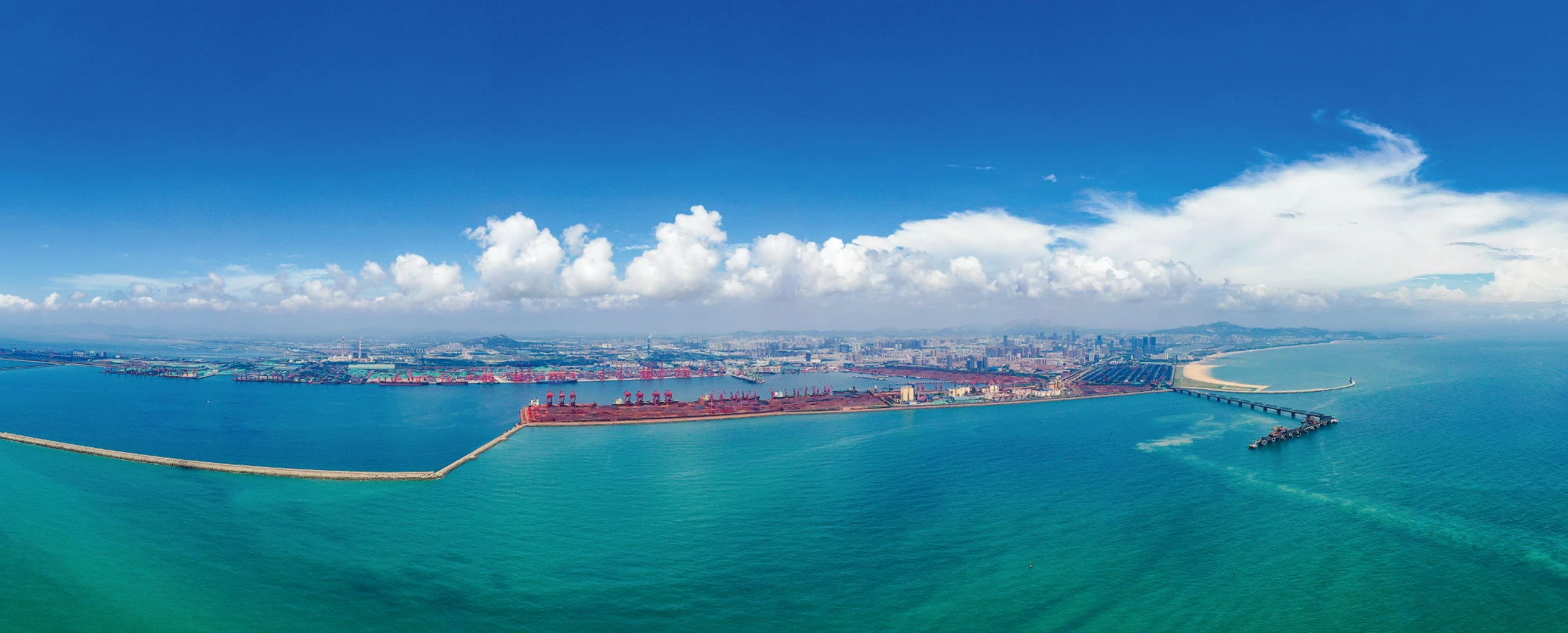
Container crane dispatch supports automation rollout at every step in your container terminal. CEGC enables you to utilize advanced dispatch systems, making your container terminal operate faster and safer. Container crane dispatch enhances automation rollout by improving real-time teamwork, reducing idle time, and increasing productivity.
Recent industry studies indicate that dispatch optimization significantly boosts container terminal productivity. It achieves this by enhancing teamwork, minimizing idle time, and elevating throughput without the need for additional equipment. The results are evident in several ways: faster cycles, improved balance between QC, HTE, and yard cranes, better vessel planning and sequencing, and consistent productivity. As idle time decreases and usage increases, throughput rises without the necessity of adding more equipment.
Container crane dispatch supports automation rollout by preparing your container terminal for seamless system upgrades. You can choose from market-standard specifications or request custom solutions tailored to your automation project. Container crane dispatch facilitates automation rollout in every aspect of your container terminal.
|
Benefit |
Description |
|---|---|
|
Improved Coordination |
Standardized data sharing enhances collaboration, leading to improved performance. |
|
Real-time Visibility |
Terminal Operating Systems provide real-time insights into terminal activities, aiding decision-making. |
|
Workflow Optimization |
Eliminates data silos, fosters teamwork, and optimizes resource utilization across the terminal. |
|
Delay Minimization |
Rapid issue resolution through real-time data sharing reduces downtime and prevents disruptions. |
|
Enhanced Decision-Making |
Real-time tracking and performance insights enable informed decisions, enhancing operational flexibility. |
Container crane dispatch supports automation rollout, ensuring your container terminal is equipped to meet future demands.
Key Takeaways
-
Container crane dispatch helps teams work better together and cuts down on waiting time, so terminal work is faster and safer.
-
When you use advanced dispatch systems, your terminal can change quickly when needed, so you get more work done without buying new equipment.
-
If you use predictive maintenance and energy management, you can save money, have less downtime, and make less carbon emissions in automated terminals.
Container crane dispatch enables automation
Role in terminal productivity
You can make your terminal work better by using advanced dispatching. CEGC solutions change to fit different terminal situations. These systems use short planning periods and update plans quickly. They use strong models to help your terminal deal with changes. This includes vessel arrival times, equipment problems, and truck lines.
|
Adaptation Strategy |
Description |
|---|---|
|
Rolling-horizon approaches |
Split planning into short times for fast updates when things change. |
|
Real-time rescheduling |
Change plans right away to fix truck lines and equipment issues. |
|
Robust and adaptive models |
Handle surprises like vessel arrivals and equipment failures for steady work. |
You can check how well your terminal works with important numbers. Moves per hour, gross moves per hour, and overall equipment effectiveness show performance. Good dispatching helps move more containers and lowers vessel waiting time. A quay crane can do 30–45 moves each hour. This means your terminal can handle more containers faster.
|
Metric |
Description |
|---|---|
|
Moves per Hour (MPH) |
Shows how many containers cranes move every hour. |
|
Gross Moves per Hour (GMPH) |
Counts all moves, giving a full view of terminal work. |
|
Overall Equipment Effectiveness (OEE) |
Combines speed, uptime, and quality to show how well dispatching works. |
CEGC’s anti-sway control and safety interlocks help make things safer and more productive. Anti-sway keeps loads steady, so handling is safer and quicker. Safety interlocks stop machines if something is wrong, keeping people and cargo safe. These features can cut container waiting times by up to 20%. You get smoother operations and fewer delays.
-
Anti-sway technology stops loads from swinging, making work safer.
-
Safety interlocks stop machines if there is a problem, protecting people and cargo.
-
Better processes can lower container waiting times by up to 20%, boosting productivity.
Integration with automated systems
You can use dispatching to link your container equipment with automated systems. CEGC dispatching works with automated guided vehicles and stacking cranes. These systems need fast updates. Dispatching must update maps right away to handle moving AGVs, trucks, and other things.
|
Integration Challenge |
Description |
|---|---|
|
Update maps quickly to handle moving AGVs and trucks. |
|
|
Data integration |
Use GIS for correct locations and spatial searches. |
|
Effective scheduling |
Model separation, speed, and braking for safe work. |
|
Conflict-free path planning |
Use reservation tables or time graphs to avoid crashes and jams. |
|
Dynamic obstacle handling |
Change routes right away when obstacles show up. |
Anti-sway control and safety interlocks help with system integration. Interlocks make sure cranes only move when it is safe. Smart limits change speed and load handling for each job. Sway control keeps loads steady, lowering accident risk and speeding up placement. These features help automated systems work together better.
-
Interlocks make sure cranes move only after safety checks.
-
Smart limits change speed and load handling for each job.
-
Sway control keeps loads steady, lowering risk and making work faster.
-
Safety interlocks block unsafe moves, keeping everyone safe.
-
Sway control changes crane movement in real time for steady loads.
Lamong Bay Terminal is a real-world example. This terminal uses step-by-step rollout strategies. You can start with semi-automated dispatching and add more automation later. This lets you test new systems, train your team, and grow as needed. CEGC offers custom projects, so you can match your automation level and safety needs.
Tip: Begin with semi-automated dispatching. Add more automation as your team learns. This step-by-step plan helps you avoid problems and build trust in your automated systems.
You can count on CEGC equipment and dispatching to help your automation journey. These systems help you handle changes, boost productivity, and connect with automated systems for a smarter, safer terminal.
Optimization for cycle time and throughput
Motion coordination and workflow integration
You can make your terminal work better with CEGC’s advanced dispatch systems. These systems plan crane moves to match your goals. Motion coordination helps control crane movements exactly. Each step fits into the bigger workflow. The Automated Crane Control System works with scheduling tools. It decides which container to move next. This makes your terminal more efficient and keeps things running smoothly.
-
Motion coordination lets you control crane actions with accuracy.
-
ACCS works with scheduling to choose the right container for each move.
-
Safety monitoring stops accidents and keeps your workflow steady.
Intent-driven optimization helps you avoid congestion. You can spot slowdowns early and change crane paths. This keeps your terminal moving without extra stops. You can also set speed tiers, duty cycles, and automation levels to fit your needs.
Reducing bottlenecks and improving efficiency
You face many challenges in your terminal. These include load sway, wind load, and operator skill differences. CEGC’s intent-driven optimization solves these problems directly. Anti-sway control keeps loads steady, even when it is windy. Load-dependent speed profiles change crane speed based on weight and weather. This helps you avoid congestion and bottlenecks.
-
Automated scheduling finishes tasks in seconds, not hours. This reduces congestion and waiting times.
-
You can handle more trips without hiring extra staff. This increases container terminal throughput.
-
Automated systems grow with your needs. You can scale up without chaos or mistakes.
Operator skill still matters. Skilled operators check AI suggestions and manage exceptions. Their knowledge makes sure intent-driven optimization matches real-time needs. This teamwork between people and automation keeps your terminal efficient and free from congestion.
Tip: Use options for speed, duty cycle, and automation level to fit your terminal’s needs. This helps you reach the best optimization and keeps congestion under control.
Reliability, safety, and lifecycle protection
Marine durability and anti-corrosion
You can keep your container cranes safe from harsh sea weather by using CEGC’s marine-grade anti-corrosion systems. These systems use epoxy coatings to cover steel so water and air cannot get in. Galvanizing and zinc primers give new cranes extra protection. You need to check and reapply these coatings every two or three years. This helps your cranes stay strong and last longer in automated terminals. You can pick the anti-corrosion grade that works best for your port. Custom options let you choose the right protection for your environment.
-
Epoxy coatings stop water and air from touching steel.
-
Galvanizing and zinc primers help new cranes fight rust.
-
Checking and fixing coatings often keeps cranes working well.
-
You pick the anti-corrosion grade for your terminal.
Tip: Good anti-corrosion systems save you money and prevent crane downtime.
Predictive maintenance and energy efficiency
You can make your automated terminals work better by using predictive maintenance. Sensors watch crane health and send real-time data. You plan repairs when there is less work, so you avoid surprise breakdowns. Fixing things based on real data saves money and helps your equipment last longer. Finding problems early stops big failures and keeps cranes running.
-
Sensors check crane health and give real-time updates.
-
You plan repairs to stop work from being interrupted.
-
Data-based maintenance saves money and makes equipment last.
-
Early problem spotting stops big breakdowns.
You also save energy with smart dispatch and maintenance systems. AI-powered analytics help you find slow spots and use resources better. Automated Guided Vehicles use 40% less diesel fuel. Energy management systems cut yearly energy use by 7–8% and lower carbon emissions by 11–12%. You can change maintenance plans and energy features to fit your terminal.
Note: Predictive maintenance and energy management keep your automated terminals safe, efficient, and ready for the future.
You get big improvements when you pick CEGC’s container crane dispatch. Advanced systems help your yard use space better. They make gates work faster and safer. These systems also cut downtime and lower emissions.
|
Metric |
Benefit |
|---|---|
|
More efficient use of space |
|
|
Equipment Downtime |
Less waiting, more progress |
Begin with automated decision support and AI agents. Choose market-standard specs or customize your project for the best results.
FAQ
How does job sequencing optimization improve operational performance?
Job sequencing optimization helps you plan crane moves better. It makes fewer mistakes happen and speeds up each task. This way, your terminal works faster and smoother.
What role do automated guided vehicles and automated stacking cranes play in reducing terminal congestion?
Automated guided vehicles and automated stacking cranes move containers quickly. They help clear up crowded areas and keep the yard neat. These machines make the terminal less busy.
Can semi-automated quay cranes support real-time decisions during automation rollout?
Semi-automated quay cranes help you make quick choices. You can change operations fast when needed. This keeps your terminal working well all the time.


