
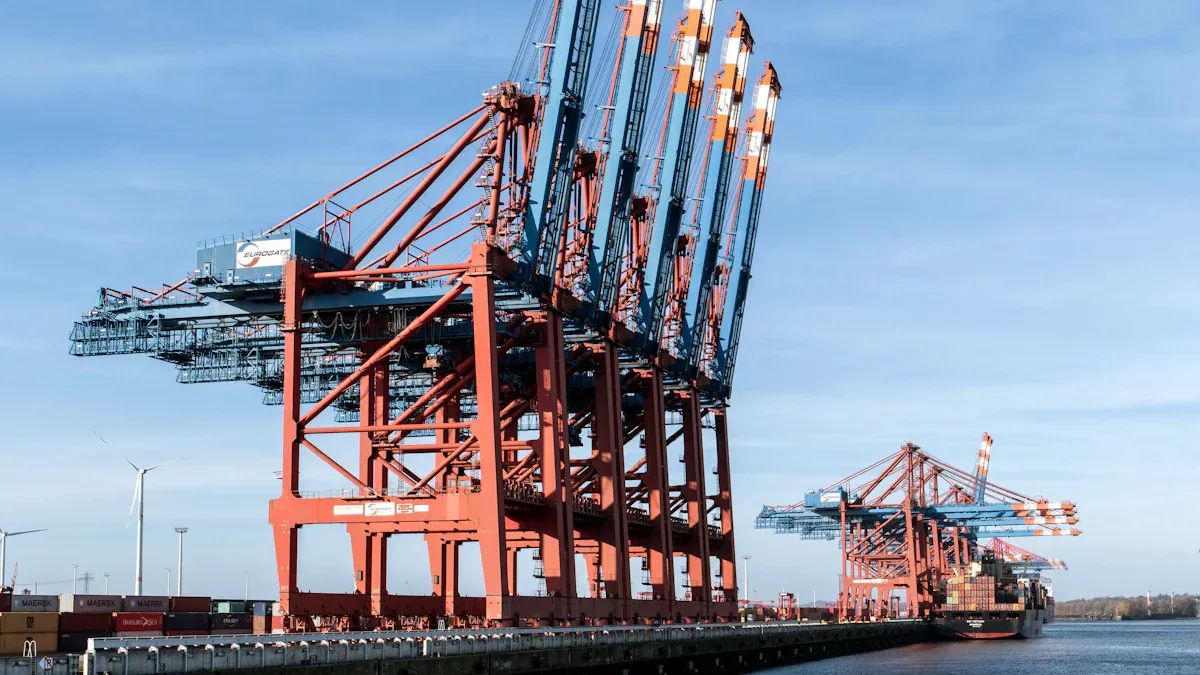
You make the most money when you balance speed, safety, and cost for container crane hoist speed: how fast is profitable. Understanding how fast is best is crucial. Anti-sway and safety systems are essential for maximizing profitability. CEGC provides both standard and custom solutions for port machinery.
|
Integration Feature |
Impact on Profitability |
|---|---|
|
Helps put loads in the right place and keeps work safe |
|
|
Reduced cycle time variability |
Helps make more money and use machines better |
Key Takeaways
-
It is important to balance speed, safety, and cost to make the most money with container cranes. Pick hoist speeds that help you work faster but still keep everyone safe.
-
Use anti-sway systems and motion coordination to stop accidents and make work faster. These tools let you move more containers in a safe way.
-
Check your crane’s design, the types of loads, and the weather often. Change hoist speeds when needed to keep things safe and working well.
Container crane hoist speed: how fast is profitable
Defining profitable hoist speed
Finding the right hoist speed is important. If you set the speed too high, loads might swing and accidents can happen. If you set it too low, you will not move as many containers. This means you make less money. You need to think about safety, how long each cycle takes, and how well your crane works.
When you make the hoist go faster, you face some problems:
-
Sway control keeps loads from swinging. It uses encoders and closed-loop systems to keep things steady.
-
Anemometers and crane anchors check the wind and hold cranes in place. These tools help you work safely at higher speeds.
-
Cycle times change when you change speed. Going faster can help you move more containers, but only if you control sway and plan movements.
-
Safety risks get bigger when you go faster. You need anti-sway and safety systems to keep people and equipment safe.
Different jobs use different hoist speeds:
|
Application Type |
|
|---|---|
|
Precision & Laboratory Applications |
20 - 60 FPM |
|
General Manufacturing & Maintenance Shops |
60 - 160 FPM |
|
Heavy Fabrication & Steel Service Centers |
160 - 300+ FPM |
|
Specialized High-Speed Cranes |
400 - 600+ FPM |
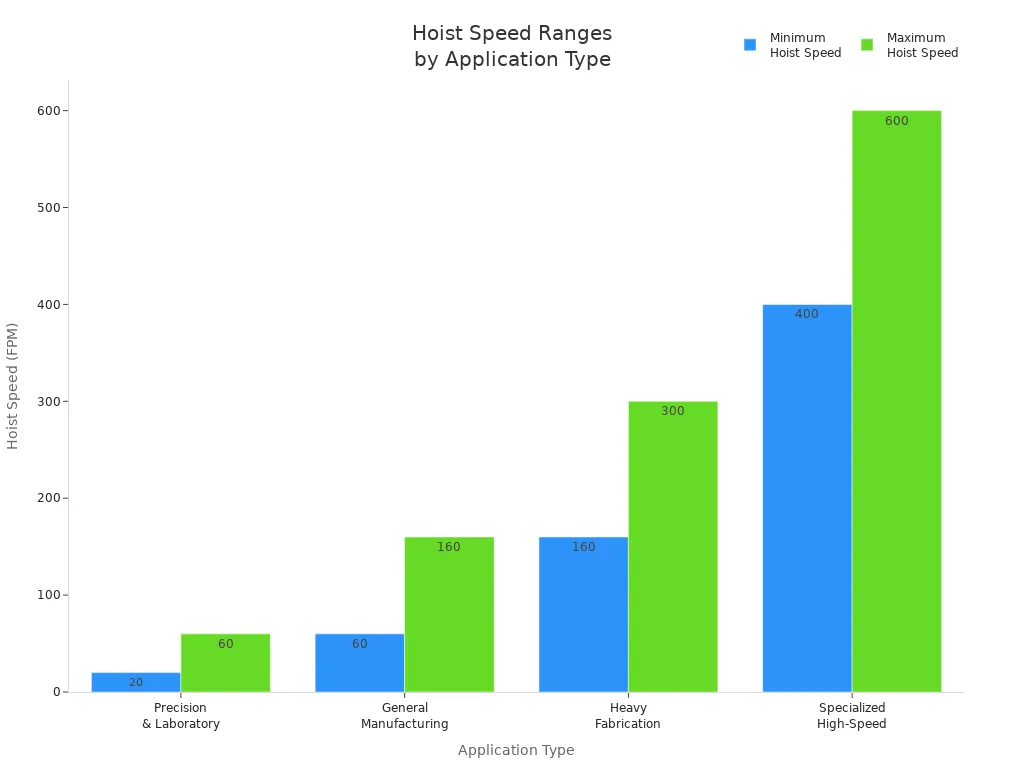
Remember, the best hoist speed depends on your work. Faster speeds change how long cycles take, how well things run, and how safe your site is. Anti-sway technology and motion coordination help stop accidents and keep cycle times steady. Automation lets cranes work faster and better than people. You can move more containers every day and earn more money.
Tip: Anti-sway systems and motion coordination make work safer and help keep cycle times steady. You can use these with terminal scheduling software for even better results.
Market benchmarks and CEGC solutions
You should check how your crane compares to others. Most container cranes use these hoist speed ranges:
|
Hoist Type |
Trolley Speed (fpm) |
|
|---|---|---|
|
Single Speed Hoists |
10 - 26 |
Up to 65 (for spans up to 60') |
|
Two Speed Hoists |
Slow speed is 1/4 of main speed |
80 (for longer spans) |
|
Variable Speed Hoists |
Starts at 1/10 of main speed |
- |
Rules also affect your choices:
|
Impact on Hoist Speeds |
|
|---|---|
|
OSHA |
Needs special safety features and tests. These can limit hoist speeds to keep everyone safe. |
|
Machinery Directive |
Sets rules for Europe. These rules affect how cranes are built and how fast they can go. |
CEGC makes equipment that meets these standards. You can pick custom options for size, power, automation, and more. CEGC’s cranes have anti-sway and motion coordination systems. These features help you find the best hoist speed for your terminal.
You get these benefits:
-
Better safety because operators do not have to work high up.
-
More steady cycle times.
-
Easier to use with terminal scheduling software.
-
Less load sway and smoother movements.
Variable Frequency Drives (VFDs) help cranes start and stop smoothly. This makes moving containers faster, safer, and more accurate. It helps you work better and make more money.
You need to pick travel and lifting speeds that fit your needs. CEGC helps you match crane speed to your work, rules, and site. You can choose sensors, anti-collision zones, and extra safety features. This gives you a system that moves more containers and keeps risks low.
You can see that the best hoist speed depends on balancing speed, safety, and cost. Features like anti-sway and motion coordination help you do this. CEGC gives you both standard and custom solutions for your port or terminal.
Factors affecting hoist speed profitability
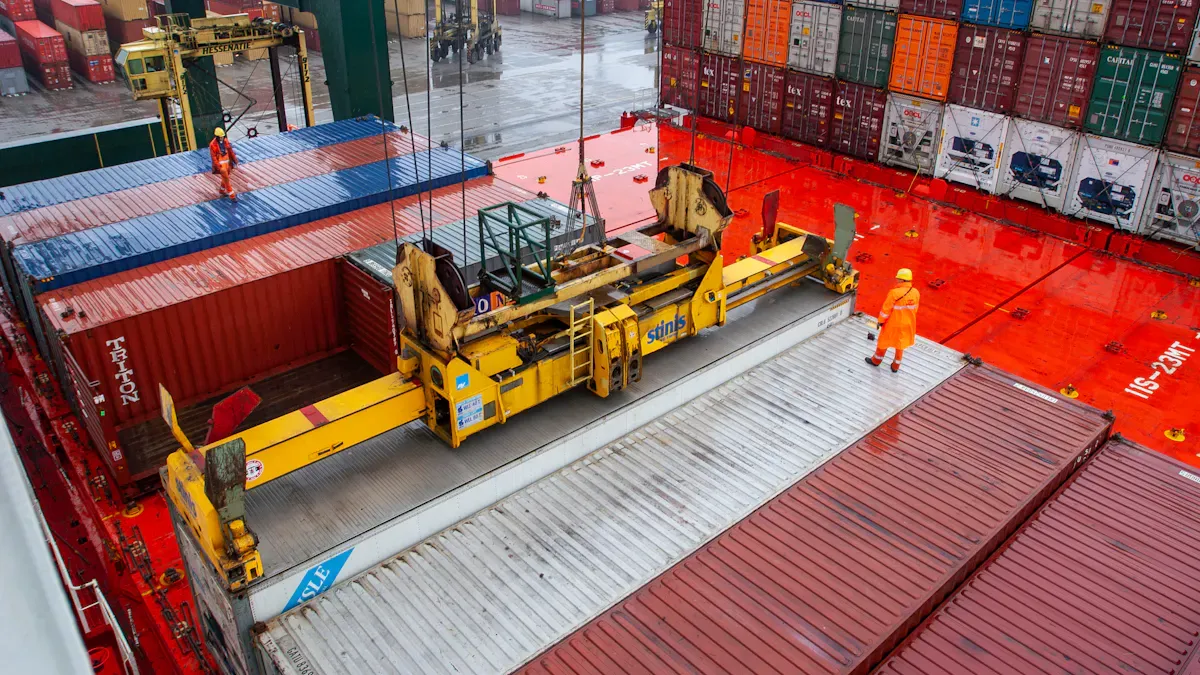
Load, crane design, and environment
You need to look at several factors before you set hoist lifting speeds for your container crane. These include:
-
The weight and type of load you move each day.
-
The design of your crane, such as its capacity and duty cycle.
-
The speed of the trolley and gantry, which affects how fast you can move containers.
-
The weather at your port, like wind, rain, or extreme temperatures.
High winds can make loads swing and cause accidents. Rain or ice can make containers slippery. You should always check the weather before you start work. Cranes with higher duty cycles work better for busy ports. You should pick a crane that can handle at least 20-25% more than your heaviest load.
Safety, maintenance, and energy cost
You must keep your team safe. Operators need good skills, like watching for obstacles and reacting fast to changes. You can use variable speed cranes to match the speed to the load and weather. This helps prevent accidents and keeps your equipment in good shape.
Predictive maintenance helps you fix problems before they stop your work. This reduces downtime and saves money. You can also use energy optimization strategies, like smart scheduling, to lower costs and keep your cranes running smoothly.
Step-by-step speed selection
Follow these steps for speed selection:
-
Check your average and heaviest loads.
-
Look at your crane’s design and duty cycle.
-
Watch the weather and adjust speeds if needed.
-
Train your operators for safe and smooth moves.
-
Use CEGC’s customization options to pick the right automation and safety features.
You should choose higher speeds for fast loading and unloading when conditions are safe. Lower speeds work best in bad weather or with new operators. CEGC can help you find the best setup for your port.
You make the most money when you balance speed, safety, and cost. Safety systems and motion controls help cranes work better and stop delays. CEGC gives you custom solutions to help your port run well. You can use tools and data to keep improving your crane’s work.
|
Benefit |
|
|---|---|
|
Operational Efficiency |
You get your money back faster |
|
Hidden Costs |
You have less downtime and spend less |
FAQ
What is the ideal hoist speed for most container cranes?
You should pick a speed between 10 and 26 feet per minute. This speed helps keep work safe and saves money. It also makes your port run well.
How do anti-sway systems help increase profitability?
Anti-sway systems stop loads from swinging too much. You can move containers faster and with less risk. This means there are fewer accidents and more containers moved each shift.
Can CEGC customize crane speeds for my terminal?
Yes, CEGC can change crane speeds for your port. You can ask for special hoist speeds, more automation, and extra safety features. CEGC will make sure the crane fits what your port needs.


