
Container crane remote monitoring supports automation by providing real-time data that enhances predictive maintenance and streamlines port operations. CEGC plays a crucial role in addressing safety issues, particularly concerning load sway and unexpected downtime. With advanced monitoring, you can maintain a safe working environment while ensuring optimal site performance.
-
Container crane remote monitoring supports automation by lowering risks.
-
Container crane remote monitoring supports automation for better control.
-
Container crane remote monitoring supports automation for quicker response.
Key Takeaways
-
Remote monitoring lets you check cranes to keep them safe. It gives you live data about how cranes are doing.
-
Smart systems help stop cranes from breaking down. They warn you about issues before something goes wrong.
-
Automation makes cranes work better and faster. It helps cranes use less energy to do their jobs.
What is container crane remote monitoring?
Core functions and data flow
Remote monitoring is like a smart helper that always watches your container cranes. It uses sensors to gather important facts, like how hot the motor is, if there is shaking, how much weight is lifted, and the crane’s angle. These sensors send their information to a main control room. There, you can check the crane’s condition right away. The Terminal Operating System gives jobs to the Equipment Control System. The ECS tells the cranes what to do next. As cranes work, they send updates back to the ECS and TOS. This way, you can follow every step and find problems early.
Here are some usual things you will check:
-
Motor temperature so it does not get too hot
-
Vibration to find out if something is wrong
-
Load and overload to keep things safe
-
Angle and pressure for moving the crane correctly
|
Data Point |
Role in Automation |
|---|---|
|
Vibration |
Finds problems early for better repairs |
|
Temperature |
Spots when things get too hot and keeps it safe |
|
Oil Quality |
Checks if parts are healthy for good care |
|
Load |
Watches weight to keep work safe |
|
Angle |
Follows position for careful moving |
|
Pressure |
Makes sure hydraulic parts work right |
Role in automation systems
Remote monitoring changes how you take care of cranes. You do not have to guess or wait for things to break. You use facts to make smart choices. Automation systems need this data to work well. For example, PLCs read sensor facts and help control crane moves. Automated systems use real-time facts to move cranes safely and quickly. Smart systems can even tell when repairs are needed, so you do not lose time.
With remote monitoring, you can control cranes from one safe room. You spend less time in dangerous spots and more time making sure things go well. Automation works because you always know what is happening with your machines. You get faster answers, better safety, and more work done. With CEGC’s standard and custom choices, you can set up these systems for your port and help with the future of container handling.
How container crane remote monitoring supports automation
Real-time data and predictive maintenance
You can use smart remote monitoring to get live data from cranes. This data lets you see what your container gantry cranes are doing every second. Smart sensors check things like how much weight is lifted, how long cranes work, and how hot motors get. You also get updates about hydraulic pressure, fluid levels, and wind speed. These details help you find problems before they stop your work.
Here is a table that shows the types of smart data you can collect and how you use it for predictive maintenance:
|
Type of Data |
Description |
|---|---|
|
Load metrics |
Weight measurements, load distribution, and lifting patterns |
|
Operational hours and duty cycles |
Overall usage and component-specific activity |
|
Motor and drive system performance |
Temperature, current draw, and efficiency metrics |
|
Hydraulic system health |
Pressure readings, fluid levels, and response times |
|
Structural stress indicators |
Strain measurements at critical structural points |
|
Environmental factors |
Wind speed affecting safe crane operation |
Smart systems use this data to warn you about parts that need fixing. For example, if a motor gets too hot, you get an alert. You can fix the problem before it stops the crane. This way of working keeps your container gantry cranes running longer and safer. You do not have to guess when to do maintenance. The smart system tells you the best time. This helps you save money and avoid sudden breakdowns.
Safety, anti-sway, and collision prevention
Smart remote monitoring makes cranes safer. You can use smart anti-sway systems to watch how much the load swings. If the load starts to move too much, the smart system changes the crane’s speed or direction. This keeps the load steady and helps you place containers more carefully. Smart anti-sway is important for container gantry cranes because it lowers the chance of accidents.
Smart collision prevention is another important feature. When many cranes work together, smart systems help them stay apart. The smart system checks where each crane is and stops them from getting too close. This keeps your cranes and workers safe.
Here is a table that shows some smart safety features:
|
Feature |
Description |
|---|---|
|
Impact Detection Methodology (IDM) |
Monitors and detects crane-induced impacts on containers in real time, mitigating handling-related damage. |
|
Integration with crane management |
Enhances operational precision, reduces container damage, and improves port efficiency. |
Smart safety systems also help you follow international rules. They keep records of how your cranes work. This makes it easier to pass safety checks and avoid fines. You can show inspectors that your smart system tracks everything.
Tip: Smart anti-sway and collision prevention are important for busy ports. They help you keep cranes working safely, even when many cranes move at the same time.
-
Smart systems watch the swaying of the load all the time.
-
They change the crane's speed and direction to stop swaying, making lifting safer.
-
Smart collision prevention is needed when many cranes work together.
-
These systems stop cranes from hitting each other or other equipment.
Remote diagnostics and operational efficiency
Smart remote diagnostics let you check your cranes from anywhere. You do not need to send a worker to the site every time there is a problem. The smart system tells you what is wrong and where to look. This saves you time and money. You can fix small problems before they get bigger.
Smart diagnostics also help you use your cranes better. In one European port, smart control systems on rubber tired gantry cranes made work faster by 30% and used 20% less energy in one year. You can get these results with your container gantry cranes too.
Here are some smart benefits you get from remote diagnostics:
-
More efficiency because of automation and predictive maintenance.
-
Better energy use by changing motor speeds and power.
Smart systems also help you spend less on maintenance, have fewer failures, and keep more cranes working. The chart below shows how much you can improve with smart remote diagnostics:
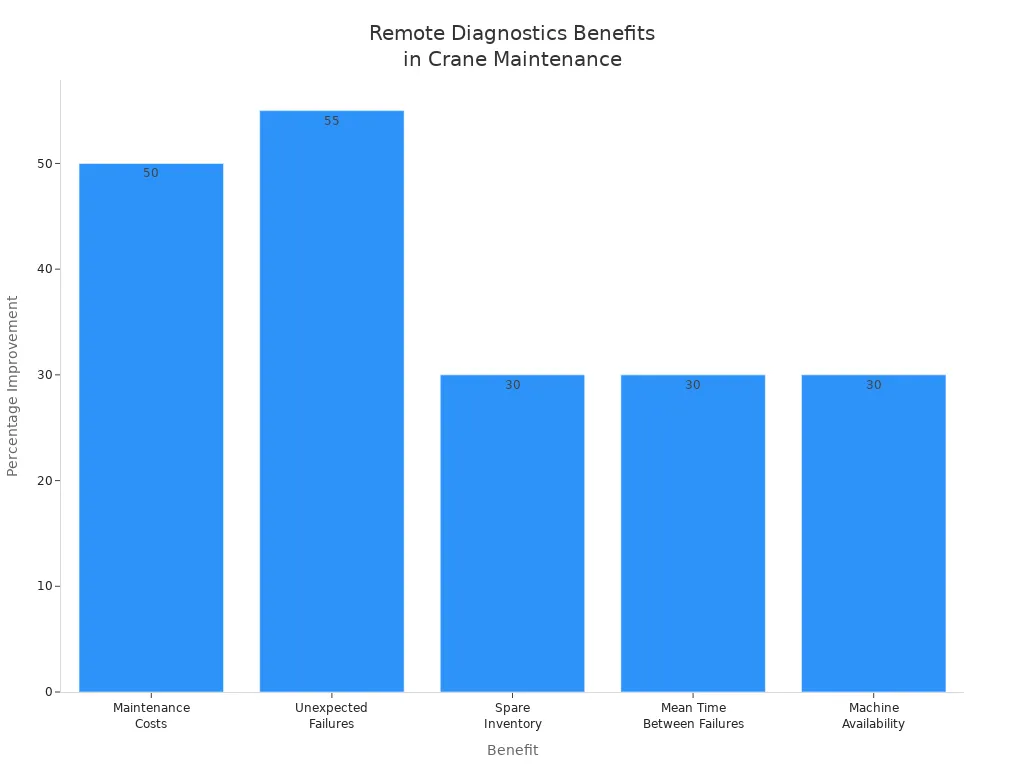
|
Benefit |
Percentage Improvement |
|---|---|
|
Maintenance Costs |
50% |
|
Unexpected Failures |
55% |
|
Spare Inventory |
30% |
|
Mean Time Between Failures (MTBF) |
30% |
|
Machine Availability |
30% |
You can see that smart remote monitoring and diagnostics make your container gantry cranes more reliable. You get more work done with less downtime. Smart systems help you use less energy and keep your port running well. With CEGC’s smart solutions, you can connect all your cranes and other port machines for full automated operation. This gives you better control, safer work, and smarter results every day.
Automation impact on container gantry cranes
Technologies enabling automation
Many new technologies help automate cranes. Sensors check each part of the crane. They look at load weight and wind speed. IoT connects these sensors and sends live data. Smart control systems use AI to make quick choices. Cloud computing keeps all the information safe. You can look at it anytime you want. With smart control systems, you manage cranes from a control room. This keeps you safe and lets you work in any weather. Smart control systems help you find problems early. You can fix them before the cranes stop working.
-
IoT gives live updates about cranes and the environment.
-
AI in smart control systems helps plan moves and stops mistakes.
-
Cloud systems let you check crane data from anywhere.
Practical benefits for terminal operations
Smart control systems give many benefits to your terminal. You can move containers faster and safer. Cranes work longer without stopping. You spend less money on repairs. Smart control systems warn you before something breaks. You also save on labor costs. Fewer people can run more cranes with smart control systems. The table below shows some key benefits:
|
Benefit |
Description |
|---|---|
|
Increased Throughput |
Cranes move more containers in less time with smart control systems. |
|
Reduced Labor Costs |
Smart control systems let you use fewer workers for more cranes. |
|
Higher Efficiency |
Cranes work better and waste less energy with smart control systems. |
Note: At Qingdao New Qianwan Container Terminal, smart control systems helped cut labor costs by 70%. They also boosted efficiency by 30%.
Real-world examples and CEGC solutions
Smart control systems are used in ports all over the world. Konecranes and Liebherr use smart control systems to keep cranes running well. ZPMC uses smart control systems to connect cranes and lower wear. CEGC gives you custom smart control systems for your cranes and port. You can pick the sensors, safety features, and automation level you need. Smart control systems help you follow rules and keep cranes working longer. When you use CEGC’s smart control systems, your cranes are safer, faster, and more reliable every day.
You can make cranes safer, work better, and last longer with remote monitoring. CEGC gives you both regular and special automation for port machines.
-
Today’s ports use live tracking to give better service and follow rules.
-
Automated cranes lift things more exactly and move faster.
-
Smart monitoring helps you keep up when the industry changes.
FAQ
How does remote monitoring help you manage cranes?
Remote monitoring shows you what cranes are doing right now. You can find problems before they get worse. This helps your cranes stay safe and work well.
Can you use remote monitoring with older cranes?
Yes, you can put smart sensors and systems on old cranes. This makes it easier to control them. It also helps you make cranes safer and more efficient.
What benefits do you get from automating cranes?
You can move containers faster and in a safer way. Automated cranes help you spend less money and have less downtime. You can also move more cargo with fewer errors.


