
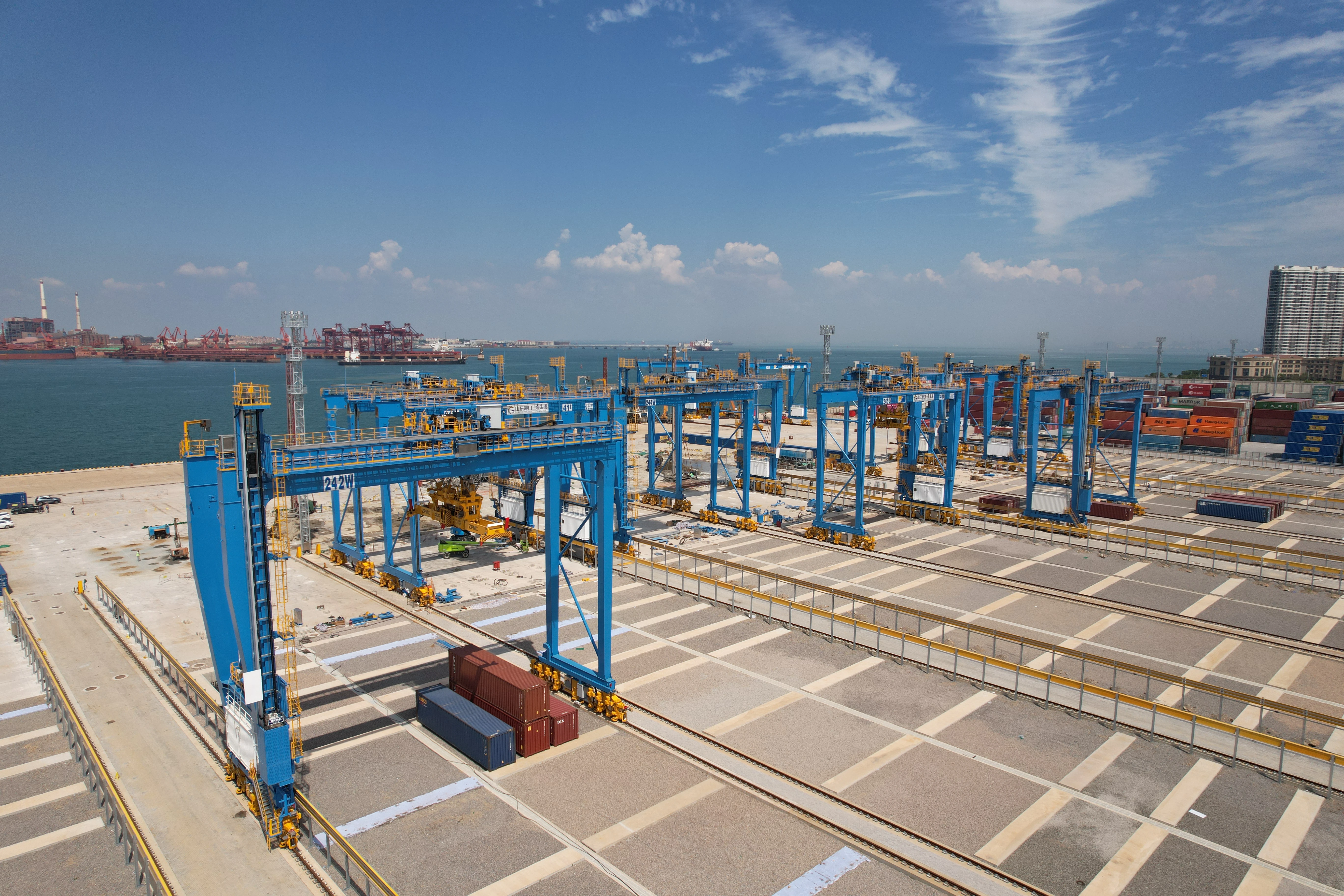
You think safety is the most important thing in port work. Automated container gantry crane auto moves: risk controls help you lower risks and make things more reliable. CEGC makes systems that keep your work safer. Automation helps things go faster by cutting down on traffic and moving containers quicker. You get better safety, faster loading, and more steady results.
Key Takeaways
-
Use a good risk assessment module to find dangers early. This helps stop accidents before they happen. This way, crane operations are safer and more reliable.
-
Use predictive maintenance systems to cut downtime by half. This helps you fix problems before things break. It saves both time and money.
-
Add anti-sway and collision avoidance systems for better control. These tools help place containers exactly right. They also lower the chance of accidents.
Container gantry crane auto moves: risk controls
Main operational risks
When you manage container gantry crane auto moves: risk controls, you face many challenges. The most common operation risk assessment findings show these main problems:
-
Operator fatigue and safety risks can cause accidents, especially during long shifts.
-
Equipment maintenance and downtime can mess up schedules and make things cost more.
-
Operator training and skill gaps lead to different safety results.
-
Load sway and collision exposure make it hard to place containers exactly right.
-
Environmental factors like salt fog and humidity make corrosion happen faster and increase maintenance.
You need a strong risk assessment module to handle these risks. This module helps you find and control dangers before they cause trouble. Using predictive maintenance and condition monitoring can cut downtime and make things safer. You can add special features for your port, like anti-corrosion packages, to make parts last up to three times longer than normal. A full operation risk assessment helps your container gantry crane work well, even in tough weather.
Anti-sway and collision avoidance
You need good control to keep your container gantry crane safe and working well. Load sway makes it hard to put containers in the right spot and raises the chance of collisions. Anti-sway systems can fix this problem. There are three main types:
-
Passive systems use dampers and rigid spreaders to stop sway. These work best when things are steady.
-
Semi-active systems change for different loads with little help, giving better results.
-
Active systems use sensors and control algorithms to stop sway right away. These give you the best control and safety.
Active anti-sway systems help you work faster by making container placement quicker. They also lower maintenance costs because smoother moves are easier on your equipment. If you use anti-sway and collision avoidance together, you get even better results. Modern collision avoidance uses geo-fencing, dynamic speed limits, and decision-support tools. These tools help you stay out of restricted areas, slow down in bad weather, and pick safer ways to move containers. You can trust these systems to lower accidents and keep things running well.
A strong risk assessment module should have both anti-sway and collision avoidance. This helps your operation risk assessment by cutting down on mistakes and giving steady control, no matter who is using the crane. CEGC container handling equipment has these advanced features as standard, and you can also get custom options for your project.
Comparison Table: Assisted vs. Active Anti-Sway Systems
|
Feature |
Assisted Anti-Sway Systems |
Active Anti-Sway Systems |
|---|---|---|
|
Human Error Reduction |
Relies on operator's judgment |
Reacts faster than the operator to off-angle hooks |
|
Stability of Hook Control |
Provides some support to the operator |
Keeps the hook centered and minimizes sway |
|
Performance in Low-Visibility |
Limited by operator's visibility |
Monitors hook in real-time with camera systems |
|
Consistency Across Operators |
Varies with operator experience |
Provides consistent handling for all operators |
Safety interlocks and emergency stops
You must use safety interlocks and emergency stops as part of your risk assessment module. These controls keep your team and equipment safe during container gantry crane auto moves: risk controls. The main parts are:
|
Component |
Function |
|---|---|
|
Limit Switches |
Stop hooks, trolleys, or bridge assemblies from going too far by turning off power at set points. |
|
Emergency Stop Buttons |
Cut off motor power and brakes right away, making things safe fast. |
|
Compliance Standards |
OSHA 1910.179 and ANSI B30.2.0-1967 set the rules for crane safety. |
You need to follow rules like OSHA 1910.179 and ANSI B30.2.0-1967. These rules say you must check equipment often, train operators, and use safety devices. You should also use an operator-centered HMI. This screen gives you clear alarms, status updates, and step-by-step help. It helps you act fast if there is a risk and supports your operation risk assessment.
A multi-layer safety interlock system lowers the chance of accidents from mistakes. It also makes things steady across different shifts. Emergency stops let you take control right away if something goes wrong. These features, along with a strong risk assessment module, are the base of container gantry crane auto moves: risk controls.
Tip: Check your operation risk assessment often and update your risk assessment module to match the newest safety rules and technology.
You can count on CEGC container gantry crane solutions to give you safety and control features that meet market standards. You can also change these systems to fit your port and how you work.
Monitoring, maintenance, and performance optimization
Predictive maintenance systems
You use predictive maintenance systems to help your container gantry crane work well. These systems have IoT sensors and AI that check the crane’s health. Repairs are done only when data shows there might be a problem. This means you find most problems before the crane stops working. Unplanned stops can go down by half. Repairs happen faster, and there are fewer breakdowns. You spend less money on fixing things, and your cranes are more dependable.
-
Predictive maintenance cuts downtime by up to 50%.
-
You find 85-95% of problems before they stop the crane.
-
You save money and make your work run better.
Real-time monitoring and analytics
Real-time monitoring helps you know what is happening right now. Sensors watch the crane’s position, how it lifts loads, and the weather. Data analytics let you see problems early. Safety systems set off alarms if loads are too heavy. You follow safety rules and keep your team safe. Cranes and terminal systems talk to each other for smooth work.
|
Data Type |
|
|---|---|
|
Sensor Feeds |
Helps with predictive maintenance and better work. |
|
TOS Logs |
Shows yard crowding and helps change plans. |
|
VMS-derived Events |
Helps you act fast and make good choices. |
Cycle time and throughput optimization
You use automation and automatic positioning to make cycle time better. Yard planning and stack strategies help cut waiting. Heuristics lower container moves by 25%. Ground slot planning makes waiting times 15% shorter. Faster turnaround times make your terminal better for shipping lines.
|
Quantitative Result |
|
|---|---|
|
Improved yard planning |
Makes loading and unloading faster, ships leave sooner. |
|
Optimal stack planning |
Cuts extra moves and travel distance. |
|
Ground slot capacity optimization |
Waiting times drop by 15%. |
Case studies and implementation challenges
You see real results when you add automation to your terminal work. More containers move, extra moves go down, and things get greener. CEGC lets you pick the right size, automation, and anti-corrosion features. You choose the best materials and coatings for your place. Remote monitoring and good communication make things more reliable and keep customers happy.
|
Description |
Impact on Efficiency |
|
|---|---|---|
|
Hook Height |
Changes how high you can lift. |
Makes lifting more exact. |
|
Lifting Mechanisms |
Wire rope hoists or electric chain hoists. |
Changes how much and how fast you lift. |
|
Additional Features |
Wireless controls and safety upgrades. |
Makes things easier and safer. |
Tip: Pick sealed motors and IP-rated boxes to last longer in tough places.
When you use advanced risk controls for container gantry crane auto moves, safety gets better. Work also becomes faster and smoother. Built-in safety features help stop accidents. Real-time monitoring lets you see problems right away. Predictive maintenance helps fix things before they break. This means cranes stop working less often. CEGC gives you solutions that meet market standards. You can also pick special options for your port. This helps your port work its best.
FAQ
What is the main risk when using a container gantry crane?
The biggest risks are load sway, collisions, and mistakes people make. These problems can lead to accidents, lost time, or broken equipment. You need to control these risks to keep everyone safe.
How do you reduce human error in automated crane operations?
You use smart systems to help stop mistakes. Anti-sway controls, safety interlocks, and operator-centered HMI help you find risks and fix them before they cause trouble.
Why is risk assessment important for container handling equipment?
Risk assessment helps you find problems early. It lets you stop mistakes, lower error rates, and protect your team. This makes your work more reliable and less risky.


