
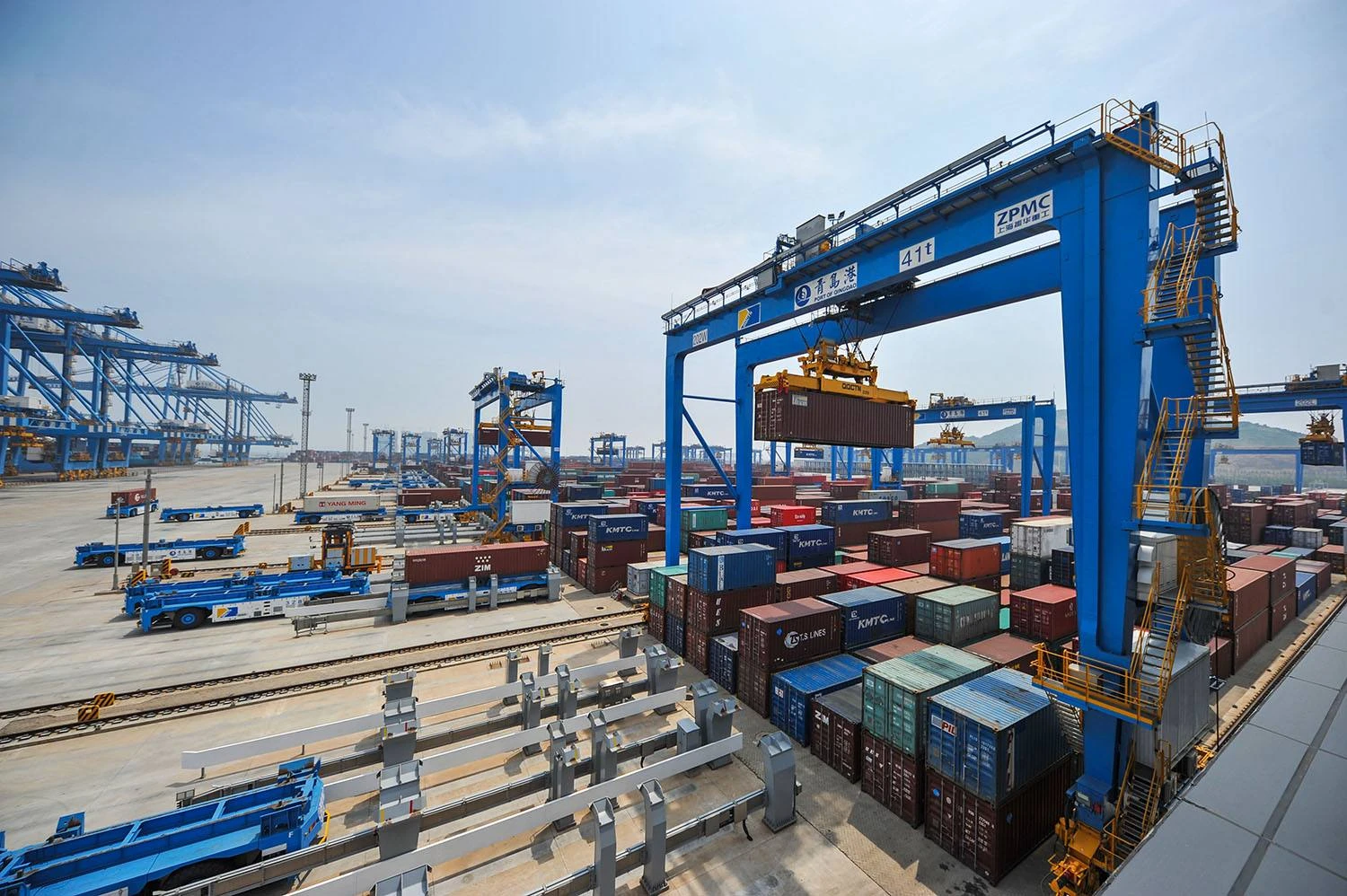
Container handling equipment routing reduces rehandles by streamlining every move in your terminal. Approximately 75% of all container-handling moves do not add value, leading to wasted time and money. This inefficiency also contributes to safety issues and vessel delays. CEGC employs smart control systems and equipment planning to enhance container terminal operations.
|
Pain Point |
Implication |
|---|---|
|
Causes higher costs and slows down work |
|
|
Vessel Delays |
Wastes fuel that is not needed |
|
Need for Improved Coordination |
Encourages better communication, resulting in fewer delays |
By implementing container handling equipment routing with real-time tracking and automation, you can significantly reduce rehandles. These advanced tools not only help you save money but also increase productivity in your operations.
Key Takeaways
-
Using smart routing can help stop extra container moves. This saves time and lowers costs.
-
Tracking containers in real-time and using automation makes things work better. It helps service go faster and makes customers happier.
-
Check for slow spots in operations often. Change routing plans to keep containers moving smoothly.
Rehandles in container terminals
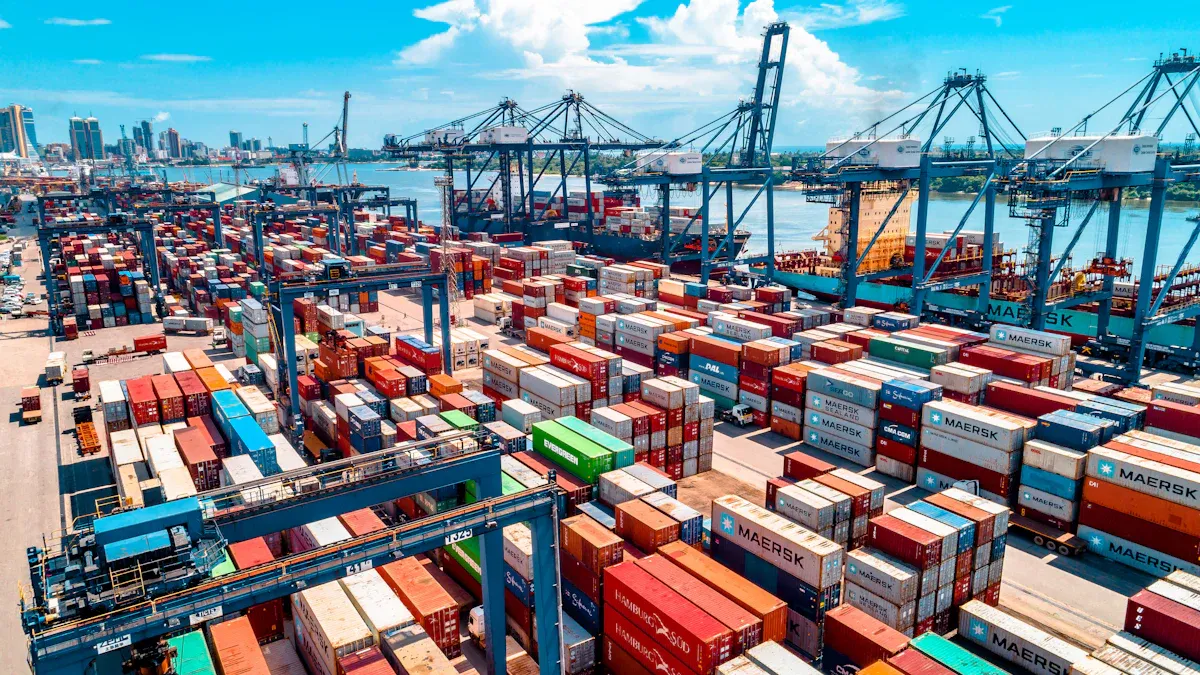
What are rehandles
Rehandles happen when you move containers that are not the ones you want. Industry standards say rehandles are moves that do not help the job. This happens if the container you need is under other containers. You must move the top containers to get to the right one. These extra moves cost more money and slow down your terminal.
Yard operations in a container terminal have many jobs to do. Gate arrivals, rail transfers, yard grooming, and vessel work all meet at the yard cranes. Sometimes, containers need rehandles because they are under other boxes. This makes it harder to get them out. When yard cranes have overlapping areas, it can cause more problems. One crane’s movement can slow down or block another crane.
Why rehandles are a problem
Rehandles cause many problems in a container terminal. You pay more for workers and equipment repairs. Trucks wait longer, and quay work slows down. In yards that are not planned well, rehandles can be 20–30% of all moves. These issues make your terminal less efficient.
-
At least 25 people have died in marine cargo handling since 1996.
-
There have been 15 official reports of injuries during these jobs.
-
People worry about mistakes, injuries, and accidents because the work is complex with vertically tandem lifted containers.
-
Dangers include tipovers, interbox connectors coming apart, and people in unsafe areas.
-
Terminals that move many containers at once have more risk of mistakes and accidents than those that move one at a time.
APM Terminals' Pier 400 cut container rehandles by 90%. This made their terminal work better and lowered accident risks.
How container handling equipment routing reduces rehandles
Optimized routing strategies
Smart routing strategies help cut down extra moves. Planning each equipment’s path makes every move important. This stops extra lifts and lowers mistakes. Many terminals use Data Envelopment Analysis to find weak spots. This can make capacity use better by 10–20%. Multi-stop shipment logic can shorten travel by up to 25%. Grouping containers by export area, destination, or weight also lowers rehandles.
Here are some ways to make routing better and reduce rehandles:
-
Truck-to-task allocation sends trucks to the closest stack. This saves time and helps quay cranes work faster.
-
Bay planning and grouping rules limit rehandles during busy times.
-
Stacking containers by type or weight makes picking them up easier.
Advanced algorithms can help plan routes. These include genetic algorithms, particle swarm optimization, and hybrid methods. These tools find the best path for each move, even when the yard is busy.
|
Algorithm Type |
Description |
|---|---|
|
Exact Methods |
Give the best answer but can be slow for live dispatch. |
|
Heuristics and Metaheuristics |
Make good plans quickly, great for busy places. |
|
Genetic Algorithm Variants |
Used often for tough problems, balancing speed and quality. |
|
Particle Swarm Optimization |
Another popular way to make routing better in container handling. |
|
Hybrid Approaches |
Mix different methods to get better results. |
|
Simulation-Based Optimization |
Uses simulations to find the best routing using real-time data. |
Using these strategies makes container handling equipment routing reduces rehandles possible in your terminal.
Reducing bottlenecks and improving flow
Bottlenecks slow down terminal work and hurt efficiency. You see these problems in the yard, at the gate, or during vessel loading. Infrastructural bottlenecks come from not enough space or equipment crowding. Operational bottlenecks happen when workflows do not match. Sometimes, bottlenecks move from one area to another, so you must watch them closely.
Container handling equipment routing reduces rehandles is your main tool to fix these issues. Smart routing keeps container flow steady and stops jams. Motion coordination systems help move containers smoothly. Safety interlocks stop equipment from working in unsafe conditions. Anti-sway control keeps loads steady, so there are fewer accidents and less lost time.
Tip: Keep watching for bottlenecks that move. Change your routing plan as soon as you see a slowdown.
Studies show that better routing and reservation systems cut waiting times for trucks and equipment. This means faster cycles and better use of resources. Improving container flow boosts efficiency and lowers costs.
Real-world results and technical solutions
You see real improvements when you use container handling equipment routing reduces rehandles every day. Terminals with routing optimization report faster equipment cycles and less idle time. This lets you move more containers with the same resources. You also get better balance between yard cranes, quality control, and vessel planning.
Here are some results from container terminal operations:
|
Study |
Findings |
|---|---|
|
Xu et al. (2024) |
Container truck reservation strategies cut waiting times in ports. |
|
Phan and Kim (2016) |
Made a new reservation process that lowers waiting times for container trucks. |
|
Rijal et al. (2019) |
Routing optimization and reservation are key for terminal efficiency. |
You can get up to 30% more productivity and cut costs by 25–50%. Some terminals save over USD 2 million each year. Automation and better routing also lower labor incidents by more than 40%. Customers notice faster service and are happier.
CEGC helps with technical solutions:
-
Anti-sway systems keep loads steady, so you avoid accidents and rehandles.
-
Safety interlocks stop unsafe operations, keeping workers and cargo safe.
-
Motion coordination makes container flow smooth and cuts extra moves.
-
Predictive maintenance finds problems early, so you fix equipment before it breaks.
|
Solution |
Description |
|---|---|
|
Anti-swing control |
Measures sway and adjusts trolley and hoist for less movement. |
|
Predictive maintenance |
Checks vibration and temperature of motors, gearboxes, and wheels; sends automatic alerts to CMMS. |
You can change these solutions to fit your project. CEGC connects them to your workflows, so you get the right automation, safety, and reporting. Using container handling equipment routing reduces rehandles as your main idea builds a safer, more efficient, and reliable terminal.
You get quicker moves and do not wait as long. Handoffs between workers are smoother with smart container handling equipment routing. CEGC’s cranes stay safe and work well because they use protective coatings and stainless steel. Predictive maintenance helps fix problems before they get worse. Automation and IoT sensors let you move more containers. These tools also help lower emissions as global trade gets bigger.
FAQ
How does container terminal planning help reduce rehandles?
When you plan your container terminal, you organize the stacks better. This makes it easier to move containers without extra steps. Good planning means you do not have to move containers you do not need. This saves time and makes work faster in your terminal.
What equipment improves handling in a terminal?
Portal cranes, container cranes, and reach stackers help with handling. These machines let you move containers safely and fast. They make it easier to do the job in your terminal.
Why is handling important for terminal safety?
Handling is important because it keeps your terminal safe. When you handle containers well, there are fewer accidents. Workers stay safe, and containers do not get damaged.
Tip: Check your container terminal planning often. This helps you find problems early and keep your terminal working well.
|
Equipment Type |
Main Use in Terminal |
|---|---|
|
Container handling |
|
|
Ship-to-shore handling |
|
|
Yard handling |


