

You must follow swing limits every time you use container handling equipment: swing limits and safety are crucial for maintaining load stability and preventing accidents. Safety and swing limits always go hand in hand. Here are the main safety risks for you and your team:
|
Role |
Primary Safety Risks |
|---|---|
|
Crane Operators |
Crashes, machine problems, falling from high places. |
|
Container Handling Equipment Operators |
Tipping over, crashes, falling when getting in or out of cabs. |
|
External Truck Drivers |
Hard to drive, possible crashes. |
|
Yard Workers |
Hard to see, slipping, tripping, falling on bumpy ground. |
|
Container Inspectors |
Dangerous chemicals, sharp edges, loads that can move. |
|
Maintenance Technicians |
Fixing things in tight spots, hard to see near big machines. |
"We always try new things. We never lower our standards. We work our best every day." CEGC is a leader in safety and technology for all your port needs, ensuring that container handling equipment operates within safe swing limits.
Key Takeaways
-
Always follow swing limits to keep loads steady and stop accidents. This helps keep you and your team safe.
-
Use anti-sway technology to control how containers move. This technology makes lifting safer and faster.
-
Regular training and safety checks are very important. They help lower accident risks and make sure everyone knows how to use equipment safely.
Container handling equipment: swing limits and safety
What are swing limits?
Swing limits tell you how far a container can move from its centerline. These limits help keep the container steady when lifting. You use swing limits to stop the container from swinging too much. When you run cranes or other container handling equipment, swing limits help you control the load. They keep the container from moving in a dangerous way.
Swing limits are important for lifting containers. They stop the container from swaying side to side or front to back. This control keeps shipping container handling safe. If you ignore swing limits, the container can swing out of control. It becomes hard to place the container where you want. The risk of accidents goes up.
Here is how swing limits affect performance and safety in container handling equipment:
|
Aspect |
Impact on Performance and Safety |
|---|---|
|
Fewer accidents happen in busy container yards. Safety gets better. |
|
|
Positioning Accuracy |
Automated systems and crowded yards need good swing control. Swing delays make handling slower. |
|
Equipment Wear |
Swinging too much wears out parts faster. Maintenance costs go up. |
|
Operator Control |
New operators can cause swing. This hurts safety and efficiency. |
|
Environmental Factors |
Wind makes swing worse. Safety and efficiency drop. |
|
Mechanical Design Measures |
Strong trolley structures and good wire ropes help stop swing. Safety improves. |
|
Anti-Sway Technologies |
Closed-loop systems adjust in real time. Positioning and safety get better. |
|
Automation Integration |
Good swing control is needed for smooth automated container terminals. |
|
Overall Benefits |
Safety gets better. Efficiency goes up. Cycle times get shorter. Maintenance costs go down. |
Swing limits are part of every step in container lifting. They help keep loads steady, protect equipment, and make your job safer.
Why swing limits matter for safety
Swing limits keep you, your team, and your equipment safe. When you follow swing limits, you lower the chance of accidents and injuries. Many accidents happen when containers swing too far. Since 1996, at least 25 people have died in marine cargo handling accidents. There have been 15 reports of injuries during these operations.
Tip: Always follow safety rules and container lifting guidelines. These rules keep you safe and stop accidents.
Groups like the National Maritime Safety Association and ICHCA made special rules for safe shipping container handling. Lifting more than one container at a time (VTLs) is riskier than single lifts. That is why strict swing limits and safety rules are set for every job.
When you use container handling equipment: swing limits and safety controls help you:
-
Stop crashes with other containers, cranes, or buildings.
-
Keep containers from tipping or falling.
-
Lower the risk of injuries or deaths.
-
Keep your equipment working well and cut maintenance costs.
OSHA says following safety rules and protocols lowers risks a lot. Using swing limits and safety rules makes container lifting safer for everyone.
Risks of exceeding swing limits
If you go past swing limits, you put yourself and others in danger. Here are some problems that happen when swing limits are ignored:
-
Operator mistakes, like not using outriggers before swinging a boom, can cause injuries.
-
Bad maintenance can make machines break, raising accident risks.
-
Not enough training on equipment and safety rules makes mishaps more likely.
Going past swing limits can cause big problems:
-
Serious injuries or deaths from crashes with buildings.
-
Lifeline failures can cause deadly falls.
-
Longer fall arrest distances mean a bigger risk of falling.
You also pay more for maintenance because swinging too much stresses your equipment. This leads to more breakdowns and downtime.
To help you avoid these risks, CEGC made advanced anti-sway and safety control solutions for container handling equipment. These include:
-
Anti-sway technology keeps the load steady when lifting.
-
Real-time monitoring works with anti-sway systems to keep things stable.
-
Safety interlocks stop unsafe actions and protect the load and operator.
-
Operator-centered HMI systems give clear alarms, updates, and steps for safe container lifting.
With these solutions, you handle containers safely and efficiently. You get faster cycle times, fewer accidents, and less wear on your equipment. CEGC’s container handling equipment: swing limits and safety features help you meet the highest safety standards.
When you use CEGC’s container handling equipment: swing limits and safety systems, you get:
-
Automatic stopping of load sway during crane operation.
-
Continuous rope angle measurement for better stability.
-
Faster load cycle times and less wear on crane parts.
-
Better safety with more visual feedback and real-time tracking.
Remember, container handling equipment: swing limits and safety are not just rules. They are your best tools for safe, efficient, and reliable container lifting.
Container lifting: equipment types and technical solutions
Portal cranes and container cranes
Many machines help lift containers in ports. Portal cranes and container cranes are used a lot. They move containers from ships to the yard. You must follow swing limits to keep containers steady.
|
Aspect |
Description |
|---|---|
|
Rated Capacity |
You need to know rated capacity. This stops overloading. |
|
Safety margins help prevent accidents. They make lifting safer. |
|
|
High-Strength Materials |
Strong materials help cranes lift heavy containers safely. |
|
Sway Control |
Sway control helps place containers accurately. It reduces swing. |
|
Environmental Considerations |
Cranes resist wind and rust. This keeps lifting safe in ports. |
CEGC gives you standard specs and custom choices for each job. You get strong steel and coatings that fight rust. These features make your equipment safe and reliable.
Reach stackers and forklifts
Reach stackers and forklifts are used in smaller yards. They help you lift containers fast and safely. Reach stackers can lift three full or five empty containers. Forklifts have safety features to stop tipping and keep you safe.
|
Type of Forklift |
Key Safety Features |
|---|---|
|
Counterbalance Trucks |
Counterbalance, low center of gravity, emergency brakes, 360-degree visibility |
|
Reach Trucks |
Stability systems, load weight indicators, height sensors |
|
Pallet Trucks |
Controlled release, fork stops, protective features |
CEGC’s equipment uses anti-sway control and safety sensors. Predictive maintenance keeps lifting safe and smooth.
Safety systems and best practices
You must follow safe lifting steps every time. Always wear PPE like helmets and gloves. Check your equipment before lifting. Use the 3-3-3 rule: take 3 seconds to inspect, stay 3 meters from the load, and do 3 checks before lifting. Emergency steps and training help you avoid accidents.
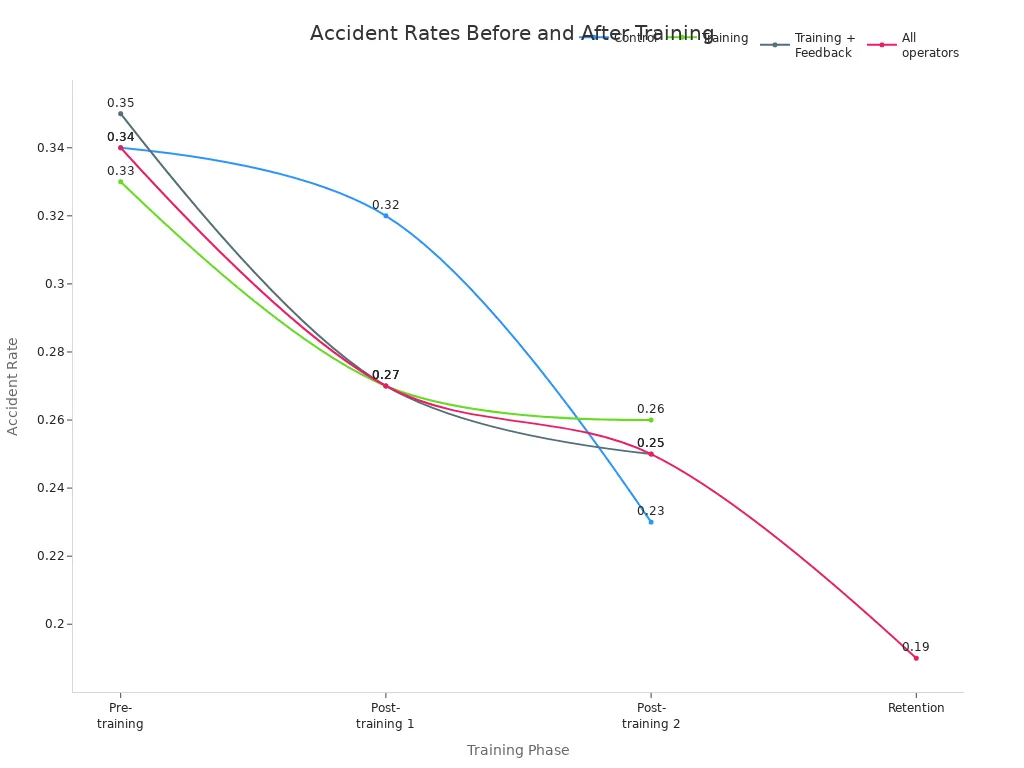
Training lowers accident rates and builds your skills. International safety standards guide your lifting steps and keep your team safe. You must use the right lifting techniques and follow all rules for safe container lifting.
You stay safe when you follow swing limits. Your team stays safe too. Lighter containers swing more than heavy ones. You must pay attention and control them. CEGC gives you special safety features.
-
Training all the time helps you stay safe.
-
Looking at accidents and changing training makes you better.
-
Putting safety first makes your port stronger and faster.
FAQ
What happens if you ignore swing limits on a container crane?
You could cause accidents or hurt people. Equipment might get damaged. Always use swing limits to keep everyone safe. Swing limits also protect your CEGC container handling equipment.
How does anti-sway technology help you during container lifting?
Anti-sway systems make loads move less. You can control the container better. Lifting is faster and safer. CEGC’s anti-sway solutions help you every time you lift.
Why should you choose CEGC for container handling equipment safety?
You get standard specs and special safety features. Anti-sway systems are reliable. CEGC helps you follow safety rules. Your port works better and safer.


