
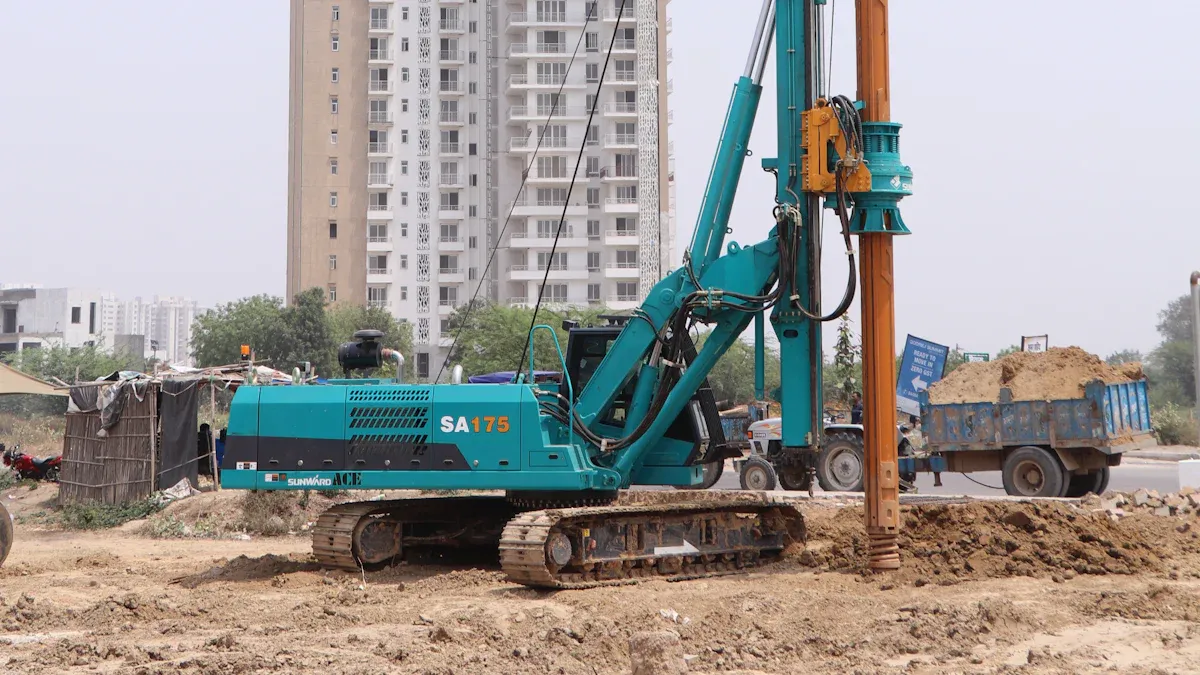
Horizontal directional drilling is very important for today's buildings and roads. Old signal problems cause issues with distance. They also cause problems with how exact things are. This leads to expensive re-drilling. The 800m signal technology is a new and great improvement. It makes CEGC directional bore machines work much better. They are also more exact. This new idea changes how Trenchless Drilling Rig applications work. The Directional Bore Machine 800m Signal Solves Issues.
Key Takeaways
-
Old drilling signals have problems. They do not go far enough. They also give wrong depth readings. This causes expensive mistakes.
-
The new 800m signal fixes these problems. It lets drills go farther. It also makes them more exact. This helps avoid costly re-drilling.
-
This new signal makes drilling safer and cheaper. It works better in tough ground. It helps projects finish faster. It saves money.
Traditional Signal Limitations in Horizontal Directional Drilling
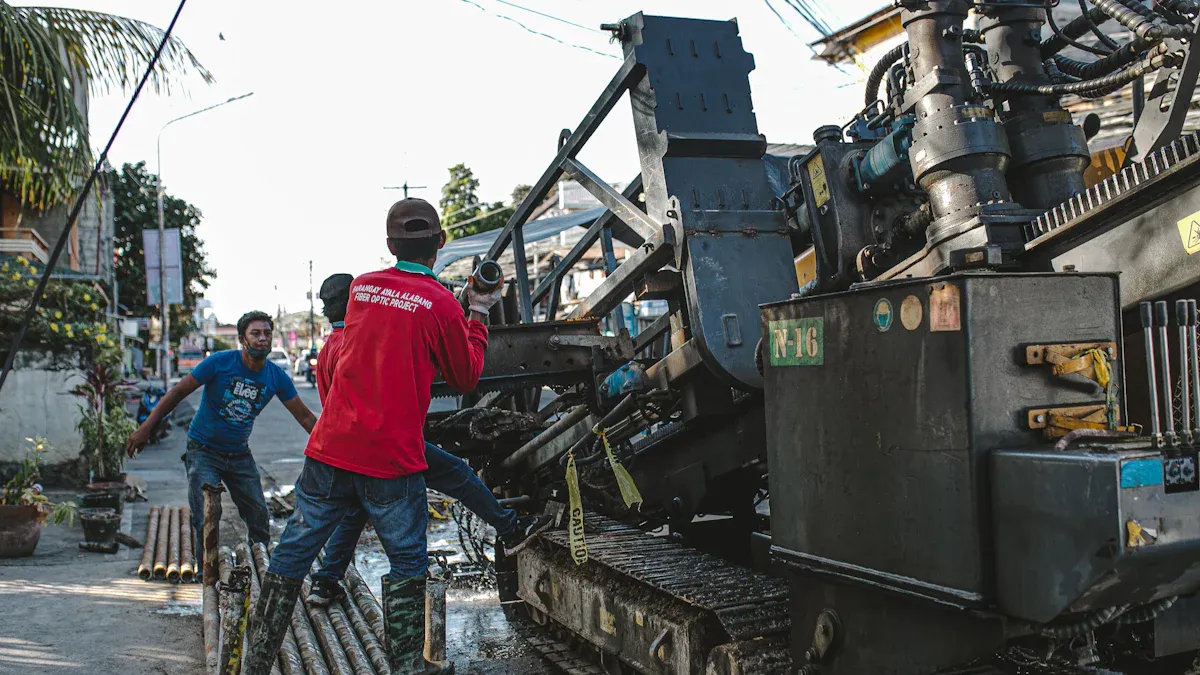
Older signal tech causes problems. These are for horizontal directional drilling. Operators have many issues. These hurt project success. They also hurt safety.
Limited Range and Inaccurate Depth Readings
Old signals have a short range. This limits drill distance. Drills lose contact. Depth readings are also wrong. Many things cause these issues.
|
Cause |
Impact on Signal and Readings |
|---|---|
|
Low Battery |
A low battery can cause the transmitter to lose signal. This leads to inaccurate readings or complete signal loss. |
|
Incorrect Frequency |
If frequencies do not match, communication fails. This results in no signal. |
|
Obstructions |
Dense soil, rock, or metal can block or weaken the signal. This causes signal loss or reduced range. |
|
Interference |
Electromagnetic interference can disrupt the signal. This leads to erratic readings or signal loss. |
|
Damaged Transmitter |
A damaged transmitter can result in a weak or lost signal. |
|
Depth and Distance |
Signal strength weakens with depth and distance. The signal may become too weak to detect reliably. |
|
Ground Conditions |
Conductive or resistive ground affects signal spread. This causes signal weakening or distortion. |
|
Moisture |
Water or too much moisture can interfere with the signal. |
|
Temperature Extremes |
Extreme temperatures affect transmitter performance. This can cause signal instability. |
|
Software/Firmware Issues |
Outdated software can cause communication problems. |
|
Antenna Orientation |
The antenna's position affects signal strength and reception. |
|
Receiver Malfunction |
A faulty receiver can also cause issues. |
|
Proximity to Metal |
Large metallic objects can reflect or absorb signals. This leads to signal loss or inaccurate readings. |
|
Multiple Transmitters |
Many transmitters on the same frequency cause signal confusion. |
|
Environmental Noise |
General electromagnetic noise degrades signals. |
Locators check signal strength. This finds depth. They turn strength into depth. This is based on above-ground setup. Any signal problem makes depth wrong.
Signal Interference and Inconsistent Readings
Signal interference is common. It makes readings uneven. There are two main types.
-
Active Interference: This comes from things. They make their own magnetic field. Power lines are an example. Other electronics also cause it. Invisible dog fences do too. It causes problems. Its frequency is like the locator's. Strong active interference can still mess up tools.
-
Passive Interference: These do not make magnetic signals. They block the signal. They distort it. They weaken it. Rebar in concrete is an example.
Many things in nature cause interference.
-
Underground Utilities: Electric cables cause issues. Gas pipes do too. Water pipes also cause issues. They can create cross-talk. They can absorb signals.
-
Metallic Structures and Objects: Steel concrete reflects signals. Buried tanks absorb signals. This creates wrong readings.
-
Electrical Infrastructure: Power lines make noise. Generators make noise. This can stop locating signals.
-
Soil Composition: Soils with high conductivity cause problems. Soils that absorb signals cause problems. Signals can disappear fast. They can get twisted.
-
Induced Signals and Magnetic Anomalies: Unwanted currents happen. They are in nearby metal. Natural magnetic changes also interfere.
Costly Re-bores and Project Delays
These signal problems cost a lot. Off-line bores need rework. Off-grade bores need rework. This causes fines. It causes delays. Projects take longer. Equipment sits unused. Worker costs go up. These issues hurt money plans.
Risks of Bore Deviation and Crossing Failure
Bad guidance creates big risks. Bores can go off path. This can cause crossing failures. Hitting other pipes is a big worry. Damage from cross bores costs a lot. Sewer line fixes can cost $150,000. Explosions can cost $30,000,000. Good guidance is key. It avoids these dangers.
How the Directional Bore Machine 800m Signal Solves Issues
The Directional Bore Machine 800m Signal Solves Issues. These issues have long troubled the industry. This new tech fixes old system problems. It makes horizontal directional drilling better. It makes it more exact.
Extended Range for Longer, Single-Pass Bores
The 800m signal makes drills go farther. Drillers can do longer bores. They do not need to stop. They do not need to reset tools. This saves time. It lowers worker costs. Longer bores are now possible. This helps CEGC machine users. It creates new project chances. It makes hard jobs easier.
Enhanced Precision Guidance and Stability
The 800m signal is key. It is part of a "Precision Guidance & Stability System." This system keeps the drill on track. It works with tracking systems. This gives real-time data. It helps control the process. Workers get good info. They can make fast changes.
💡 Tip: This better exactness helps. It lessens shaking. It stops "walk" while drilling. The drill head moves smoothly. It stays where it should be. This is key for important crossings. These include roads, railways, and utility lines. The system makes sure it is always exact. This stops costly mistakes.
Improved Signal Penetration and Reliability
The 800m signal goes deeper. It can get through tough ground. This includes thick dirt and rock. It works even with metal nearby. The signal stays strong. It stays steady. This lessens signal problems. Workers get good readings. They can trust the data. This makes drilling safer. It lowers the risk of surprises. The Directional Bore Machine 800m Signal Solves Issues with lost signals.
Boosting Efficiency and Reducing Costs for CEGC Operations
This new signal tech makes things better. It cuts down on re-bores. This saves a lot of money. It also saves worker hours. Machines are down less often. Projects finish faster. This means CEGC machine users can do more jobs. They can make more money. The Directional Bore Machine 800m Signal Solves Issues by making work smoother. This tech helps with hard and long jobs. It makes the drill rig more useful. This makes drilling more fruitful and cheaper.
The 800m signal technology changes horizontal directional drilling. It fixes problems. These include short range and bad accuracy. It also lowers high costs. This makes it a key tool. It is vital for any Horizontal Directional Drilling Rig. The future will have bigger projects. They will be more efficient. Underground utilities will be safer.
The Directional Bore Machine 800m Signal Solves Issues. It sets a new standard for project success.
FAQ
How does the 800m signal improve drilling accuracy?
The 800m signal gives very precise data. This helps guide the drill head. It works with tracking systems. This keeps the drill on its path. It reduces mistakes.
Can the 800m signal work in difficult ground conditions?
Yes, it can. The 800m signal goes deeper. It penetrates tough soil and rock. It works well even near metal. This makes drilling reliable.
How does the 800m signal reduce project costs?
It helps avoid re-bores. This saves money on labor and equipment. Projects finish faster. This means more jobs can be done. It boosts overall efficiency.


