
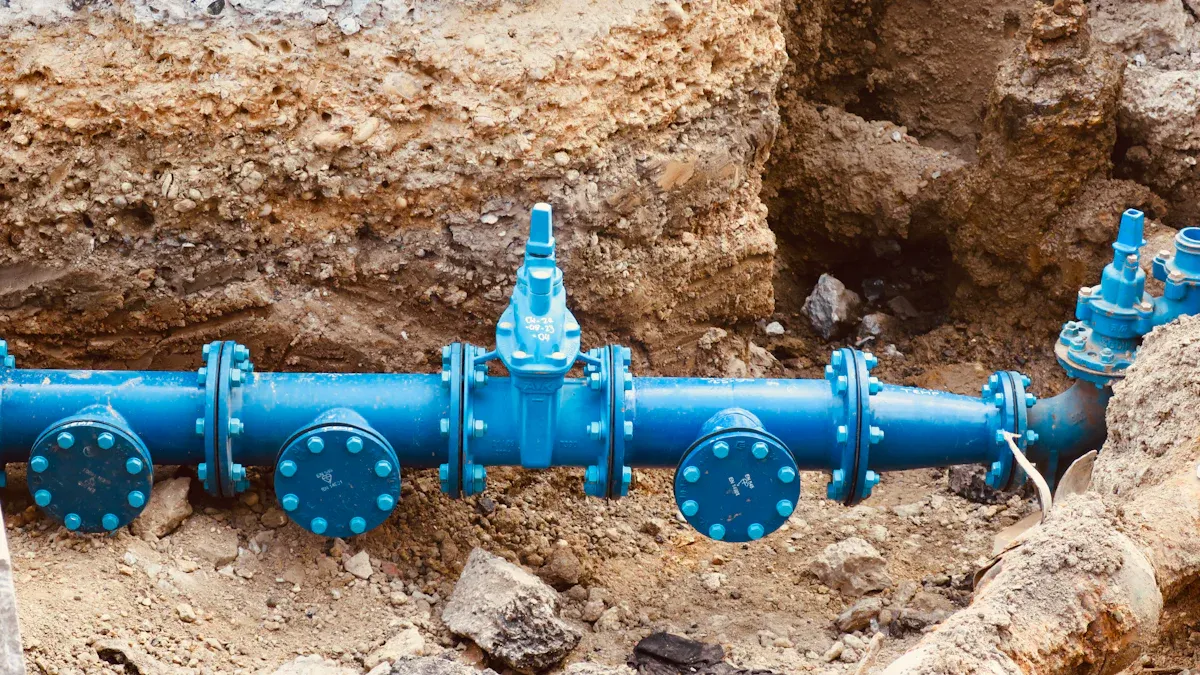
A stuck directional bore machine costs a lot of money and causes significant delays. Traditional methods for resolving this issue often fall short, especially in challenging drilling environments. This guide introduces an innovative, technology-driven approach to free a stuck directional drilling machine. These advanced solutions expedite the recovery process and ensure project continuity, much like the reliable performance of CEGC equipment.
Key Takeaways
-
New tech helps find why a directional bore machine gets stuck. It uses sensors, AI, and cameras. They see problems underground.
-
Special ways like hydro-jetting help free stuck machines. Vibratory tools and chemicals also help. Robots can go down the hole. They fix things.
-
Planning and good care stop machines from getting stuck. Use better tools. Train workers well. This keeps projects smooth.
I. Advanced Diagnostics: Understanding the Stuck Scenario
Your horizontal directional drilling machine gets stuck. This is a big problem. You need to know why. New tools help you see clearly. They show you the exact reason. This helps you plan how to fix it.
A. Real-time Sensor Data: Identifying Root Causes
You use live sensor data. It helps find the problem. This data shows what is happening deep down. You watch how fast things flow. You check the lifting force. You look at drilling speed. You also watch turning speed. You check pipe pressure. You see how much weight is on the drill. You also check twisting force. How fast it digs is key. Special numbers like BPOS and HKLA give more facts. TQA, RPMA, SPMT, and SPPA also give important hints. This tells you if the stuck drill string is from the ground. Or if it is a machine problem. For example, less flow can mean a loss of flow. Or it could be a block.
B. AI-Powered Analytics: Interpreting Bore Logs and Geotechnical Surveys
AI helps you understand hard data. You give it bore logs. You also give it ground surveys. The AI finds patterns. It guesses future problems. This helps you know the ground better. You can then make smart choices. This is for your hdd project.
C. Remote Visuals: Borehole Cameras and Sonar for Obstruction Mapping
You use cameras to see underground. Borehole cameras and sonar map blocks. They show you a clear picture. This helps you find strange objects. Or parts that have fallen in.
D. GPR and EM Locators: Pinpointing Obstruction Location
You use GPR and EM tools. These tools find blocks exactly. GPRS Project Managers are very accurate. They are 99.8% accurate. This means you know where to work. This helps you fix the problem. This way of finding problems is smart. It shows how directional bore machine stuck free tech solves problems. This is true in today's hdd work.
II. Immediate Actions: Initial Recovery Protocols
Your horizontal directional drilling rig gets stuck. You must act fast. First, keep everyone safe. Then, check your machine. Do these steps before you free the drill.
A. Safety First: Site and Personnel Security
Always be safe first. Secure the work area. Do it right away. Keep people away from moving parts. Look for dangers. Protect your team. Protect your equipment.
B. Machine Status Check: Hydraulics, Torque, and Drill String Integrity
Next, check your machine. See how the hydraulics work. Look at pressure changes. This controls weight on the bit. It affects the drill string. Use a torque sensor. It measures twisting forces. This finds stick-slip vibrations. Measure speed and torque. This shows early vibrations. Check drill string connections. Look at drill pipe load. Check for buckling. Check side load. These keep the drill string strong.
C. Controlled Pullback and Rotation: Drill Stem Recovery Techniques
After checks, move it slowly. Gently pull the drill string back. Turn it slowly. This can free a stuck pipe. Do not pull hard. Do not make sudden moves. This can make it worse. Prevent hydrolock. This is trapped fluid. It makes the pipe seem stuck. This first step is important. It is for any hdd project.
D. Mud Program Optimization: Fluid Properties for Lubrication and Pressure
Make your mud better. Watch mud properties closely. This cleans the hole. It helps the bit work. You can guess the mud's weight. This helps with drilling problems. Measure mud properties often. Do this on-site. Check density and viscosity. This helps change the mud. Use the right mud weight. This stops sticking. Make sure your drilling fluid reduces rubbing. Avoid thick mud cake. To free a stuck drill string, put oil around it. Oil pressure can squeeze the cake. This makes it smaller. This helps free the pipe. This is how directional bore machine stuck free tech solves problems fast.
III. Advanced Freeing Techniques: Free Tech Solves Directional Bore Machine Stuck Problems
Your directional bore machine can get stuck. This is a tough problem. New tech helps free your equipment. These methods are better than old ones. They use new tools. This gets your project moving again.
A. Hydro-Jetting and High-Pressure Fluid Injection
You can use hydro-jetting. It clears things that block the way. This sends strong water into the hole. The water breaks up dirt or trash. It also makes the drill string slippery. This helps reduce rubbing. High-pressure water can make a path. This lets the drill move. This method clears mud or collapsed parts. It helps your drilling fluid flow again. CEGC's Anti-Stall Powertrain helps. It keeps pressure steady. This sends full power to the blockage.
B. Sonic and Vibratory Tools: Breaking Compaction
Dirt can get packed tight. Sonic and vibratory tools can help. These tools attach to the drill string. They send strong shakes down the hole. These shakes break the bond. This is between the drill string and the dirt. They make solid dirt more like liquid. This lets the drill string move. Percussive power helps a lot. It is in good drill rigs. It hits fast and hard. This helps loosen tough stuff. This works well in sticky clay. It also works in packed sand. It helps you get past hard spots. This is for your hdd project.
C. Chemical Solutions and Lubricants: Reducing Adhesion
Sometimes the drill string sticks. This is because of adhesion. Chemicals and lubricants can fix this. You put these liquids into the hole. They make a slick layer. This is between the drill string and the hole wall. This makes less rubbing. You can use special esters. Emulsifier/alkaline surfactants also work. Lub A mixes well with water. It makes the wall cake less sticky. This helps with sticking. Lub B is an oil blend. It lowers twisting and dragging. It mixes easily in mud. Diesel oil makes mud better. It stops fluid loss. It helps with lubrication. It stops pipe sticking. New lubricants use biodiesel. They work in water-based mud. They work better after heating. ZDDP and modified graphite also help. Algae powder lubricant works well. It has tiny oil capsules. Co-polymer beads and glass beads also help. They reduce rubbing. They fit between the drill string and the hole. Glass beads are like tiny ball bearings. They get into the filter-cake. They make a smooth surface. These solutions help free the pipe. They do this without too much force.
D. Specialized Recovery Tools: Enhanced Overshots and Fishing Magnets
Other methods might fail. Then, special recovery tools are used. These tools grab lost parts. They also grab stuck parts. Heavy Duty Releasable Overshots grab tools. They work even if tools are damaged. Heavy Duty Releasable Spears do the same. Skirted and Bar Fishing Magnets pick up metal trash. They get metal from the top of tools. Hydraulic Fishing Jars go into a well. They grab stuck pipe. They free it by jarring up or down. Magnets for wells are strong. Companies like Hole Products make them. They get odd-shaped metal pieces. Overshot mesh well pipe retrievers work well. They pull lost well pipes. These are round or cone-shaped tools. They go over the top of a pipe. Some overshots have sharp threads. They grab the pipe. Schlumberger makes releasing overshots. They are for jarring. Pin Tap / Screw-In Sub taps get tubular fishing tools. They have reverse threads. Grappling hooks grab non-pipe items. Spears or releasing spears are fishing tools. They go inside a well pipe. They grab its inner sides. The LM-T Type Releasing Casing Spear is one example. The DYLT-T Type Series 70 Short Catch Overshot is another. The Series 20 Short Catch Overshot is also available. You can also use a Fishing Magnet. The Series 150 Releasing and Circulating Overshot is an option. The Lifting-releasing and Circulating Overshot is another. These tools provide a precise rescue. This is for your equipment. If these tools do not work, you might need to dig up the reamer. This means digging to reach the stuck tool.
E. Robotic Downhole Intervention: Precision and Safety
Robots can go down the hole. They offer exact work and safety. Small robots can go into the bore. They can see what is happening. They can do tricky jobs. These jobs include cutting. They can grab stuck parts. They can move them. Robots mean fewer people in danger zones. They show live video. This helps operators make good choices. This tech lowers risks. It makes recovery more likely. This advanced way helps you avoid digging. You will not have to dig up the reamer. You will not have to dig down to the reamer. This is a big step forward. It helps with hdd recovery.
IV. Prevention and Future-Proofing Horizontal Directional Drilling
You can stop future sticking. Plan smart. Use good machines. This helps your Trenchless Drilling Rig. It will work well.
A. Enhanced Pre-Bore Analysis: 3D Geological Modeling and AI
Start with better planning. Use 3D ground models. AI helps you understand the ground. It shows where problems might be. You can change your plan. This avoids underground surprises.
B. Advanced Drill String Design: Reducing Sticking Potential
Use better drill string parts. These parts are stronger. They move more smoothly. This design stops sticking. It makes your horizontal directional drilling easier.
C. Operator Training and Simulation: Preparing for Complexities
Train your operators well. Advanced simulators help them. These simulators use VR. They give a safe practice place. Operators learn steering. They see the drill head move. This avoids bending rods. Use bore planning apps. These apps use GPS. They use aerial images. They map utilities. They calculate bore paths. This makes accurate plans. This is for your hdd projects.
D. Proactive Maintenance: Ensuring Drill Rig Reliability
Maintain your equipment. Do it proactively. Predictive maintenance uses data. It finds problems early. This means less downtime. It makes equipment last longer. IoT gives real-time data. This helps schedule maintenance. Tracking systems watch performance. They predict failures. This cuts breakdowns by 30%.
Effectively freeing a directional bore machine stuck free tech solves problems in 2026. You need good diagnostic tools. You need quick actions. You need new recovery tech. These new ways help a lot. They cut down on waiting time. They lower costs. Your project works better. It is safer for your directional drilling. Hdd technology keeps changing. Stay current to fix problems. CEGC gives strong solutions. They can be changed for your hdd needs.
FAQ
What makes a directional bore machine get stuck?
Many things make it stick. Bad ground can do it. Things in the way can too. The machine can break. The hole can fall in. Mud can get thick. 🚧
How do new tools help free a stuck machine?
New tools use live data. They use smart computer programs. They use cameras. They find why and where it is stuck. This helps you plan to fix it. 💡
What are the good things about using new tech to fix it?
New tech saves time. It costs less money. It makes work better. It makes work safer. Your project gets going again faster. ✅


