
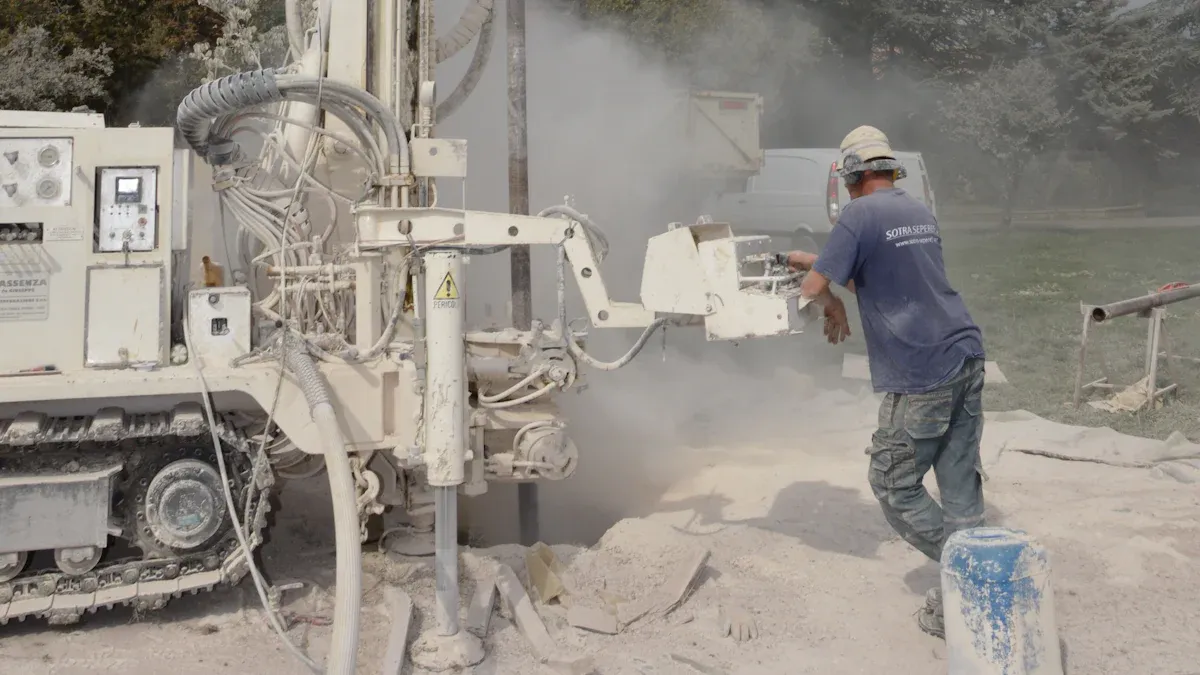
Horizontal directional drilling (HDD) frequently encounters drill rod breakage, leading to significant financial losses, operational downtime, and potential safety hazards. The innovative Horizontal Drill Anti Jam System Prevents Rod Breaking by CEGC directly addresses these challenges. This advanced technology enhances the drilling process, making it smoother, safer, and more efficient. The system achieves this by providing superior control over the drill string, a key factor in preventing costly and dangerous rod failures.
Key Takeaways
-
A Horizontal Drill Anti Jam System stops drill rods from breaking. It uses smart technology. This prevents costly damage. It keeps drilling safe.
-
This system watches drilling as it happens. It uses sensors. These gather facts. It changes things on its own. This protects the drill string.
-
Using an anti-jam system makes drilling faster. It also makes it safer. It saves money too. Equipment lasts longer. Repair costs are lower.
The Problem: Rods Breaking in Horizontal Drilling
Why Rod Breaking is a Big Problem in HDD
Drill rods are very important for drilling. They link the drilling machine to the drill bit. These rods send power and push or pull force. This makes the drill bit dig into the ground. They are key in many drilling jobs. Drill rods usually cost only 3% of all drilling costs. But if they break, costs can go way up. For example, re-drilling a hole for one month can add 9% to costs. This shows that broken drill rods cost a lot of money. Keeping the whole drill string safe is very important for a project to do well.
What Usually Makes Rods Break
Tiredness is the main reason drill rods break in small Horizontal Directional Drilling (HDD). This often happens even when the stress is not too high. Repeated bending stress, going from pulling to pushing, causes this tiredness. Other stresses from twisting, pushing, or pulling also add up. This happens as the drill rod moves along a curved path. During horizontal drilling, too much force or mistakes can break the drill pipe. This can stop the drill bit from working. Bad material and old age play a part. But too much force and mistakes are direct causes from drilling. Wrong drilling methods also make the hole unstable. This can indirectly cause equipment to break, like drill rods. Better control of drilling can stop many of these problems. The horizontal drill anti jam system stops rod breaking. It does this by giving better control. It keeps the drill string safe from these common stresses.
What Happens When Rods Break
Broken rods cause big problems. Workers lose valuable time. They also pay a lot to fix things. Project timelines get messed up. Dangers go up for workers and machines. The drill machine and tools can also get hurt. These problems hurt how much money a project makes and its good name. Good control over drilling is key to avoid these results. Keeping the drill string safe means smoother work.
How a Horizontal Drill Anti Jam System Prevents Rod Breaking
A horizontal drill anti jam system prevents rod breaking. It uses smart tech. These systems stop drill rods from getting stuck. They also stop them from breaking. They find problems early. Then they fix them. This keeps drilling smooth. It also keeps drilling safe.
Defining Anti-Jamming Systems
Anti-jamming systems are special tech. They stop drill rods from binding. They stop them from breaking. They find things that cause jamming. Then they fix them. This stops costly damage. A key part is the Unique Swivel Assembly. This part helps stop jams. This is true in tough drilling spots. The system also uses an Advanced Automatic Control System. This system changes drilling settings. It does this on its own. It changes the drill's spin speed. This is based on the rock. It also controls how fast the drill moves forward. The system even changes the drill's impact force. This helps drill better. It stops jams. This careful control protects the drill string. It saves it from sudden stress.
Real-time Monitoring and Data Analysis
These systems watch drilling all the time. They use sensors. These sensors gather important facts. They measure twist, push, spin speed, and squeeze. This info helps the system. It understands ground conditions. For example, Eddy current sensors watch the drill's spin speed. They do this without touching the drill. They find small changes. They turn them into speed signals. Resistance strain gauges measure cutting forces. Workers put these gauges on the drill cutter. They link to a system. This system collects facts all the time. These facts help understand the force needed to cut. It also shows how much push the drill uses. This constant watching gives the system info. It needs this for smart control.
Automated Response and Overload Protection
The system finds a problem. It acts fast. It makes changes on its own. This prevents damage. These changes include pulling the drill back a little. It also lowers the pushing force. Sometimes, it spins the drill backward. The system manages squeeze. This lowers sudden hits on the drill string. This protects rods, swivels, and other tools. These systems use smart control rules. For example, some use Bayesian Active Inference. This helps the system guess problems. It changes its path. Other systems mix Deep Neural Networks (DNN). They use game theory too. This helps them change. They adapt to changing ground. They can switch jamming models. This is based on the ground. This makes the system very quick to react. Learning rules also help. They reduce jamming. They make the drill work better. These smart rules let the system change. They stop jams. These jams happen when equipment reacts slowly. This active changing is key. It helps with borehole protection.
Anti-Stall Powertrain and Controlled Load Management
The Anti-Stall Powertrain is a key part. It gives strong twist. This is true over many speeds. It uses hydraulic load sensing. It also uses squeeze management. This helps stop twist spikes. Twist spikes can hurt rods. They can cause stuck pipe. The powertrain also controls how the drill speeds up. It controls how it slows down. This lowers sudden shocks. These shocks hit the drill string, swivels, and tools. This careful control helps stop rod damage. It makes sure the drill string works smoothly. This safety protection subsystem works. It keeps drilling safe. It gives steady power. It gives careful control. This stops unexpected stops and damage.
How Anti-Jamming Systems Help
Better Work and Safety
Anti-jamming systems stop rod breaking. This makes drilling faster. It also means less waiting time. Workers and the safety of crew get much better. These systems give good control. This makes drilling more exact. It means fewer errors. Projects finish faster. They stay on time. They stay on budget.
Save Money and Make Equipment Last
These systems make drilling tools last longer. They lower costs for parts. Smooth work means less damage to the drill string. This saves money later. Good control also stops expensive fixes. It protects your machines. You get more from your equipment.
Picking the Best System for Your Drill
Picking the right system is key. Think about your CEGC Horizontal Directional Drilling Rig. Look at the ground. Think about the project size. Make sure it works with your tools. A good horizontal drill anti jam system prevents rod breaking. It fits your needs. This gives you the most help.
Setup and Learning for Best Results
Put the system in with your tools. Teach workers how to use it. This makes the system work best. Good control helps keep the borehole safe. It keeps the drill string safe. The system always controls drilling forces. This protects the drill string. It also gives workers more control. They feel more sure.
A horizontal drill anti jam system stops rods from breaking. This system is very important. It makes drilling better. It makes drilling safer. It saves money. Workers get more control. They can steer the drill string better. This control helps projects succeed. This system is a must-have. It makes drilling work best. It keeps tools safe. This helps projects last.
FAQ
What is a Horizontal Drill Anti Jam System?
This system finds problems. It stops drill rods from getting stuck. This keeps them from breaking. Drilling stays smooth. It uses sensors. It also uses smart controls.
How does this system save money for drilling projects?
This system stops rods from breaking. It means less waiting time. Repair costs go down. Drilling tools last longer. This saves a lot of money.
Is the anti-jamming system difficult to integrate with existing equipment?
No, it works with your current tools. Workers get training. This helps it work best. It makes drilling smooth.


