
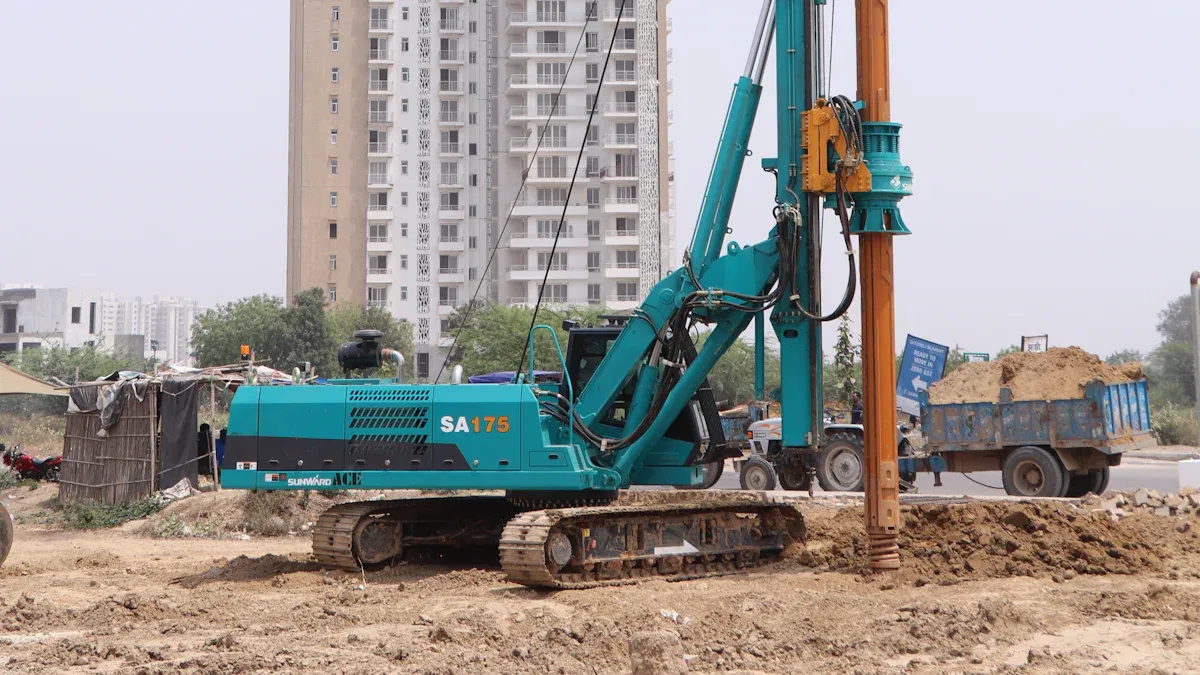
Directional Bore Machine Variable System Solves Issues by providing enhanced control and reliability throughout the drilling process. With CEGC’s advanced technology, you can overcome common challenges such as:
-
Tools breaking and unexpected downtime
-
High costs associated with outdated excavation methods
CEGC offers directional drilling machines that not only meet market-standard specifications but can also be customized to fit your specific project requirements.
|
Specification |
Details |
|---|---|
|
Manufacturing Experience |
|
|
Capacity |
5-1000 tons |
|
Applications |
Municipal, power, telecom projects |
Choose CEGC and experience how the Directional Bore Machine Variable System Solves Issues, delivering efficiency and reliability for your next project.
Key Takeaways
-
CEGC's Directional Bore Machine Variable System makes drilling more accurate and reliable. This helps you stop expensive delays and tool problems.
-
Automated steering and real-time tracking give you better control of the drilling path. This lowers mistakes and makes the project go faster.
-
Advanced fluid management systems keep drilling conditions just right. They stop problems like hole collapse and stuck pipes. This can help you save time and money.
Precision and Control in Horizontal Directional Drilling
Variable System Enhances Bore Accuracy
Many horizontal directional drilling projects have bore deviation and crossing failures. These problems can make you spend more money and time. Variable systems help by giving you real-time control over steering and toolface control. You can change the direction and path while you drill. This helps keep the bore on the planned path, even if things change.
-
The automated steering system helps you set drilling parameters for better accuracy.
-
Automated slide drilling makes the path better and improves how well you drill.
-
The system works at any angle, so you can drill straight down or sideways with precision.
-
Advanced algorithms guess where the wellbore will go before the drill bit gets there, so you avoid mistakes.
CEGC lets you pick specs for automated directional drilling. You can choose torque, thrust, rod system, and control packages for your project. These features help you get top accuracy and rop performance.
Stability and Tracking Integration
Stability is important when you drill under roads, rivers, or utilities. Automated systems use a strong frame and carriage alignment to lower vibration and walk. This keeps your drill steady and helps it work better.
Real-time tracking gives you feedback on the drill head’s location, depth, and direction. You can change steering right away to stay on the planned path.
If you do not have tracking integration, steering is just guessing. Automated steering system and utility mapping work together to lower bore deviation rates. Automation lets you watch and control every step, so you get the same good results and less risk.
CEGC’s horizontal directional drilling machines support automated tracking integration. You can change the system for your ground type and bore length. This helps you get the best performance and durability for every project.
Reliability and Efficiency: Directional Bore Machine Variable System Solves Issues
Anti-Stall Powertrain and Overload Protection
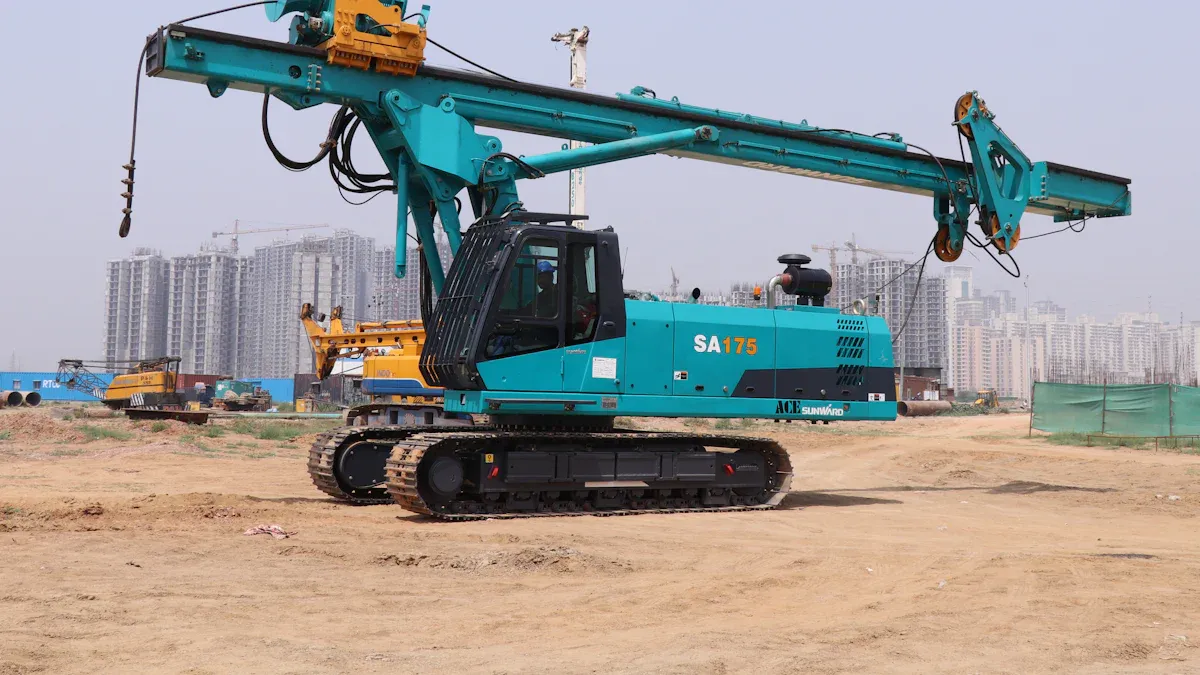
Drilling through tough soil can be hard. You might get stuck pipe or torque spikes. These problems can stop your work and cost more money. The directional bore machine variable system solves issues with hydraulic load sensing and smart controls. These systems change the pump’s output as the load changes. This gives smoother torque and saves energy when you do not need full power. The system keeps the right pressure by changing flow to match the load. This helps the machine work well and protects rods and tools from shock.
-
Load-sense pumps give the right flow only when needed.
-
You use less energy, so your costs go down.
-
Smart controls change pressure and flow for mobile fluid power.
Automation is important for reliability. Automatic controls watch the system and help with tasks. You get better accuracy in steering and drilling. Operations are more reliable because you make better choices and have more control. Common automation uses PID and fuzzy controllers to manage control. Downhole automation figures out steering ratios using curve and toolface commands.
You avoid downtime and expensive repairs with a directional bore machine variable system that has anti-stall powertrain and overload protection. The automated steering system helps you keep drilling well, even in hard ground.
Tooling Compatibility and Durability
Tools can wear out fast and need changing often. This can slow your job and cost more money. The directional bore machine variable system solves issues by working with blade, fluted, rock, and barrel reamers. You get smoother torque, which means less chatter and even tool wear. Easy access lets you fix tools fast and keep working.
-
You pick rod size, tool joint specs, and wear protection for your ground and tools.
-
The system uses standard parts, so you can switch tools easily.
-
You keep rop performance and avoid bad bores or pullback problems.
Automation helps tools last longer. A central display shows machine data and makes training easier. Modular design lets you change the setup for your needs. You can handle different ground and keep high performance.
You save time and money with a directional bore machine variable system that supports tooling compatibility and durability. Automated slide drilling and toolface control help you get the same good results and less tool wear.
Fluid Management and Mud Integration
Managing drilling fluid is very important for good horizontal directional drilling. Bad fluid can make the hole collapse, wash out, or get stuck pipe. The directional bore machine variable system solves issues by using advanced mud cleaners that change for different drilling needs. Hydrocyclone technology separates particles by density, making the fluid better.
Keeping mud balanced is key for solids control and drilling. Shale shakers and hydrocyclones work together to cut downtime and lower costs for getting rid of solids.
-
Good mud weight stops collapse and sticking.
-
Changing fluid density and thickness keeps pressure and cleans the hole.
-
Right casing and liner keep weak ground stable and stop collapse.
-
Watching drilling in real time warns you early about problems like stuck pipe.
You use pump sizing to match flow and pressure with bore size and ground. The system works with electric and diesel mud pumps. You can pick pump packages, filters, cooling, and fluid handling for your site.
You get better results and less risk with a directional bore machine variable system that has advanced fluid management and mud integration. Utility mapping and real-time data help you steer well and avoid frac-out.
Advanced Technologies and Real-Time Data Integration
The directional bore machine variable system solves issues by using new technology and real-time data. You get 14% more lateral footage per well because drilling is better. Steering accuracy goes up from 93% to 97%, showing better drilling. Automation cuts wellsite workers by 46%, making things faster.
Automated workflows help geologists and drillers talk better. Real-time data helps you find landing zones exactly. Machine learning makes decisions and reactions faster during drilling.
|
Technique |
Impact on Costs |
|---|---|
|
Pattern Recognition |
Finds ways to save money |
|
Automated Benchmarking |
Checks performance against standards |
|
Predictive Resource Allocation |
Uses resources better |
|
Continuous Process Improvement |
Makes strategies better over time |
Scenario analysis lets you check millions of things fast and find the best supply chain. You can cut costs by up to 23% and work together better. You see your project clearly, make fewer mistakes, and earn more money.
You get more work done, stay safer, handle different ground, use modular design, and train operators better with CEGC’s variable system-equipped horizontal directional drilling machines.
The directional bore machine variable system solves issues by using automated steering, toolface control, automated drilling, and utility mapping. You get reliable, efficient, and high-performance results for every project.
Automated directional drilling helps you drill more accurately and reliably. Automation makes your work better and lowers how much you spend on workers. Advanced modeling and automated steering help you get the best rop performance. CEGC lets you pick rigs that fit what you need. You can ask for help and learn how automation makes your project better.
|
Technology/Methodology |
Description |
|---|---|
|
Automated fluid control stops accidents and helps drilling work better. |
|
|
Steering Systems |
Automated systems keep the bore path exact. |
|
Data Logging |
Automation gives real-time modeling to keep things steady. |
FAQ
How does an automated directional bore machine improve accuracy?
Automated systems change steering and toolface control as you drill. This helps keep the bore path straight. You make fewer mistakes because the system adjusts quickly.
Can you use automated features for different ground conditions?
You can use automated settings for soft, hard, or mixed ground. The machine changes drilling speed and torque to fit the ground. It adapts so you can drill in many places.
What maintenance does a directional bore machine need?
You need to check fluid levels often. You should look at rods and clean filters. Automated alerts tell you about problems early. This helps your machine work well.


