
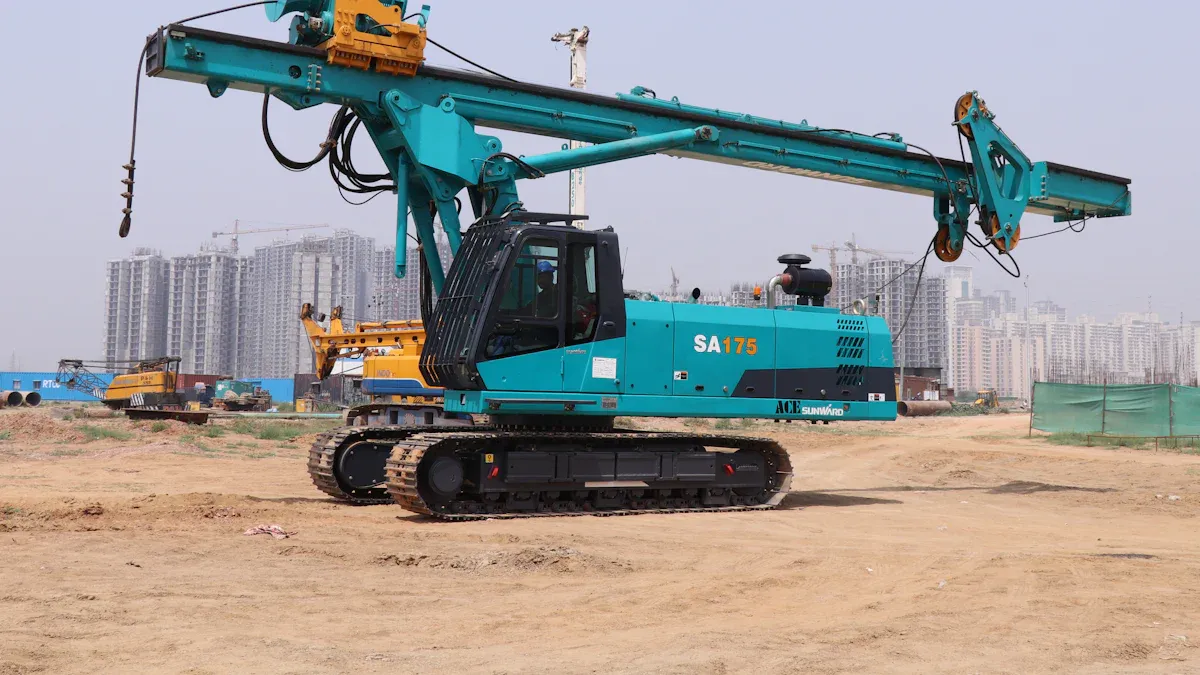
Directional drilling now demands extreme precision, specifically to 0.03°. This significant advancement is crucial for modern construction projects. Such accuracy minimizes risks and reduces costs, ensuring successful project outcomes. This blog explores innovative tools designed to achieve this 0.03° accuracy by 2026, setting a new benchmark for horizontal drilling operations. The CEGC Directional Boring Machine 0.03° Guide Never Fails, consistently delivering this precise level of accuracy.
Key Takeaways
-
Drilling can be very exact. It can be 0.03° accurate. This helps avoid hitting pipes. It also saves money.
-
New tools help with drilling. Smart systems guide the drill. They give real-time info. AI helps too. This makes drilling super precise. It keeps the drill on track.
-
Planning is important. Special software is used. Drilling fluids are managed. Operators are trained. All these things help with exact drilling.
Why 0.03° Accuracy Matters in 2026
Defining 0.03° Precision
Hitting a target with a tiny error is 0.03° precision. Imagine drilling for a mile. A 0.03° error means the drill path is only off by three feet. This is like threading a needle far away. It makes sure the path is exact. This stops unwanted shifts.
Benefits of Extreme Accuracy
Great accuracy helps a lot. It lowers the risk of hitting pipes. This stops damage and delays. Exact bores mean less waste. This saves money and time. For important things like pipelines, exact spots keep them safe. This control makes workers safer. It also keeps the public safe. It protects nature too.
Evolution of Directional Drilling Precision
Getting to 0.03° accuracy took time. Old ways were simple.
-
Late 1800s: Acid bottles measured borehole tilt.
-
1926: Gyroscopes measured tilt and direction.
-
1929: Magnetic tools measured tilt and direction. This started controlled directional drilling.
-
Late 1980s: Tensor made steering tech. It used magnets to find the drill head. This helped horizontal directional drilling.
-
1970s: Motors made drilling better.
-
Turn of the Millennium: Rotary steerable systems changed drilling. They made wells longer and faster.
-
2018: Weatherford made Magnus. This system was new. These steps led to today's super-exact directional drilling.
Key Technologies for Pinpoint Accuracy
Getting 0.03° precision needs many new tools. These tools work together. They keep the drill path straight. They help with tough underground spots. CEGC's 'Precision Guidance & Stability System' is very important. It has load-matched control. It has a strong frame. It is ready for tracking. This system fixes 'Bore Deviation & Crossing Failure' problems. It makes sure accuracy is always the same.
Advanced Guidance: Gyroscopic and Magnetic Steering
New drilling machines use smart guidance systems. Gyroscopic and magnetic steering are key. Gyroscopic systems use inner sensors. These sensors find changes in direction. They give very exact direction data. A study showed gyroscopic drift was low. It was not over 0.03 degrees per hour. This helps find north and object spots. This makes exact bore paths possible.
Magnetic steering also helps a lot. They are good in tough ground. HDD Paratrack is one such system. It uses a magnet in the drill head. Receivers on the ground track it. This allows for real-time changes. These ways work well in hard rock. They work in uneven or soft ground. They keep exact control. Another system is RMRS. It sends a steady magnetic signal. Probes in the bore find this signal. They figure out distance in real-time. This makes exact 'point-to-point' links. Good probes make RMRS range longer. This makes bore path measuring better. For areas with magnetic issues, a mix is used. This joins INS with Acoustic Ranging. INS gives quick, exact data. Acoustic ranging adds more position info. This keeps accuracy even in complex ground.
Real-Time Telemetry and Data Analytics
Real-time telemetry systems are vital. They send key data from the drill to the top. This allows for quick changes. Important data includes slant and direction. Drilling data and ground data are also sent. Workers get direction, slant, and toolface data. Gamma ray data, pressure readings, and heat checks are also sent. This constant flow of info helps real-time sensing.
This data is deeply checked. This helps make the bore path best. Fast downhole data finds drilling problems right away. The system can find bad shakes. It changes settings to stop them. This makes drilling faster. Auto drilling uses downhole WOB, torque, and RPM. This makes sure the drill works best. It uses less energy. Surface changes use smart auto driller logic. It mixes fast downhole and surface data. This makes surface WOB, torque, and RPM best. A special way to send data makes it more sure. It sends data faster. This fixes old mud-pulse limits. This data-based way is key for keeping precision. It helps make choices based on data.
Sensor Fusion for Unparalleled Accuracy
Sensor fusion mixes data from many sensors. This makes a fuller, more exact picture. It makes drilling more precise. MEMS sensors are often added. They work with magnetic beacon systems. This gives exact position data. This mixing of data is key for guidance. Gyroscope guidance systems are also used. They are in tunnel boring machines. This shows their worth in drilling. Mixing these tools gives amazing accuracy.
AI and ML for Bore Path Optimization
AI and ML are changing bore path making. These tools look at lots of data. They guess and change the drill path. Many ML methods are used for changes. These include GPR and SVR. KNN and DTR are also used. ANN and RF are strong tools. The PSO-RF method guesses shield position in TBMs. This allows for real-time changes. It fixes position errors during digging. Other methods like AdaBoost and RR are also used. CatBoost makes guesses even better. These AI insights lead to more exact and good work.
Robotics and Automation in Precision Steering
Robots and auto systems are key for steady bore path accuracy. This is true for long distances. GPS in HDD tracks and maps the bore in real-time. This makes sure the bore follows the plan. It lowers errors. GPS makes accuracy better by finding position data. It uses many satellites. This helps a lot for long bores. GPS gives constant updates and real-time changes. It lowers human mistakes. It makes HDD work more precise.
Laser systems also get very small accuracy. Systems like CentrAlign Ultra can get ±0.005 mm to ±0.02 mm over long ways. These systems replace hand fixes. They use real-time checks and auto center line setting. They fix laser drift. They stop sag. These were big error causes before. Auto systems replace hand changes with wireless data. It gives real-time digital feedback. It gives true bore center line position. Lasers give a fixed, clear guide. This allows early lining up. It allows real-time error fixing. These new drilling tools make sure the 0.03° guide never fails. These tools are pushing what is possible in drilling.
How to Drill Exactly Right
Getting directional drilling to be super exact needs more than just cool tools. It needs a full plan. This plan includes careful thinking. It uses smart computer programs. It also needs good fluid control. The right tools are important. And people who know a lot are key. All these things work together. They make sure the project goes well. They also stop problems.
Planning Before You Drill
Good directional drilling starts early. It happens before drilling begins. Careful planning is a must. This means checking the site well. It also means looking at the ground closely. This check finds out what the soil is like. It finds rocks and water underground. This info is super important. It helps guess drilling problems. It helps pick the right tools. Knowing what's underground helps engineers. They can plan a path. This path avoids problems. It keeps the drill straight. This first step makes sure. It keeps the drilling very exact.
Using Software to Plan the Path
New directional drilling uses smart software. This software plans the drill path. It takes info from checks. It turns it into clear plans. The Vermeer BorePlan app is a top tool. It helps with horizontal directional drilling. It gives good ways to plan. It helps with doing the work. It also helps with keeping records. For bigger jobs, there's a better version. The Premium app has more features. It plans curved paths. It has smart calculators. These help with distances. It also makes reports. It can send plans to other programs. It helps manage many projects.
Another great tool is H&P’s Bit Guidance System™ software (BGS). This smart system helps with directional drilling. It makes steering choices automatic. It tells the driller what to do. It gives feedback all the time. This helps with drilling problems. It makes things more exact. It saves money. It makes drilling better. These programs let engineers try out drilling. They make the path best. This means less stress on tools. It means super exact drilling. This way of using data is key. It helps get very high accuracy.
Managing Fluid for Steady Work
Drilling fluid, like bentonite, is very important. It keeps the bore steady. It stops cracks. It makes things slippery. It stops the hole from falling in. But if fluid is not managed well. It can cause cracks. This is when mud leaks out. To stop cracks, watch the pressure. Manage the fluid well. Plan how to hold the fluid.
CEGC's "Mud Integration & Fluid Management Solution" helps. It fixes "Poor Fluid Performance & Frac-Out Risk." This solution tells you how big pumps should be. It looks at flow and pressure. It checks length, width, and ground type. It also looks at how fluid moves. It checks if filters are ready. It stresses strict mud rules. This includes mixing goals. It means watching and changing things.
For shale rock, special muds are used. High-Performance Water-Based Muds (HPWBMs) control four things. They keep the wellbore steady:
-
Clay Fixation: Salts like potassium, aluminum, and calcium do this. They go into shale. They hold clay in place. They stop water from getting in.
-
Accretion Control: Special chemicals do this. They stop water from sticking. They slow down clay swelling.
-
Film/Membrane Forming: These materials slow water. They plug small holes. Examples are polymers. These include polyacrylamides. Starch stuff is also used. Polyols like glycol are used. Synthetic oils are used. Formate brines are used.
-
Plugging: Some polyols do this. Asphalt, gilsonite, graphite do this. Micronized cellulose does this. They plug small spaces. They plug tiny cracks. This is true in stressed areas.
Materials that make the wellbore stronger include. Deformable graphite is one. Small calcium carbonate is one. Small nut shells are one. Micronized cellulose is one. Fibers are one. Good fluid management is a main part. It helps with exact directional drilling.
Tools and Bits for Exactness
The right tools and bits are vital. They help get 0.03° precision. Boring tools make holes better. They make them more exact. Boring heads let you change size. This helps with tight fits. Strong tool holders help. Balanced tools help. They stop shaking. Vibration-dampened boring bars are key. They are for deep holes. They keep things centered. They keep the surface smooth. Pilot holes guide the tool. This is before boring.
CEGC's "Tooling Compatibility & Durability Package" helps. It fixes "High Consumables Cost & Tool Wear." This package makes sure tools fit. It works with many reamer types. These include blade, fluted, rock, and barrel. It also makes torque smoother. This stops shaking. It stops uneven wear. Easy access for fixes is a main part.
Special drill bits make things better. They lower failure risks. Schlumberger has directional PDC drill bits. These are for steering systems. Horizontal Technology, Inc. has 'Varel High Energy Series bits'. These are made for tough horizontal directional drilling. What the soil is like changes drilling speed. It changes how tools wear. Different ways are needed for sticky soil. Different ways are needed for loose stuff. Good drillers change their methods. They do this based on ground checks. This makes work better. It saves money.
Better drill bits mean faster drilling. This makes boring quicker. It makes it better. The drilling fluid choice is also key. It cools the drill. It takes out cuttings. This directly helps how well things work.
|
How Strong |
How Hard Soil & Rock Types |
|
|---|---|---|
|
0 to 2,500 PSI / Low |
Dirt, Clay, Cobble, Talc, Shale, Siltstone |
Low Drag or Blade Type (duckbill, spade, etc.) |
|
2,500 to 7,000 PSI |
Unconsolidated Sandstone, Shale, Limestone |
Point Attack, Shear Type (PDC) Milled Tooth & Aggressive TCI Roller Cone |
|
7,000 to 15,000 PSI |
Consolidated Sandstone, Shale, Limestone |
Shear Type (PDC) Aggressive to Medium Formation TCI Roller Cone |
|
15,000 to 25,000 PSI |
Harder formation Sandstone, Shale, Limestone, Dolomite |
Medium Formation TCI Roller Cone with Chisel or Round Top Inserts |
|
25,000 PSI + |
High Finely Grained Granites, Trap Rock, Chert, Iron formations, Quartzite |
Hard Formation TCI Roller Cone with Domed Inserts |
How the rig works can change bit choice. Torque needs go up in softer stuff. Weight on bit (WOB) needs go up in harder stuff. TCI roller cone bits with round tops. They drill the slowest. Max size, shirttail, and leg protection. These make bearings last longer. They make drilling hours longer. Picking a bit that balances speed. And total run time is key. Faster drilling means fewer hours. It means saving money. Regular oil bits are not always best. Special HDD bits can save more money.
For soft ground like dirt. Almost any bit will work. But if soil is too soft. Or too wet, a wider blade helps. This is for steering. Otherwise, the blade will react slowly. This is when you push to steer. For soft loam, pick a reamer. One that mixes well is good.
Key things for tools to think about:
-
Cut: How tools cut is like saw teeth. Sizes and spaces change with soil. Speed should be slower. This stops damage to teeth.
-
Mix: Drilling fluid has jobs. It keeps the bore steady. It stops fluid loss. It cools tools. It carries cuttings. The reamer's mixing is key for this.
-
Flow: Pilot bores make fewer cuttings. They need more fluid pressure. This is for cutting. During backreaming, more fluid is needed. It needs lower pressure. This mixes with cuttings. The backreamer should help pump slurry out.
Better drill point shapes are used. Better flute designs are used. Coolant strategies through the tool are used. These are in PCD drill designs. They make things work better.
Training for Smart Systems
Even with the best tools. Human skill is still needed. Operators must know a lot. They need to understand the tools. They need to know how directional drilling works. The GLOMACS 'Advanced Drilling Best Practices' course is key. It is for operators of smart directional drilling systems. It teaches basics for many wells. This includes hard, high-pressure ones. It covers all drilling tech. It focuses on ideas and doing. A main goal is to help people. They can design BHA (Bottom Hole Assembly). This is for good deviation. It is for directional and horizontal drilling control. This course is good for many people. Drilling Engineers, Well Site Supervisors. Drilling Contractors, Drilling Supervisors. Trainee Drillers, and Rig Engineers.
The IADC (International Association of Drilling Contractors) has programs. These are important for operators. They are for smart directional drilling systems:
-
Managed Pressure Drilling (MPD): A special program. It is for smart drilling.
-
WellSharp®: A full training program. It is for well control.
-
Advanced Rig Technology (ART): A group that focuses on smart drilling.
These programs make sure operators have skills. They have the knowledge needed. This is for smart drilling systems. CEGC's "Anti-Stall Powertrain & Overload Protection" system. It has high power. It senses hydraulic load. It needs skilled operators. This is to get the most from it. Controlled start and stop features. They lower sudden shocks. But good training makes sure operators. They can use these protections well. A well-trained operator can read data. They make smart choices. This human part, with data. It is key for keeping 0.03° precision.
Real-World Uses of Super-Exactness
Super-exactness in directional drilling helps many important projects. This 0.03° accuracy is more than just a technical win. It gives real benefits in hard, real-world situations.
City Building: Moving Around Many Pipes
Busy city areas make new infrastructure hard. Deep site checks and good plans are key. Old maps are often not enough. This is because of many pipes, trains, and towns. Knowing the area well is most important for success. A big risk is new pipes hitting old ones underground. Like gas or sewer lines. This can cause bad gas leaks or damage. Running drill machines and avoiding things needs special skills. It also needs training. New operators can cause delays and cost more. Super-exact drilling lowers these risks. It makes operations safe and works well.
Important Pipe Installs: Keeping Them Strong
Putting in important pipes needs the best accuracy. A 0.03° guide makes sure the pipe follows its exact path. This exactness is key to keep it strong over long areas. It stops weak spots. It lowers the chance of future leaks. Such exact placing is vital for pipes with sensitive stuff. It keeps the environment safe. It also keeps people safe.
Nature and Ground Projects
Super-exact directional drilling greatly helps nature and ground projects. It keeps groundwater safe. It makes a closed drill path. This lowers the chance of bad stuff reaching water. It also makes less mess on the surface. It only needs small entry and exit spots. This keeps most of the surface whole. It stops dirt from washing away. It stops mud from running off. This is by leaving topsoil in place. This keeps the ground stable. This method also cuts down on carbon. Fewer big machines and less digging help lower bad gases. It saves natural places and old sites. This is by drilling under the ground. This is key in wet areas, forests, and rivers.
Future of Directional Drilling Accuracy
Emerging Tech: Quantum Sensors and Hyper-Accuracy
New tech will shape drilling. Quantum sensors are one example. These include tiny diamond magnets. They also include atomic gravity tools. These tools will make drilling better. They give very exact measurements. They can also be made small. These sensors help make 3D maps. These maps show underground ore. This makes drilling work better. It helps drills hit targets more often. New electric sensing helps too. It uses diamond quantum magnets. This gives better data before drilling.
Digital Twins and AR for Enhanced Control
Digital twins and AR will change drilling. Digital twins will check drilling data. They will find problems. They will help make choices. This makes drilling better in real-time. Digital twins also help teams work together. This makes planning faster. Data is easier to get. Digital twins can cut drilling costs. They can save up to 25%. They update info while drilling. This helps guess risks. It finds ways to improve. AR overlays work with digital twins. Workers can see underground issues. They see how parts are doing. This helps them make fast choices. Repair teams can use AR glasses. They see digital twin data. This helps them find problems faster.
Towards Autonomous and Sustainable Directional Drilling
Drilling is becoming self-driving. It is also becoming green. Machines will work on their own. New machines will be more green. They will meet strict eco-rules. AI will help hit targets. This means fewer mistakes. This makes drilling more green. Hybrid drilling rigs will be common. They work better. Being green is very important. Companies will track green goals. They will aim for higher scores. This saves resources for the future. These tools will make drilling better. They will make it more green.
0.03° accuracy is real. New tech helps make it happen. Better ways of doing things help too. This makes drilling exact. These tools make work good. They keep things safe. They help the Earth. CEGC cares about the Earth. Our machines are a good choice. They always work well. We lead new ideas. We make things safe. We make work good. Our machine sets new rules.
FAQ
What does 0.03° accuracy mean in directional drilling?
The drill path moves very little. It is off by only three feet. This is for a mile. This makes sure things are put in the right place underground.
How do advanced technologies achieve this precision?
Smart guidance systems are used. These include gyroscopic and magnetic steering. Data is checked in real-time. AI makes the path better. Robots also help with steering.
What are the main benefits of ultra-precise drilling?
It makes projects less risky. It costs less money. It makes sure projects work well. It also keeps old pipes safe. It protects nature.


