

Pinpoint guidance systems are very important. They help horizontal directional drilling (HDD) work well. These systems stop expensive mistakes. They also prevent having to do work again. The HDD market will be very big. It will be 16.08 billion dollars by 2030. This market needs exact work. It is for things under the ground. The 2025 HDD Guide talks about this. The 2026 HDD Academy also shows new ideas. Good guidance technology is a must. It is for any horizontal directional drilling machine. This makes sure HDD rig supplier pinpoint guidance prevents misses. CEGC's Horizontal Directional Drilling Rig solutions stop drilling from going off track. They also prevent crossing failures.
Key Takeaways
-
Pinpoint guidance systems follow drill bits. They do this in real-time. This helps HDD projects. They stay on track. It stops costly mistakes. It avoids doing work again.
-
Accurate drilling keeps underground utilities safe. It also puts new lines in the right spot. This exactness helps avoid fines. It prevents project delays.
-
New guidance systems use smart technology. They give live information. They have automatic controls. This helps workers get perfect results. It lowers human mistakes.
Pinpoint Guidance in HDD: Defining Accuracy
Core Concept of Pinpoint Guidance
Pinpoint guidance is very important. It helps with horizontal directional drilling. It tracks the drill bit in real-time. This makes sure the drill follows the path. This exactness is key. It helps horizontal directional drilling projects succeed.
Pinpoint accuracy is a must. It stops costly damage. This damage is to buried utilities. Small mistakes can cause big problems. The locator tracks the drill bit. It does this in real-time. This keeps it on the planned path. Real-time data and feedback are also important. Directional drill locators are like "eyes and ears." They work underground. They give instant information. This includes the drill head's spot. It also tells its depth and direction. This data helps the operator. They can adjust steering. This helps follow the planned path. Handling signal interference is also key. Job sites often have electric noise. This comes from power lines. It also comes from other utilities. A good locator uses special filters. It uses many frequencies. This helps it tell the signal apart. It separates it from background noise. This gives a clear signal. It provides reliable data. This guidance helps in all three stages. These are pilot drilling, expanding, and pulling pipe.
Accuracy's Importance in Horizontal Directional Drilling
Accuracy is needed for successful projects. These are horizontal directional drilling projects. Without it, projects can have many issues. Drills that are off-line cause rework. They also add extra costs. Fines can also happen. For important crossings, like under roads, exact placement is vital. Precision stops damage. It protects existing structures. It also makes sure new lines are put in right.
Evolution of Directional Drilling Machine Guidance
Guidance technology has changed a lot. It is for the directional drilling machine. Early systems were simple. They are now much more complex.
|
Decade |
|
|---|---|
|
1950s |
Robert Neff made a locating system. It was for sewer lines. It used a dipole transmitting antenna. It also used a walkover surface receiver. It could find the spot. But it could not find depth. |
|
1960s |
C.A. Young made a cable locator. It used signal strength ratios. These were from two horizontal antennas. It calculated depth. Bell Labs also made a guided impact tool. It had its own guidance system. It used complex antennas. These were for steering signals. Transistors helped manage power. They also helped speed in electronics. |
|
1970s |
Lester McCullough and Duane Ladine made a system. It used a transistorized dipole. This was in an unguided boring device. It used one or two receivers. These found nulls in the magnetic field. This was for depth. |
These improvements show how hdd rig supplier pinpoint guidance prevents misses today. Modern HDD work uses these advanced tools.
Types of Pinpoint Guidance Systems for Trenchless Drilling
Different guidance systems help steer the drill bit. They make sure horizontal directional drilling (HDD) is accurate. These systems track the drill head in various ways.
Walkover Locating Systems
Walkover locating systems are common. They watch where the bore is going. A transmitter sends out a magnetic signal. A handheld receiver picks up this signal. Operators use controls on the drill. They check the bit's angle and bore direction. To drill straight, operators spin and push the drill string. To change direction, they stop spinning and push. The path changes towards the bit’s slanted side. These systems are used for drilling pilot holes. They also help with river and highway crossings. This trenchless technology has gotten better. Companies like Digital Control made systems. They send data from the drill head. This goes to a base station. The station figures out the location. It also maps the bore path.
Wireline Guidance Systems
Wireline guidance systems are very accurate. They are not easily affected by bumps. This is good when breaking rocks. These systems are often more accurate. They are better than gyro steering. This is because of their surface tracking tool. But, they have problems. Coil-based systems can be tricky in busy areas. They can also struggle under lakes or rivers. Strong magnetic fields can mess them up. The steering tool cannot read through casings.
Gyroscopic and Inertial Navigation Systems
Gyroscopic and inertial navigation systems use advanced tech. The Inertial Labs miniAHRS is an example. It uses precise accelerometers. It also uses magnetometers and gyroscopes. This system finds the device's exact direction. It gives info for directional surveys. This is key to avoiding dangers. It helps stop cross bores. It also prevents extreme stress on equipment. Data from these sensors makes 2D and 3D models. This helps plan directional wells.
Integrated Guidance Solutions
Integrated guidance solutions mix different technologies. These tracking and locating systems offer many good things. They give real-time data. This helps operators make smart choices. They allow accurate bore planning. This avoids things underground. They track the drill head in real-time. This makes sure the bore path is smooth. These solutions have easy-to-use interfaces. They make operating simple. They also offer full data management. This includes collecting and checking data.
|
Benefit Area |
|
|---|---|
|
Safety |
Built-in camera for a good view. It finds problems early. |
|
Productivity |
More spinning power. More drilling fluid capacity. |
|
Efficiency/Control |
All machine data and location info. It shows on one screen. |
|
Adaptability |
Adjustable turning force. It fits different ground types. It also fits drilling tools. |
Pinpoint Guidance Prevents Misses: Fixing Problems
Good guidance systems fix many common problems. They help with horizontal directional drilling. These systems stop drills from going off track. They also prevent crossing failures. This makes projects work better.
Stopping Bore Deviation and Crossing Failures
Drills that are off line cause big issues. They lead to doing work again. They also cause fines. If a borehole is too wide, the drill bit can go off course. It can miss the target by a lot. Other things also make the drill go off. These include drill string shakes. The drill bit's design also plays a part. The borehole walls can wear away. This can also be a problem. Changes in pressure matter. The borehole's angle matters. The drilling mud's thickness also plays a role.
Many things can cause crossing failures. Sometimes, the site check is not good enough. Bad drilling fluid handling can also cause issues. Using wrong equipment for the soil is another cause. Not planning the bore enough also adds to problems. Poor talking among teams also plays a part.
CEGC has ways to fix these problems. Our systems use load-matched control. This links thrust, pullback, spin, and feed. This exact control keeps the drill on path. We also use a very stiff frame. This frame has carriage alignment. It lessens shaking. It also stops "walk" while drilling. This helps keep the drill from going off course.
Steady Accuracy for Important Crossings
Some crossings are very important. These include roads, railways, rivers. They also include existing underground utilities. These crossings need very high accuracy. They need it every time. Our guidance systems make sure this happens. They help avoid costly mistakes. They also stop damage to existing things. This steady accuracy means the drill follows the plan. It does this every time. This is key for project success.
CEGC's systems are ready for tracking. They work with advanced tracking systems. They also offer optional data recording. They have process control. These features give operators live info. This helps them make exact changes. This makes sure the drill stays on the right path. This ability is why hdd rig supplier pinpoint guidance prevents misses on key projects.
Lessening Operator Skill Risks
HDD project success often relies on the operator's skill. But, good guidance systems lower this risk. They give constant feedback. They have automated controls. This means the system helps even new operators. They can get good results. The technology guides the drill bit. It makes sure the path is followed right. This lowers the chance of human mistakes. It also makes drilling more steady. This helps all operators do well.
CEGC's Exact Guidance for Horizontal Directional Drilling
CEGC's solutions are made for exactness. Our horizontal directional drilling rigs have good guidance features. These features fix common problems. The load-matched control system makes things run smooth. It stops sudden moves that can cause errors. The stiff frame and carriage alignment keep the drill steady. This lessens unwanted shaking. This steadiness is key for staying accurate.
Our systems are also ready to work with tracking tech. This allows for live checking. It also lets us record data. This gives a full record of the drilling. This data helps plan future projects. It also helps fix problems. This full approach makes sure hdd rig supplier pinpoint guidance prevents misses from the start. It gives reliable and exact results for every project.
Overcoming HDD Guidance Challenges
Horizontal directional drilling (HDD) projects have many problems. Guidance is a main one. Operators must fix these problems. They need to keep the drill on track. This part talks about common issues. It also gives solutions.
Managing Signal Interference
Signal interference is a big issue for HDD guidance. It can make readings wrong. Interference comes in two types. These are active and passive. Active interference happens when something sends a signal. It makes its own magnetic field. Power lines are an example. Traffic loops also do this. Fiber trace lines cause it. Invisible dog fences also create it. Unknown things can also make it. This type of interference causes many problems. Signal strength can be jumpy. Depth readings can be wrong. Pitch and roll data can be lost. Calibration can become wrong. This leads to depth errors.
Passive interference blocks a magnetic field. Or it changes it. Metal things are common examples. Chain-link fences can cause it. Rebar can also cause it. Saltwater also makes passive interference. Other unknown things that conduct electricity can too. Passive interference can make depths seem deeper. Or it can make them seem shallower. It can also give the wrong drill head spot. Direction info can be wrong. Information might be blocked. Calibration errors can also happen.
Teams use many ways to fight interference. Pre-drilling surveys are very important. They use tools like Ground-Penetrating Radar (GPR). They also use electromagnetic induction. These tools find things underground. They find metal objects. This helps change the drilling plan. It avoids areas with much interference. Modern HDD systems use many frequencies. Advanced systems filter out noise. They make signals clearer. Signal boosters make the sonde’s signal stronger. This helps over long distances. It also helps in tough dirt. Sometimes, changing the drill path helps. It keeps a safe distance from interference. Checking equipment regularly is also key. This makes sure readings are correct.
Ensuring Depth Accuracy and Data Integrity
Getting the right depth is very important. Keeping data correct is also key. This helps with successful hdd work. Mistakes in depth can cause big problems. New locating equipment helps a lot. These systems use many frequencies. They handle both passive and active interference better. They also add GPS spots to bore records. This makes tracking more exact.
Wireless technology has gotten better. It helps with direction guidance. It also checks pressure inside the bore. Software apps help plan projects. They design bore paths. Web-based tools help contractors. They manage jobsite papers. They map utilities. They also plan bores right away. These tools make sure data is correct. They help make good choices.
Adapting to Ground Conditions
Different ground affects HDD guidance. Some ground is easy to drill. Other ground is very hard. Good ground includes medium-hard clay. Silt is also good. Hard clay is good. Weathered shale is also good. These conditions have good pores. They are good for crossings. Teams try to drill through these areas.
Some ground has bad effects. But, these can be fixed. This is called general adaptive ground. Steps can reduce these problems. Or they can remove them. Bad ground is very hard. Loose sand is an example. Gravel is also bad. Ground with big rocks is also bad. Coarse materials are also bad. These conditions have bad pores. They risk hole walls falling in. They can cause sticking. Drilling fluid leaks are also common. Mud can show up on the surface. Teams should avoid these areas. If they cannot, they use special ways. These include casing. Or they improve the ground. Emergency stuff in drilling fluid can also help.
Clay, silty clay, and sticky dirt are usually stable. They keep the pore walls strong. Weakly cemented ground, like coarse sand, is not very strong. The borehole wall stays stable if filled with mud. If coarse materials are there, more steps are needed.
Advanced Tracking System Integration
Modern HDD technology includes advanced tracking systems. These systems guide the drill head. They work from the start to the end. Fancy navigation systems are now common. They work with advanced drill heads. They place pipes and cables exactly. This happens even in tough ground. New real-time monitoring systems track the drill path. This helps lower environmental risks. It makes sure projects finish well.
New technology like LOGIX Automation helps. It allows for steering the well path. It keeps the drill on target. This is an automated AI drilling technology. It uses real-time ground data. This data comes from logging-while-drilling (LWD) services. It helps find the right spot. AI and machine learning give steering advice. This guides the automation. It allows drilling long parts without human help.
Automated workflows change steering targets. This combines ground data with automatic drilling. It allows real-time changes to the well plan. This happens in seconds. It removes the need for human action. This new technology has many good things. It removes communication problems. These problems can happen between geologists and drillers. It also removes the need for manual well path guesses. It keeps drilling performance high. These integrated tracking and locating systems make HDD better.
Holistic Rig Design for Project Success
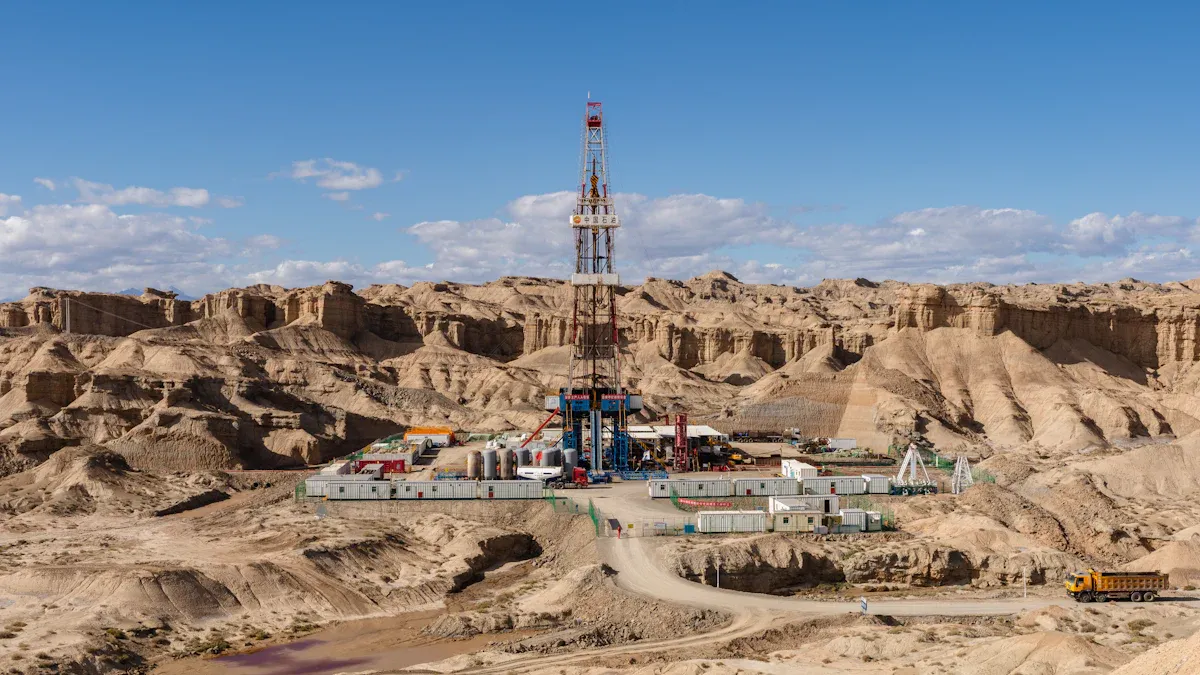
Pinpoint guidance is very important. Other parts of a drill rig also help projects succeed. These features work together. They solve common problems.
Anti-Stall Powertrain and Overload Protection
Drilling can face tough challenges. Pipes can get stuck. Sudden torque spikes can damage parts. These issues cause delays and cost money. CEGC's horizontal directional drilling machine has solutions. It offers high torque. It also has a wide range of speeds. Hydraulic sensors manage pressure. This prevents too much force. Controlled power changes reduce shock. This protects rods and tools. An optional “rock package” is available. It helps in very hard ground.
Tooling Compatibility and Durability
High costs for tools and fast wear are common problems. Choosing the right tools is key. As Fontana says, "Picking the right piece of tooling is just as important as selecting the right drill for the bore." Many things can cause tools to wear out quickly:
-
Losing tools underground.
-
Wear on parts like sub savers.
-
Poor signal strength.
-
Too much fuel use.
-
Over-steering.
-
Not using enough drilling fluid. CEGC's rigs work with many reamers. They deliver torque smoothly. This reduces wear. Easy access for service also helps.
Mud Integration and Fluid Management
Poor drilling fluid can cause problems. It can lead to frac-outs. This is when fluid escapes the bore. Good fluid management is vital. It prevents these risks.
Close teamwork between fluid experts and the drilling team is crucial. They work together to remove cuttings. They also recondition fluid for reuse. CEGC helps with pump sizing. We guide on circulation paths. We also help with filtration. This ensures good mud programs. It keeps the drilling smooth and safe.
Guidance Helps Money and Work
Good guidance systems have many clear benefits. They make projects better. They also make drill rigs earn more money.
Less Rework and Fines
Guidance systems stop many mistakes. They keep the drill on the right path. This means less work redone. Projects finish on time. This avoids expensive fines. Smart tracking keeps the drill on course. It lowers the chance of costly errors.
Better Safety and Environment
These systems make work safer. They also help the environment. Exact control of the drill head lowers dangers. It avoids hitting hidden things. This makes the work area safer. HDD steering also lessens surface damage. This helps the environment. This better accuracy helps safety. It avoids underground pipes. It also reduces harm to nature. It stops extra digging and damage.
Making Projects Better
Good guidance systems make projects faster. They make them work better. Automated rod exchange systems remove hand steps. They ensure steady work. They also make parts last longer. This improves how well things work. Automated drill-guidance systems can make work 40% better. Real-time data cuts equipment idle time by 35%. This is due to automatic steering. Newest HDD machines can drill 200 feet per hour. This is much faster than old ones. This helps project times. Good tracking systems give live info. This helps with path and depth. It allows quick changes. This saves time and money for HDD work.
Getting More from Your Drill Rig
All these good things mean more money back. Less rework means lower costs. Faster projects mean more jobs done. Safer work means fewer accidents. Better environmental ways improve public view. These things make the drill rig earn more.
Pinpoint guidance systems are very important. They help with modern horizontal directional drilling. They stop mistakes. They also lower costs. They make sure projects work. Better accuracy is a key benefit. Safety is also a key benefit. Efficiency is another key benefit. Buying new technology is important. CEGC's horizontal directional drilling machine is an example. Future guidance will use automation. It will also use telematics.
FAQ
What is pinpoint guidance in HDD?
Pinpoint guidance tracks the drill bit. It does this in real-time. It makes sure the drill follows the path. This exactness stops mistakes. It also stops doing work again.
Why is accuracy important in HDD?
Accuracy stops damage. It protects underground utilities. It puts new lines in the right spot. Precision avoids fines. It also stops project delays. 🎯
How do advanced guidance systems help operators?
Advanced systems give constant feedback. They have automated controls. This helps operators get exact results. It lowers risks from human mistakes.


