
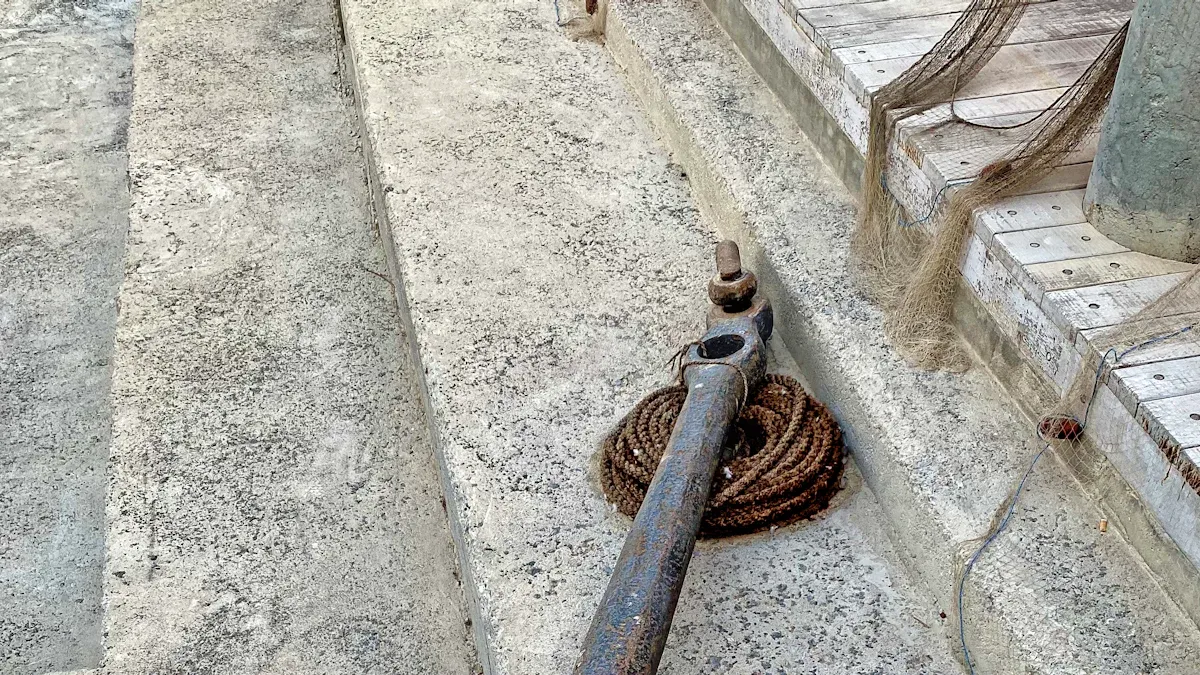
Staying steady is very important for any directional drilling machine. The CEGC Anchor System ensures it remains stable, providing a reliable foundation. This system works exceptionally well, enhancing safety and precision during drilling operations. These robust systems are designed to counteract the significant forces generated by the directional drilling machine. This blog will explore the components and functionality of the Directional Boring Machine Anchor System Never Slips, highlighting how they contribute to the machine's stability. This steadfastness is crucial for any drill rig.
Key Takeaways
-
Anchor systems keep directional drilling machines steady. This stops the drill from moving and helps it work well.
-
Different anchors work best in different ground. Picking the right anchor helps the machine stay firm.
-
Check and care for anchor systems often. This makes them last longer and keeps drilling safe.
The Critical Role of Anchor Systems in Directional Boring
Why Stability is Paramount: Forces at Play
A steady base is key. It is needed for any horizontal directional drilling machine. The anchor system helps the "Precision Guidance & Stability System." This system stops "Bore Deviation & Crossing Failure." A directional drilling machine makes huge forces. This happens when it is working. These forces are thrust, torque, and pullback.
|
Force Type |
Maximum Value |
|---|---|
|
Thrust-pullback Force |
|
|
Spindle Torque |
6000 N·m |
Different ground types change these forces. In a full coal roadway, stress is even. The most cutting resistance is about 200 kN. The machine moves back very little. It is about 10 mm. But a roadway with gangue is harder. It has more horizontal cutting resistance. This reaches about 300 kN. This makes the machine's front lift up. Weight moves to the back support. It goes over 200 kN. The floor bends more. It goes to 280 mm. Backward movement jumps to 65 mm. This means the anchor system has a much bigger load. The Directional Boring Machine Anchor System Never Slips must handle these different conditions.
Consequences of Anchor Failure
If the anchor system fails, big problems happen. It can make the bore go off course. This means the drill path is wrong. Bores that are off line need to be redone. This costs money. Important crossings, like roads, need to be very exact. A steady anchor system helps make this accuracy happen. It means less depends on the operator's skill. Without a strong anchor, the machine can move. This makes exact drilling impossible. It raises the risk of "Bore Deviation & Crossing Failure.
Key Components of a Directional Boring Anchor System
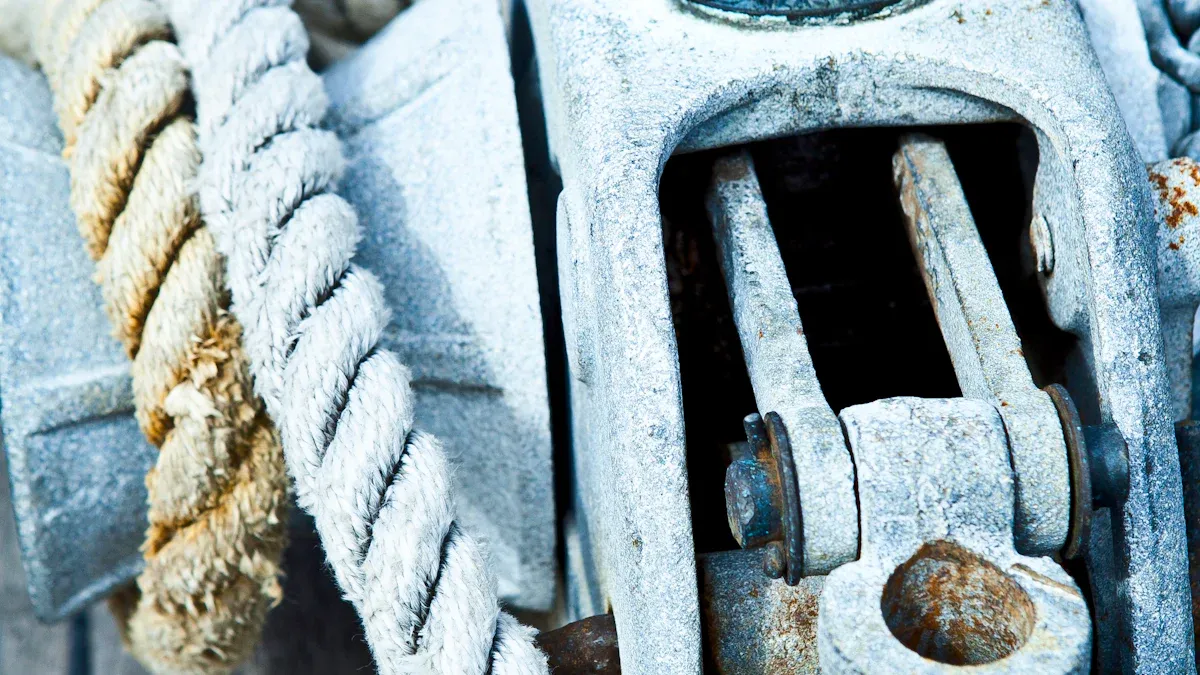
A strong anchor system is very important. It is for any horizontal directional drilling machine. It keeps the machine steady. This is during tough drilling jobs. This system uses many key parts. They work together. These parts make sure the drill rig stays in place. An anchor system has plates, stakes, and pins. They hold the drill rack to the ground.
Anchor Types and Applications
Different ground needs different anchors. Picking the right anchor is key. It helps with stability.
-
Helical Anchors: These anchors look like big screws. They have a square steel shaft. It has helix plates. Workers screw them into the ground. They use steady downward force. Helical anchors work well in loose soil. They also work in soft or mixed soils. Their strength changes. It depends on the soil. They are a good choice. This is when concrete blocks are not practical.
-
Plate Anchors: These anchors are flat plates. They are often used in soft soils. They are also used in medium soils. Workers bury them. Then they pull them. This creates resistance.
-
Mechanical Anchors: These anchors use steel parts. They grip the soil. They work by friction. They also use a mechanical lock. Once put in, they wedge or expand. This gives them strong resistance. It stops them from pulling out. Mechanical anchors are good for firm soils. They are also good for granular or mixed soils. They go in fast. This is because they do not need time to dry. They are useful for quick, strong anchoring.
Here is a quick guide. It shows anchor types. It shows their best uses.
|
Anchor Type |
Suitable Ground Conditions |
|---|---|
|
Mechanical |
Firm, granular, mixed soils |
|
Helical |
Loose, soft, or mixed soils |
|
Disk/Plate |
Soft to medium soils |
Anchor Drive Systems: Installation and Security
Anchors must go deep into the ground. This makes them secure. Two main systems do this.
-
Hydraulic Systems: These systems use fluid pressure. They push or screw anchors into the ground. They offer strong installation. It is also controlled. Hydraulic systems are common. They are on larger horizontal directional drilling rigs.
-
Mechanical Systems: These systems use gears. They use chains or other parts. They drive anchors into the soil. They are often on smaller machines. Or they are for specific anchor types. Both systems make sure the anchor is set firmly. This stops movement during drilling.
Connection Mechanisms: Anchor to Machine
Anchors are in the ground. They must connect to the directional drilling machine. This connection moves forces. It goes from the machine to the anchors.
-
Chains: Heavy-duty chains are common. They link anchors to the drill rig. They are strong. They are also flexible.
-
Cables: Steel cables also connect securely. They can handle high pull.
-
Rigid Bars: Sometimes, solid metal bars are used. These bars offer a very stiff connection. They stop any small movement. This is between the machine and the anchor.
These connections make sure forces are moved safely. This is from the machine to the ground. This keeps the machine stable.
Load Distribution Elements
Anchors alone might not be enough. The ground can fail. This is under extreme pressure. Load distribution elements help stop this.
-
Anchor Plates: These are large, flat plates. They are placed on the ground. Or they are buried with the anchor. They spread the force. It goes from the anchor. It goes over a wider area. This lowers pressure. It is on any single spot.
-
Outriggers: Many horizontal directional drilling machine rigs have outriggers. These are arms. They can extend. They have large pads. They extend from the machine to the ground. Outriggers help spread the machine's weight. They also spread drilling forces. They stop the machine from sinking. They also stop it from tipping.
These elements work together. They work with the anchors. They make sure the Directional Boring Machine Anchor System Never Slips. This makes a stable base. It is for precise drilling.
How the Directional Boring Machine Anchor System Prevents Slippage
Ground Engagement Principles
The anchor system holds the ground. It stops movement. Compression anchors are one type. They expand grout. This grout is squeezed. It creates friction. This friction holds the anchor. Shear stresses also form. They are between the grout and soil. They add to the anchor's strength. The load goes to a part. This part is at the end of the hole. Tendons help move the load. This part moves. It moves towards the system. This squeezes the grout. This makes shear resistance. It is between the grout and the hole. These actions keep the anchor firm.
Component Interplay: Functional Analysis
All parts of the anchor system work together. This stops problems. It prevents "Stuck Pipe, Torque Spikes & Downtime." This helps the "Anti-Stall Powertrain & Overload Protection." A steady base lessens shocks. These shocks hit rods and tools. This helps the "Tooling Compatibility & Durability Package." Parts last longer. The anchor system keeps the machine steady. This helps drilling stay even. Even drilling helps "Mud Integration & Fluid Management Solution." It lowers frac-out risk. When the machine is still, the drill stays straight. This stops bad stress. Fluid flows well. This makes drilling smooth and safe.
Anchor Holding Capacity: Calculation and Verification
Knowing anchor strength is key. Soil science helps us. It looks at soil type. It studies soil structure. It checks soil properties. This helps with site checks. It helps design foundations. It makes structures stable. Knowing soil strength is vital. It helps pick foundation types. It helps with depths and materials. This knowledge checks risks. It includes failures. Shear failure can happen. This is when stress is too high. It is more than the soil can handle. Stress checks are needed. They are for foundations. Soil science helps find strength. It also finds safety levels. These are important for structures. They protect against soil and quake risks.
After design, check it. Proof Testing is a way. It uses 'Proof testers.' They check anchor strength. A proof tester does two things. It locks strong anchors. It also tests all anchors. Any anchor can attach. This includes other brands. Pull Tests are also done. Test anchors are put in. Conditions are the same. They are pulled until they fail. Or until they reach a load. Onsite tests are vital. They find holding power. This is for specific soils. They also find install problems. The steps are: put anchors in. Then attach test gear. This includes a cylinder. It has a power unit. It has load tools. Rigging is also used. The anchor is pulled to fail. Or to the needed load.
Adapting to Ground Conditions
Anchor systems must change. They adapt to different ground. Hard places need changes. Continuous threading is one. It runs the whole anchor length. This spreads the load. It makes it stronger. It works with many methods. Coatings also help. They resist rust. These are galvanized or epoxy. They last long in bad places. Coasts or underground are examples. This means less fixing. Adapting to odd shapes is key. This allows install at angles. It works at different depths. It is good for steep slopes. It helps with rough rocks.
Other changes are made. Torque-to-capacity is one. This checks install torque. It confirms load prediction. It proves holding power. Helix choice is important. Pick helix size. Pick spacing and number. This depends on soil. It depends on needed strength. Shaft type matters. Pick shaft size. Pick wall thickness. Pick lead section length. This depends on loads. It depends on install limits. It depends on soil resistance. Rust protection is checked. Coatings, galvanizing, or better materials. They ensure long life. This is in bad or wet soil. Anchors are used in wet places. They are used for anti-lift. This stops upward forces. These changes make anchors work best. They hold firm anywhere. This makes sure the Directional Boring Machine Anchor System Never Slips.
Best Ways to Use and Care for Anchor Systems
Checking the Site and Making Plans
Good plans start before drilling. First, look at the job site. Check the ground. See the soil type. Find water levels. Look for things underground. This helps pick the best anchor system. Different soils need different anchors. A good check stops problems. It keeps the horizontal directional drilling machine steady.
How to Install for Strong Hold
Right installation makes anchors strong. Put anchors deep enough. Use the right angle. This gives the most hold. For helical anchors, push down slowly. For plate anchors, bury them well. Make them tight. Always follow the maker's rules. Good installation makes sure the directional drilling machine anchor system never slips.
Checking and Fixing for Long Life
Regular checks keep anchors working. Look at all anchors. Check connections before each job. Look for wear. Look for damage. Look for rust. Check chains. Check cables. Check rigid bars. Replace bad parts right away. Good care makes the anchor system last. It also keeps the drill rig safe.
Fixing Anchor System Problems
Sometimes, anchors do not hold. If an anchor pulls out, check the ground again. You might need a new anchor type. Or, you might need to put it deeper. Stop drilling if the machine moves. Fix the anchor system. Then keep working. Safety is most important.
The Directional Boring Machine Anchor System Never Slips. These systems are made with care. They make drilling safe. They make drilling steady. Strong parts help. Good setup helps. Knowing the ground helps. This makes them "never slip." This steady base is important. It is for every job. It stops big forces. Buying these systems helps. It helps any CEGC drilling rig. It makes it work best.
FAQ
What makes an anchor system "never slip"?
Anchor systems have strong parts. They go deep into the ground. This makes them very hard to move. It stops the directional drilling machine from slipping.
How do ground conditions affect anchor choice?
Different ground needs different anchors. Soft dirt might use helical anchors. Harder dirt might use mechanical anchors. Checking the site helps choose the best one. 🗺️
How often should anchor systems be checked?
Check anchor systems before each job. Look for wear. Look for damage. Regular checks keep them safe. They also make sure they work well.


