
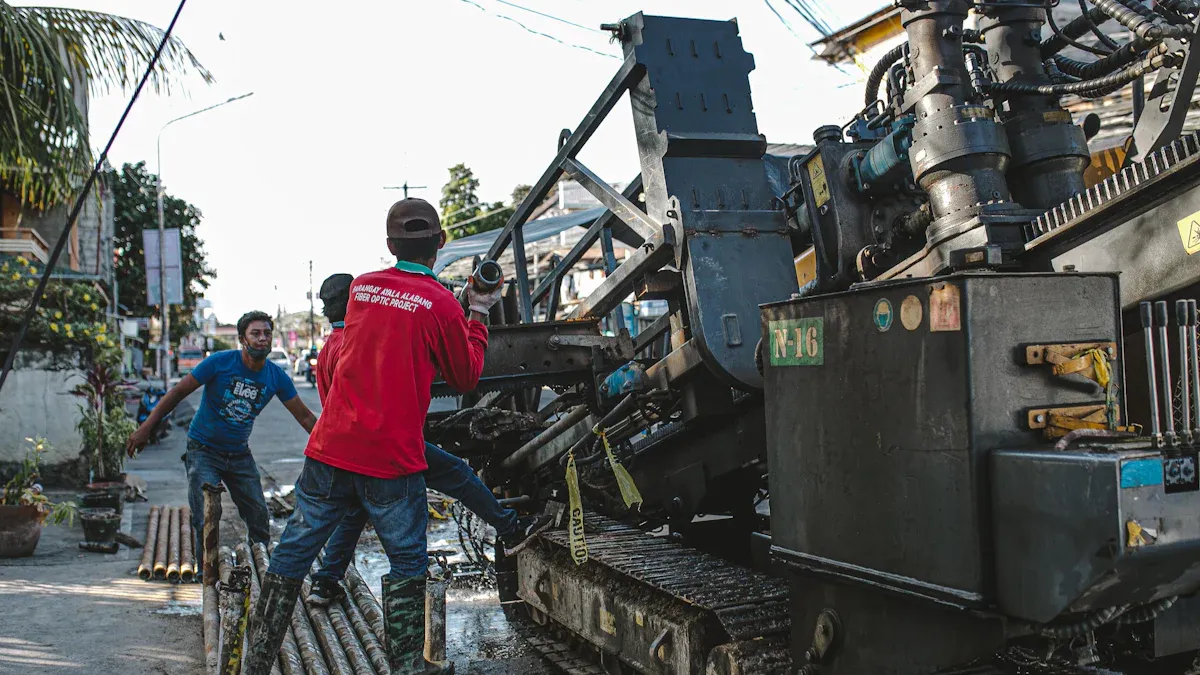
Good fluid control is very important for modern horizontal directional drilling. Blockages cost a lot of money and cause delays for companies. Old drilling methods often have trouble maintaining a steady flow, which stops work. The new CEGC Directional Boring Machine Large Flow Never Blocks changes this. It is a directional boring machine with a large flow that never blocks, meaning work keeps going. This guide looks at the new technology that makes this possible for new drillers doing horizontal directional drilling.
Key Takeaways
-
New directional boring machines use smart guidance and strong engines. This stops the drill from getting stuck. It helps work go smoothly.
-
Better tools and good fluid control make drilling easier. Tools last longer. Fluid keeps the drill from blocking. This saves money and time.
-
CEGC offers special drills for each project. They also provide good support. This makes sure your drilling machine works well and finishes jobs.
Precision Guidance for Horizontal Directional Drilling
Eliminating Bore Deviation and Crossing Failures
Good guidance systems are key. They help with horizontal drilling. These systems stop the drill. They keep it from going off course. Ground tests help workers. They learn about different ground. They take samples. This shows rock and soil. Sensors are in the drill. They give live information. This includes angle and direction. Operators use this data. They change the drill path. Starting the hole well helps. It keeps the drill centered. Stabilizers hold the drill bit steady. The drill string must be strong. It resists side forces. This makes sure it is accurate.
Drilling problems can happen. Rocks or bad soil cause them. Good surveys help prevent this. Constant checking also helps. Equipment can break down. Drill stems can get stuck. Regular care helps. Training operators helps too. Other pipes can be in the way. This is a common problem. Maps of pipes help. Surveys before drilling find issues. Ground radar finds pipes. It finds other things too. These ways make drilling safe. They make trenchless work good.
Advanced Control for Consistent Drilling Paths
New drill machines have smart controls. These controls keep drilling steady. The CAN bus system makes controls easy. It links drill parts to joysticks. This means less work for operators. Smart diagnostic systems help operators. They help fix problems. This means less stopped time. The H&P Bit Guidance System steers itself. It gives live directions. This helps place the bit well. It makes drilling more exact. It lowers risks in hard holes.
Ditch Witch and Digital Control have special systems. A part in the drill head sends signals. Receivers on the ground get them. This system finds the drill's spot. It maps the drill's path. It tells the operator where to steer. This makes drilling paths steady. It helps install pipes underground. These tools make work more reliable. They help with trenchless work. This leads to better projects.
Anti-Stall Powertrain: Preventing Downtime
Overcoming Stuck Pipe and Torque Spikes
Stuck pipes cause big problems. They cost a lot to fix. They waste time. Torque spikes also break parts. They damage rods and threads. They harm other tools. New drill machines stop these issues. They have a strong powertrain. It gives high power. It works at many speeds. This helps it drill in different dirt. It checks the hydraulic load. It manages pressure well. It changes power as needed. The system starts and stops smoothly. This protects rods and tools. This smart design keeps the rig working. It saves expensive equipment. It means fewer repairs.
High-Torque Output for Challenging Ground
Hard rock or mixed soil is tough. It slows down drilling. The anti-stall powertrain helps. It works well in these spots. It gives a lot of power. It matches other strong rigs. This keeps drilling steady. It works even in hard places. The system is very strong. It can run all the time. This means more drilling each day. A "rock package" is an option. It helps with very hard ground. It has better cooling. It has good filters. It adds more power. It has strong parts. These features help the machine. It handles the hardest ground. It keeps drilling without stopping. This gets more work done. It finishes projects faster.
Optimized Tooling for Durability and Cost Efficiency
Reducing Consumables and Tool Wear
Tool wear costs money and slows down work. Fast reamer and cutter wear increases the cost for each meter drilled. Operators must inspect their directional drilling reamers after each use. They wash and flush the reamer inside. They check for wear or cracks on the shaft and threaded ends. Missing or damaged carbide cutters must be replaced. This stops more tool damage. For hole openers, operators inspect bearings and cones. They rotate cones to clear residue. They check for too much movement.
Maintaining reamers is important. Replacing worn cutters keeps the cutting system working well. It also lowers the torque load on other teeth. Small cracks on the body can be ground and welded. Major cracks need bigger repairs. Operators remove and replace thread grease. This protects threads from rust. They clean and grease the swivel after every bore. Storing reamers under cover prevents rust and dirt. New materials also help. PDC bits have better abrasion resistance. This makes cutters last 100 times longer. Enhanced hard coatings on tools extend tool life by 50%. These advancements make tools stronger.
Versatile Tooling for Diverse Ground
Different ground conditions need different tools. A tooling mismatch can cause poor hole cleaning. It can also lead to under-gauge bores. This increases the risk of pullback. CEGC offers versatile tools for various ground types. The PD-2 Hydraulic Line Replacement Tool is for single operators. It installs pipes from basement to curb stop. It works under driveways and narrow roads. This tool minimizes restoration needs. The PD-4 Thrust Boring Equipment offers 7,714 lbs of thrust. It installs pipes up to 4-inch ID. It works well in tough soil. It fits in small spaces. The PD-6 Directional Boring Tool provides 85,000 lbs of thrust. It installs pipes up to 8 inches ID. It works in many compressible soils.
Other tools also help. Air hammers work in hard rock. Mud motors use high-pressure fluid. They power tri-cone or PDC bits. These are often used with larger hdd rigs. Dual-rod systems are good for mixed rock. They use an outer rod for steering. An inner rod provides bit torque. Conventional drills with armor systems also exist. The Lance bit works in hard soils and cobble. The Gauntlet bit is for medium rock or shale. It has carbide hardfacing. These tools ensure efficient product installation in any ground.
Integrated Fluid Management for Large Flow Never Blocks
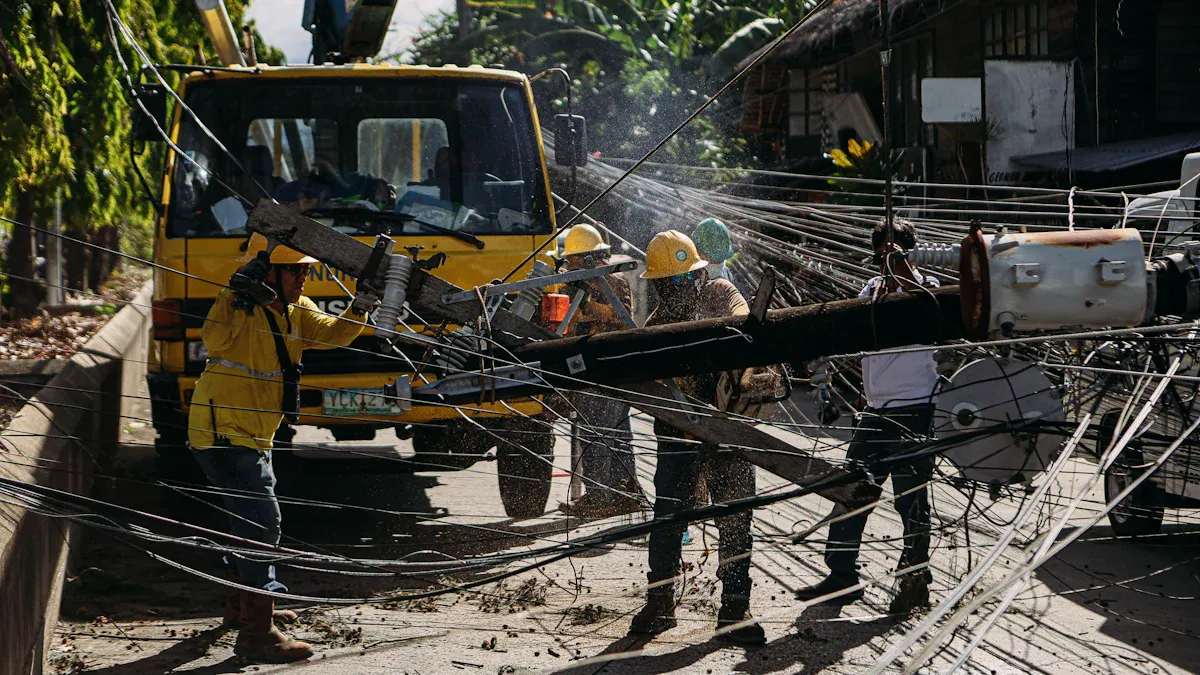
Achieving Optimal Flow and Pressure
Low flow and pressure cause problems. They make drilling harder. They can get pipes stuck. A good drilling fluid system stops this. It makes fluid work best. This system is key. It helps the "directional boring machine large flow never blocks" promise. Operators need to know about fluid flow.
-
Drilling Fluid Properties: Fluid thickness is important. How strong it is matters. It must stop fluid loss. Thicker fluid needs more pump pressure. Strong fluid holds cuttings.
-
Fluid Volume Calculations: The amount of fluid pumped changes things. It changes how much solid is in it. It helps make a flowing mix. Fluid to soil ratios are needed. They carry away cuttings. For example, use 2 to 3 parts fluid for 1 part sand. Use up to 5 parts fluid for 1 part clay. Bigger holes need much more fluid.
-
Monitoring Downhole Pressures: This is very important. It stops damage to the ground. This is true when drilling under roads.
-
Matching Fluid Properties to Soil Type: Fluid must match the soil. Its job and traits must fit.
-
Understanding Flow Rate Requirements: Knowing the right flow rate is vital. It keeps fluid moving.
-
Monitoring Drilling Speed: Operators must watch drilling speed. This keeps fluid moving. It also helps control pressure.
New models keep fluid flowing well. You and Rahnema made a model. It figures out steam quality. It also finds temperature and pressure. This is for steam wells. Zhao and others made a new model. It shows fluid flow. It also shows heat transfer. It uses math to do this. These models help control fluid.
Mitigating Frac-Out Risks and Compliance
Losing fluid or frac-out causes issues. It means cleanup. It means breaking rules. Bad mud makes holes unstable. A good fluid system stops these problems. It lessens harm to the environment. This system makes sure the directional boring machine large flow never blocks well.
Rules guide how work is done. OSHA rules keep crew safety. PHMSA gives rules for pipelines. State and federal permits are needed. This is for projects near water. It is also for sensitive areas.
Good ways help stop frac-outs.
-
Precise monitoring of downhole pressure: This finds problems early.
-
Proper fluid management: This makes sure fluid is right.
-
Containment planning: This gets ready for spills.
Ambrus and others made a way to guess. It is for MPD systems. It uses surface data. It uses a simple model. This model guesses pore pressure. It also guesses reservoir inflow. This is during gas kicks. It keeps things safe. It uses less computer power. It stays accurate. This helps stop frac-outs. It protects the environment from hdd projects.
The hdd rig uses electric or diesel pumps. Special pump packages can be added. Filters and cooling can be upgraded. Fluid solutions for specific sites are possible. This full drilling fluid system works best.
The CEGC Advantage in Horizontal Directional Drilling
Customization for Project-Specific Needs
CEGC knows each job is different. They have standard drills. These are for horizontal drilling. Customers can ask for special changes. This helps many businesses. It helps contractors and cities. It also helps engineering firms. CEGC makes tools just right. They fit underground pipe jobs. This makes the drill perfect. It helps work go smoothly. It makes projects succeed. CEGC customizes for you. You get the best tools. They change power and torque. They change rod systems. They add special controls. This helps in different soils. It helps with long bores.
Reliability and Support for Your Drill Rig
CEGC helps with every drill. Long-term care is key. It keeps tools working well. It stops sudden stops. It makes machines last longer. Regular checks prevent delays. They keep work going. Checks make sites safer. They find problems early. New tech watches data. It shows how tools are doing. It helps fix things fast. AI helps with care. It lowers human mistakes. Experts give good help. They find issues soon. This stops costly delays. This help makes your drill work best. It always gets the job done.
This new technology changes drilling. It is called "large flow never blocks." It helps with horizontal drilling. Good guidance helps. Strong engines help. Better tools help. Fluid control helps. These things stop blocks. Work goes faster. It costs less money. This helps many groups. It helps builders. It helps power companies. It helps city projects. CEGC's new ways are good. They make drilling better. They help build lasting systems.
FAQ
What does "large flow never blocks" mean for HDD?
It means the directional drilling machine keeps fluid moving. This stops things from getting stuck. It makes work go on and on. This means less waiting. It means projects finish on time.
How does CEGC's technology prevent stuck pipes?
CEGC uses a special engine. It has strong power. It also checks fluid pressure. This stops pipes from getting stuck. It keeps tools safe from harm.
What are the main benefits of optimized tooling?
Better tools wear out less. They cost less to use. They also drill well. This works in many types of ground. It makes projects work better.


